
 A SCHOLARLY BOOK REPOSITORY
16 start with P start with P

Patrick White spent his whole life writing letters. He wanted them all burnt, but thousands survive to reveal him as one of the greatest letter-writers of his time. Patrick White: Letters is an unexpected and final volume of prose by Australia's most acclaimed novelist. Only a few scraps of White's letters have been published before.
From the aftermath of the First World War until his death in 1990, letters poured from White's pen: they are shrewd, funny, dramatic, pigheaded, camp, and above all, hauntingly beautiful. He wrote novels to sway a hostile world, but letters were for friends.
The culmination of ten years' work and reflection by David Marr, author of the well-received biography Patrick White: A Life, the volume tells the story of White's life in his own words. These are the letters of a great writer, a profound critic, a gossip with the sharpest eyes and tongue, a man who loved and hated ferociously, a keen cook, an angry patriot, and a believer never free of doubt.
"A literary milestone."—Kirkus Reviews
"Mean-spirited and brilliant, the 600 letters collected here offer real insight into the life of the Nobel-Prize winning Australian author. White's venom is matched by his torment, and the whole volume is redeemed by outstanding writing."—Publisher's Weekly ("Best Books 96")
"[T]hose who come to these letters after having read Marr's biography will expect more than shop talk from the master novelist. They will expect the bracing bitchiness of a master curmudgeon. And they will not be disappointed."—Frank Wilson, Philadelphia Inquirer
Patrick White (1912-1990), Australian novelist and playwright, won the Nobel Prize in Literature in 1973. His many novels include Voss, The Twyborn Affair, and Riders in the Chariot.
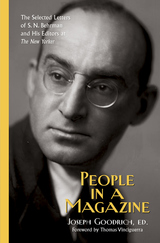
Playwright, biographer, screenwriter, and critic S. N. Behrman (1893–1973) characterized the years he spent writing for The New Yorker as a time defined by “feverish contact with great theatre stars, rich people and social people at posh hotels, at parties, in mansions and great estates.” While he hobnobbed with the likes of Mary McCarthy, Elia Kazan, and Greta Garbo and was one of Broadway's leading luminaries, Behrman would later admit that the friendships he built with the magazine's legendary editors Harold Ross, William Shawn, and Katharine S. White were the “one unalloyed felicity” of his life.
People in a Magazine collects Behrman's correspondence with his editors along with telegrams, interoffice memos, and editorial notes drawn from the magazine's archives—offering an unparalleled view of mid-twentieth-century literary life and the formative years of The New Yorker, from the time of Behrman's first contributions to the magazine in 1929 until his death.
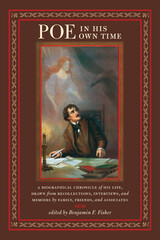
An image of Edgar Allan Poe (1809–1849) as a man of gloom and mystery continues to hold great popular appeal. Long recognized as one of the greats of American literature, he elicited either highly commendatory or absolutely hostile reactions from many who knew him, from others who claimed to comprehend him as person or as writer, and from still others who circulated as fact opinions intuited from his writings. Whether promoting him as angel or demon, “a man of great and original genius” or “extraordinarily wicked,” the viewpoints in this dramatic collection of primary materials provide vigorous testimony to support the contradictory images of the man and the writer that have prevailed for a century and a half.
Noted Poe scholar Benjamin Fisher includes a comprehensive introduction and a detailed chronology of Poe’s sadly short life; each entry is introduced by a short headnote that places the selection in historical and cultural context, and explanatory notes provide information about people and places. From John Allan’s letter to Secretary of War John Eaton about Poe’s West Point life to John Frankenstein’s hostile verse casting him as an alcoholic, from Rufus Griswold’s first and second posthumous vilifications to James Russell Lowell’s more sensible outline of his life and career, from scornful to commendable reviews to scathing attacks on his morals to recognition of his comic achievements, Fisher has gathered a lively array of materials that read like the most far-fetched of gothic tales.
Poe himself was creative when he supplied information to others about his life and literary career, and the speculative content of many of the portrayals presented in this collection read as if their authors had set out to be equally creative. The sixty-nine recollections gathered in Poe in His Own Time form a dramatic, real-time biographical narrative designed to provide a multitude of perspectives on the famous author, sometimes in conflict with each other and sometimes in agreement but always arresting.
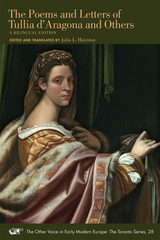
Hairston has constructed a full personal, cultural and literary biography for d’Aragona, using newly discovered letters, archival material of other kinds, and contemporary theory about gender in women’s writing. Footnotes establish the intricacy of Tullia’s intellectual networks and her courting of intellectuals in rhyme. Hairston includes poems written to d’Aragona, including Girolamo Muzio’s long pastoral, Tirrhenia. She addresses with tact the question of how sexual Tullia’s relationships were with her various interlocutors. At times, as she says, one just can’t know, but that the issue is much less important than the poems themselves. I agree wholeheartedly. This is the editor Tullia has been waiting for: an indefatigable researcher, a creative biographer, and a precise and appreciative literary critic.
—Ann Rosalind Jones
Esther Cloudman Dunn Professor of Comparative Literature, Smith College
The figure of Tullia d’Aragona has long fascinated readers as the prototype of the “honest courtesan”, a woman who successfully exploited her physical and intellectual charms to win the adoration and respect of the Italian cultural elite. With Julia Hairston’s richly annotated edition of her collected verse, the product of more than a decade of scholarship, d’Aragona finally comes into focus also as poet. She emerges in this volume as one of the most distinctive protagonists in a key transitional moment in Italian literary history, when the aristocratic tradition of Petrarchist lyric began to be reshaped and democratized by its encounter with print.
—Virginia Cox
Professor of Italian, New York University
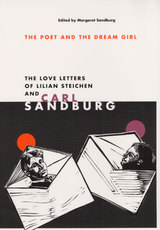
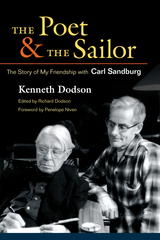
Carl Sandburg first encountered Kenneth Dodson through a letter written at sea during World War II. Though Dodson wrote the letter to his wife, Letha, Sandburg read it in tears and told her, "I've got to meet this man." Composed primarily of their correspondence that continued until Sandburg's death in 1967, The Poet and the Sailor is a chronicle of the deep friendship that followed. Ranging over anything they found important, from writing to health and humor, the letters are arranged by Richard Dodson and are accompanied by a foreword from Sandburg's noted biographer, Penelope Niven.
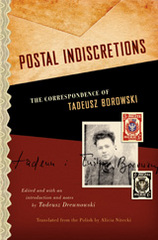
This correspondence in this volume expands on the insights of Borowski’s published work and extends to the less-documented aftermath of the Holocaust in postwar Poland and East Germany. The volume opens with Borowski’s letter to his mother from Pawiak Prison the day after his arrest and closes with an unsigned telegram informing his parents of his suicide. The letters to and from family members, friends, and literary figures offer an indispensable picture of the world in the wake of the Nazis—and of the indelible stain that experience left upon the literature, politics, and life of Eastern Europe, in particular upon one gifted and doomed writer.
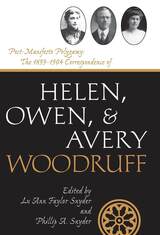
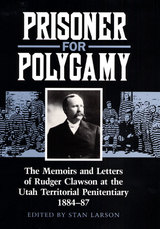
These letters among two women and their husband offer a rare look into the personal dynamics of an LDS polygamous relationship. Abraham “Owen” Woodruff was a young Mormon apostle, the son of President Wilford Woodruff, remembered for the Woodruff Manifesto, which called for the divinely inspired termination of plural marriage. It eased a systematic federal judicial assault on Mormons and made Utah statehood possible. It did not end polygamy in the church. Some leaders continued to encourage and perform such marriages. Owen Woodruff himself contracted a secretive, second marriage to Avery Clark. Pressure on the LDS church revived with hearings regarding Reed Smoot’s seat in the U. S. Senate. After church president Joseph F. Smith issued the so-called Second Manifesto in 1904, polygamy and its more prominent advocates were mostly expunged from mainstream Mormonism. Owen Woodruff was not excommunicated, as a couple of his apostolic colleagues were. He and his first wife, Helen May Winters, had died suddenly that same year after contracting smallpox in Mexico. Owen Woodruff had often been “on the underground,” moving frequently, traveling under secret identities, and using code names in his letters to his wives, while still carrying out his administrative duties, which, in particular, involved supervision of the nascent Mormon colonies in the Big Horn Basin of Wyoming.
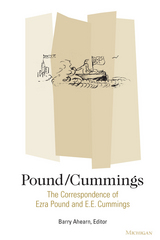
Throughout the correspondence both poets reveal themselves and their beliefs to a remarkable degree. Pound entrusted to Cummings details of his political outlook in the 1930s and 1940s, including his opinions about Mussolini's Italy. The letters to Cummings also shed new light on the question of Pound's sanity after World War II. Although he was diagnosed as mentally unfit, the letters generally show no evidence of paranoia, only of his characteristic eccentricity.
Similarly, these letters should provoke a reevaluation of Cummings. Critics have treated Cummings's political views as either strictly private matters or merely incidental to his art. The letters, however, show that Cummings's radically conservative political opinions are wholly consistent with his poetics, and raise the question of the relation between Cummings's political principles and his enthusiasm for particular forms (and particular stars) of mass entertainment.
In addition to their political revelations, the letters are steeped in the literary climate--and literary gossip--of the times. Pound comments often and candidly on Cummings's poetry and prose; both Pound and Cummings send light verse to each other. And the poets exchange anecdotes about such figures as Henry James, Wyndham Lewis, T. S. Eliot, Edmund Grosse, Max Eastman, and Aldous Huxley, among other writers.
There is much here to interest and delight both fans and foes of Pound and Cummings. The book will be of primary importance to students and scholars of modern poetry, especially those who emphasize the intersection of literary works and political history.
Barry Ahearn is Associate Professor of English, Tulane University.
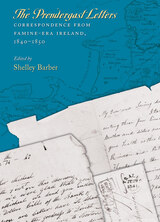
Most important, the letters offer a rare contemporary, firsthand account of Ireland's an Gorta Mor, the Great Famine that began with the failure of the potato crop in 1845. Letters written in the months and years following the announcement of the first crop failure provide insight into not only the sufferings of one family but also the response of the community and nation as this crisis transformed Ireland.
James and Elizabeth Prendergast were the parents of six children. Their letters from Milltown, County Kerry, dictated to a scrivener, were posted to sons Thomas and Jeffrey and daughter Julia Riordan and her husband Cornelius, all of whom had emigrated in search of employment to Boston, Massachusetts—a city that would itself be transformed by the famine-era influx of Irish immigrants.
In addition to transcriptions of the forty-eight letters in the collection, this volume includes contextual essays by historian Ruth-Ann Harris and genealogist Marie Daly. The evidence of the letters themselves, along with the contributions of Harris and Daly, demonstrate the ways in which the family of James Prendergast was at once exceptional and typical.
READERS
Browse our collection.
PUBLISHERS
See BiblioVault's publisher services.
STUDENT SERVICES
Files for college accessibility offices.
RECENTLY PUBLISHED



UChicago Accessibility Resources
home | accessibility | search | about | contact us
BiblioVault ® 2001 - 2026
The University of Chicago Press