
 A SCHOLARLY BOOK REPOSITORY
3 start with P start with P
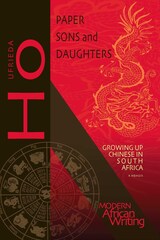

In The Politics of the Trail, Löwenheim confronts this tension by focusing on his encounters with three places along the trail: the separation fence between Israel and the Palestinians; the ruins of the Palestinian village Qalunya, demolished in 1948; and the trail connecting the largest 9/11 memorial site outside of the U.S. with a top-secret nuclear-proof bunker for the Israeli cabinet. He shares the stories of the people he meets along the way and considers how his own subjectivity is shaped by the landscape and culture of conflict. Moreover, he deconstructs, challenges, and resists the concepts and institutions that constitute such a culture and invites conversation about the idea of conflict as a culture.
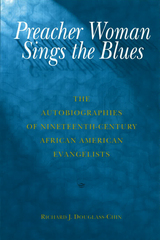
In this thorough and detailed study, Richard Douglass-Chin examines collectively for the first time the autobiographies of nineteenth-century African American women evangelists, along with their eighteenth-century forerunner "Belinda." By studying how black women evangelists employed dialogue created by socioeconomic conditions, the author shows how their writings form the groundwork for a contemporary womanist literature rooted in spirituality. Arguing that the writings have their own unique figurations and forms that develop and alter over time, Douglass-Chin claims that the changing black female spiritual narrative traces an important line in the ongoing traditions of black women's writing, a line that has only now begun to be reclaimed and validated. Through references to the writings of black male autobiographers Frederick Douglass, Richard Allen, Daniel Payne, and John Jea as well as the works of white female autobiographers Harriet Livermore and Phoebe Palmer, Douglass-Chin is able to make valuable comparisons.
Preacher Woman Sings the Blues begins with the study of black evangelists Belinda, Jarena Lee, and Zilpha Elaw, continuing with Rebecca Cox Jackson, Sojourner Truth, Julia Foote, Amanda Smith, Elizabeth, and Virginia Broughton. The author's discussion of Zora Neale Hurston focuses on how Hurston operates as a connection between early black women evangelist writers and black women writing in America today. He ends with the works of Alice Walker, Toni Morrison, and Toni Cade Bambara.
By examining the early traditions prefiguring contemporary African American women's texts and the impact that race and gender have on them, Douglass-Chin shows how the nineteenth-century black women's works are still of utmost importance to many African American women writers today. Preacher Woman Sings the Blues makes a valuable contribution to literary criticism and theoretical analysis and will be welcomed by scholars and students alike.
READERS
Browse our collection.
PUBLISHERS
See BiblioVault's publisher services.
STUDENT SERVICES
Files for college accessibility offices.
RECENTLY PUBLISHED



UChicago Accessibility Resources
home | accessibility | search | about | contact us
BiblioVault ® 2001 - 2025
The University of Chicago Press