
 A SCHOLARLY BOOK REPOSITORY
15 start with P start with P
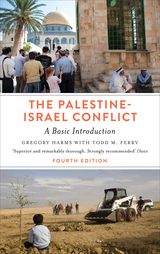
Perfect for both general readers and students, it offers a comprehensive yet lucid rendering of the conflict, setting it in historical context. This fourth edition brings us up to date with a new introduction, conclusion, and material covering recent events: Israel’s Operation Protective Edge, the Palestinian unity deal between Fatah and Hamas, and ongoing Palestinian resistance, America’s Middle East policy, and the election of Trump.
Cutting through layers of confused and inconsistent information, this new edition of The Palestine-Israel Conflict will clarify the ongoing struggle for all readers.

Falk explores the intricacies and interconnections within the history and politics of Israel and Palestine, while delving into the complicated relationships the conflict has created within the global community. He refutes the notion that the Palestinian struggle is a lost cause and offers new tactics and possibilities for change. He also puts the ongoing conflict in context, reflecting on the legacy of Edward Said and drawing on the importance of his ideas as a humanist model for peace that is mindful of the formidable difficulties that come with achieving a solution to the long struggle. One of the most established and authoritative voices on the conflict, Falk now presents his most sustained and focused historical overview to date.
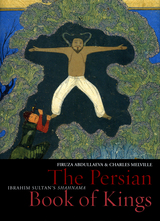
The Shahnama positions Iran at the heart of human civilization, and its sprawling and compelling narrative stretches from the beginning of time to the seventh-century takeover of the Persian Empire by Muslim Arabs. Ibrahim Sultan, governor of Shiraz in southern Iran from 1415 to 1435, commissioned an edition of the Shahnama that contained a lavish assortment of intricate original paintings. This version is now in the collection of the Bodleian Library, and The Persian Book of Kings explores this rare text in extensive detail.
The authors investigate the life of the poet Firdausi, unpack the literary context of the poem and its illuminations, and examine the royal court of Ibrahim Sultan for whom the manuscript was commissioned. The richly colored miniatures and illuminations spread through the text are given full exploration in this study, with examinations of both the artists’ techniques that influenced generations of illustrators and the artworks’ meanings. The book also features a helpful glossary of Persian terms and a list of the numerous characters that appear in the epic.
A gorgeously produced study of one of the great literary works of human history, The Persian Book of Kings offers a fascinating look at the myths and legends of an ancient culture.
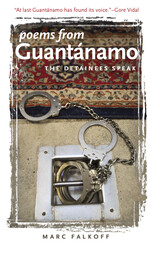
Since 2002, at least 775 men have been held in the U.S. detention center at Guantánamo Bay, Cuba. According to Department of Defense data, fewer than half of them are accused of committing any hostile act against the United States or its allies. In hundreds of cases, even the circumstances of their initial detainment are questionable.
This collection gives voice to the men held at Guantánamo. Available only because of the tireless efforts of pro bono attorneys who submitted each line to Pentagon scrutiny, Poems from Guantánamo brings together twenty-two poems by seventeen detainees, most still at Guantánamo, in legal limbo.
If, in the words of Audre Lorde, poetry “forms the quality of light within which we predicate our hopes and dreams toward survival and change,” these verses—some originally written in toothpaste, others scratched onto foam drinking cups with pebbles and furtively handed to attorneys—are the most basic form of the art.

Engaging the poetic to expand our imagination of Maghrebi literature in French
Poetry, as the Moroccan writer Abdelkébir Khatibi describes it, is a form of dissymmetry that exposes readers to the unexpected, and to the possibility of a transformative encounter with the text. Drawing on literary, philosophical, theoretical, and theological texts in multiple languages and scripts, as well as on the visual arts, Thomas C. Connolly delves into the poetic works of Khatibi and six other major Maghrebi authors—Jean Amrouche, Tahar Djaout, Nabile Farès, Mohammed Khaïr-Eddine, Abdelwahab Meddeb, and Jean Sénac—as well as the French poet Arthur Rimbaud, to think anew about the origins and legacy of Francophone poetry in the Maghreb. Instead of turning away from the poetic when it becomes indecipherable, A Poetic Genealogy of North African Literature engages poetic texts on their own terms, allowing them to dictate the search for meaning, thereby expanding our understanding of what Maghrebi literature in French was, is, and might become.
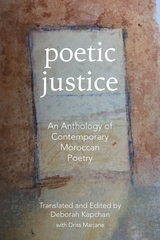
Poetic Justice is the first anthology of contemporary Moroccan poetry in English. The work is primarily composed of poets who began writing after Moroccan independence in 1956 and includes work written in Moroccan Arabic (darija), classical Arabic, French, and Tamazight.
Why Poetic Justice? Moroccan poetry (and especially zajal, oral poetry now written in Moroccan Arabic) is often published in newspapers and journals and is thus a vibrant form of social commentary; what’s more, there is a law, a justice, in the aesthetic act that speaks back to the law of the land. Poetic Justice because literature has the power to shape the cultural and moral imagination in profound and just ways.
Reading this oeuvre from independence until the new millennium and beyond, it is clear that what poet Driss Mesnaoui calls the “letters of time” have long been in the hands of Moroccan poets, as they write their ethics, their aesthetics, as well as their gendered and political lives into poetic being.
Naous’s book offers analyses of Diana Abu-Jaber’s Arabian Jazz and Crescent, Rabih Alameddine’s Koolaids: The Art of War, Laila Halaby’s Once in a Promised Land, and Mohja Kahf’s The Girl in the Tangerine Scarf as ways to answer this question. Naous explores how these novels negotiate queer desire, music, Western and Middle Eastern art, gender, and relationships between other minorities. These poetics enable readers to see the nuance and richness of Arab American experience. Naous ultimately argues that fiction creates crucial spaces for reimagining and redefining intercultural relationships.
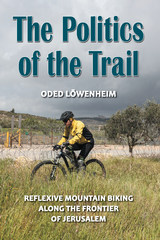
In The Politics of the Trail, Löwenheim confronts this tension by focusing on his encounters with three places along the trail: the separation fence between Israel and the Palestinians; the ruins of the Palestinian village Qalunya, demolished in 1948; and the trail connecting the largest 9/11 memorial site outside of the U.S. with a top-secret nuclear-proof bunker for the Israeli cabinet. He shares the stories of the people he meets along the way and considers how his own subjectivity is shaped by the landscape and culture of conflict. Moreover, he deconstructs, challenges, and resists the concepts and institutions that constitute such a culture and invites conversation about the idea of conflict as a culture.

To confront time, pre-modern Arabic poems often began with the poet standing before the ruins, real and imagined, of a beloved’s home. In Postcards from the Underworld, Sinan Antoon works in that tradition, observing the detritus of his home city, Baghdad, where he survived two wars—the Iran-Iraq War of 1980 and the First Gulf War of 1991—and which, after he left, he watched from afar being attacked during the US invasion in 2003. Antoon’s poems confront violence and force us not to look away as he traces death’s haunting presence in the world. Nature offers consolation, and flowers and butterflies are the poet’s interlocutors, but they too cannot escape ruin. Composed in Arabic and translated into English by the poet himself, Postcards from the Underworld is a searing meditation on the destruction of humans, habitats, and homes.

Power, Resistance, Ideology and the State: Charles Tripp and the Comparative Politics of the Middle East seeks to present a new understanding of a region of unprecedented volatility, where postcolonial projects of state-driven development have now expired, old ruling elites have been delegitimized, and political Islam discredited. The work of Charles Tripp, professor at the School of Oriental and African Studies (SOAS) for over three decades, has shaped a distinct approach to the study of Middle East politics with an analytical sensibility that is empirically rich, theoretically insightful, and historically sensitive. This volume brings together contributions from ten political scientists and historians from across Europe, the United States, and the Middle East, each of which takes Tripp’s work as an intellectual point of departure for studying Middle East politics.
Against this background, the contributors explore the contemporary developments that have emerged to fill the intellectual and material shortcomings created by the systemic failures of economics and politics in the region.
The contributions focus on four themes that are central to an understanding of Middle East politics—power, resistance, ideology, and the state—to examine political trends in cases ranging from Iran and Iraq to Jordan, Lebanon, and Syria. Each chapter combines extensive field research and a knowledge of regional politics with methodological and philosophical reflexivity to produce a collection of papers at the cutting edge of contemporary Middle East Studies.
Known for her far-reaching examinations of psychoanalysis, literature, and politics, Jacqueline Rose has in recent years turned her attention to the Israel-Palestine conflict, one of the most enduring and apparently intractable conflicts of our time. In Proust among the Nations, she takes the development of her thought on this crisis a stage further, revealing it as a distinctly Western problem.
READERS
Browse our collection.
PUBLISHERS
See BiblioVault's publisher services.
STUDENT SERVICES
Files for college accessibility offices.
RECENTLY PUBLISHED



UChicago Accessibility Resources
home | accessibility | search | about | contact us
BiblioVault ® 2001 - 2026
The University of Chicago Press