
 A SCHOLARLY BOOK REPOSITORY
10 start with R start with R
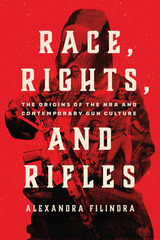
An eye-opening examination of the ties between American gun culture and white male supremacy from the American Revolution to today.
One-third of American adults—approximately 86 million people—own firearms. This is not just for protection or hunting. Although many associate gun-centric ideology with individualist and libertarian traditions in American political culture, Race, Rights, and Rifles shows that it rests on an equally old but different foundation. Instead, Alexandra Filindra shows that American gun culture can be traced back to the American Revolution when republican notions of civic duty were fused with a belief in white male supremacy and a commitment to maintaining racial and gender hierarchies.
Drawing on wide-ranging historical and contemporary evidence, Race, Rights, and Rifles traces how this ideology emerged during the Revolution and became embedded in America’s institutions, from state militias to the National Rifle Association (NRA). Utilizing original survey data, Filindra reveals how many White Americans —including those outside of the NRA’s direct orbit—embrace these beliefs, and as a result, they are more likely than other Americans to value gun rights over voting rights, embrace antidemocratic norms, and justify political violence.
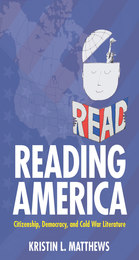
During the Cold War, the editor of Time magazine declared, “A good citizen is a good reader.” As postwar euphoria faded, a wide variety of Americans turned to reading to understand their place in the changing world. Yet, what did it mean to be a good reader? And how did reading make you a good citizen?
In Reading America, Kristin L. Matthews puts into conversation a range of political, educational, popular, and touchstone literary texts to demonstrate how Americans from across the political spectrum—including “great works” proponents, New Critics, civil rights leaders, postmodern theorists, neoconservatives, and multiculturalists—celebrated particular texts and advocated particular interpretive methods as they worked to make their vision of "America" a reality. She situates the fiction of J. D. Salinger, Ralph Ellison, Thomas Pynchon, John Barth, and Maxine Hong Kingston within these debates, illustrating how Cold War literature was not just an object of but also a vested participant in postwar efforts to define good reading and citizenship.
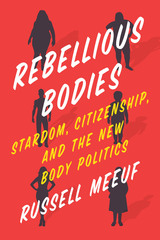
Celebrity culture today teems with stars who challenge long-held ideas about a “normal” body. Plus-size and older actresses are rebelling against the cultural obsession with slender bodies and youth. Physically disabled actors and actresses are moving beyond the stock roles and stereotypes that once constrained their opportunities. Stars of various races and ethnicities are crafting new narratives about cultural belonging, while transgender performers are challenging our culture’s assumptions about gender and identity. But do these new players in contemporary entertainment media truly signal a new acceptance of body diversity in popular culture?
Focusing on six key examples—Melissa McCarthy, Gabourey Sidibe, Peter Dinklage, Danny Trejo, Betty White, and Laverne Cox—Rebellious Bodies examines the new body politics of stardom, situating each star against a prominent cultural anxiety about bodies and inclusion, evoking issues ranging from the obesity epidemic and the rise of postracial rhetoric to disability rights, Latino/a immigration, an aging population, and transgender activism. Using a wide variety of sources featuring these celebrities—films, TV shows, entertainment journalism, and more—to analyze each one’s media persona, Russell Meeuf demonstrates that while these stars are promoted as examples of a supposedly more inclusive industry, the reality is far more complex. Revealing how their bodies have become sites for negotiating the still-contested boundaries of cultural citizenship, he uncovers the stark limitations of inclusion in a deeply unequal world.
Section One, "Gender, Citizenship, and Collectivity," includes Nancy Frazer and Linda Gordon's critique of dependency and citizenship; Iris Young on women as a social collective; Ruth Bloch on the feminization of public virtue in revolutionary America; Trisha Franzen on feminism and lesbian community, and Sonia Kruks on de Beauvoir and contemporary feminism.
"Collective Action and Women's Resistance," Section Two, features Louis Tilly's "Paths of Proletarianization"; Temma Kaplan's "Female Consciousness and Collective Action"; and five assessments of women's collective action worldwide: Samira Haj on Palestine, Arlene McLeod on Egypt, Gay Seidman on South Africa, Nancy Sternbach et al. on Latin America, and Anne Walthall on Japan.
Concluding with a section on gender and the state, Rethinking the Political also features Bronwyn Winter on the law and cultural relativism; Sherene Razack on sexual violence; Wendy Luttrell on educational institutions; Patricia Stamp on ethnic conflict in postcolonial Kenya; Elizabeth Schmidt on patriarchy and capitalism in Zimbabwe; and Muriel Nazzari on the "woman question" in post-revolutionary Cuba.

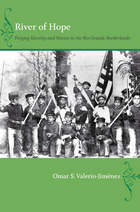
Diverse influences transformed the borderlands as Spain, Mexico, and the United States competed for control of the region. Indian slaves joined Spanish society; Mexicans allied with Indians to defend river communities; Anglo Americans and Mexicans intermarried and collaborated; and women sued to confront spousal abuse and to secure divorces. Drawn into multiple conflicts along the border, Mexican nationals and Mexican Texans (tejanos) took advantage of their transnational social relations and ambiguous citizenship to escape criminal prosecution, secure political refuge, and obtain economic opportunities. To confront the racialization of their cultural practices and their increasing criminalization, tejanos claimed citizenship rights within the United States and, in the process, created a new identity.
Published in cooperation with the William P. Clements Center for Southwest Studies, Southern Methodist University.
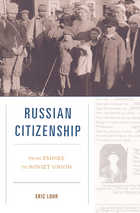
Russian Citizenship is the first book to trace the Russian state’s citizenship policy throughout its history. Focusing on the period from the mid-nineteenth century to the consolidation of Stalin’s power in the 1930s, Eric Lohr considers whom the state counted among its citizens and whom it took pains to exclude. His research reveals that the Russian attitude toward citizenship was less xenophobic and isolationist and more similar to European attitudes than has been previously thought—until the drive toward autarky after 1914 eventually sealed the state off and set it apart.
Drawing on untapped sources in the Russian police and foreign affairs archives, Lohr’s research is grounded in case studies of immigration, emigration, naturalization, and loss of citizenship among individuals and groups, including Jews, Muslims, Germans, and other minority populations. Lohr explores how reform of citizenship laws in the 1860s encouraged foreigners to immigrate and conduct business in Russia. For the next half century, citizenship policy was driven by attempts to modernize Russia through intensifying its interaction with the outside world. But growing suspicion toward non-Russian minorities, particularly Jews, led to a reversal of this openness during the First World War and to a Soviet regime that deprived whole categories of inhabitants of their citizenship rights.
Lohr sees these Soviet policies as dramatically divergent from longstanding Russian traditions and suggests that in order to understand the citizenship dilemmas Russia faces today—including how to manage an influx of Chinese laborers in Siberia—we must return to pre-Stalin history.
READERS
Browse our collection.
PUBLISHERS
See BiblioVault's publisher services.
STUDENT SERVICES
Files for college accessibility offices.
RECENTLY PUBLISHED





UChicago Accessibility Resources
home | accessibility | search | about | contact us
BiblioVault ® 2001 - 2025
The University of Chicago Press