
 A SCHOLARLY BOOK REPOSITORY
9 start with R start with R
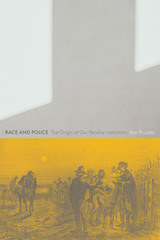
Race and Police corrects the Eurocentrism in the orthodox history of American police and in predominating critical theories of police. That orthodoxy rests on an origin story that begins with Sir Robert Peel and the London Metropolitan Police Service. Predating the Met by more than a century, America’s first police, often called slave patrols, did more than maintain order—it fabricated a racial order. Prior to their creation, all white citizens were conscripted to police all Blacks. Their participation in the coercive control of Blacks gave definition to their whiteness. Targeted as threats to the security of the economy and white society, being policed defined Blacks who, for the first time, were treated as a single racial group. The boundaries of whiteness were first established on the basis of who was required to regulate slaves, given a specific mandate to prevent Black insurrection, a mandate that remains core to the police role to this day.
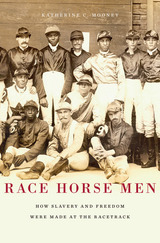
Race Horse Men recaptures the vivid sights, sensations, and illusions of nineteenth-century thoroughbred racing, America’s first mass spectator sport. Inviting readers into the pageantry of the racetrack, Katherine C. Mooney conveys the sport’s inherent drama while also revealing the significant intersections between horse racing and another quintessential institution of the antebellum South: slavery.
A popular pastime across American society, horse racing was most closely identified with an elite class of southern owners who bred horses and bet large sums of money on these spirited animals. The central characters in this story are not privileged whites, however, but the black jockeys, grooms, and horse trainers who sometimes called themselves race horse men and who made the racetrack run. Mooney describes a world of patriarchal privilege and social prestige where blacks as well as whites could achieve status and recognition and where favored slaves endured an unusual form of bondage. For wealthy white men, the racetrack illustrated their cherished visions of a harmonious, modern society based on human slavery.
After emancipation, a number of black horsemen went on to become sports celebrities, their success a potential threat to white supremacy and a source of pride for African Americans. The rise of Jim Crow in the early twentieth century drove many horsemen from their jobs, with devastating consequences for them and their families. Mooney illuminates the role these too often forgotten men played in Americans’ continuing struggle to define the meaning of freedom.

Rethinking the history of African enslavement in the western Indian Ocean through the lens of Iranian cinema
From the East African and Red Sea coasts to the Persian Gulf ports of Bushihr, Kish, and Hurmuz, sailing and caravan networks supplied Iran and the surrounding regions with African slave labor from antiquity to the nineteenth century. This book reveals how Iranian cinema preserves the legacy of this vast and yet long-overlooked history that has come to be known as Indian Ocean slavery.
How does a focus on blackness complicate traditional understandings of history and culture? Parisa Vaziri addresses this question by looking at residues of the Indian Ocean slave trade in Iranian films from the second half of the twentieth century. Revealing the politicized clash between commercial cinema (fīlmfārsī) and alternative filmmaking (the Iranian New Wave), she pays particular attention to the healing ritual zār, which is both an African slave descendent practice and a constitutive element of Iranian culture, as well as to cinematic sīyāh bāzī (Persian black play). Moving beyond other studies on Indian Ocean and trans-Saharan slavery, Vaziri highlights the crystallization of a singular mode of historicity within these cinematic examples—one of “absence” that reflects the relative dearth of archival information on the facts surrounding Indian Ocean slavery.
Bringing together cinema studies, Middle East studies, Black studies, and postcolonial theory, Racial Blackness and Indian Ocean Slavery explores African enslavement in the Indian Ocean through the revelatory and little-known history of Iranian cinema. It shows that Iranian film reveals a resistance to facticity representative of the history of African enslavement in the Indian Ocean and preserves the legacy of African slavery’s longue durée in ways that resist its overpowering erasure in the popular and historical imagination.
Retail e-book files for this title are screen-reader friendly with images accompanied by short alt text and/or extended descriptions.

Winner of the Merle Curti Award
Winner of the James A. Rawley Prize
Winner of the Louis Gottschalk Prize
Longlisted for the Cundill Prize
“Vincent Brown makes the dead talk. With his deep learning and powerful historical imagination, he calls upon the departed to explain the living. The Reaper’s Garden stretches the historical canvas and forces readers to think afresh. It is a major contribution to the history of Atlantic slavery.”—Ira Berlin
From the author of Tacky’s Revolt, a landmark study of life and death in colonial Jamaica at the zenith of the British slave empire.
What did people make of death in the world of Atlantic slavery? In The Reaper’s Garden, Vincent Brown asks this question about Jamaica, the staggeringly profitable hub of the British Empire in America—and a human catastrophe. Popularly known as the grave of the Europeans, it was just as deadly for Africans and their descendants. Yet among the survivors, the dead remained both a vital presence and a social force.
In this compelling and evocative story of a world in flux, Brown shows that death was as generative as it was destructive. From the eighteenth-century zenith of British colonial slavery to its demise in the 1830s, the Grim Reaper cultivated essential aspects of social life in Jamaica—belonging and status, dreams for the future, and commemorations of the past. Surveying a haunted landscape, Brown unfolds the letters of anxious colonists; listens in on wakes, eulogies, and solemn incantations; peers into crypts and coffins, and finds the very spirit of human struggle in slavery. Masters and enslaved, fortune seekers and spiritual healers, rebels and rulers, all summoned the dead to further their desires and ambitions. In this turbulent transatlantic world, Brown argues, “mortuary politics” played a consequential role in determining the course of history.
Insightful and powerfully affecting, The Reaper’s Garden promises to enrich our understanding of the ways that death shaped political life in the world of Atlantic slavery and beyond.
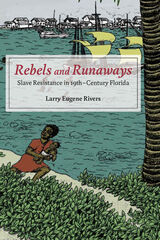
Against a smoldering backdrop of violence, this study analyzes the various degrees of slave resistance--from the perspectives of both slave and master--and how they differed in various regions of antebellum Florida. In particular, Rivers demonstrates how the Atlantic world view of some enslaved blacks successfully aided their escape to freedom, a path that did not always lead North but sometimes farther South to the Bahama Islands and Caribbean. Identifying more commonly known slave rebellions such as the Stono, Louisiana, Denmark (Telemaque) Vesey, Gabriel, and the Nat Turner insurrections, Rivers argues persuasively that the size, scope, and intensity of black resistance in the Second Seminole War makes it the largest sustained slave insurrection ever to occur in American history.
Meticulously researched, Rebels and Runaways offers a detailed account of resistance, protest, and violence as enslaved blacks fought for freedom.
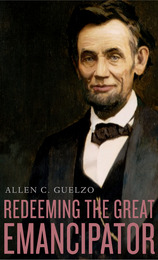
The larger-than-life image Abraham Lincoln projects across the screen of American history owes much to his role as the Great Emancipator during the Civil War. Yet this noble aspect of Lincoln’s identity is precisely the dimension that some historians have cast into doubt. In a vigorous defense of America’s sixteenth president, award-winning historian and Lincoln scholar Allen Guelzo refutes accusations of Lincoln’s racism and political opportunism, while candidly probing the follies of contemporary cynicism and the constraints of today’s unexamined faith in the liberating powers of individual autonomy.
Redeeming the Great Emancipator enumerates Lincoln’s anti-slavery credentials, showing that a deeply held belief in the God-given rights of all people steeled the president in his commitment to emancipation and his hope for racial reconciliation. Emancipation did not achieve complete freedom for American slaves, nor was Lincoln entirely above some of the racial prejudices of his time. Nevertheless, his conscience and moral convictions far outweighed political calculations in ultimately securing freedom for black Americans.
Guelzo clarifies the historical record concerning what the Emancipation Proclamation did and did not accomplish. As a policy it was imperfect, but it was far from ineffectual, as some accounts of African American self-emancipation imply. To achieve liberation required interdependence across barriers of race and status. If we fail to recognize our debt to the sacrifices and ingenuity of all the brave men and women of the past, Guelzo says, then we deny a precious part of the American and, indeed, the human community.
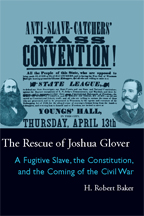
On March 11, 1854, the people of Wisconsin prevented agents of the federal government from carrying away the fugitive slave, Joshua Glover. Assembling in mass outside the Milwaukee courthouse, they demanded that the federal officers respect his civil liberties as they would those of any other citizen of the state. When the officers refused, the crowd took matters into its own hands and rescued Joshua Glover. The federal government brought his rescuers to trial, but the Wisconsin Supreme Court intervened and took the bold step of ruling the Fugitive Slave Act unconstitutional.
The Rescue of Joshua Glover delves into the courtroom trials, political battles, and cultural equivocation precipitated by Joshua Glover’s brief, but enormously important, appearance in Wisconsin on the eve of the Civil War.
H. Robert Baker articulates the many ways in which this case evoked powerful emotions in antebellum America, just as the stage adaptation of Uncle Tom’s Cabin was touring the country and stirring antislavery sentiments. Terribly conflicted about race, Americans struggled mightily with a revolutionary heritage that sanctified liberty but also brooked compromise with slavery. Nevertheless, as The Rescue of Joshua Glover demonstrates, they maintained the principle that the people themselves were the last defenders of constitutional liberty, even as Glover’s rescue raised troubling questions about citizenship and the place of free blacks in America.
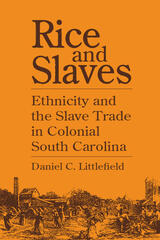
Winner of the SHEAR Book Prize
Honorable Mention, Avery O. Craven Award
“Few books have captured the lived experience of slavery as powerfully.”
—Ari Kelman, Times Literary Supplement
“[One] of the most impressive works of American history in many years.”
—The Nation
“An important, arguably seminal, book…Always trenchant and learned.”
—Wall Street Journal
A landmark history, by the author of National Book Critics Circle Award finalist The Broken Heart of America, that shows how slavery fueled Southern capitalism.
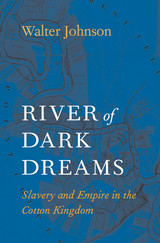
When Jefferson acquired the Louisiana Territory, he envisioned an “empire for liberty” populated by self-sufficient white farmers. Cleared of Native Americans and the remnants of European empires by Andrew Jackson, the Mississippi Valley was transformed instead into a booming capitalist economy commanded by wealthy planters, powered by steam engines, and dependent on the coerced labor of slaves. River of Dark Dreams places the Cotton Kingdom at the center of worldwide webs of exchange and exploitation that extended across oceans and drove an insatiable hunger for new lands. This bold reconsideration dramatically alters our understanding of American slavery and its role in U.S. expansionism, global capitalism, and the upcoming Civil War.
Walter Johnson deftly traces the connections between the planters’ pro-slavery ideology, Atlantic commodity markets, and Southern schemes for global ascendency. Using slave narratives, popular literature, legal records, and personal correspondence, he recreates the harrowing details of daily life under cotton’s dark dominion. We meet the confidence men and gamblers who made the Valley shimmer with promise, the slave dealers, steamboat captains, and merchants who supplied the markets, the planters who wrung their civilization out of the minds and bodies of their human property, and the true believers who threatened the Union by trying to expand the Cotton Kingdom on a global scale.
But at the center of the story are the enslaved people who pulled down the forests, planted the fields, picked the cotton—who labored, suffered, and resisted on the dark underside of the American dream.
“Shows how the Cotton Kingdom of the 19th-century Deep South, far from being a backward outpost of feudalism, was a dynamic engine of capitalist expansion built on enslaved labor.”
—A. O. Scott, New York Times
“River of Dark Dreams delivers spectacularly on the long-standing mission to write ‘history from the bottom up.’”
—Maya Jasanoff, New York Review of Books
READERS
Browse our collection.
PUBLISHERS
See BiblioVault's publisher services.
STUDENT SERVICES
Files for college accessibility offices.
RECENTLY PUBLISHED


UChicago Accessibility Resources
home | accessibility | search | about | contact us
BiblioVault ® 2001 - 2026
The University of Chicago Press