
 A SCHOLARLY BOOK REPOSITORY
14 start with R start with R


"Skilfully chosen and edited by Stephanie Dickey, these papers were presented at the highly successful conferences on Rembrandt and his pupils held at Herstmonceaux Castle in recent years. This is cutting-edge Rembrandt scholarship full of valuable insights and new discoveries." -- Christopher Brown, Professor of Netherlandish Art, University of Oxford
"[This book] contains a wealth of fresh and lucidly argued insights, not only into Rembrandt's art, thinking and practice: notably, a significant place is reserved for such artists as Jan Lievens, Ferdinand Bol, Gerrit Dou, Johannes van Vliet and, unexpectedly, Frans Hals. In these thoughtful reflections on the artist and his milieu, the reader will find many generally accepted notions critically revised." - Eric Jan Sluijter, emeritus professor of Art History at the University of Amsterdam
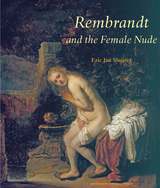
Rembrandt’s extraordinary paintings of female nudes—Andromeda,Susanna, Diana and her Nymphs, Danaë, Bathsheba—as well as his etchings of nude women, have fascinated many generations of art lovers and art historians. But they also elicited vehement criticism when first shown, described as against-the-grain, anticlassical—even ugly and unpleasant. However, Rembrandt chose conventional subjects, kept close to time-honored pictorial schemes, and was well aware of the high prestige accorded to the depiction of the naked female body. Why, then, do these works deviate so radically from the depictions of nude women by other artists? To answer this question Eric Jan Sluijter, in Rembrandt and the Female Nude, examines Rembrandt’s paintings and etchings against the background of established pictorial traditions in the Netherlands and Italy. Exploring Rembrandt’s intense dialogue with the works of predecessors and peers, Sluijter demonstrates that, more than any other artist, Rembrandt set out to incite the greatest possible empathy in the viewer, an approach that had far-reaching consequences for the moral and erotic implications of the subjects Rembrandt chose to depict.
In this richly illustrated study, Sluijter presents an innovative approach to Rembrandt’s views on the art of painting, his attitude towards antiquity and Italian art of the Renaissance, his sustained rivalry with the works of other artists, his handling of the moral and erotic issues inherent in subjects with female nudes, and the nature of his artistic choices.

This book is the first study in depth of the potent bond between Rembrandt and Jews, from his time to ours, a bond that has penetrated the image of the artist and the people alike.

Available for the first time in an English translation, this selection of René Magritte’s writings gives non-Francophone readers the chance to encounter the many incarnations of the renowned Belgian painter—the artist, the man, the aspiring noirist, the fire-breathing theorist—in his own words. Through whimsical personal letters, biting apologia, appreciations of fellow artists, pugnacious interviews, farcical film scripts, prose poems, manifestos, and much more, a new Magritte emerges: part Surrealist, part literalist, part celebrity, part rascal.While this book is sure to appeal to admirers of Magritte’s art and those who are curious about his personal life, there is also much to delight readers interested in the history and theory of art, philosophy and politics, as well as lovers of creativity and the inner workings of a probing, inquisitive mind unrestricted by genre, medium, or fashion.

The intertwining story of a noted anti-Nazi artist and the former rabbi who revived his reputation.
During World War II, the Polish-Jewish immigrant Arthur Szyk became America’s leading anti-Nazi artist. His art was so effective that Adolf Hitler reportedly put a bounty on his head while the US military declared him a “citizen-soldier” of the free world. Szyk steadfastly fought for the rescue of European Jewry during the Holocaust, creating artworks like De Profundis, which imagines Jesus sharing the suffering of countless lifeless Jews. His civil rights art challenged segregation and his illuminated Declaration of Independence resides in the Library of Congress. Szyk’s masterwork, an illustrated Passover Haggadah, is considered by many to be one of the most beautiful books ever produced by human hands.
Once world-famous, Arthur Szyk was all but forgotten after his death in 1951. Reviving the Artist Who Fought Hitler recounts Irvin Ungar's decades-long journey to restore Szyk to public consciousness, and become the principal collector, dealer, scholar, and promoter of Szyk’s art in the United States, Europe, and Israel. Richly illustrated and full of forgotten history, this memoir is an inspiring story of artistic passion and an invitation to commune with a heroic advocate for all humanity.
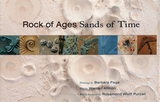
These are just a few scenes from the magnificent drama that unfolds in glorious full color and three-dimensional texture in Rock of Ages, Sands of Time. Each of Barbara Page's 544 contiguous painted panels represents a million years of the history of life on earth, with fossil plants and animals depicted at the same scale and in association with each other just as they might be found by a paleontologist in the field. A muted rainbow of background colors evoke the rocks in which the fossils were found—the Texas Red Beds, for instance, or the yellow Solnhofen limestone—and keystone events are shown metaphorically, with fat rolls of paint marking major extinctions or continental drift.
To fully experience the awesome impact of an eon's worth of time spread across 500 feet of bas-relief panels, you'd have to visit the Museum of the Earth in Ithaca, New York, where Page's specially commissioned work will be installed when the museum opens in 2002. But this book is the next best thing. Not only does it contain crisp color reproductions of each painting, but it also includes an accessible essay from paleontologist Warren Allmon giving the scientific context behind the art.
For fossil lovers of all ages, and anyone interested in the merging of art and science, Rock of Ages, Sands of Time will be the find of a lifetime.

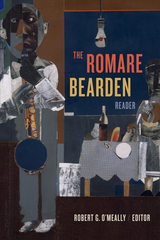
Contributors. Elizabeth Alexander, Romare Bearden, Mary Lee Corlett, Rachel DeLue, David C. Driskell, Brent Hayes Edwards, Ralph Ellison, Henri Ghent, Farah Jasmine Griffin, Harry Henderson, Kobena Mercer, Toni Morrison, Albert Murray, Robert G. O’Meally, Richard Powell, Richard Price, Sally Price, Myron Schwartzman, Robert Burns Stepto, Calvin Tomkins, John Edgar Wideman, August Wilson
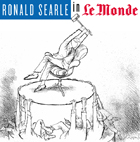
Since 1995, Searle has plied his sardonic trade on the coveted op-ed pages of the French daily newspaper Le Monde. This book presents more than a hundred of the best of these cartoons, ranging across politics, the new Europe, the nature of the contemporary economy, social games, and various "angels," both benign and mischievous. Whether skewering the greed of the rich with images of men in suits padding each other's pockets with cash or conducting business under the table, or making a poignant comment about how much harder peace has to work than war to stay in the same place, Searle displays the same pungent, incisive, yet infinitely humane wit. The deceptive simplicity of his lines and shadings combine with meticulously observed details of dress, background, and facial expression to produce arresting images that convey his messages powerfully and beautifully.
By turns delightful, amusing, and disturbing, but always deeply thought provoking, Searle's work reaches well beyond the specific occasion that inspired a given cartoon to illuminate key aspects of public life in the West at the end of the millennium. This book contains twenty-five illustrations not found in the French edition, together with a new preface for English-speaking readers written by Searle himself.
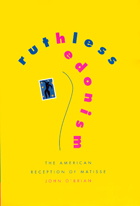
In this ambitious study, John O'Brian argues that Matisse's sober presentations of himself were calculated to fit with the social constraints and ideological demands of the times. Matisse's strategy included cooperating with museums, cultivating private collectors, playing off dealers one against another, and reassuring the media that, whatever his reputation as an avant-gardist, the conduct of his life was solidly bourgeois.
Moving from the late 1920s, when Matisse's output was shedding its outlaw reputation, to the early 1950s, when his work was canonized, O'Brian shows how the way Matisse's work was viewed changed as attention shifted away from the seductiveness of his subject matter to the seductiveness of his paint. The art's resolute rejection of political concerns, its deployment of decorative design for visual satisfaction, and its representations of pleasure encouraged American audiences, who in the 1930s deemed the art disreputable, to celebrate its gratifications by the early years of the Cold War.
This intriguing, wide-ranging investigation of Matisse's self-promotion, America's uneasy embrace of modernism, and America's consumer culture and politics provides a rich context to Clement Greenberg's words published in the Nation in 1947: "Matisse's cold hedonism and ruthless exclusion of everything but the concrete, immediate sensation will in the future, once we are away from the present Zeitgeist, be better understood as the most profound mood of the first half of the twentieth century."
READERS
Browse our collection.
PUBLISHERS
See BiblioVault's publisher services.
STUDENT SERVICES
Files for college accessibility offices.
RECENTLY PUBLISHED




UChicago Accessibility Resources
home | accessibility | search | about | contact us
BiblioVault ® 2001 - 2025
The University of Chicago Press