
 A SCHOLARLY BOOK REPOSITORY
17 start with R start with R
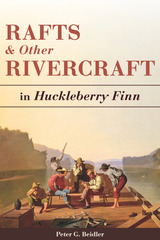
Huck and Jim’s little raft is not made of logs, as it is often depicted in illustrations, but of sawn planks, and it was originally part of a much larger raft. Beidler explains why this matters and describes the other rivercraft that appear in the book. He gives what will almost certainly be the last word on the vexed question of whether the lengthy “raft episode,” removed at the publisher’s suggestion from the novel, should be restored to its original place.
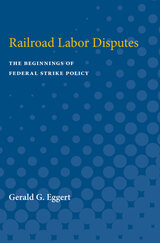

Out of the tradition of those long-gone days of great, heaving steam locomotives and endless rail lines comes this remarkable selection of vintage cards, a treasure trove selected from John Vander Maas' consummate collection at the University of Iowa Libraries.
This lavish volume is the first general book-length work devoted to the once-ubiquitous railroad picture postcard. It comprises an introductory essay and an album of cards. The former fully examines the nature of the postcard craze, which reached its zenith about 1910, and discusses why images of American railroads played such an important part in the card phenomenon. The album divides an engaging assortment of more than 150 representative views into five sections: “Trains and Rolling Stock,” “Depots and Railway Structures,” “The Railroad Corridor,” “People and Railroads,” and “The Lighter Side of Railroading.”
Railroad historians, train enthusiasts, postcard collectors, and all other readers will find much to interest them in this selection of images. Not only are the cards themselves visually striking, but they convey a sense of how important railroads once were to the nation's citizenry. The sight of steaming locomotives and the hustle and bustle associated with “train time” caused hearts to quicken. These feelings made views of railroad scenes popular with buyers of postcards and now with latter-day railroad fans and card collectors.
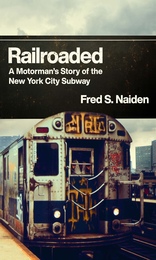
“A fascinating insider’s view of a vital and dangerous profession.” —The Wall Street Journal
“An instant classic of labor and transportation history.” —Library Journal, starred review
The New York City subway system is one of the largest and oldest in the world, still carrying traces of the transport systems that came before it. Some of its elevated tracks are remnants of steam railroads, and some tunnels run where canoes served as ferries. For passengers, riding the subway can feel like stepping into another world, dark and dank and sometimes dangerous. Now just imagine what it’s like to work there every day.
One of the few subway workers who went on to earn a PhD from Harvard, historian Fred Naiden gives readers a firsthand look at what it was like to work as a subway porter, a motorman, and a locomotive engineer during the 1980s. He recounts the labor activism of his fellow MTA employees, who advocated for better conditions, higher pay, and less institutional racism. He also shares wild stories about the riders he encountered, from a homeless former realtor who worked as a mob frontman to an angry passenger who pulled a gun on him while the train was stuck at a stop signal. Above all, Railroaded will answer many questions about the New York subway system, including how it could be improved.
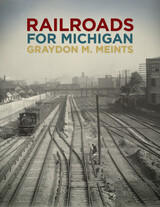
Historians of midwestern railroading during the early part of the twentieth century have generally focused on the production of railroad company histories while ignoring the regional view. Fortunately for railway historians and buffs, coincidentally with the zenith of the Railway Age, the national fad for producing and mailing postcards was at its height. Millions of cards, including "real-photo" images, were produced between 1905 and 1915. Roger Grant has selected more than a hundred representative picture postcards to visualize the principal themes and characteristics that gave this dynamic industry its distinctive regional features.
By the turn of the century, the railroad map of the Midwest was unequaled. Anyone who examined it carefully sensed that this was the vital center of America's massive network of steel rails. Depots erected in the western prairie environment were spartan, with only minor decoration, but those in the Midwest usually mirrored more ornate New England styles. These features are often reflected in the images in this heavily illustrated book, which depicts the spare but strong pioneering spirit of the enterprise.
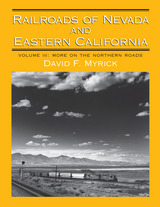
The final volume in the complete history of Nevada and Eastern California railroads David Myrick's monumental railroad histories have become essential reference works for railroaders, historians, and hobbyists. Volume III contains additional information about the northern roads, including some not covered in previous volumes, and about developments since the publication of the first two volumes in the railroads of the region. It provides new facts gleaned from the correspondence of Collis P. Huntington, one of the builders of the Central Pacific and Southern Pacific railroads. It also covers roads connected with the lumber industry and the construction of electric power plants, and Southern Pacific branch lines, including some that never advanced beyond surveys.
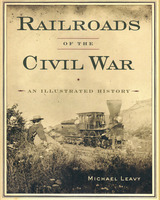
The Photographic Record of the First Wide-Scale Mechanization of War
Over the course of the first half of the nineteenth century, America would find itself following two increasingly divergent tracks: an industrialized North and an agricultural South. By 1860 railroads were firmly entrenched in our culture, reshaping our cities and steering us through the industrial age towards worldwide prominence. From sleepy post towns to the largest east coast cities, the distant hooting of the locomotive whistle drew ever closer and louder, filling listeners with fascination while brightening the eyes of profit-driven industrialists. But this admirable invention, lavishly adorned in brass and iron trimmings, was about to take on a new and deadly role. America’s regional differences would result in a spectacular collision over slavery, and between 1861–1865, the nation fought a savage war. The “iron horse” became a major weapon in the first war fully dependent on railroads. Moreover railroads would escalate and prolong the war, leading to its terrible carnage. Trains were used to move troops rapidly and over great distances, completely changing military strategy. Trains were also used as mobile artillery, armed with large-caliber cannons that could pound cities and fortifications. Trains were a crucial means for supplying the armies on both sides, and it was the severing of the railway lines providing food and munitions to the Army of Northern Virginia that led to Robert E. Lee’s surrender at Appomattox Court House.
In Railroads of the Civil War: An Illustrated History, Michael Leavy uses compelling period photographs and drawings and a rich narrative to reevaluate and illuminate the role of railroads in the Civil War. In addition to identifying details about the various trains and ancillary equipment and buildings in the illustrations, the author explains how trains influenced the outcome of battles and the war in general.
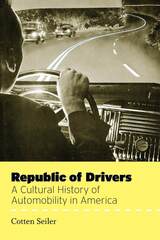
Cotten Seiler combs through a vast number of historical, social scientific, philosophical, and literary sources to illustrate the importance of driving to modern American conceptions of the self and the social and political order. He finds that as the figure of the driver blurred into the figure of the citizen, automobility became a powerful resource for women, African Americans, and others seeking entry into the public sphere. And yet, he argues, the individualistic but anonymous act of driving has also monopolized our thinking about freedom and democracy, discouraging the crafting of a more sustainable way of life. As our fantasies of the open road turn into fears of a looming energy crisis, Seiler shows us just how we ended up a republic of drivers—and where we might be headed.
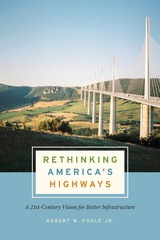
In Rethinking America’s Highways, Poole examines how our current model of state-owned highways came about and why it is failing to satisfy its customers. He argues for a new model that treats highways themselves as public utilities—like electricity, telephones, and water supply. If highways were provided commercially, Poole argues, people would pay for highways based on how much they used, and the companies would issue revenue bonds to invest in facilities people were willing to pay for. Arguing for highway investments to be motivated by economic rather than political factors, this book makes a carefully-reasoned and well-documented case for a new approach to highways that is sure to inform future decisions and policies for U.S. infrastructure.
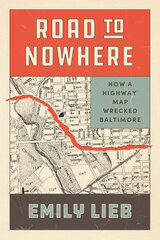
In the mid-1950s Baltimore’s Rosemont neighborhood was alive and vibrant with smart rowhouses, a sprawling park, corner grocery stores, and doctor’s offices. By 1957, a proposed expressway threatened to gut this Black, middle-class community from stem to stern.
That highway was never built, but it didn’t matter—even the failure to build it destroyed Rosemont economically, if not physically. In telling the history of the neighborhood and the notional East–West Expressway, Emily Lieb shows the interwoven tragedies caused by racism in education, housing, and transportation policy. Black families had been attracted to the neighborhood after Baltimore’s Board of School Commissioners converted several white schools into “colored” ones, which had also laid the groundwork for predatory real-estate agents who bought low from white sellers and sold high to determined Black buyers. Despite financial discrimination, Black homeowners built a thriving community before the city council formally voted to condemn some nine hundred homes in Rosemont for the expressway, leading to deflated home values and even more predatory real estate deals.
Drawing on land records, oral history, media coverage, and policy documents, Lieb demystifies blockbusting, redlining, and prejudicial lending, highlighting the national patterns at work in a single neighborhood. The result is an absorbing story about the deliberate decisions that produced racial inequalities in housing, jobs, health, and wealth—as well as a testament to the ingenuity of the residents who fought to stay in their homes, down to today.
'As a movement for social change it is important that we understand our own history. This is a compelling read.'
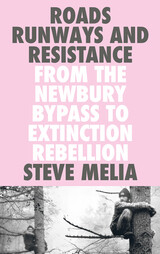
From the anti-roads protests of the 1990s to HS2 and Extinction Rebellion, conflict and protest have shaped the politics of transport. In 1989, Margaret Thatcher's government announced 'the biggest road-building programme since the Romans.' This is the inside story of the thirty tumultuous years that have followed.
Roads, Runways and Resistance draws on over 50 interviews with government ministers, advisors and protestors - many of whom, including 'Swampy', speak here for the first time about the events they describe. It is a story of transport ministers undermined by their own Prime Ministers, protestors attacked or quietly supported by the police, and smartly-dressed protestors who found a way onto the roof of the Houses of Parliament.
Today, as a new wave of road building and airport expansion threatens to bust Britain's carbon budgets, climate change protestors find themselves on a collision course with the government. Melia asks, what difference did the protests of the past make? And what impacts might today's protest movements have on the transport of the future?
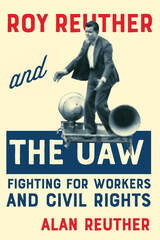
Many of the injustices that Reuther fought continue to plague America today. This book provides important context for the current efforts of workers to organize, for the Black Lives Matter movement, and for efforts to reform the filibuster rule and stop voter suppression. It shows how dedicated individuals can overcome enormous odds to win great victories for social justice and emphasizes the potential connections between the labor and civil rights movements, offering hope for a more just future.
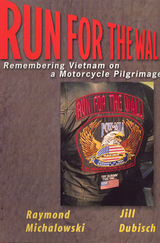
Every May, for more than a decade, an ever-increasing number of motorcyclists have made the “Run for the Wall,” a cross-country journey from Southern California to the “Wall,” the Vietnam war memorial in Washington, D.C. While the journey’s avowed purpose is political — to increase public awareness about those who remain either prisoners of war or missing in action in Southeast Asia — it also serves as a healing pilgrimage for its participants and as a “welcome-home” ritual many veterans feel they never received.
Run for the Wall is a highly readable ethnographic account of this remarkable American ritual. The authors, themselves motorcyclists as well as Run participants, demonstrate that the event is a form of secular pilgrimage. Here key concepts in American culture— “freedom,” and “brotherhood,” for example—are constructed and deployed in a variety of rituals and symbols to enable participants to come to terms with the consequences of the Vietnam war. While the focus is the journey itself, the book also explores other themes related to American culture and history, including the nature of community, the Vietnam war, and the creation of American secular ritual.
In moving, first-hand accounts, the book tells how participation in the POW-MIA social movement helps individuals find personal and collective meaning in America’s longest and most divisive conflict. Above all, this is a story of a uniquely American form of political action, ritual, pilgrimage, and the social construction of memory.
READERS
Browse our collection.
PUBLISHERS
See BiblioVault's publisher services.
STUDENT SERVICES
Files for college accessibility offices.
RECENTLY PUBLISHED




UChicago Accessibility Resources
home | accessibility | search | about | contact us
BiblioVault ® 2001 - 2026
The University of Chicago Press