
 A SCHOLARLY BOOK REPOSITORY
22 start with R start with R
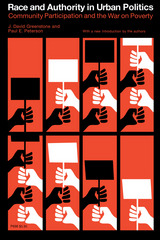
In a series of lively chapters, Greenstone and Peterson show how the coalitions that formed around the community action question developed not out of electoral or organizational interests alone but were strongly influenced by prevailing conceptions of the nature of authority in America. The book stresses the way in which both machine and reform structures affected the ability of minority groups to organize effectively and to form alliances in urban politics. It considers the wide-ranging critiques made of the Community Action Program by conservative, liberal, and radical analysts and finds that all of them fail to appreciate the significance and intensity of the racial cleavage in American politics.
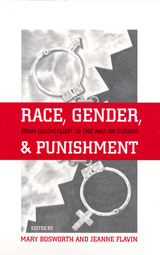
In Race, Gender, and Punishment, Mary Bosworth and Jeanne Flavin bring together twelve original essays by prominent scholars to examine not only the discrimination that is evident, but also the structural and cultural forces that have influenced and continue to perpetuate the current situation. Contributors point to four major factors that have impacted public sentiment and criminal justice policy: colonialism, slavery, immigration, and globalization. In doing so they reveal how practices of punishment not only need particular ideas about race to exist, but they also legitimate them.
The essays unearth troubling evidence that testifies to the nation's brutally racist past, and to white Americans' continued fear of and suspicion about racial and ethnic minorities. The legacy of slavery on punishment is considered, but also subjects that have received far less attention such as how colonizers' notions of cultural superiority shaped penal practices, the criminalization of reproductive rights, the link between citizenship and punishment, and the global export of crime control strategies.
Uncomfortable but necessary reading, this book provides an original critique of why and how the criminal justice system has emerged as such a racist institution.
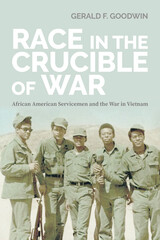
When African American servicemen went to fight in the Vietnam War, discrimination and prejudice followed them. Even in a faraway country, their military experiences were shaped by the racial environment of the home front. War is often viewed as a crucible that can transform society, but American race relations proved remarkably durable.
In Race in the Crucible of War, Gerald F. Goodwin examines how Black servicemen experienced and interpreted racial issues during their time in Vietnam. Drawing on more than fifty new oral interviews and significant archival research, as well as newspapers, periodicals, memoirs, and documentaries, Goodwin reveals that for many African Americans the front line and the home front were two sides of the same coin. Serving during the same period as the civil rights movement and the race riots in Chicago, Detroit, and dozens of other American cities, these men increasingly connected the racism that they encountered in the barracks and on the battlefields with the tensions and violence that were simmering back home.
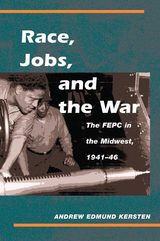
In this rigorous and thoroughly documented study focusing on the pivotal Midwest, Andrew E. Kersten shows how a tiny government agency--the President's Committee on Fair Employment Practice (FEPC)--influenced the course of civil rights reform, moving the United States closer to a national fair employment policy and laying the foundation for today's contested affirmative action practices.
Rejecting claims that black advancement during the war was due primarily to shortages of labor, Race, Jobs, and the War contends that the FEPC made significant strides in breaking racial barriers, settling complaints, and pursuing a vigorous educational campaign to foster more harmonious industrial relations between white and minority workers.
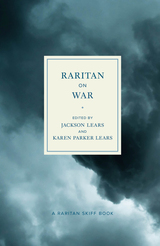
Raritan on War collects some of the finest writing on that troubling subject published in Raritan Quarterly between 2003 and 2022. The editors, Jackson Lears and Karen Parker Lears, have selected work that typifies Raritan's wide-ranging sensibility, focusing on a topic that is aesthetically rich, intellectually challenging, and morally disturbing. Ultimately, Raritan on War reveals the power of art and reflection to sustain humane ways of being in the world, even amid constant global violence.
Contributors: C. Felix Amerasinghe; Andrew J. Bacevich; Victoria De Grazia; Tamas Dobozy; David Ferry; M. Fortuna; Cai Guo-Qiang; Emma Dodge Hanson; Jochen Hellbeck; Karl Kirchwey; Ray Klimek; Peter LaBier; Patrick Lawrence; d. mark levitt; Michael Miller; Lyle Jeremy Rubin; Elizabeth D. Samet; Sherod Santos; Robert Westbrook
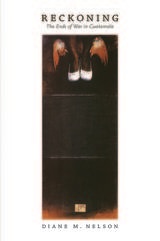
Nelson brings together stories of human rights activism, Mayan identity struggles, coerced participation in massacres, and popular entertainment—including traditional dances, horror films, and carnivals—with analyses of mass-grave exhumations, official apologies, and reparations. She discusses the stereotype of the Two-Faced Indian as colonial discourse revivified by anti-guerrilla counterinsurgency and by the claims of duplicity leveled against the Nobel laureate Rigoberta Menchú, and she explores how duplicity may in turn function as a survival strategy for some. Nelson examines suspicions that state power is also two-faced, from the left’s fears of a clandestine para-state behind the democratic façade, to the right’s conviction that NGOs threaten Guatemalan sovereignty. Her comparison of antimalaria and antisubversive campaigns suggests biopolitical ways that the state is two-faced, simultaneously giving and taking life. Reckoning is a view from the ground up of how Guatemalans are finding creative ways forward, turning ledger books, technoscience, and even gory horror movies into tools for making sense of violence, loss, and the future.
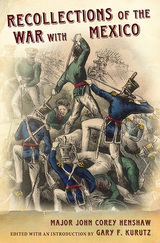
Major John Henshaw, a dutiful regimental officer in the American invasion of Mexico, was one of only a handful of eyewitnesses to describe the two major theaters of that war from start to finish. But unlike most of his peers, he did not see himself as a conquering warrior and took pride in never having taken a life. He even wrote, “If I were alone, no earthly power could induce me to lend a helping hand in this base and infamous war.”
This book presents Henshaw’s recollections for the first time, covering all the action from the first skirmish in southern Texas to the collapse of Mexico City. As a member of the Seventh Infantry Regiment, this pugnacious line officer from New England served under both of the war’s principal generals, Zachary Taylor and Winfield Scott, and survived seven major battles. His writings constitute a virtual “minority opinion” report on the Mexican War.
Henshaw’s recollections include a rare and highly descriptive account of the siege of Fort Texas (later Fort Brown), plus rich new details of the storming of the Bishop’s Palace at Monterrey, the bombardment of Veracruz, the assault on Cerro Gordo, and the savage fighting outside the capital. His records of battles, marches, and maneuvers greatly augment what is already known about the campaign, but in addition to reporting daily occurrences and describing combat in graphic detail, Henshaw also reflected on the strategies and tactics—and what he saw as shortcomings—of officers on both sides.
Bitingly critical of those in command, of American volunteers, and of the war’s glory hounds, Henshaw admired the valor of ordinary soldiers on both sides of the fighting. And in the midst of the carnage, he also found time to describe Mexico’s cities and scenery in rhapsodic prose and express considerable empathy for its people. In addition to the “Recollections,” the volume includes vivid passages from letters Henshaw sent back to his wife, which supply additional details of the campaign. Editor Gary Kurutz provides an extensive biography of Henshaw, as well as comprehensive annotations to the text.
What Henshaw may have lacked as an unquestioning officer he more than made up for as an astute observer. Offering a decidedly different view of this war of American expansion, these writings with their balanced approach lend a fresh perspective among other primary sources and paint a startlingly honest picture of both Americans fighting abroad and those they fought.
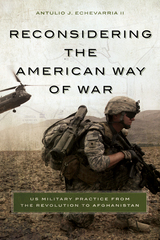
Challenging several longstanding notions about the American way of war, this book examines US strategic and operational practice from 1775 to 2014. It surveys all major US wars from the War of Independence to the campaigns in Iraq and Afghanistan, as well as most smaller US conflicts to determine what patterns, if any, existed in American uses of force. Contrary to many popular sentiments, Echevarria finds that the American way of war is not astrategic, apolitical, or defined by the use of overwhelming force. Instead, the American way of war was driven more by political considerations than military ones, and the amount of force employed was rarely overwhelming or decisive.
As a scholar of Clausewitz, Echevarria borrows explicitly from the Prussian to describe the American way of war not only as an extension of US policy by other means, but also the continuation of US politics by those means. The book’s focus on strategic and operational practice closes the gap between critiques of American strategic thinking and analyses of US campaigns. Echevarria discovers that most conceptions of American strategic culture fail to hold up to scrutiny, and that US operational practice has been closer to military science than to military art.
Providing a fresh look at how America’s leaders have used military force historically and what that may mean for the future, this book should be of interest to military practitioners and policymakers, students and scholars of military history and security studies, and general readers interested in military history and the future of military power.

There exists today a tragic rift between Americans and the world’s Muslims. Yet in the immediate aftermath of 9/11, there was widespread sympathy for the U.S. throughout the Muslim world. This book explores what happened. It examines the disconnect that leads Americans and Muslims to view the same words and images in fundamentally different ways. Partly a result of a centuries-old 'us' against 'them' dichotomy, the problem is exacerbated by an increasingly polarised media and by leaders on both sides who either don't understand or don't care what impact their words and policies have in the world at large.
Journalist-scholar Lawrence Pintak, a former CBS News Middle East correspondent, argues that the Arab media revolution and the rise of 'patriot-journalists' in the US marginalized voices of moderation, distorting perceptions on both sides of the divide with potentially disastrous results.
Built on the author's extensive journalistic experience, the book will appeal to policymakers, students of media studies, Middle East studies and Islamic studies, and general current affairs readers.
Hawley combines the theoretical insights of Judith Butler, Michel Foucault, and Emmanuel Levinas with detailed research into the history of the movement to recover the remains of soldiers missing in Vietnam. He examines the practices that constitute the Defense Department’s accounting protocol: the archival research, archaeological excavation, and forensic identification of recovered remains. He considers the role of the American public and the families of missing soldiers in demanding the release of pows and encouraging the recovery of the missing; the place of the body of the Vietnam veteran within the war’s legacy; and the ways that memorials link individual bodies to the body politic. Highlighting the contradictions inherent in the recovery effort, Hawley reflects on the ethical implications of the massive endeavor of the American government and many officials in Vietnam to account for the remains of American soldiers.
In Resurgency, Kali Rubaii offers detailed ethnographic insight into how decades of war have affected everyday life in Iraq. Drawing on fieldwork in Anbar province and Iraqi Kurdistan in 2014–15 and 2021–24, Rubaii foregrounds the practices of displaced people who stubbornly outlast their occupiers, returning to homes that feel estranging, repairing war-damaged land, and surviving into futures to which they have been disinvited. Following Anbari farmers in their struggle to counter the social and environmental fallout from toxic military waste, depleted ecosystems, and transformed political economies, Resurgency expands the temporal and descriptive categories of what war is—and what resistance looks like. By asking what actions and dispositions make sense when conditions of survival are diminished, and when today may be better than tomorrow, Rubaii offers new methods and insights to those concerned about the possibilities of life amid environmental devastation, mass displacement, and the slow violence of the forever wars.


The Yugoslav crisis, with its armed conflict, ethnic cleansing and the reverberating ideas and mindsets, has been going on for more than ten years. The Road to War in Serbia is the first serious assessment to explore the roots of the conflict in the former Yugoslavia. Based on years of research, the authors - all eminent scholars in the field who have lived through these social conflicts - highlight key issues which have to date remained unknown or which have been previously neglected.
The issues dealt with include the institutional frameworks of ethnicity and nationalism; the input of the church, science, literature and sports; specific catalysts of the conflict and the role of the political actors, students, the ruling party and the media.
The Road to War in Serbia will be of great interest to all readers who want to understand why and how the violent option of settling disputes and conflicts on the territory of Yugoslavia is being accepted.
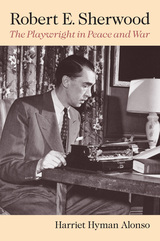
One of the nation's first film critics, an acclaimed speechwriter on his own and for President Franklin D. Roosevelt, a propagandist during World War II, and a leading producer on Broadway, Robert E. Sherwood scripted some of the most popular plays and films of his day, including Waterloo Bridge, The Best Years of Our Lives, Idiot's Delight, Abe Lincoln in Illinois, and Rebecca. His work brought him four Pulitzer Prizes and an Oscar. In his personal life, however, he was driven by a deep conviction that war was a societal evil that must be eradicated and human rights a moral responsibility that all governments should protect. At times, his belief in pacifism and his commitment to defending freedom and justice came into conflict with each other, causing frustration and emotional trauma which found their way into his writings and actions.
In this book, Harriet Hyman Alonso unravels Sherwood's inner struggle and portrays his political journey. Relying largely on his letters, diaries, plays, films, essays, and biography of Roosevelt and Harry Hopkins, she traces Sherwood's obsession with the world of politics and its effects on his life and art, from his experience as a soldier in World War I to the Cold War. She also describes his participation in the Algonquin Round Table, his friendships and working relationships with such notables as Alfred Lunt, Lynn Fontanne, Edna Ferber, Spencer Tracy, Harry Hopkins, and Franklin D. Roosevelt, his two marriages and uneasy relationship with his daughter, and his leadership role in the Broadway community.
Alonso brings together history, theater and film studies, and peace studies in this interdisciplinary political biography. In the process, she illuminates major currents in U.S. foreign policy, society, and culture from 1896 to 1955—the years of the remarkable life of Robert E. Sherwood.
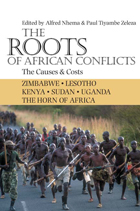
“Africa is no more prone to violent conflicts than other regions. Indeed, Africa’s share of the more than 180 million people who died from conflicts and atrocities in the twentieth century is relatively modest.… This is not to underestimate the immense impact of violent conflicts on Africa; it is merely to emphasize the need for more balanced debate and commentary.”
—From the introduction by Paul Tiyambe Zeleza
Violent conflicts have exacted a heavy toll on Africa’s societies, polities, and economies. This book presents African scholars’ views of why conflicts start in their continent. The causes of conflict are too often examined by scholars from the countries that run the proxy wars and sell the arms to fuel them. This volume offers theoretically sophisticated, empirically grounded, and compelling analyses of the roots of African conflicts.

This book analyzes the evolution of Russian military thought and how Russia's current thinking about war is reflected in recent crises. While other books describe current Russian practice, Oscar Jonsson provides the long view to show how Russian military strategic thinking has developed from the Bolshevik Revolution to the present. He closely examines Russian primary sources including security doctrines and the writings and statements of Russian military theorists and political elites. What Jonsson reveals is that Russia's conception of the very nature of war is now changing, as Russian elites see information warfare and political subversion as the most important ways to conduct contemporary war. Since information warfare and political subversion are below the traditional threshold of armed violence, this has blurred the boundaries between war and peace. Jonsson also finds that Russian leaders have, particularly since 2011/12, considered themselves to be at war with the United States and its allies, albeit with non-violent means. This book provides much needed context and analysis to be able to understand recent Russian interventions in Crimea and eastern Ukraine, how to deter Russia on the eastern borders of NATO, and how the West must also learn to avoid inadvertent escalation.
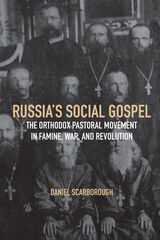
This volume draws upon extensive archival research to examine the effects of the pastoral movement on Russian society and the Orthodox Church. Scarborough argues that the social work of parish clergymen shifted the focus of Orthodox practice in Russia toward cooperative social activism as a devotional activity. He furthers our understanding of Russian Orthodoxy by illuminating the difficult position of parish priests, who were charged with both spiritual and secular responsibilities but were supported by neither church nor state. His nuanced look at the pastorate shows how social and historical traumas shifted perceptions of what being religious meant, in turn affecting how the Orthodox Church organized itself, and contributed to Russia’s modernization.
READERS
Browse our collection.
PUBLISHERS
See BiblioVault's publisher services.
STUDENT SERVICES
Files for college accessibility offices.
RECENTLY PUBLISHED


UChicago Accessibility Resources
home | accessibility | search | about | contact us
BiblioVault ® 2001 - 2026
The University of Chicago Press