
 A SCHOLARLY BOOK REPOSITORY
13 start with S start with S

Samuel Johnson was first published in 1970. Minnesota Archive Editions uses digital technology to make long-unavailable books once again accessible, and are published unaltered from the original University of Minnesota Press editions.
For anyone interested in the work of Samuel Johnson and his place in eighteenth-century studies, this bibliography will be of great value, for it includes virtually everything of importance that has been written about Johnson from his own lifetime to the present. In addition, Professors Clifford and Greene, in an introductory essay, survey and evaluate the changing attitudes toward Johnson through the entire period covered in the bibliography.
This volume is a revision and enlargement of Professor Clifford's earlier work Johnsonian Studies, 1887–1950: A Survey and Bibliography,long recognized as an indispensable tool for the study of Samuel Johnson, his circle, and his times, and now out of print. The present volume contains nearly four thousand bibliographical entries, grouped under twenty-five subject headings, and arranged chronologically within each classification. This arrangement enables the student to trace the development of the scholarship of the various aspects of Johnson's life and work. A detailed author and subject index to the whole volume makes it easy for him to find the description of the particular book or article for which he is searching.




Sir Humphry Davy (1778-1829) was a leading and controversial member of the international scientific community. Davy's publications received all the publicity available to an early nineteenth-century scholar. For that reason the history of his publications is of interest not only for what it reveals of Davy but for what it tells about the fate of scientific news during this period.
For more than a century it was assumed that the nine-volume Collected Works of Sir Humphry Davy represented the definitive statement of his contributions. That collection does include the major works on which Davy's fame depends; however, many papers were omitted. This annotated bibliography lists Davy's published writings that appeared during his lifetime and posthumously.
Translations of Davy's papers and reports of his experimental findings printed prior to the official versions are included. Critical reviews in journals not exclusively devoted to scientific subjects have also been catalogued. These translations, reports, and reviews, which frequently forced Davy to further publication, round out the history of his publishing. Through a guide to the location of the first reports of Davy's papers, it is possible to trace the diffusion of scientific news and its reception on the Continent. Fullmer indicates the accuracy of the translations and shows how the changes made by continental editors often distorted Davy's views, and acerbated a scientific atmosphere already ripe with controversy.
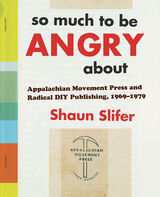
In a remarkable act of recovery, So Much to Be Angry About conjures an influential but largely obscured strand in the nation’s radical tradition—the “movement” printing presses and publishers of the late 1960s and 1970s, and specifically Appalachian Movement Press in Huntington, West Virginia, the only movement press in Appalachia. More than a history, this craft- and activist-centered book positions the frontline politics of the Appalachian Left within larger movements in the 1970s. As Appalachian Movement Press founder Tom Woodruff wrote: “Appalachians weren’t sitting in the back row during this struggle, they were driving the bus.”
Emerging from the Students for a Democratic Society chapter at Marshall University, and working closely with organizer and poet Don West, Appalachian Movement Press made available an eclectic range of printed material, from books and pamphlets to children’s literature and calendars. Many of its publications promoted the Appalachian identity movement and “internal colony” theory, both of which were cornerstones of the nascent discipline of Appalachian studies. One of its many influential publications was MAW, the first feminist magazine written by and for Appalachian women.
So Much to Be Angry About combines complete reproductions of five of Appalachian Movement Press’s most engaging publications, an essay by Shaun Slifer about his detective work resurrecting the press’s history, and a contextual introduction to New Left movement publishing by Josh MacPhee. Amply illustrated in a richly produced package, the volume pays homage to the graphic sensibility of the region’s 1970s social movements, while also celebrating the current renaissance of Appalachia’s DIY culture—in many respects a legacy, Slifer suggests, of the movement publishing documented in his book.
In the twentieth century Marxism challenged laissez-faire economics, psychoanalysis reinterpreted the processes of thought, and evolution discredited the idea of creation. These changes profoundly affected American Protestantism. Ferré examines the belief system that underlies what middle-class Protestants chose to read.
Beginning with an introduction to various philosophies and perspectives, the Sourcebook examines major elements of the environment and selected case studies of human alteration of our surroundings. The essential references in each field are carefully presented, and directions are given for examining more advanced and specialized works. Appendixes on selected periodicals, the latest relevant federal legislation, and environmental organizations point to further areas of investigation. To maintain its value in this volatile area, this indispensable work will be periodically revised and updated.
This information is organized in accord with indigenous South Asian concepts and categories within the threefold dimensions of time, space, and topic. These units and their interrelationships are first laid out in an outline of headings that constitutes, in the aggregate, a self-contained reference outline of Indic civilization. Each unit and its subdivisions are then presented as the headings for the bibliographic sections that form the main body of the book. This conceptual structure, in combination with the author and subject indexes, offers the reader several means of access to the entries themselves, making South Asian Civilizations a work that will be of great use to a wide audience.
How can a scientist or policy analyst summarize and evaluate what is already known about a particular topic? This book offers practical guidance.
The amount and diversity of information generated by academic and policy researchers in the contemporary world is staggering. How is an investigator to cope with the tens or even hundreds of studies on a particular problem? How can conflicting findings be reconciled? Richard Light and David Pillemer have developed both general guidelines and step-by-step procedures that can be used to synthesize existing data. They show how to apply quantitative methods, including the newest statistical procedures and simple graphical displays, to evaluate a mass of studies and combine separate data sets. At the same time, they insist on the value of qualitative information, of asking the right questions, and of considering the context in which research is conducted. The authors use exemplary reviews in education, psychology, health, and the policy sciences to illustrate their suggestions.
Written in nontechnical language and addressed to the beginning researcher as well as to the practicing professional, Summing Up will set a new standard for valid research reviews and is likely to become a methodological classic.
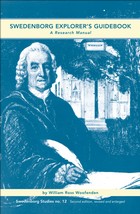
For more than 250 years, followers of scientist and visionary Emanuel Swedenborg have been translating and commenting on his writings, and for those unfamiliar with Swedenborg's works, it can be a difficult field to navigate. This revised and expanded edition of the Swedenborg Explorer's Guidebook offers:
* An annotated bibliography of all primary works by Emanuel Swedenborg -- including scientific, literary, and theological writings as well as personal letters and journals -- containing the latest information on holdings, publication dates, and available translations.
* An extensive annotated bibliography of secondary literature, including major biographies, bibliographies, analyses of Swedenborg's works, dissertations and theses, historical writings about the New Church, and works on and by prominent figures in the Swedenborgian community.
* Easy-to-use listings of Swedenborg's works by date, by subject, and by title, with cross-references to each title's bibliographic information.
* A glossary of special terms used in Swedenborg's writings.
* A listing of major documentary collections in the United States and Europe.
* A chronology of Swedenborg's life and works
* An expanded index
READERS
Browse our collection.
PUBLISHERS
See BiblioVault's publisher services.
STUDENT SERVICES
Files for college accessibility offices.
RECENTLY PUBLISHED





UChicago Accessibility Resources
home | accessibility | search | about | contact us
BiblioVault ® 2001 - 2025
The University of Chicago Press