
 A SCHOLARLY BOOK REPOSITORY
63 start with S start with S
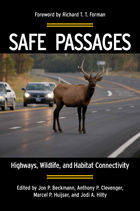
- an overview of the importance of habitat connectivity with regard to roads
- current planning approaches and technologies for mitigating the impacts of highways on both terrestrial and aquatic species
- different facets of public participation in highway-wildlife connectivity mitigation projects
- case studies from partnerships across North America that highlight successful on-the-ground implementation of ecological and engineering solutions
- recent innovative highway-wildlife mitigation developments
Safe Passages is an important new resource for local-, state-, and national-level managers and policymakers working on road-wildlife issues, and will appeal to a broad audience including scientists, agency personnel, planners, land managers, transportation consultants, students, conservation organizations, policymakers, and citizens engaged in road-wildlife mitigation projects.
Since time before memory, large numbers of salmon have made their way up and down the Klamath River. Indigenous management enabled the ecological abundance that formed the basis of capitalist wealth across North America. These activities on the landscape continue today, although they are often the site of intense political struggle. Not only has the magnitude of Native American genocide been of remarkable little sociological focus, the fact that this genocide has been coupled with a reorganization of the natural world represents a substantial theoretical void. Whereas much attention has (rightfully) focused on the structuring of capitalism, racism and patriarchy, few sociologists have attended to the ongoing process of North American colonialism. Salmon and Acorns Feed Our People draws upon nearly two decades of examples and insight from Karuk experiences on the Klamath River to illustrate how the ecological dynamics of settler-colonialism are essential for theorizing gender, race and social power today.
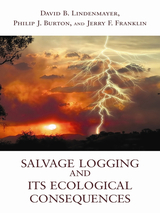
Salvage Logging and Its Ecological Consequences brings together three leading experts on forest ecology to explore a wide range of issues surrounding the practice of salvage logging. They gather and synthesize the latest research and information about its economic and ecological costs and benefits, and consider the impacts of salvage logging on ecosystem processes and biodiversity. The book examines
• what salvage logging is and why it is controversial
• natural and human disturbance regimes in forested ecosystems
• differences between salvage harvesting and traditional timber harvesting
• scientifically documented ecological impacts of salvage operations
• the importance of land management objectives in determining appropriate post-disturbance interventions
Brief case studies from around the world highlight a variety of projects, including operations that have followed wildfires, storms, volcanic eruptions, and insect infestations. In the final chapter, the authors discuss policy management implications and offer prescriptions for mitigating the impacts of future salvage harvesting efforts.
Salvage Logging and Its Ecological Consequences is a “must-read” volume for policymakers, students, academics, practitioners, and professionals involved in all aspects of forest management, natural resource planning, and forest conservation.
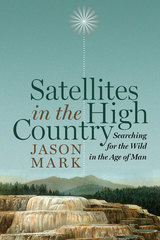
In Satellites in the High Country, journalist and adventurer Jason Mark travels beyond the bright lights and certainties of our cities to seek wildness wherever it survives. In California's Point Reyes National Seashore, a battle over oyster farming and designated wilderness pits former allies against one another, as locals wonder whether wilderness should be untouched, farmed, or something in between. In Washington's Cascade Mountains, a modern-day wild woman and her students learn to tan hides and start fires without matches, attempting to connect with a primal past out of reach for the rest of society. And in Colorado's High Country, dark skies and clear air reveal a breathtaking expanse of stars, flawed only by the arc of a satellite passing—beauty interrupted by the traffic of a million conversations. These expeditions to the edges of civilization's grid show us that, although our notions of pristine nature may be shattering, the mystery of the wild still exists — and in fact, it is more crucial than ever.
But wildness is wily as a coyote: you have to be willing to track it to understand the least thing about it. Satellites in the High Country is an epic journey on the trail of the wild, a poetic and incisive exploration of its meaning and enduring power in our Human Age.
Contributors. Marija Cetinić, Jeff Diamanti, Bishnupriya Ghosh, Lisa Yin Han, Stefan Helmreich, Mél Hogan, Melody Jue, Rahul Mukherjee, Max Ritts, Rafico Ruiz, Bhaskar Sarkar, John Shiga, Avery Slater, Janet Walker, Joanna Zylinska
Science and Ecosystem Management in the National Parks presents twelve case studies of long-term research conducted in and around national parks that address major natural resource issues. These cases demonstrate how the use of longer time scales strongly influence our understanding of ecosystems and how interpretations of short-term patterns in nature often change when viewed in the context of long-term data sets. Most importantly, they show conclusively that scientific research significantly reduces uncertainty and improves resource management decisions. Chosen by scientists and senior park managers, the cases offer a broad range of topics, including: air quality at Grand Canyon; interaction between moose and wolf populations on Isle Royale; control of exotic species in Hawaiian parks; simulation of natural fire in the parks of the Sierra Nevada; and the impact of urban expansion on Saguaro National Monument.
Because national parks are increasingly beset with conflicting views of their management, the need for knowledge of park ecosystems becomes even more critical--not only for the parks themselves, but for what they can tell us about survival in the rest of our world. This book demonstrates to policymakers and managers that decisions based on knowledge of ecosystems are more enduring and cost effective than decisions derived from uninformed consensus. It also provides scientists with models for designing research to meet threats to our most precious natural resources. "If we can learn to save the parks," observe Halvorson and Davis, "perhaps we can learn to save the world."
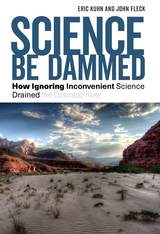
Arguing that the science of the early twentieth century can shed new light on the mistakes at the heart of the over-allocation of the Colorado River, authors Eric Kuhn and John Fleck delve into rarely reported early studies, showing that scientists warned as early as the 1920s that there was not enough water for the farms and cities boosters wanted to build. Contrary to a common myth that the authors of the Colorado River Compact did the best they could with limited information, Kuhn and Fleck show that development boosters selectively chose the information needed to support their dreams, ignoring inconvenient science that suggested a more cautious approach.
Today water managers are struggling to come to terms with the mistakes of the past. Focused on both science and policy, Kuhn and Fleck unravel the tangled web that has constructed the current crisis. With key decisions being made now, including negotiations for rules governing how the Colorado River water will be used after 2026, Science Be Dammed offers a clear-eyed path forward by looking back.
Understanding how mistakes were made is crucial to understanding our contemporary problems. Science Be Dammed offers important lessons in the age of climate change about the necessity of seeking out the best science to support the decisions we make.
Citizen science—research involving nonprofessionals in the research process—has attracted both strong enthusiasts and detractors. Many environmental professionals, activists, and scholars consider citizen science part of their toolkit for addressing environmental challenges. Critics, however, contend that it represents a corporate takeover of scientific priorities. In this timely book, two sociologists move beyond this binary debate by analyzing the tensions and dilemmas that citizen science projects commonly face. Key lessons are drawn from case studies where citizen scientists have investigated the impact of shale oil and gas, nuclear power, and genetically engineered crops. These studies show that diverse citizen science projects face shared dilemmas relating to austerity pressures, presumed boundaries between science and activism, and difficulties moving between scales of environmental problems. By unpacking the politics of citizen science, this book aims to help people negotiate a complex political landscape and choose paths moving toward social change and environmental sustainability.
Science Magazine's State of the Planet 2006-2007 is a unique contribution that brings together leading environmental scientists and researchers to give readers a comprehensive yet accessible overview of current issues. Included are explanatory essays from Science magazine editor-in-chief Donald Kennedy that tie together the issues and explore the relationships among them. Each of the book's 18 chapters is written by the world's leading experts, such as:
Joel Cohen on population
Peter Gleick on water
Daniel Pauly on fisheries
Thomas Karl on climate change science
Paul Portney on energy and development
Elinor Ostrom and Thomas Dietz on commons management
Interspersed throughout are Science news pieces that highlight particular issues and cases relevant to the main scientific findings. An added feature is the inclusion of definitions of key terms and concepts that help students and nonspecialists understand the issues. Published biennially, State of the Planet is a clear, accessible guide for readers of all levels-from students to professionals.
Broad-scale conservation of habitats is increasingly being recognized as a more effective means of protecting species and landscapes than single-species preservation efforts. While interest in the approach has grown tremendously in recent years, it remains controversial and the science behind it has yet to be fully developed.
In The Science of Conservation Planning, three of the nation's leading conservation biologists explore the role of the scientist in the planning process and present a framework and guidelines for applying science to regional habitat-based conservation planning. Chapters consider: history and background of conservation planning efforts criticisms of science in conservation planning principles of conservation biology that apply to conservation planning detailed examination of conservation plans specific recommendations for all parties involved.
The recommendations, interpretations, and questions provided are thoroughly based in the science of conservation biology, and the framework presented is adaptable to allow for revision and improvement as knowledge is gained and theories refined. The Science of Conservation Planning will serve as a model for the application of conservation biology to real-life problems, and can lead to the development of scientifically and politically sound plans that are likely to achieve their conservation goals, even in cases where biological and ecological information is limited.
The book is essential for scientists at all levels, including agency biologists, academic scientists, environmental consultants, and scientists employed by industry and conservation groups. It is also a valuable resource for elected officials and their staffs, environmentalists, developers, students, and citizen activists involved with the complex and contentious arena of conservation planning.
The Science of Open Spaces turns conventional conservation paradigms on their heads, proposing that in thinking about complex natural systems, whether the arid spaces of the southwestern United States or open seas shared by multiple nations, we must go back to "first principles"--those fundamental physical laws of the universe--and build innovative conservation from the ground up based on theory and backed up by practical experience. Curtin walks us through such foundational science concepts as thermodynamics, ecology, sociology, and resilience theory, applying them to real-world examples from years he has spent designing large-scale, place-based collaborative research programs in the United States and around the world.
Compelling for not only theorists and students, but also practitioners, agency personnel, and lay readers, this book offers a thoughtful and radical departure from business-as-usual management of Earth's dwindling wide-open spaces.

A continuing, comprehensive and timely survey of the state of knowledge of ocean science, this distinguished series provides an overview of research frontiers as ocean science progresses. Areas covered include physical, biological, and chemical oceanography, marine geology, and geophysics and the interactions of the oceans with the atmosphere, the solid earth, and ice. Because ocean science is evolving so rapidly, straining the boundaries of traditional sub-disciplines, interdisciplinary topics have a special place in this series--including those topics related to the application of ocean science, for example, to ocean technology, marine operations, and the resources of the sea. As a treatise on advances and new developments, each topical volume starts with fundamentals and covers recent progress, so as to provide a balanced account of how oceanography is evolving.
Previous volumes (1-12) in the series are now available from Harvard University Press.
In the manifold, multidisciplinary efforts of science to understand and manage our planet, contemporary ocean science plays an essential role. Volumes 13 and 14 of the series The Sea focus on two of the most important components in the interdisciplinary field of ocean science today--the coastal ocean and its interactions with the deep sea, and coupled physical-biogeochemical and ecosystem dynamics.
Comprehensive, definitive studies, these volumes chart the real progress being made by ocean scientists in achieving lasting scientific understanding; specifically, they address issues surrounding significant applications--for coastal regions and in general--such as: the development of monitoring and prediction systems; functionality and stability of ecosystems; eutrophication; harmful algae blooms; habitat modification; and regime shift.
Intended as companion volumes to Volumes 10 and 11 on physical coastal oceanography, these studies of the global coastal ocean continue the series' overall effort to encourage and facilitate coastal and shelf ocean sciences and technology on a global basis.
A continuing, comprehensive and timely survey of the state of knowledge of ocean science, this distinguished series provides an overview of research frontiers as ocean science progresses. Areas covered include physical, biological, and chemical oceanography, marine geology, and geophysics and the interactions of the oceans with the atmosphere, the solid earth, and ice. Because ocean science is evolving so rapidly, straining the boundaries of traditional sub-disciplines, interdisciplinary topics have a special place in this series--including those topics related to the application of ocean science, for example, to ocean technology, marine operations, and the resources of the sea. As a treatise on advances and new developments, each topical volume starts with fundamentals and covers recent progress, so as to provide a balanced account of how oceanography is evolving.
Previous volumes (1-13) in the series are now available from Harvard University Press.
In the manifold, multidisciplinary efforts of science to understand and manage our planet, contemporary ocean science plays an essential role. Volumes 13 and 14 of the series The Sea focus on two of the most important components in the interdisciplinary field of ocean science today--the coastal ocean and its interactions with the deep sea, and coupled physical-biogeochemical and ecosystem dynamics.
Comprehensive, definitive studies, these volumes chart the real progress being made by ocean scientists in achieving lasting scientific understanding; specifically, they address issues surrounding significant applications--for coastal regions and in general--such as: the development of monitoring and prediction systems; functionality and stability of ecosystems; eutrophication; harmful algae blooms; habitat modification; and regime shift.
Intended as companion volumes to Volumes 10 and 11 on physical coastal oceanography, these studies of the global coastal ocean continue the series' overall effort to encourage and facilitate coastal and shelf ocean sciences and technology on a global basis.

With marine ecosystems endangered by a warming climate and exploding human population growth, a critical transformation is taking place in the way the world's ocean resources are managed. Marine Ecosystem-Based Management presents a state-of-the-art synopsis of the conservation approaches that are currently being translated from theory to action on a global scale. With contributions from an international team of experts, this volume synthesizes the scientific literature of holistic practices in ecosystem-based management (EBM), focusing on protecting the marine ecologies that humans and countless other organisms vitally depend upon.
Human uses of ocean ecosystems have usually been divided into separate sectors--fisheries, transportation, tourism, and recreation, for example--and ecosystem boundaries defined as much by politics as geography. This approach is giving way to a broader strategy based on integrated management of human activities in scientifically identified regions of the marine environment. Spanning a range of issues from the tropics to the poles, the authors present analyses of open ocean systems and high-impact regions such as coastlines, coral reefs, and estuaries. Methods of modeling and evaluating marine EBM are explored, as well as the role of governmental and other regulatory frameworks in ocean management and the lessons to be learned from past ecological interventions.
It is now widely recognized that any viable strategy for sustaining the world's oceans must reflect the relationships among all ecosystem components, human and nonhuman species included. Marine Ecosystem-Based Management is an in-depth report of new advances in the rapidly evolving discipline of coupled Human-Ecological Systems.
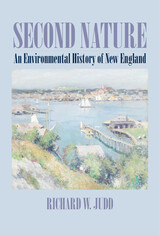
Winner of the 2014 New England Historical Association's James P. Hanlan Book Award
Bounded by the St. Lawrence Valley to the north, Lake Champlain to the west, and the Gulf of Maine to the east, New England may be the most cohesive region in the United States, with a long and richly recorded history. In this book, Richard W. Judd explores the mix of ecological process and human activity that shaped that history over the past 12,000 years. He traces a succession of cultures through New England's changing postglacial environment down to the 1600s, when the arrival of Europeans interrupted this coevolution of nature and culture.
A long period of tension and warfare, inflected by a variety of environmental problems, opened the way for frontier expansion. This in turn culminated in a unique landscape of forest, farm, and village that has become the embodiment of what Judd calls “second nature”—culturally modified landscapes that have superseded a more pristine “first nature.”
In the early 1800s changes in farm production and industrial process transformed central New England, while burgeoning markets at the geographical margins brought rapid expansion in fishing and logging activities. Although industrialization and urbanization severed connections to the natural world, the dominant cultural expression of the age, Romanticism, provided new ways of appreciating nature in the White Mountains and Maine woods. Spurred by these Romantic images and by a long tradition of local resource management, New England gained an early start in rural and urban conservation.
In the 1970s environmentalists, inspired by a widespread appreciation for regional second-nature landscapes, moved quickly from battling pollution and preserving wild lands to sheltering farms, villages, and woodlands from intrusive development. These campaigns, uniquely suited to the region's land-use history, ecology, and culture, were a fitting capstone to the environmental history of New England.
The Yaqui Valley is the birthplace of the Green Revolution and one of the most intensive agricultural regions of the world, using irrigation, fertilizers, and other technologies to produce some of the highest yields of wheat anywhere. It also faces resource limitations, threats to human health, and rapidly changing economic conditions. In short, the Yaqui Valley represents the challenge of modern agriculture: how to maintain livelihoods and increase food production while protecting the environment.
Renowned scientist Pamela Matson and colleagues from leading institutions in the U.S. and Mexico spent fifteen years in the Yaqui Valley in Sonora, Mexico addressing this challenge. Seeds of Sustainability represents the culmination of their research, providing unparalleled information about the causes and consequences of current agricultural methods. Even more importantly, it shows how knowledge can translate into better practices, not just in the Yaqui Valley, but throughout the world.
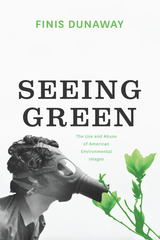
Finis Dunaway closes that gap with Seeing Green. Considering a wide array of images—including pictures in popular magazines, television news, advertisements, cartoons, films, and political posters—he shows how popular environmentalism has been entwined with mass media spectacles of crisis. Beginning with radioactive fallout and pesticides during the 1960s and ending with global warming today, he focuses on key moments in which media images provoked environmental anxiety but also prescribed limited forms of action. Moreover, he shows how the media have blamed individual consumers for environmental degradation and thus deflected attention from corporate and government responsibility. Ultimately, Dunaway argues, iconic images have impeded efforts to realize—or even imagine—sustainable visions of the future.
Generously illustrated, this innovative book will appeal to anyone interested in the history of environmentalism or in the power of the media to shape our politics and public life.
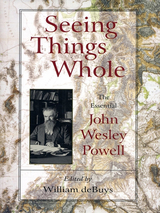
John Wesley Powell was an American original. He was the last of the nation's great continental explorers and the first of a new breed of public servant: part scientist, part social reformer, part institution builder. His work and life reveal an enduringly valuable way of thinking about land, water, and society as parts of an interconnected whole; he was America's first great bioregional thinker.
Seeing Things Whole presents John Wesley Powell in the full diversity of his achievements and interests, bringing together in a single volume writings ranging from his gripping account of exploring the Colorado River through the Grand Canyon to his views on the evolution of civilization, along with the seminal writings in which he sets forth his ideas on western settlement and the allocation and management of western resources.
The centerpiece of Seeing Things Whole is a series of selections from the famous 1878 Report on the Lands of the Arid Region and related magazine articles in which Powell further develops the themes of the report. In those, he recommends organizing the Arid Lands into watershed commonwealths governed by resident citizens whose interlocking interests create the checks and balances essential to wise stewardship of the land. This was the central focus of John Wesley Powell's bioregional vision, and it remains a model for governance that many westerners see as a viable solution to the resource management conflicts that continue to bedevil the region.
Throughout the collection, award-winning writer and historian William deBuys brilliantly sets the historical context for Powell's work. Section introductions and extensive descriptive notes take the reader through the evolution of John Wesley Powell's interests and ideas from his role as an officer in the Civil War through his critique of Social Darwinism and landmark categorization of Indian languages, to the climatic yet ultimately futile battles he fought to win adoption of his land-use proposals.
Seeing Things Whole presents the essence of the extraordinary legacy that John Wesley Powell has left to the American people, and to people everywhere who strive to reconcile the demands of society with the imperatives of the land.
According to veterinarian and journalist Mark Walters, we are contributing to-if not overtly causing-some of the scariest epidemics of our time. Through human stories and cutting-edge science, Walters explores the origins of seven diseases: mad cow disease, HIV/AIDS, Salmonella DT104, Lyme disease, hantavirus, West Nile, and new strains of flu. He shows that they originate from manipulation of the environment, from emitting carbon and clear-cutting forests to feeding naturally herbivorous cows "recycled animal protein."
Since Walters first drew attention to these "ecodemics" in 2003 with the publication of Six Modern Plagues, much has been learned about how they developed. In this new, fully updated edition, the author presents research that precisely pinpoints the origins of HIV, confirms the link between forest fragmentation and increased risk of Lyme disease, and expands knowledge of the ecology of West Nile virus.
He also explores developments in emerging diseases, including a new chapter on flu, examining the first influenza pandemic since the Hong Kong flu of 1968; a new tick-borne infection in the Mid-West; a second novel bird flu in China; and yet a new SARS-like virus in the Middle East.
Readers will not only learn how these diseases emerged but the conditions that make future pandemics more likely. This knowledge is critical in order to prevent the next modern plague.
Large-scale agriculture has come to favor uniformity in food crops. More than 7,000 U.S. apple varieties once grew in American orchards; 6,000 of them are no longer available. Every broccoli variety offered through seed catalogs in 1900 has now disappeared. As the international genetics supply industry absorbs seed companies—with nearly one thousand takeovers since 1970—this trend toward uniformity seems likely to continue; and as third world agriculture is brought in line with international business interests, the gene pools of humanity's most basic foods are threatened.
The consequences are more than culinary. Without the genetic diversity from which farmers traditionally breed for resistance to diseases, crops are more susceptible to the spread of pestilence. Tragedies like the Irish Potato Famine may be thought of today as ancient history; yet the U.S. corn blight of 1970 shows that technologically based agribusiness is a breeding ground for disaster.
Shattering reviews the development of genetic diversity over 10,000 years of human agriculture, then exposes its loss in our lifetime at the hands of political and economic forces. The possibility of crisis is real; this book shows that it may not be too late to avert it.
Edited by marine ecologists Jeremy Jackson and Enric Sala, and historian Karen Alexander, the book brings together knowledge from disparate disciplines to paint a more realistic picture of past fisheries. The authors use case studies on the cod fishery and the connection between sardine and anchovy populations, among others, to explain various methods for studying historic trends and the intricate relationships between species. Subsequent chapters offer recommendations about both specific research methods and effective management. This practical information is framed by inspiring essays by Carl Safina and Randy Olson on a personal experience of shifting baselines and the importance of human stories in describing this phenomenon to a broad public.
While each contributor brings a different expertise to bear, all agree on the importance of historical perspective for effective fisheries management. Readers, from students to professionals, will benefit enormously from this informed hindsight.

“Not long ago, people did not worry about the food they ate. They did not worry about the water they drank or the air they breathed. It never occurred to them that eating, drinking water, satisfying basic, mundane bodily needs might be a dangerous thing to do. Parents thought it was good for their kids to go outside, get some sun.
“That’s all changed now.” —from the Introduction
Many Americans today rightly fear that they are constantly exposed to dangerous toxins in their immediate environment: tap water is contaminated with chemicals; foods contain pesticide residues, hormones, and antibiotics; even the air we breathe, outside and indoors, carries invisible poisons. Yet we have responded not by pushing for governmental regulation, but instead by shopping. What accounts for this swift and dramatic response? And what are its unintended consequences?
Andrew Szasz examines this phenomenon in Shopping Our Way to Safety. Within a couple of decades, he reveals, bottled water and water filters, organic food, “green” household cleaners and personal hygiene products, and “natural” bedding and clothing have gone from being marginal, niche commodities to becoming mass consumer items. Szasz sees these fatalistic, individual responses to collective environmental threats as an inverted form of quarantine, aiming to shut the healthy individual in and the threatening world out.
Sharply critiquing these products’ effectiveness as well as the unforeseen political consequences of relying on them to keep us safe from harm, Szasz argues that when consumers believe that they are indeed buying a defense from environmental hazards, they feel less urgency to actually do something to fix them. To achieve real protection, real security, he concludes, we must give up the illusion of individual solutions and together seek substantive reform.
Andrew Szasz is professor and chair of the department of sociology at the University of California at Santa Cruz and author of the award-winning EcoPopulism (Minnesota, 1994).
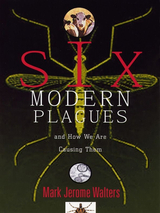
In Six Modern Plagues, Mark Jerome Walters offers us the first book for the general reader that connects these emerging health risks and their ecological origins. Drawing on new research, interviews, and his own investigations, Mark Jerome Walters weaves together a compelling argument: that changes humans have made to the environment, from warming the climate to clearing the forests, have contributed to, if not caused a rising tide of diseases that are afflicting humans and many other species.
According to Mark Jerome Walters, humans are not always innocent bystanders to infectious disease. To the contrary, in the case of many modern epidemics, we are the instigators. Six Modern Plagues, a ground-breaking introduction to the connection between disease and environmental degradation should be read by all those interested in their health and the health of others.

From Scott and Shackleton to sled dogs and penguins, stories of Antarctica seize our imagination. In December 2002, environmental historian Tom Griffiths set sail with the Australian Antarctic Division to deliver the new team of winterers. In this beautifully written book, Griffiths reflects on the history of human experiences in Antarctica, taking the reader on a journey of discovery, exploration, and adventure in an unforgettable land.
He weaves together meditations on shipboard life during his three-week voyage with fascinating forays into the history and nature of Antarctica. He brings alive the great age of sail in the initiation of travelers to the great winds of the “roaring forties.” No continent is more ruled by wind, and Griffiths explains why Antarctica is a barometer of global climatic health. He charts the race to the South Pole, from its inception as part of the drive to map Earth’s magnetism, to the reasons for Robert Scott’s tragic death. He also offers vivid descriptions of life in Antarctica, such as the experience of a polar night, the importance of food for morale, and coping with solitude.
A charming narrative and an informative history, Slicing the Silence is an intimate portrait of the last true wilderness.
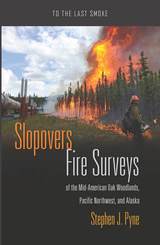
The Mid-American oak woodlands were the scene of vigorous settlement in the late eighteenth and early nineteenth centuries and thus the scene of changing fire practices. The debate over the origin of the prairies—by climate or fire—foreshadowed the more recent debate about fire in oak and hickory hardwoods. In both cases, today’s thinking points to the critical role of fire.
The Pacific Northwest was the great pivot between laissez-faire logging and state-sponsored conservation and the fires that would accompany each. Then fire faded as an environmental issue. But it has returned over the past decade like an avenging angel, forcing the region to again consider the defining dialectic between axe and flame.
And Alaska—Alaska is different, as everyone says. It came late to wildland fire protection, then managed an extraordinary transfiguration into the most successful American region to restore something like the historic fire regime. But Alaska is also a petrostate, and climate change may be making it the vanguard of what the Anthropocene will mean for American fire overall.
Slopovers collates surveys of these three regions into the national narrative. With a unique mixture of journalism, history, and literary imagination, renowned fire expert Stephen J. Pyne shows how culture and nature, fire from nature and fire from people, interact to shape our world with three case studies in public policy and the challenging questions they pose about the future we will share with fire.
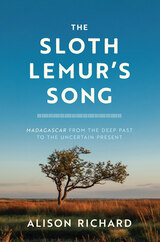
Madagascar is a place of change. A biodiversity hotspot and the fourth largest island on the planet, it has been home to a spectacular parade of animals, from giant flightless birds and giant tortoises on the ground to agile lemurs leaping through the treetops. Some species live on; many have vanished in the distant or recent past. Over vast stretches of time, Madagascar’s forests have expanded and contracted in response to shifting climates, and the hand of people is clear in changes during the last thousand years or so. Today, Madagascar is a microcosm of global trends. What happens there in the decades ahead can, perhaps, suggest ways to help turn the tide on the environmental crisis now sweeping the world.
The Sloth Lemur’s Song is a far-reaching account of Madagascar’s past and present, led by an expert guide who has immersed herself in research and conservation activities with village communities on the island for nearly fifty years. Alison Richard accompanies the reader on a journey through space and time—from Madagascar’s ancient origins as a landlocked region of Gondwana and its emergence as an island to the modern-day developments that make the survival of its array of plants and animals increasingly uncertain. Weaving together scientific evidence with Richard’s own experiences and exploring the power of stories to shape our understanding of events, this book captures the magic as well as the tensions that swirl around this island nation.

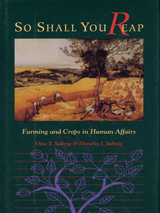
So Shall You Reap is a broad-gauged exploration of the intersections of farming and history. Beginning with the prehistorical era, Otto and Dorothy Solbrig describe the evolution of farming. When and how did people learn to irrigate, to fertilize, to rotate their crops -- and why?
Along with its fundamental importance to history, farming has radically altered the physical world. Natural landscapes have been completely transformed to provide room for growth on a large scale of a few species of plants and even fewer species of domesticated animals. Agriculture has altered the earth's biosphere and changed its geosphere: The soil has been modified, forests have been felled, swamps have been drained, rivers have been dammed and diverted.
So Shall You Reap presents a fresh and informed perspective on how farming and the crops we grow have changed us and our environment. By understanding the nature of the origins and evolution of agriculture, we will be better prepared to anticipate what the future may hold in store, and what must be done to increase food production while minimizing environmental problems.
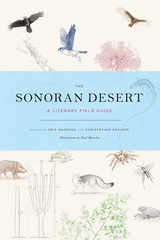
Both literary anthology and hands-on field guide, The Sonoran Desert is a groundbreaking book that melds art and science. It captures the stunning biodiversity of the world’s most verdant desert through words and images. More than fifty poets and writers—including Christopher Cokinos, Alison Hawthorne Deming, Ken Lamberton, Eric Magrane, Jane Miller, Gary Paul Nabhan, Alberto Ríos, Ofelia Zepeda, and many others—have composed responses to key species of this striking desert. Each creative contribution is joined by an illustration by award-winning artist Paul Mirocha and scientific information about the creature or plant authored by the book’s editors.
From the saguaro to the mountain lion, from the black-tailed jackrabbit to the mesquite, the species represented here have evoked compelling and creative responses from each contributor. Just as writers such as Edward Abbey and Ellen Meloy have memorialized the desert, this collection is sure to become a new classic, offering up the next generation of voices of this special and beautiful place, the Sonoran Desert.
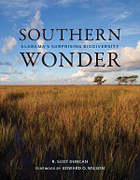
WINNER, REED AWARD FOR ENVIRONMENTAL WRITING GIVEN BY THE SOUTHERN ENVIRONMENTAL LAW CENTER
Southern Wonder explores Alabama’s amazing biological diversity, the reasons for the large number of species in the state, and the importance of their preservation.
Alabama ranks fifth in the nation in number of species of plants and animals found in the state, surpassed only by the much larger western states of California,Texas, Arizona, and New Mexico. When all the species of birds, trees, mammals, reptiles, amphibians, fishes, wildflowers, dragonflies, tiger beetles, and ants are tallied, Alabama harbors more species than 90 percent of the other states in the United States. Alabamais particularly rich in aquatic biodiversity, leading the nation in species of freshwater fishes, turtles, mussels, crayfish, snails, damselflies, and carnivorous plants. The state also hosts an exceptional number of endemic species—those not found beyond its borders—ranking seventh in the nation with 144 species. The state’s 4,533 species, with more being inventoried and discovered each year, are supported by no less than 64 distinct ecological systems—each a unique blend of soil, water, sunlight, heat, and natural disturbance regimes. Habitats include dry forests, moist forests, swamp forests, sunny prairies, grassy barrens, scorching glades, rolling dunes, and bogs filled with pitcher plants and sundews. The state also includes a region of subterranean ecosystems that are more elaborate and species rich than any other place on the continent.
Although Alabama is teeming with life, the state’s prominence as a refuge for plants and animals is poorly appreciated. Even among Alabama’s citizens, few outside a small circle of biologists, advocates, and other naturalists understand the special quality of the state’s natural heritage. R. Scot Duncan rectifies this situation in Southern Wonder by providing a well-written, comprehensive overview that the general public, policy makers, and teachers can understand and use. Readers are taken on an exploratory journey of the state’s varied landscapes—from the Tennessee River Valley to the coastal dunes—and are introduced to remarkable species, such as the cave salamander and the beach mouse. By interweaving the disciplines of ecology, evolution, meteorology, and geology into an accessible whole, Duncan explains clearly why Alabama is so biotically rich and champions efforts for its careful preservation.
Published in Cooperation with The Nature Conservancy
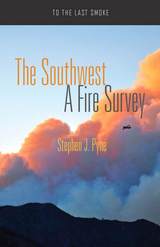
Through a mixture of journalism, history, and literary imagination, fire expert Stephen J. Pyne provides a lively survey of what makes this region distinctive, moving us beyond the usual conversations of science and policy. Pyne explores the Southwest’s sacred mountains, including the Jemez, Mogollon, Huachucas, and Kaibab; its sky islands, among them the Chiricahuas, Mount Graham, and Tanque Verde; and its famous rims and borders. Together, the essays provide a cross-section of how landscape fire looks in the early years of the 21st century, what is being done to manage it, and how fire connects with other themes of southwestern life and culture.
The Southwest is part of the multivolume series describing the nation’s fire scene region by region. The volumes in To the Last Smoke also cover California, the Northern Rockies, the Great Plains, Florida, and several other critical fire regions. The series serves as an important punctuation point to Pyne’s 50-year career with wildland fire—both as a firefighter and a fire scholar. These unique surveys of regional pyrogeography are Pyne’s way of “keeping with it to the end,” encompassing the directive from his rookie season to stay with every fire “to the last smoke.”
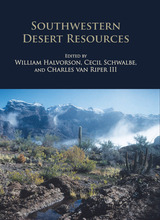
This book puts a spotlight on individual research projects which are specific examples of work being done in the area and when they are all brought together, to shed a general light of understanding the biological and cultural resources of this vast region so that those same resources can be managed as effectively and efficiently as possible. The intent is to show that collaborative efforts among federal, state agency, university, and private sector researchers working with land managers, provides better science and better management than when scientists and land managers work independently.

Willamette River cleanup efforts between 1926 and 1975 centered on a struggle between abatement advocates and the two primary polluters in the watershed, the City of Portland and the pulp and paper industry. Beginning in 1926, clean streams advocates created ad hoc groups of public health experts, sanitary engineers, conservationists, sportsmen, and others to pressure Portland officials and industry representatives to cease polluting the river. By the late 1960s, these grassroots initiatives found political footholds at the state level. As governor between 1967 and 1975, Tom McCall took the issue of environmental protection personally, providing the charisma and leadership that was needed to finally make substantive progress toward cleaning the Willamette.
Speaking for the River is the first book to describe the historical roots of Willamette River pollution, providing important context for understanding the political, fiscal, and technological antecedents to the present-day conundrum. Hillegas-Elting’s contribution to the academic literature on environmental and urban history in Oregon will be welcomed by policy makers, environmentalists, and concerned citizens alike.

Reacting against the view of nature "red in tooth and claw," ecologists and behavioral biologists such as Warder Clyde Allee, Alfred Emerson, and their colleagues developed research programs they hoped would validate and promote an image of human society as essentially cooperative rather than competitive. Mitman argues that Allee's religious training and pacifist convictions shaped his pioneering studies of animal communities in a way that could be generalized to denounce the view that war is in our genes.
In the latest edition of Worldwatch Institute’s State of the World series, scientists, policy experts, and thought leaders tackle these questions, attempting to restore meaning to sustainability as more than just a marketing tool. In State of the World 2013: Is Sustainability Still Possible?, experts define clear sustainability metrics and examine various policies and perspectives, including geoengineering, corporate transformation, and changes in agricultural policy, that could put us on the path to prosperity without diminishing the well-being of future generations. If these approaches fall short, the final chapters explore ways to prepare for drastic environmental change and resource depletion, such as strengthening democracy and societal resilience, protecting cultural heritage, and dealing with increased conflict and migration flows.
State of the World 2013 cuts through the rhetoric surrounding sustainability, offering a broad and realistic look at how close we are to fulfilling it today and which practices and policies will steer us in the right direction. This book will be especially useful for policymakers, environmental nonprofits, and students of environmental studies, sustainability, or economics.
These diverse efforts are the subject of the latest volume in the Worldwatch Institute’s highly regarded State of the World series. The 2014 edition, marking the Institute’s 40th anniversary, examines both barriers to responsible political and economic governance as well as gridlock-shattering new ideas. The authors analyze a variety of trends and proposals, including regional and local climate initiatives, the rise of benefit corporations and worker-owned firms, the need for energy democracy, the Internet’s impact on sustainability, and the importance of eco-literacy. A consistent thread throughout the book is that informed and engaged citizens are key to better governance.
The book is a clear-eyed yet ultimately optimistic assessment of citizens’ ability to govern for sustainability. By highlighting both obstacles and opportunities, State of the World 2014 shows how to effect change within and beyond the halls of government. This volume will be especially useful for policymakers, environmental nonprofits, students of environmental studies, sustainability, or economics—and citizens looking to jumpstart significant change around the world.
In State of the World 2015, the flagship publication of The Worldwatch Institute, experts explore hidden threats to sustainability and how to address them. How will nations deal with migration as climate change refugees cross borders in order to escape flooding, drought, or other extreme weather events? What will happen to the price and availability of fossil energy—the foundation of industrial civilization--as these resources oscillate between surplus and scarcity? If perpetual economic growth on a finite planet is impossible, what are the alternatives? Can national governments manage the transition? Eight key issues are addressed in depth, along with the central question of how we can develop resilience to these and other shocks.
For decades, The Worldwatch Institute has been a leader in identifying and analyzing emerging environmental threats. With the latest edition of State of The World, the authorities at Worldwatch bring to light challenges we can no longer afford to ignore.
Raf De Bont’s Stations in the Field focuses on the early history of biological field stations and the role these played in the rise of zoological place-based research. Beginning in the 1870s, a growing number of biological field stations were founded—first in Europe and later elsewhere around the world—and thousands of zoologists received their training and performed their research at these sites. Through case studies, De Bont examines the material and social context in which field stations arose, the actual research that was produced in these places, the scientific claims that were developed there, and the rhetorical strategies that were deployed to convince others that these claims made sense. From the life of parasitic invertebrates in northern France and freshwater plankton in Schleswig-Holstein, to migratory birds in East Prussia and pest insects in Belgium, De Bont’s book is fascinating tour through the history of studying nature in nature.
As this book reveals, a new understanding of the evolution of pathogen-host systems, called the Stockholm Paradigm, explains what is happening. The planet is a minefield of pathogens with preexisting capacities to infect susceptible but unexposed hosts, needing only the opportunity for contact. Climate change has always been the major catalyst for such new opportunities, because it disrupts local ecosystem structure and allows pathogens and hosts to move. Once pathogens expand to new hosts, novel variants may emerge, each with new infection capacities. Mathematical models and real-world examples uniformly support these ideas. Emerging disease is thus one of the greatest climate change–related threats confronting humanity.
Even without deadly global catastrophes on the scale of the 1918 Spanish Influenza pandemic, emerging diseases cost humanity more than a trillion dollars per year in treatment and lost productivity. But while time is short, the danger is great, and we are largely unprepared, the Stockholm Paradigm offers hope for managing the crisis. By using the DAMA (document, assess, monitor, act) protocol, we can “anticipate to mitigate” emerging disease, buying time and saving money while we search for more effective ways to cope with this challenge.
Straight Up draws on Romm’s most important posts to explain the dangers of and solutions to climate change that you won’t find in newspapers, in journals, or on T.V. Compared to coverage of Jay-Z or the latest philandering politician, climate change makes up a pathetically small share of news reports. And when journalists do try to tackle this complex issue, they often lack the background to tell the full story. Despite the dearth of reporting, polls show that two in five Americans think the press is actually exaggerating the threat of climate change. That gives Big Oil, and others with a vested interest in the status quo, a huge opportunity to mislead the public.
Romm cuts through the misinformation and presents the truth about humanity’s most dire threat. His analysis is based on sophisticated knowledge of renewable technologies, climate impacts, and government policy, written in a style everyone can understand. Romm shows how a 20 percent reduction in global emissions over the next quarter century could improve the economy; how we can replace most coal and with what technologies; why Sarah Palin wears a polar bear pin; and why controversial, emerging technologies like biochar have to be part of the solution.
The ultimate solution, Romm argues, is bigger than any individual technology: it’s citizen action. Without public pressure, Washington and industry don’t budge. With it, our grandkids might just have a habitable place to live.
“The Web’s most influential climate-change blogger” and “Hero of the Environment 2009”
—Time Magazine
“I trust Joe Romm on climate.”
—Paul Krugman, New York Times
“America’s fiercest climate-change activist-blogger” and one of “The 100 People Who Are Changing America”
— Rolling Stone
“One of the most influential energy and environmental policy makers in the Obama era”
— U.S. News & World Report
“The indispensable blog”
—Thomas Friedman, New York Times
“One of the most influential energy and environmental policy makers in the Obama era”
— U.S. News & World Report
“The indispensable blog”
—Thomas Friedman, New York Times
When populations of striped bass began plummeting in the early 1980s, author and fisherman Dick Russell was there to lead an Atlantic coast conservation campaign that resulted in one of the most remarkable wildlife comebacks in the history of fisheries. As any avid fisherman will tell you, the striped bass has long been a favorite at the American dinner table; in fact, we've been feasting on the fish from the time of the Pilgrims. By 1980 that feasting had turned to overfishing by commercial fishing interests. Striper Wars is Dick Russell's inspiring account of the people and events responsible for the successful preservation of one of America's favorite fish and of what has happened since.
Striper Wars is a tale replete with heroes--and some villains--as the struggle to save the striper migrated down the coast from Massachusetts to Maryland. Russell introduces us to a postman at arms against a burly trap-net fisherman, a renowned state governor caving to special interests, and a fishing-tackle maker fighting alongside marine biologists. And he describes how champions of this singular fish blocked power plants and New York's Westway Project that would otherwise compromise its habitat. Unfortunately, those who cheered the triumphant ending to the campaign, as the coastal states enacted measures that enabled the striped bass to make its comeback, have found the peace transitory--there is now a new enemy emerging on the front.
In recent years a chronic bacterial disease has struck more than seventy percent of the striped bass population in the primary spawning waters of the Chesapeake Bay. Malnutrition seems to be a significant factor, brought on by the same overfishing that plagued the bass in the first battle--only this time, the overfishing is devastating menhaden, the silvery little fish upon which the bass feed. Lessons learned during the first conservation battle are being applied here, highlighting a need for a whole new ecosystem-based approach to conserving species.
Only with constant vigilance by concerned citizens, Dick Russell reminds us, can environmental victories be sustained. This particular fish story is a personal one for him, and he follows the striper's saga today all the way to California, where the fish was introduced in 1879 and where agribusiness now threatens its future. For his conservation work during the 1980s Russell received a citizen's Chevron Conservation Award.
As the Mississippi and other midwestern rivers inundated town after town during the summer of 1993, concerned and angry citizens questioned whether the very technologies and structures intended to "tame" the rivers did not, in fact, increase the severity of the floods. Much of the controversy swirled around the apparent culpability of the U.S. Army Corps of Engineers, the builder of many of the flood control systems that failed.
In this book, Todd Shallat examines the turbulent first century of the dam and canal building Corps and follows the agency's rise from European antecedents through the boom years of river development after the American Civil War. Combining extensive research with a lively style, Shallat tells the story of monumental construction and engineering fiascoes, public service and public corruption, and the rise of science and the army expert as agents of the state.
More than an institutional history, Structures in the Stream offers significant insights into American society, which has alternately supported the public works projects that are a legacy of our French heritage and opposed them based on the democratic, individualist tradition inherited from Britain. It will be important reading for a wide audience in environmental, military, and scientific history, policy studies, and American cultural history.
---David Owen, Carolina Distinguished Professor of Law, and Director of Tort Law Studies, University of South Carolina
Diane C. Bates offers a wide-ranging look at the Jersey Shore both before and after Sandy, examining the many factors—such as cultural attachment, tourism revenues, and governmental regulation—that combined to create a highly vulnerable coastal region. She explains why the Shore is so important to New Jerseyans, acting as a key cultural touchstone in a state that lacks a central city or even a sports team to build a shared identity among the state’s residents. She analyzes post-Sandy narratives about the Jersey Shore that trumpeted the dominance of human ingenuity over nature (such as the state’s “Stronger than the Storm” advertising campaign) or proclaimed a therapeutic community (“Jersey Strong”)—narratives rooted in emotion and iconography, waylaying any thought of the near-certainty of future storms. The book also examines local business owners, politicians, real estate developers, and residents who have vested interests in the region, explaining why the Shore was developed intensively prior to Sandy, and why restoration became an imperative in the post-storm period.
Engagingly written and insightful, Superstorm Sandy highlights the elements that compounded the disaster on the Shore, providing a framework for understanding such catastrophes and preventing them in the future.
Perpetual economic growth is physically impossible on a planet with finite resources. Many concerned with humanity's future have focused on the concept of "sustainable development" as an alternative, as they seek means of achieving current economic and social goals without compromising the ability of future generations to meet their own goals. Sustainable development brings together elements of economics, public policy, sociology, ecology, resource management, and other related areas, and while the term has become quite popular, it is rarely defined, and even less often is it understood.
A Survey of Sustainable Development addresses that problem by bringing together in a single volume the most important works on sustainable human and economic development. It offers a broad overview of the subject, and gives the reader a quick and thorough guide to this highly diffuse topic. The volume offers ten sections on topics including:
- economic and social dimensions of sustainable development
- the North/South balance
- population and the demographic transition
- agriculture and renewable resources
- energy and materials use
- globalization and corporate responsibility
- local and national strategies
Each section is introduced with an essay by one of the volume editors that provides an overview of the subject and a summary of the mainstream literature, followed by two- to three-page abstracts of the most important articles or book chapters on the topic.
A Survey of Sustainable Development is the sixth and final volume in the Frontier Issues of Economic Thought series produced by the Global Development And Environment Institute at Tufts University. Each book brings together the most important articles and book chapters in a "frontier" area of economics where important new work is being done but has not yet been incorporated into the mainstream of economic study. The book is an essential reference for students and scholars concerned with economics, environmental studies, public policy and administration, international development, and a broad range of related fields.
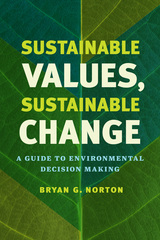
While economists, philosophers, and ecologists argue about what in nature is valuable, and why, Norton here offers an action-oriented, pragmatic response to the disconnect between public and academic discourse around sustainability. Looking to the arenas in which decisions are made—and the problems that are driving these decisions—Norton reveals that the path to sustainability cannot be guided by fixed, utopian objectives projected into the future; sustainability will instead be achieved through experimentation, incremental learning, and adaptive management. Drawing inspiration from Aldo Leopold’s famed metaphor of “thinking like a mountain” for a spatially explicit, pluralistic approach to evaluating environmental change, Norton replaces theory-dependent definitions with a new decision-making process guided by deliberation and negotiation across science and philosophy, encompassing all stakeholders and activists and seeking to protect as many values as possible. Looking across scales to today’s global problems, Norton urges us to learn to think like a planet.
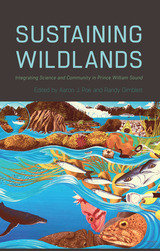
Nearly three decades later, changes in recreation use run counter to what was initially expected. Instead of avoiding Prince William Sound, tourists and visitors flock there. Economic revitalization efforts have resulted in increased wilderness access as new commercial enterprises offer nature tourism in remote bays and fjords. This increased visitation has caused concerns that the wilderness may again be threatened—not by oil but rather by the very humans seeking those wilderness experiences.
In Sustaining Wildlands, scientists and managers, along with local community residents, address what has come to be a central paradox in public lands management: the need to accommodate increasing human use while reducing the environmental impact of those activities. This volume draws on diverse efforts and perspectives to dissect this paradox, offering an alternative approach where human use is central to sustaining wildlands and recovering a damaged ecosystem like Prince William Sound.
Contributors:
Brad A. Andres, Chris Beck, Nancy Bird, Dale J. Blahna, Harold Blehm, Sara Boario, Bridget A. Brown, Courtney Brown, Greg Brown, Milo Burcham, Kristin Carpenter, Ted Cooney, Patience Andersen Faulkner, Maryann Smith Fidel, Jessica B. Fraver, Jennifer Gessert, Randy Gimblett, Michael I. Goldstein, Samantha Greenwood, Lynn Highland, Marybeth Holleman, Shay Howlin, Tanya Iden, Robert M. Itami, Lisa Jaeger, Laura A. Kennedy, Spencer Lace, Nancy Lethcoe, Kate McLaughlin, Rosa H. Meehan, Christopher Monz, Karen A. Murphy, Lisa Oakley, Aaron J. Poe, Chandra B. Poe, Karin Preston, Jeremy Robida, Clare M. Ryan, Gerry Sanger, Bill Sherwonit, Lowell H. Suring, Paul Twardock, Sarah Warnock, and Sadie Youngstrom
READERS
Browse our collection.
PUBLISHERS
See BiblioVault's publisher services.
STUDENT SERVICES
Files for college accessibility offices.
RECENTLY PUBLISHED


UChicago Accessibility Resources
home | accessibility | search | about | contact us
BiblioVault ® 2001 - 2026
The University of Chicago Press