
 A SCHOLARLY BOOK REPOSITORY
30 start with S start with S
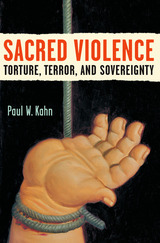
In Sacred Violence, the distinguished political and legal theorist Paul W. Kahn investigates the reasons for the resort to violence characteristic of premodern states. In a startling argument, he contends that law will never offer an adequate account of political violence. Instead, we must turn to political theology, which reveals that torture and terror are, essentially, forms of sacrifice. Kahn forces us to acknowledge what we don't want to see: that we remain deeply committed to a violent politics beyond law.
Paul W. Kahn is Robert W. Winner Professor of Law and the Humanities at Yale Law School and Director of the Orville H. Schell, Jr. Center for International Human Rights.
Cover Illustration: "Abu Ghraib 67, 2005" by Fernando Botero. Courtesy of the artist and the American University Museum.
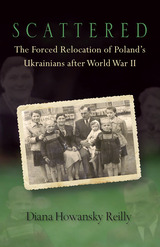
Born in the Lemko region of southeastern Poland, Petro, Melania, and Hania Pyrtej survived World War II only to be separated by political decisions over which they had no control. Petro relocated with his wife to Soviet Ukraine during the population exchange of 1944–46, while his sisters Melania and Hania were resettled to western Poland through Operation Vistula in 1947. As the Ukrainian Insurgent Army fought resettlement, the Polish government meanwhile imprisoned suspected sympathizers within the Jaworzno concentration camp. Melania, Reilly's maternal grandmother, eventually found her way to the United States during Poland's period of liberalization in the 1960s.
Drawing on oral interviews and archival research, Reilly tells a fascinating, true story that provides a bottom-up perspective and illustrates the impact of extraordinary historical events on the lives of ordinary people. Tracing the story to the present, she describes survivors' efforts to receive compensation for the destruction of their homes and communities.
Silver Medal for World History, Independent Publisher Book Awards
Finalist, Housatonic Book Awards
Finalist in History, Foreword Books of the Year
Based on her unprecedented level of access to the School of the Americas, Gill describes the School’s mission and training methods and reveals how its students, alumni, and officers perceive themselves in relation to the dirty wars that have raged across Latin America. Assessing the School’s role in U.S. empire-building, she shows how Latin America’s brightest and most ambitious military officers are indoctrinated into a stark good-versus-evil worldview, seduced by consumer society and the “American dream,” and enlisted as proxies in Washington’s war against drugs and “subversion.”

Shadow Lives reveals the unseen side of the '9/11 wars': their impact on the wives and families of men incarcerated in Guantanamo, or in prison or under house arrest in Britain and the US. Victoria Brittain shows how these families have been made socially invisible and a convenient scapegoat for the state in order to exercise arbitrary powers under the cover of the 'War on Terror'.
A disturbing exposé of the perilous state of freedom and democracy in our society, the book reveals how a culture of intolerance and cruelty has left individuals at the mercy of the security services’ unverifiable accusations and punitive punishments.
Both a j'accuse and a testament to the strength and humanity of the families, Shadow Lives shows the methods of incarceration and social control being used by the British state and gives a voice to the families whose lives have been turned upside down. In doing so it raises urgent questions about civil liberties which no one can afford to ignore.
There is no more compelling and dramatic unfolding story, with more profound international ramifications, than the conflict in the Middle East.
Sharing the Land of Canaan is a critical examination of the core issues of the conflict that dares to put forward a radical but logical solution: that a shared state is the best way to achieve justice and peace for Israelis and Palestinians.
Mazin B. Qumsiyeh, a human rights activist based at Yale University, offers an overview of the issues at stake, and outlines his vision for a lasting peace based on upholding the principles of human rights for all. Tackling taboo subjects, myths and obstacles, he argues convincingly that apartheid in the form of a two-state solution is no longer a feasible way to achieve enduring peace.
At this critical time, when the 'road map' to peace looks more uncertain than ever, this book provides a refreshing counterpoint to the failed strategies of the past. It is a direct and accessible account of the history - and mythology - of the fabled 'Land of Canaan', which lays out hopeful ideas for the future of this truly multiethnic and multicultural region.
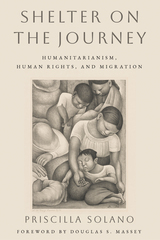
Solano, who volunteered at shelters in Mexico, chronicles the activity in three of the nearly 100 shelters along a unique humanitarian trail that many Central Americans take to reach the United States. She outlines the constraints faced by these sites and their potential to create social transformation and considers how and why migration security is currently framed and managed as both a criminal and humanitarian issue.
Shelter on the Journey explores the politics of the shelters, their social world, and the dynamics of charity and solidarity, as well as the need for humanitarian assistance and advocacy for dignified and free transit migration.
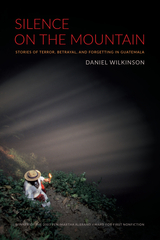
Decades of terror-inspired fear have led the Guatemalans to adopt a survival strategy of silence so complete that it verges on collective amnesia. The author’s great triumph is that he finds a way for people to tell their stories, and it is through these stories—dramatic, intimate, heartbreaking—that we are shown the anatomy of a thwarted revolution that has relevance not only to Guatemala but also to countless places around the world where terror has been used as a political tool.
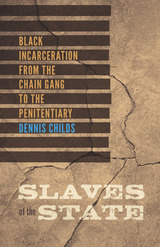
The Thirteenth Amendment to the United States Constitution, passed in 1865, has long been viewed as a definitive break with the nation’s past by abolishing slavery and ushering in an inexorable march toward black freedom. Slaves of the State presents a stunning counterhistory to this linear narrative of racial, social, and legal progress in America.
Dennis Childs argues that the incarceration of black people and other historically repressed groups in chain gangs, peon camps, prison plantations, and penitentiaries represents a ghostly perpetuation of chattel slavery. He exposes how the Thirteenth Amendment’s exception clause—allowing for enslavement as “punishment for a crime”—has inaugurated forms of racial capitalist misogynist incarceration that serve as haunting returns of conditions Africans endured in the barracoons and slave ship holds of the Middle Passage, on plantations, and in chattel slavery.
Childs seeks out the historically muted voices of those entombed within terrorizing spaces such as the chain gang rolling cage and the modern solitary confinement cell, engaging the writings of Toni Morrison and Chester Himes as well as a broad range of archival materials, including landmark court cases, prison songs, and testimonies, reaching back to the birth of modern slave plantations such as Louisiana’s “Angola” penitentiary.
Slaves of the State paves the way for a new understanding of chattel slavery as a continuing social reality of U.S. empire—one resting at the very foundation of today’s prison industrial complex that now holds more than 2.3 million people within the country’s jails, prisons, and immigrant detention centers.
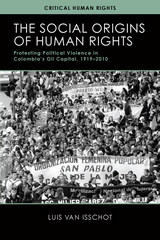
Built by Standard Oil in 1919, and home to the largest petroleum refinery in the country, Barrancabermeja has long been a critical battleground in Colombia’s armed conflict. One of the most militarized urban areas on earth, the city has been a regional base for the Colombian armed forces as well as for leftist guerrillas and a national paramilitary movement. In the midst of a dirty war in which the majority of victims were civilians, urban and rural social movements from Barrancabermeja and the surrounding area came together to establish a human rights movement. These frontline activists called upon the Colombian state to protect basic human rights and denounced the deeper socioeconomic inequalities they saw as sources of conflict. Through close study of the complex dynamics at work in Barrancabermeja, van Isschot shows how the efforts we describe as “human rights” activism derive in large part from these lived experiences of authoritarianism, war, poverty, and social exclusion. Through its social and historical approach, his analysis both complements and challenges the work of scholars who look at rights issues primarily through a legal lens.
In Solidarity, Steve Striffler addresses these key questions, offering the first history of US-Latin American solidarity from the Haitian Revolution to the present day. Striffler traces the history of internationalism through the Cold War, exploring the rise of human rights as the dominant current of international solidarity. He also considers the limitations of a solidarity movement today that inherited its organisational infrastructure from the human rights movements.
Moving beyond conventionally ahistorical analyses of solidarity, here Striffler provides a distinctive intervention in the history of progressive politics in both the US and Latin America, the past and present of US imperialism and anti-imperialism, and the history of human rights and labour internationalism.
The human rights movement in South Africa’s transition to a postapartheid democracy has been widely celebrated as a triumph for global human rights. It was a key aspect of the political transition, often referred to as a miracle, which brought majority rule and democracy to South Africa. The country’s new constitution, its Truth and Reconciliation Commission, and the moral authority of Nelson Mandela stand as exemplary proof of this achievement. Yet, less than a generation after the achievement of freedom, the status of human rights and constitutionalism in South Africa is uncertain. In government the ANC has displayed an inconsistent attitude to the protection, and advancement, of hard-won freedoms and rights, and it is not at all clear that a broader civic and political consciousness of the importance of rights is rooting itself more widely in popular culture.
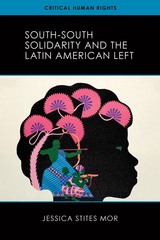
Jessica Stites Mor looks at four in-depth case studies: the use of legal reform to accomplish the goals of solidarity embedded in Mexico's revolutionary constitution, visual and print media circulated by Cuba and its influence on the agenda of the Afro-Asian block at the United Nations, organizing on behalf of Palestinian nationalism in reshaping Argentina's socialist left, and the role of Latin American Catholic activists in challenging the South African apartheid state. These examples serve as a much-needed road map to navigate our current political climate and show us how solidarity movements might approach future struggles.
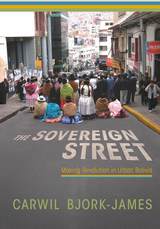
In the early twenty-first century Bolivian social movements made streets, plazas, and highways into the decisively important spaces for acting politically, rivaling and at times exceeding voting booths and halls of government. The Sovereign Street documents this important period, showing how indigenous-led mass movements reconfigured the politics and racial order of Bolivia from 1999 to 2011.
Drawing on interviews with protest participants, on-the-ground observation, and documentary research, activist and scholar Carwil Bjork-James provides an up-close history of the indigenous-led protests that changed Bolivia. At the heart of the study is a new approach to the interaction between protest actions and the parts of the urban landscape they claim. These “space-claiming protests” both communicate a message and exercise practical control over the city. Bjork-James interrogates both protest tactics—as experiences and as tools—and meaning-laden spaces, where meaning is part of the racial and political geography of the city.
Taking the streets of Cochabamba, Sucre, and La Paz as its vantage point, The Sovereign Streetoffers a rare look at political revolution as it happens. It documents a critical period in Latin American history, when protests made headlines worldwide, where a generation of pro-globalization policies were called into question, and where the indigenous majority stepped into government power for the first time in five centuries.
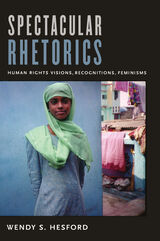

The sequel to Agamben's Homo Sacer: Sovereign Power and Bare Life, State of Exception is the first book to theorize the state of exception in historical and philosophical context. In Agamben's view, the majority of legal scholars and policymakers in Europe as well as the United States have wrongly rejected the necessity of such a theory, claiming instead that the state of exception is a pragmatic question. Agamben argues here that the state of exception, which was meant to be a provisional measure, became in the course of the twentieth century a normal paradigm of government. Writing nothing less than the history of the state of exception in its various national contexts throughout Western Europe and the United States, Agamben uses the work of Carl Schmitt as a foil for his reflections as well as that of Derrida, Benjamin, and Arendt.
In this highly topical book, Agamben ultimately arrives at original ideas about the future of democracy and casts a new light on the hidden relationship that ties law to violence.
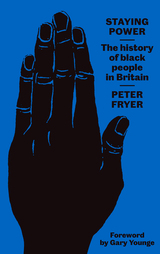
Stretching back to the Roman conquest, encompassing the court of Henry VIII, and following a host of characters from the pioneering nurse and war hero Mary Seacole to the abolitionist Olaudah Equiano, Peter Fryer paints a picture of two thousand years of black presence in Britain. By rewriting black Britons into British history, showing where they influenced political traditions, social institutions, and cultural life, Staying Power presented a radical challenge to racist and nationalist agendas. This edition includes a new foreword by Gary Younge examining the book’s continued significance in shaping black British identity today, alongside the now-classic introduction by Paul Gilroy.
To be taken seriously, therapies that claim to “cure” homosexuality wrap themselves in lab coats. Even though the fit is bad, and such therapies and their theorists now inhabit the scientific fringe, the science of sexuality has made some adjustments, too, Tom Waidzunas tells us in this provocative work.
Intervening in the politics of sexuality and science, The Straight Line argues that scientific definitions of sexual orientation do not merely reflect the results of investigations into human nature, but rather emerge through a process of social negotiation between opposing groups. The demedicalization of homosexuality and the discrediting of reparative therapies, ex-gay ministries, and reorientation research have, Waidzunas contends, required scientists to enforce key boundaries around scientific expertise and research methods. Drawing on extensive participant observation at conferences for ex-gays, reorientation therapists, mainstream psychologists, and survivors of ex-gay therapy, as well as interviews with experts and activists, The Straight Line traces reorientation debates in the United States from the 1950s to the present, following homosexuality therapies from the mainstream to the margins. As the ex-gay movement has become increasingly transnational in recent years, Waidzunas turns to Uganda, where ideas about the scientific nature of homosexuality influenced the passage of the Anti-Homosexuality Act of 2014.
While most studies treat the ex-gay movement as a religious phenomenon, this book looks at how the movement, in its attempts to establish legitimacy, has engaged with scientific institutions, shaping virulent anti-gay public policy.
Examines how poor and working-class communities in Guadalajara organized through faith, education, and culture to claim dignity, justice, and the right to the city.
Strength in Unity: Christian Base Communities and the Urban Popular Movement in Guadalajara, 1965–1994 presents the grassroots history of Guadalajara’s urban popular movement, centering the voices and struggles of poor and working-class communities, especially women, who organized for dignity, justice, and the right to the city. Brad H. Wright brings to light the transformative role of Christian base communities and Freirean popular education as incubators of political consciousness and collective action in the face of authoritarian repression and neoliberal coaptation.
Drawing from oral histories, personal archives, and the records of the Sagrado Corazón nuns, Wright reconstructs a powerful counternarrative to dominant portrayals of marginalized populations as “apathetic” and “uneducated.” Strength in Unity reveals a vibrant culture of resistance where women led campaigns for basic services, built schools, and demanded access to transportation, using tools such as community newspapers, street theater, and music to mobilize and sustain solidarity.
This deeply researched and compellingly told history challenges conventional accounts of urban development and social movements in Latin America. Strength in Unity is essential reading for scholars, students, and activists interested in grassroots organizing, liberation theology, and the enduring power of community-led change.
A deep dive into the mechanics of national human rights institutions and the forces that make or break their success.
In the years since World War II, the endeavor to promote human rights has gained momentum and become increasingly important within international relations. Yet these efforts often run into serious problems of enforcement.
Many countries formed national human rights institutions (NHRIs) with independent mandates to support and monitor government compliance with international human rights law. Be they commissions, ombudsmen, or tribunals, these institutions vary in their power and impact. For this book, Corina Lacatus surveyed NHRIs in Europe and around the world to determine their effectiveness and explain why some succeed while others fail.
The Strength of Our Commitments explores the relationship between the domestic and international support an institution receives and its ability to secure resources, credibility, and tangibly improve human rights conditions. Lacatus shows that NHRIs can be models of resilience, even in the face of opposition from political elites. Although their impact on human rights is difficult to measure, The Strength of Our Commitments shows how NHRIs’ strength comes from clearly defined formal powers, strong institutional leadership, and independence from political interference.

Structural Injustice and the Law presents theoretical approaches and case studies demonstrating how the concept of structural injustice can aid legal analysis, and how legal reform can reduce, or even eliminate, some forms of structural injustice. The interdisciplinary topics discussed here in the book include domination, equality, human rights law, legal status, labor law, criminal justice, domestic homicide reviews, homelessness, regulatory public bodies, and the films of Ken Loach. Drawn together, these subjects build an invaluable resource for legal theorists exploring how to use the concept of structural injustice and political philosophers looking for nuanced accounts of the law’s role both in creating and mitigating structural injustice.
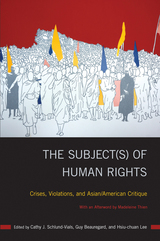
Human rights violations have always been part of Asian American studies. From Chinese immigration restrictions, the incarceration of Japanese Americans, yellow peril characterizations, and recent acts of deportation and Islamophobia, Asian Americans have consistently functioned as subordinated “subjects” of human rights violations. The Subject(s) of Human Rights brings together scholars from North America and Asia to recalibrate these human rights concerns from both sides of the Pacific.
The essays in this collection provide a sharper understanding of how Asian/Americans have been subjected to human rights violations, how they act as subjects of history and agents of change, and how they produce knowledge around such subjects. The editors of and contributors to The Subject(s) of Human Rights examine refugee narratives, human trafficking, and citizenship issues in twentieth- and twenty-first century literature. These themes further refract issues of American war-making, settler colonialism, military occupation, collateral damage, and displacement that relocate the imagined geographies of Asian America from the periphery to the center of human rights critique.
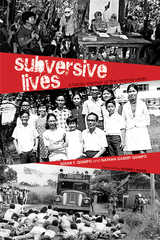
From the 1960s to the 1990s, seven members of the Quimpo family dedicated themselves to the anti-Marcos resistance in the Philippines, sometimes at profound personal cost. In this unprecedented memoir, eight siblings (plus one by marriage) tell their remarkable stories in individually authored chapters that comprise a family saga of revolution, persistence, and, ultimately, vindication, even as easy resolution eluded their struggles.
Subversive Lives tells of attempts to smuggle weapons for the New People’s Army (the armed branch of the Communist Party of the Philippines); of heady times organizing uprisings and strikes; of the cruel discovery of one brother’s death and the inexplicable disappearance of another (now believed to be dead); and of imprisonment and torture by the military. These stories show the sacrifices and daily heroism of those in the movement. But they also reveal its messy legacies: sons alienated from their father; daughters abused by the military; friends betrayed; and revolutionary affection soured by intractable ideological differences.
The rich and distinctive contributions span the martial law years of Ferdinand Marcos’s rule. Subversive Lives is a riveting and accessible primer for those unfamiliar with the era, and a resonant history for those with a personal connection to what it meant to be Filipino at that time, or for anyone who has fought political repression.
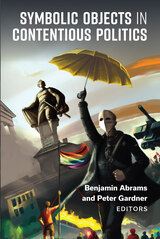
When we observe protest marches, striking workers on picket lines, and insurgent movements in the world today, a litany of objects routinely fill our field of vision. Some such objects are ubiquitous the world over, like flags, banners, and placards. Others are situationally unique: Who could have anticipated the historical importance of a flower placed in the barrel of a gun, a flaming torch, a sea of umbrellas, a motorist’s yellow vest, a feather headdress, an AK-47, or a knitted pink hat? This book explores the “stuff” at the heart of protests, revolutions, civil wars, and other contentious political events, with particular focus on those objects that have or acquire symbolic importance. In the context of “contentious politics” (disruptive political episodes where people try to change societies without going through institutions), certain objects can divide and unite social groups, tell stories, make declarations, spark controversy, and even trigger violent upheavals.
This book draws together scholars from a variety of fields to discuss symbolic objects in contentious politics: their meanings, uses, functions, and social responses. In bringing these phenomena together, this book offers a serious, distinctive, and cohesive theoretical contribution that draws upon diverse scholarly work in order to form the building blocks for future inquiry in the field. The aim is not merely to “close the gap” in the literature, but to create space in the field for further and more fruitful inquiry.
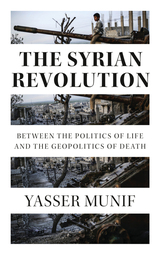
Having lived in Syria for over fifteen years, Yasser Munif is expert in exploring the micropolitics of revolutionary forces. He uncovers how cities are managed, how precious food is distributed and how underground resistance thrives in regions controlled by regime forces. In contrast, the macropolitics of the elite Syrian regime are undemocratic, destructive and counter-revolutionary. Regional powers, Western elites, as well as international institutions choose this macropolitical lens to apprehend the Syrian conflict. By doing so, they also choose to ignore the revolutionaries' struggles.
By looking at the interplay between the two sides, case studies of Aleppo and Manbij and numerous firsthand interviews, Yasser Munif shows us that this macro and geopolitical authoritarianism only brings death, and that by looking at the smaller picture - the local, the grassroots, the revolutionaries - we can see the politics of life emerge.
READERS
Browse our collection.
PUBLISHERS
See BiblioVault's publisher services.
STUDENT SERVICES
Files for college accessibility offices.
RECENTLY PUBLISHED



UChicago Accessibility Resources
home | accessibility | search | about | contact us
BiblioVault ® 2001 - 2026
The University of Chicago Press