
 A SCHOLARLY BOOK REPOSITORY
5 start with S start with S
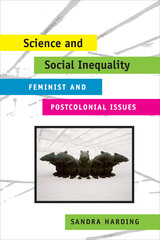
In Science and Social Inequality, Sandra Harding makes the provocative argument that the philosophy and practices of today's Western science, contrary to its Enlightenment mission, work to insure that more science will only worsen existing gaps between the best and worst off around the world. She defends this claim by exposing the ways that hierarchical social formations in modern Western sciences encode antidemocratic principles and practices, particularly in terms of their services to militarism, the impoverishment and alienation of labor, Western expansion, and environmental destruction. The essays in this collection--drawing on feminist, multicultural, and postcolonial studies--propose ways to reconceptualize the sciences in the global social order.
At issue here are not only social justice and environmental issues but also the accuracy and comprehensiveness of our understandings of natural and social worlds. The inadvertent complicity of the sciences with antidemocratic projects obscures natural and social realities and thus blocks the growth of scientific knowledge. Scientists, policy makers, social justice movements and the consumers of scientific products (that is, the rest of us) can work together and separately to improve this situation.


Jacques Derrida on the problem of secrecy, the first in a ten-seminar series on questions of responsibility.
Delivered at the École des hautes études en sciences sociales in Paris during the 1991–92 academic year, Secrets of Responsibility is the first of ten seminars given by Jacques Derrida under the umbrella “Questions of Responsibility,” a cycle that includes Hospitality, Perjury and Pardon, Death Penalty, and The Beast and the Sovereign—each also published by the University of Chicago Press.
In this seminar, Derrida asks a basic question—what is a secret?—which he then explores across scientific, technical, social, political, and religious domains. Over twelve sessions, we are treated to analyses of industrial, state, military, professional, and religious secrets as well as secret societies and secret police. Derrida also tackles secrecy in literary fiction (especially in Melville, James, Poe, and Baudelaire) and philosophical texts (including Freud, Kant, Heidegger, Kierkegaard, Patočka, Nietzsche, Levinas, and others). The result is a set of profound and surprising insights delivered as only Derrida can.
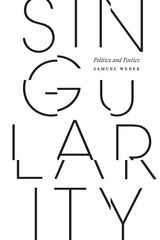
An influential thinker on the concept of singularity and its implications on politics, theology, economics, psychoanalysis, and literature
For readers versed in critical theory, German and comparative literature, or media studies, a new book by Samuel Weber is essential reading. Singularity is no exception. Bringing together two decades of his essays, it hones in on the surprising implications of the singular and its historical relation to the individual in politics, theology, economics, psychoanalysis, and literature. Although singularity has long been a keyword in literary studies and philosophy, never has it been explored as in this book, which distinguishes singularity as an “aporetic” notion from individuality, with which it remains historically closely tied.
To speak or write of the singular is problematic, Weber argues, since once it is spoken of it is no longer strictly singular. Walter Benjamin observed that singularity and repetition imply each other. This approach informs the essays in Singularity. Weber notes that what distinguishes the singular from the individual is that it cannot be perceived directly, but rather experienced through feelings that depend on but also exceed cognition. This interdependence of cognition and affect plays itself out in politics, economics, and theology as well as in poetics. Political practice as well as its theory have been dominated by the attempt to domesticate singularity by subordinating it to the notion of individuality. Weber suggests that this political tendency draws support from what he calls “the monotheological identity paradigm” deriving from the idea of a unique and exclusive Creator-God.
Despite the “secular” tendencies usually associated with Western modernity, this paradigm continues today to inform and influence political and economic practices, often displaying self-destructive tendencies. By contrast, Weber reads the literary writings of Hölderlin, Nietzsche, and Kafka as exemplary practices that put singularity into play, not as fiction but as friction, exposing the self-evidence of established conventions to be responses to challenges and problems that they often prefer to obscure or ignore.

This new translation of Plato’s dialogue on love avoids the cumbersome locutions of Victorian versions and presents Plato’s ancient drinking party in a vigorous contemporary idiom. The character of Socrates emerges with unexpected wit and humor, adding new dimensions to his familiar irony. A poet and philosopher have collaborated to give an English version that is fresh and clear, and accurately renders the ideas of the speakers.
A detailed internal analysis of the structure of the dialogue is given in the introduction. The afterword presents an historical interpretation of the two ways of love, eros and agapé, an a reinterpretation of eros in Plato.
READERS
Browse our collection.
PUBLISHERS
See BiblioVault's publisher services.
STUDENT SERVICES
Files for college accessibility offices.
RECENTLY PUBLISHED

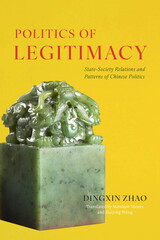





UChicago Accessibility Resources
home | accessibility | search | about | contact us
BiblioVault ® 2001 - 2026
The University of Chicago Press