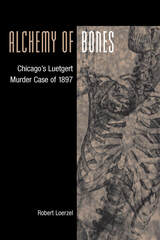
front cover of Alchemy of Bones
Alchemy of Bones
Chicago's Luetgert Murder Case of 1897
Robert Loerzel
University of Illinois Press, 2002

On May 1, 1897, Louise Luetgert disappeared. Although no body was found, Chicago police arrested her husband, Adolph, the owner of a large sausage factory, and charged him with murder. The eyes of the world were still on Chicago following the success of the World's Columbian Exposition, and the Luetgert case, with its missing victim, once-prosperous suspect, and all manner of gruesome theories regarding the disposal of the corpse, turned into one of the first media-fueled celebrity trials in American history.

Newspapers fought one another for scoops, people across the country claimed to have seen the missing woman alive, and each new clue led to fresh rounds of speculation about the crime. Meanwhile, sausage sales plummeted nationwide as rumors circulated that Luetgert had destroyed his wife's body in one of his factory's meat grinders.

Weaving in strange-but-true subplots involving hypnotists, palmreaders, English con artists, bullied witnesses, and insane-asylum bodysnatchers, Alchemy of Bones is more than just a true crime narrative; it is a grand, sprawling portrait of 1890s Chicago--and a nation--getting an early taste of the dark, chaotic twentieth century.


[more]

front cover of American Infanticide
American Infanticide
Sexism, Science, and the Politics of Sympathy
Clara S. Lewis
Rutgers University Press, 2025
On April 22, 2015, the sorority sisters at Ohio’s Muskingum University’s Delta house encountered a horrific scene: pools of blood and gore in the first-floor bathroom. No one knew exactly what had happened, but the sisters suspected it had something to do with Emile Weaver. Studious, athletic, and well-liked, Emile had recently started wearing bulky sweatsuits and hiding her midsection, as if she was covering up a sudden weight gain. Could Emile be pregnant?
 
Emboldened by fear, the sorority sisters investigated. In the driveway next to the kitchen door, they found Emile’s newborn baby girl dead inside a garbage bag. Emile’s crime seemed senseless and left her family and friends with an aching question: what happened?
 
American Infanticide situates Emile's tragic act in a long intellectual, social, and legal history, uncovering disturbing missing chapters in our national history that undercut myths that have shaped public reactions to so-called monster moms and dumpster babies since the colonial era. Ultimately, the book uncovers how bias and inconsistency dictate how women accused of infant homicide are perceived and punished and sheds new light on how and why our legal responses to infanticide are so deeply misguided.
[more]

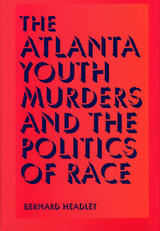
front cover of The Atlanta Youth Murders and the Politics of Race
The Atlanta Youth Murders and the Politics of Race
Bernard Headley
Southern Illinois University Press, 1998

At least twenty-nine black children and young adults were murdered by an Atlanta serial killer between the summer of 1979 and the spring of 1981. Drawing national media attention, the “Atlanta tragedy,” as it became known, was immediately labeled a hate crime. However, when a young black man was arrested and convicted for the killings, public attention quickly shifted. Noted criminologist Bernard Headley was in Atlanta as the tragedy unfolded and provides here a thoughtful exploration of the social and political implications of the case both locally and nationally. Focusing on a singular historical event, Headley exposes broader tensions of race and class in contemporary America.

[more]


Send via email Share on Facebook Share on Twitter