
 A SCHOLARLY BOOK REPOSITORY
15 start with S start with S

Richard J. Parmentier employs semiotic methods to analyze both linguistic and nonlinguistic signs representing Belauan history, showing that these signs also organize social and political structures. He identifies four pervasive semiotic patterns that appear rhetorically in myths, chants, and historical narratives and graphically in the arrangement of certain classes of stones, including village boundary markers, burial platforms, exchange valuables, and monoliths found at abandoned sites in the islands.
While not neglecting historical evidence from Western sources, Parmentier contends that the history of Belau cannot be understood without taking into full account indigenous categories of space, time, and transformation and without recognizing the importance of Belauan social actions that construct, interpret, and transmit historical knowledge. Supporting his analysis of Belauan history with concrete ethnographic demonstration, Parmentier presents a work of central importance for Austronesianists, anthropologists, and historians.

For example, in a much-cited essay on the Athenian religious festival of the Arrephoria, Burkert uncovers deep connections between this strange nocturnal ritual, in which two virgin girls carried sacred offerings into a cave and later returned with something given to them there, and tribal puberty initiations by linking the festival with the myth of the daughters of Kekrops. Other chapters explore the origins of tragedy in blood sacrifice; the role of myth in the ritual of the new fire on Lemnos; the ties between violence, the Athenian courts, and the annual purification of the divine image; and how failed political propaganda entered the realm of myth at the time of the Persian Wars.

In the decades before the rise of the Third Reich, “Secret Germany” was a phrase used by the circle of writers around the poet Stefan George to describe a collective political and poetic project: the introduction of the highest values of art into everyday life, the secularization of myth and the mythologization of history. In this book, Furio Jesi takes up the term in order to trace the contours of that political, artistic, and aesthetic thread as it runs through German literary and artistic culture in the period—which, in the 1930s, became absorbed by Nazism as part of its prophecy of a triumphant future. Drawing on thinkers like Carl Jung and writers such as Thomas Mann and Rainer Maria Rilke, Jesi reveals a literary genre that was transformed, tragically, into a potent political myth.

How Alaska redefined US colonialism through Indigenous resistance and legal innovation
Long treated as the symbolic “last frontier,” Alaska was, in fact, the United States’s first experiment in overseas empire. Settler Imperialism reveals these concepts as fictitious stories promoted by government officials and offers a sweeping history of Alaska Native legal and political struggle in the face of a colonial structure that defied the norms of US expansion. Examining Alaska as both a settler and imperial space, Jess Arnett challenges familiar narratives of American growth, sovereignty, and law.
Following the 1867 Treaty of Cession when the United States purchased Alaska from Russia, the federal government refused to sign treaties with Alaska Natives, excluded them from the Bureau of Indian Affairs, and denied the region designation as Indian Country. These departures from standard Indian policy created legal ambiguity that enabled new opportunities for land dispossession and resource extraction by state and corporate interests. Focusing on history from the late nineteenth century through the 1971 Alaska Native Claims Settlement Act, Arnett uncovers how the Tlingit, Haida, Tsimshian, and other Indigenous nations navigated—and contested—Alaska’s peculiar legal terrain. Members of these communities forcefully petitioned for US citizenship, mobilized Indigenous legal orders, and engaged selective federal Indian law to assert land rights and political authority.
By placing Alaska at the center of US colonial history, Settler Imperialism turns a critical lens on the evolution of America. To understand US expansion, race, and legal formation, one must understand Alaska first as a proving ground for empire, not the last frontier.
Retail e-book files for this title are screen-reader friendly with images accompanied by short alt text and/or extended descriptions.

As Seth Lerer shows in this pioneering book, Shakespeare’s late plays invite us to contemplate that very question, offering up lyric as a displaced and sometimes desperate antidote to situations of duress or powerlessness. Lerer argues that the theme of lyric misalignment running throughout The Tempest, The Winter’s Tale, Henry VIII, and Cymbeline serves a political purpose, a last-ditch effort at transformation for characters and audiences who had lived through witch-hunting, plague, regime change, political conspiracies, and public executions.
A deep dive into the relationship between aesthetics and politics, this book also explores what Shakespearean lyric is able to recuperate for these “victims of history” by virtue of its disjointed utterances. To this end, Lerer establishes the concept of mythic lyricism: an estranging use of songs and poetry that functions to recreate the past as present, to empower the mythic dead, and to restore a bit of magic to the commonplaces and commodities of Jacobean England. Reading against the devotion to form and prosody common in Shakespeare scholarship, Lerer’s account of lyric utterance’s vexed role in his late works offers new ways to understand generational distance and cultural change throughout the playwright’s oeuvre.
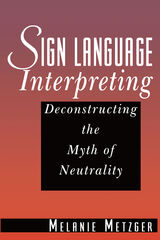
Sign Language Interpreting relies upon an interactional sociolinguistic approach to ask fundamental questions regarding interpreter neutrality. First, do interpreters influence discourse, and if so, how? Also, what kind of expectations do the participants bring to the event, and what do the interpreters bring to discussions? Finally, how do their remarks affect their alignment with participants in the interaction? Using careful assessments of how these interviews were framed, and also re-interviewing the participants for their perspectives, this penetrating book discloses the ways in which interpreters influence these situations. It also addresses the potential implications of these findings regarding sign language interpretation in medical, educational, and all other general interactions. Interpreter trainers and their students will join certified interpreters and Deaf studies scholars in applauding and benefiting from the fresh ground broken by this provocative study.
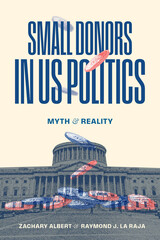
A myth-busting investigation of small donors: who they are, how they spend their money, and whose campaigns actually benefit from their donations.
Many political reformers argue that more robust small donor participation in US campaigns would reduce the influence of the wealthiest Americans and improve political responsiveness to ordinary citizens. Drawing on extensive data, including surveys and campaign records, Zachary Albert and Raymond J. La Raja largely dispel this myth, offering the first comprehensive portrait to date of small donors in US elections.
Although small donor contributions to high-profile, national races have increased markedly since 2018, the US campaign finance system allows for even larger sums of money from Super PACs and other independent spending groups. Moreover, small donors are mostly similar to their larger contributor counterparts: both are socioeconomically advantaged, strongly partisan, ideologically extreme, and distinct from non-donors. Small donors can also be impulsive: they tend to give mostly to high-profile candidates on the ideological extremes, empowering media celebrities and norm-breakers rather than consensus-builders, and they underinvest in competitive and down-ballot races. Importantly, the candidates who rely most heavily on small donor support are not necessarily better legislators or representatives.
Yet, the story is not entirely bleak. Small donors bring energy and resources, especially for challengers and outsider candidates. The book shows how reforms could channel this energy more productively—by strengthening political parties, emphasizing local representation, and creating systems that broaden participation beyond the most ideological citizens.
Timely, accessible, and grounded in data, Small Donors in US Politics reveals both the promise and the peril of small donor politics—and what it will take to make money in politics serve democracy, not undermine it.


Since pre-Columbian times, soldiering has been a traditional life experience for innumerable women in Mexico. Yet the many names given these women warriors—heroines, camp followers, Amazons, coronelas, soldadas, soldaderas, and Adelitas—indicate their ambivalent position within Mexican society. In this original study, Elizabeth Salas explores the changing role of the soldadera, both in reality and as a cultural symbol, from pre-Columbian times up to the present day.
Drawing on military archival data, anthropological studies, and oral history interviews, Salas first explores the real roles played by Mexican women in armed conflicts. She finds that most of the functions performed by women easily equate to those performed by revolutionaries and male soldiers in the quartermaster corps and regular ranks. She then turns her attention to the soldadera as a continuing symbol in Mexican and Chicano culture, examining the image of the soldadera in literature, corridos, art, music, and film.
Challenging many traditional stereotypes, Salas finds that the fundamental realities of war link all Mexican women, regardless of time period, social class, or nom de guerre.

Setting the tone for the collection, NASA chief historian Roger D. Launius and Howard McCurdy maintain that the nation's presidency had become imperial by the mid-1970s and that supporters of the space program had grown to find relief in such a presidency, which they believed could help them obtain greater political support and funding. Subsequent chapters explore the roles and political leadership, vis-à-vis government policy, of presidents Eisenhower, Kennedy, Johnson, Nixon, Ford, Carter, and Reagan.

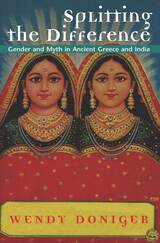
Myth, Doniger argues, responds to the complexities of the human condition by multiplying or splitting its characters into unequal parts, and these sloughed and cloven selves animate mythology's prodigious plots of sexuality and mortality. Doniger's comparisons show that ultimately differences in gender are more significant than differences in culture; Greek and Indian stories of doubled women resemble each other more than they do tales of doubled men in the same culture. In casting Hindu and Greek mythologies as shadows of each other, Doniger shows that culture is sometimes but the shadow of gender.

A literary and cultural milestone, Spoon River Anthology captured an idea of the rural Midwest that became a bedrock myth of life in small-town America. Jason Stacy places the book within the atmosphere of its time and follows its progress as the poetry took root and thrived. Published by Edgar Lee Masters in 1915, Spoon River Anthology won praise from modernists while becoming an ongoing touchstone for American popular culture. Stacy charts the ways readers embraced, debated, and reshaped Masters's work in literary controversies and culture war skirmishes; in films and other media that over time saw the small town as idyllic then conflicted then surreal; and as the source of three archetypes—populist, elite, and exile—that endure across the landscape of American culture in the twenty-first century.
A wide-ranging reconsideration of a literary landmark, Spoon River America tells the story of how a Midwesterner's poetry helped change a nation's conception of itself.

Sometimes the crack of the bat or the roar of the crowd fails to capture the meaning of sports as athletes themselves understand it. Books about sports have ignored this dimension of the subject, particularly the athletes’ own autobiographical accounts. In Sporting Lives, the first book to examine the two popular realms of sports and autobiography, James Pipkin looks at recurring patterns found in athletes’ accounts of their lives and sporting experiences, examining language, metaphor, rhetorical strategies, and other elements to analyze sports from the inside out.
Sporting Lives takes a fresh look at memoirs from baseball, football, basketball, golf, and other sports to explore how American athletes see themselves: not only how those images mesh with popular perceptions of them as heroes or celebrities but also how their accounts differ from those of sports journalists and other outsiders. Drawing on the life stories of such well-known figures as Wilt Chamberlain, Babe Ruth, and Martina Navratilova—both as-told-to and self-authored works—Pipkin follows players from the “echoing green” of eternal youth to the sometimes cultlike and isolated status of fame, interpreting recurring patterns both in the living of their lives and in the telling of them. He even considers Dennis Rodman’s four autobiographies to show how the contradictions of his self-portrayals reflect the Janus-faced quality of sports in the era of celebrity culture.
As Pipkin shows, the life of the athlete involves more than mere athleticism; it is also a world of nostalgia and sentiment, missed opportunities and lost youth. He sheds light on athletes’ common obsession with youth and body image—including gender and racial considerations—and explores their descriptions of being “in a zone,” that transcendent state when everything seems to click. And he considers the time that all athletes dread, when their bodies begin to betray them . . . and the cheering stops.
While the lives of athletes may often suggest the magic of Peter Pan, Pipkin’s engaging study reveals that they are in many ways more like the Lost Boys. Sporting Lives shows that the meaning of sports is intertwined with the telling. It is both an eminently readable book for fans and a critically sophisticated analysis that will engage scholars of literature, sports or media studies, and American popular culture.

Anyone who has ever taken a CPR course has wondered, "What would happen if I actually had to use CPR?" In Western societies, the lifesaving power of resuscitation has the status of a revered cultural myth. It promises life in the face of sudden death, but the reality is that lives are rarely saved. Medical researchers estimate the survival rate for out-of-hospital CPR to be between 1 and 3 percent. Sudden Death and the Myth of CPR explores the history of this medical innovation and the promotion of its effectiveness.
The overuse of resuscitation, Timmermans explains, defines people's experience with sudden death, something he learned firsthand by following the practice of lifesaving from street corner to emergency room. He argues that very few people are successfully resuscitated without brain damage despite the promotion of CPR's effectiveness through powerful media images. In vivid accounts of the day-to-day practices of cardiopulmonary resuscitation in one of the only studies o f sudden death, Timmermans records the astonishingly frank comments of emergency personnel. Doctors, nurses, social workers, and paramedics express emotions from cynicism about going through the futile motions to genuine concern for victims' family members.
If a person who was supposed to keep on living dies at the end of a resuscitative attempt, how socially meaningful is the dying? Timmermans asks tough questions and addresses the controversial ethical issues about the appropriateness of interfering with life and death. He suggests policy reform and the restoration of dignity to sudden death.
READERS
Browse our collection.
PUBLISHERS
See BiblioVault's publisher services.
STUDENT SERVICES
Files for college accessibility offices.
RECENTLY PUBLISHED




UChicago Accessibility Resources
home | accessibility | search | about | contact us
BiblioVault ® 2001 - 2026
The University of Chicago Press