
 A SCHOLARLY BOOK REPOSITORY
10 start with S start with S
Arnold R. Hirsch (1949–2018) was one of the preeminent urban historians of his generation, a reputation cemented by his landmark book, Making the Second Ghetto. With compelling clarity, Hirsch demonstrated that segregation is not the inevitable result of individual choices, natural tendencies, or cultural traits—it is a structural phenomenon, reinforced on every level by state power.
Segregating Cities collects the author’s key essays, some previously unpublished, to reveal a more complete picture of a remarkable scholar and his exploration of race, place, politics, and policy in the twentieth-century American city. Together, these essays can help us see segregation for what it is, so that we can then begin to truly work to overcome it.

Best Nineteenth-Century Book Award, Latin American Studies Association Nineteenth-Century Section, 2021
Analyzing a wide variety of late-nineteenth-century sources, Sex, Skulls, and Citizens argues that Argentine scientific projects of the era were not just racial encounters, but were also conditioned by sexual relationships in all their messy, physical reality.
The writers studied here (an eclectic group of scientists, anthropologists, and novelists, including Estanislao Zeballos, Lucio and Eduarda Mansilla, Ramón Lista, and Florence Dixie) reflect on Indigenous sexual practices, analyze the advisability and effects of interracial sex, and use the language of desire to narrate encounters with Indigenous peoples as they try to scientifically pinpoint Argentina's racial identity and future potential.
Kerr's reach extends into history of science, literary studies, and history of anthropology, illuminating a scholarly time and place in which the lines betwixt were much blurrier, if they existed at all.
The first part of this book presents a fresh and encouraging report on the state of racial integration in America's neighborhoods. It shows that while the majority are indeed racially segregated, a substantial and growing number are integrated, and remain so for years.
Still, many integrated neighborhoods do unravel quickly, and the second part of the book explores the root causes. Instead of panic and "white flight" causing the rapid breakdown of racially integrated neighborhoods, the author argues, contemporary racial change is driven primarily by the decision of white households not to move into integrated neighborhoods when they are moving for reasons unrelated to race. Such "white avoidance" is largely based on the assumptions that integrated neighborhoods quickly become all black and that the quality of life in them declines as a result.
The author concludes that while this explanation may be less troubling than the more common focus on racial hatred and white flight, there is still a good case for modest government intervention to promote the stability of racially integrated neighborhoods. The final chapter offers some guidelines for policymakers to follow in crafting effective policies.
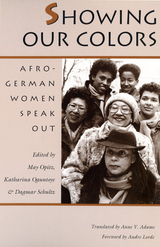
Showing Our Colors: Afro-German Women Speak Out is an English translation of the German book Farbe bekennen, edited by author May Ayim, Katharina Oguntoye, and Dagmar Schultz. It is the first published book by Afro-Germans. It is the first written use of the term Afro-German.
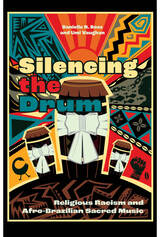
Silencing the Drum exposes the profound struggle of Afro-Brazilian sacred music against escalating intolerance. Danielle N. Boaz and Umi Vaughan blend legal scholarship with ethnomusicology, offering a compelling narrative rooted in interviews with religious leaders, musicians, and activists across Brazil. This multidisciplinary exploration examines the relentless attacks against the practitioners of Afro-Brazilian religions—from discriminatory noise complaints in Bahia to vigilante violence in Rio de Janeiro.
The volume integrates multimedia elements including musical samples to vividly illustrate the struggles and resilience of Afro-Brazilian communities in the face of discrimination. As Silencing the Drum confronts the larger global issues of racism and religious freedom, it provides essential insights for scholars, activists, and anyone passionate about human rights and cultural preservation.
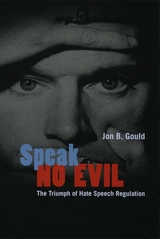
Although college speech codes have been overturned by the courts, Speak No Evil argues that their rise has still had a profound influence on curtailing speech in other institutions such as the media and has also shaped mass opinion and common understandings of constitutional norms. Ultimately, Gould contends, this kind of informal law can have just as much power as the Constitution.

Rukmini Pande’s examination of race in fan studies is sure to make an immediate contribution to the growing field. Until now, virtually no sustained examination of race and racism in transnational fan cultures has taken place, a lack that is especially concerning given that current fan spaces have never been more vocal about debating issues of privilege and discrimination.
Pande’s study challenges dominant ideas of who fans are and how these complex transnational and cultural spaces function, expanding the scope of the field significantly. Along with interviewing thirty-nine fans from nine different countries about their fan practices, she also positions media fandom as a postcolonial cyberspace, enabling scholars to take a more inclusive view of fan identity. With analysis that spans from historical to contemporary, Pande builds a case for the ways in which non-white fans have always been present in such spaces, though consistently ignored.
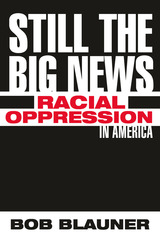
Blauner launched his concept of internal colonialism in the turbulent 1960's, a period in which many Americans worried that racial conflicts would propel the country into another civil war. The notion that the systematic oppression of people of color in the United States resembles the situation of colonized populations in Third World countries still informs much of the academic research on race as well as public discourse. Indeed, today's critical race and whiteness studies are deeply indebted to Blauner's work on internal colonialism and the pervasiveness of white privilege. Offering a radical perspective on the United States' racial landscape, Bob Blauner forcefully argues that we ignore the persistence of oppression and our continuing failure to achieve equality at our own peril.

READERS
Browse our collection.
PUBLISHERS
See BiblioVault's publisher services.
STUDENT SERVICES
Files for college accessibility offices.
RECENTLY PUBLISHED


UChicago Accessibility Resources
home | accessibility | search | about | contact us
BiblioVault ® 2001 - 2026
The University of Chicago Press