
 A SCHOLARLY BOOK REPOSITORY
16 start with S start with S
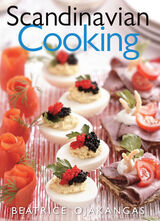
Traditional Scandinavian home cooking—now in paperback!
Beatrice Ojakangas brings to life the cuisines and customs of Norway, Sweden, Finland, and Denmark, countries that share borders and bounty. Danes lead with smørrebrød (an open-faced sandwich), which may be topped with cheese, green pepper, and sliced fresh strawberries. Finns specialize in earthy, chewy whole grain bread. Norwegians have wonderfully fresh fish and seafood, and the Swedes gave the world smörgåsbord!
Ojakangas offers us true Scandinavian home cooking that features the best of what is in season. Scandinavian Cooking provides traditional menus for different occasions and seasons—from a Farmhouse Brunch with Buttered Potato Soup to an Old-Fashioned Christmas Smörgåsbord with Dip-in-the-Kettle Soup and Norwegian Cream Pudding, to a sumptuous Midsummer’s Day Buffet with Salmon-in-a-Crust and Fruit-Juice Glögg. A good Scandinavian cook has a flair for color, texture, shape, and simplicity in creating the food that these menus show off to perfection. Beatrice Ojakangas describes her experiences gathering recipes at the tables of friends on her visits to Scandinavia and the beautifully crafted tools and tableware that will help to make the Scandinavian dishes you prepare authentic.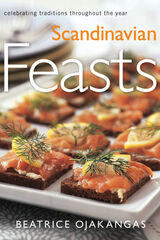
The definitive word on sumptuous Scandinavian cooking, now in paperback!
Drawing upon her rich knowledge of Scandinavian cuisine and culture, expert chef and veteran writer Beatrice Ojakangas presents a multitude of delicious yet remarkably simple recipes in this cookbook classic, available in paperback for the first time. Scandinavian Feasts features the cuisine of Denmark, Norway, Sweden, and Finland, and it includes menus made up of a bounty of appetizers, drinks, smorgasbord, meats, fish, soups, vegetables, desserts, and breads. Easily as engaging as the dishes themselves, each recipe comes with an introduction that explains the cultural importance of the feast and details its seasonal significance.
During the long, dark Scandinavian winter, the meals tend to be hearty and substantial. In Sweden and western Finland, a traditional Thursday lunch consists of pea soup and pancakes. A typical winter dinner might include Danish crackling roast pork with sugar-browned potatoes topped off with an irresistible ice cream cake. Christmastime gatherings, in particular, are often a chance to celebrate with a cup of hot glogg or Swedish punch. When the winter is finally over, the seemingly endless summer days are savored along with the fresh fruits and vegetables that are hard to find after the short growing season. During the white nights of Sweden and Norway, it is customary to serve a midnight supper after a concert or the theater, while a special occasion such as a baptism or anniversary might call for a feast of dill-stuffed whole salmon followed by kransekake, a beautiful towering ring cake of ground almonds.No matter what your level of expertise as a cook, the recipes are easy to use. The ingredients are commonly found in most grocery stores. Scandinavian Feasts is sure to delight enthusiasts of Scandinavian culture and lovers of fine food everywhere.Beatrice Ojakangas is the author of two dozen cookbooks, including The Great Scandinavian Baking Book (1999), also published by the University of Minnesota Press. Her articles have been published in Bon Appétit, Gourmet, Cooking Light, Cuisine, and Redbook, and she has appeared on television’s Baking with Julia Child and Martha Stewart’s Living. She lives in Duluth, Minnesota.
Seasons of Plenty provides colorful descriptions, folk stories, appealing photgraphs and illustrations, excerpts from journals and ledgers, recipes for good food like savory dumpling soup, mashed potatoes with browned bread crumbs, Sauerbraten, and feather light apple fritters.

The music of Serbia and Greece has long been a vital part of Balkan culture, but it has been excluded from the academic canon of Western music history. Katy Romanou corrects this oversight with Serbian and Greek Art Music, the first book in English on the subject. Written by seven renowned musicologists, the book stresses the interaction between music and politics and relates the efforts of local musicians to synchronize their musical environment with the West. Focusing on music education, musical culture, and creation, this timely volume will be of interest to musicologists and scholars of Balkan culture.
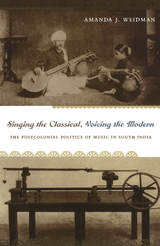
Combining ethnographic observation derived from her experience as a student and performer of South Indian music with close readings of archival materials, Weidman traces the emergence of this politics of voice through compelling analyses of the relationship between vocal sound and instrumental imitation, conventions of performance and staging, the status of women as performers, debates about language and music, and the relationship between oral tradition and technologies of printing and sound reproduction. Through her sustained exploration of the way “voice” is elaborated as a trope of modern subjectivity, national identity, and cultural authenticity, Weidman provides a model for thinking about the voice in anthropological and historical terms. In so doing, she shows that modernity is characterized as much by particular ideas about orality, aurality, and the voice as it is by regimes of visuality.

2018 James Beard Award Winner: Best American Cookbook
Named one of the Best Cookbooks of 2017 by NPR, The Village Voice, Smithsonian Magazine, UPROXX, New York Magazine, San Francisco Chronicle, Mpls. St. PaulMagazine and others
Here is real food—our indigenous American fruits and vegetables, the wild and foraged ingredients, game and fish. Locally sourced, seasonal, “clean” ingredients and nose-to-tail cooking are nothing new to Sean Sherman, the Oglala Lakota chef and founder of The Sioux Chef. In his breakout book, The Sioux Chef’s Indigenous Kitchen, Sherman shares his approach to creating boldly seasoned foods that are vibrant, healthful, at once elegant and easy.
Sherman dispels outdated notions of Native American fare—no fry bread or Indian tacos here—and no European staples such as wheat flour, dairy products, sugar, and domestic pork and beef. The Sioux Chef’s healthful plates embrace venison and rabbit, river and lake trout, duck and quail, wild turkey, blueberries, sage, sumac, timpsula or wild turnip, plums, purslane, and abundant wildflowers. Contemporary and authentic, his dishes feature cedar braised bison, griddled wild rice cakes, amaranth crackers with smoked white bean paste, three sisters salad, deviled duck eggs, smoked turkey soup, dried meats, roasted corn sorbet, and hazelnut–maple bites.
The Sioux Chef’s Indigenous Kitchen is a rich education and a delectable introduction to modern indigenous cuisine of the Dakota and Minnesota territories, with a vision and approach to food that travels well beyond those borders.


"Rowden has wedded ethnomusicology and disability studies to offer a fresh approach to the study of African American popular music. The Songs of Blind Folk undermines many of the defining mythologies and tropes of blind musicians, including the perception that they are successful because they compensate for the loss of vision."
---Mark Anthony Neal, Duke University
"Illuminates how the enduring phenomenon of blind African American musicians emerged from brutal conditions, how these musicians were deployed in the burgeoning American iconography of race and 'freakdom,' and how they negotiated this hazardous cultural terrain . . . the book is timely, well-historicized, and rich in insight."
---Kari Winter, University at Buffalo
The Songs of Blind Folk explores the ways that the lives and careers of blind and visually impaired African American musicians and singers have mirrored the changes in America's image of African Americans and the social positioning and possibilities of the entire black community. The book offers a historically grounded consideration of African American performers and their audiences, and the ways that blindness, like blackness, has affected the way the music has been produced and received. Author Terry Rowden considers the controversial nineteenth-century prodigy Blind Tom Bethune; blues singers and songwriters such as Blind Lemon Jefferson, who achieved an unprecedented degree of visibility and acceptance in the 1920s and '30s; spiritual and gospel musicians such as the Blind Boys of Alabama; celebrated jazz and rhythm and blues artists Art Tatum, Rahsaan Roland Kirk, and Ray Charles; and finally, perhaps the best known of all blind performers, Stevie Wonder.
Terry Rowden is Assistant Professor of English at the City University of New York, Staten Island. He is coeditor of Transnational Cinema: The Film Reader.
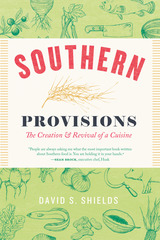
Shields’s turf is the southern Lowcountry, from the peanut patches of Wilmington, North Carolina to the sugarcane fields of the Georgia Sea Islands and the citrus groves of Amelia Island, Florida. He takes us on a historical excursion to this region, drawing connections among plants, farms, growers, seed brokers, vendors, cooks, and consumers over time. Shields begins by looking at how professional chefs during the nineteenth century set standards of taste that elevated southern cooking to the level of cuisine. He then turns to the role of food markets in creating demand for ingredients and enabling conversation between producers and preparers. Next, his focus shifts to the field, showing how the key ingredients—rice, sugarcane, sorghum, benne, cottonseed, peanuts, and citrus—emerged and went on to play a significant role in commerce and consumption. Shields concludes with a look at the challenges of reclaiming both farming and cooking traditions.
From Carolina Gold rice to white flint corn, the ingredients of authentic southern cooking are returning to fields and dinner plates, and with Shields as our guide, we can satisfy our hunger both for the most flavorful regional dishes and their history.
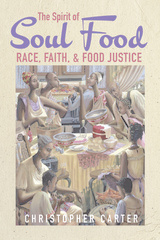
Soul food has played a critical role in preserving Black history, community, and culinary genius. It is also a response to--and marker of--centuries of food injustice. Given the harm that our food production system inflicts upon Black people, what should soul food look like today?
Christopher Carter's answer to that question merges a history of Black American foodways with a Christian ethical response to food injustice. Carter reveals how racism and colonialism have long steered the development of US food policy. The very food we grow, distribute, and eat disproportionately harms Black people specifically and people of color among the global poor in general. Carter reflects on how people of color can eat in a way that reflects their cultural identities while remaining true to the principles of compassion, love, justice, and solidarity with the marginalized.
Both a timely mediation and a call to action, The Spirit of Soul Food places today's Black foodways at the crossroads of food justice and Christian practice.

Personal and simple, earthy and warm—recipes and stories from the Steger Wilderness Center in Minnesota’s north woods
The Steger Homestead Kitchen is an inspiring and down-to-earth collection of meals and memories gathered at the Homestead, the home of the Arctic explorer and environmental activist Will Steger, located in the north woods near Ely, Minnesota. Founded in 1988, the Steger Wilderness Center was established to model viable carbon-neutral solutions, teach ecological stewardship, and address climate change. In her role as the Homestead’s chef, Will’s niece Rita Mae creates delicious and hearty meals that become a cornerstone experience for visitors from all over the world, nourishing them as they learn and share their visions for a healthy and abundant future.
Now, with this new book, home chefs can make Rita Mae’s simple, hearty meals to share around their own homestead tables. Interwoven with dozens of mouth-watering recipes—for generous breakfasts (Almond Berry Griddlecakes), warming lunches (Northwoods Mushroom Wild Rice Soup), elegant dinners (Spatchcock Chicken with Blueberry Maple Glaze), desserts (Very Carrot Cake), and snacks (Steger Wilderness Bars)—are Will Steger’s exhilarating stories of epic adventures exploring the Earth’s most remote and endangered regions.
The Steger Homestead Kitchen opens up the Wilderness Center’s hospitality, its heart and hearth, providing the practical advice and inspiration to cook up a good life in harmony with nature.
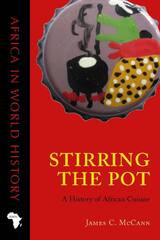
Africa’s art of cooking is a key part of its history. All too often Africa is associated with famine, but in Stirring the Pot, James C. McCann describes how the ingredients, the practices, and the varied tastes of African cuisine comprise a body of historically gendered knowledge practiced and perfected in households across diverse human and ecological landscape. McCann reveals how tastes and culinary practices are integral to the understanding of history and more generally to the new literature on food as social history.
Stirring the Pot offers a chronology of African cuisine beginning in the sixteenth century and continuing from Africa’s original edible endowments to its globalization. McCann traces cooks’ use of new crops, spices, and tastes, including New World imports like maize, hot peppers, cassava, potatoes, tomatoes, and peanuts, as well as plantain, sugarcane, spices, Asian rice, and other ingredients from the Indian Ocean world. He analyzes recipes, not as fixed ahistorical documents,but as lively and living records of historical change in women’s knowledge and farmers’ experiments. A final chapter describes in sensuous detail the direct connections of African cooking to New Orleans jambalaya, Cuban rice and beans, and the cooking of African Americans’ “soul food.”
Stirring the Pot breaks new ground and makes clear the relationship between food and the culture, history, and national identity of Africans.
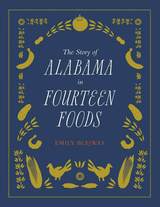
Alabama’s history and culture revealed through fourteen iconic foods, dishes, and beverages.
The Story of Alabama in Fourteen Foods explores well-known Alabama food traditions to reveal salient histories of the state in a new way. In this book that is part history, part travelogue, and part cookbook, Emily Blejwas pays homage to fourteen emblematic foods, dishes, and beverages, one per chapter, as a lens for exploring the diverse cultures and traditions of the state.
Throughout Alabama’s history, food traditions have been fundamental to its customs, cultures, regions, social and political movements, and events. Each featured food is deeply rooted in Alabama identity and has a story with both local and national resonance. Blejwas focuses on lesser-known food stories from around the state, illuminating the lives of a diverse populace: Poarch Creeks, Creoles of color, wild turkey hunters, civil rights activists, Alabama club women, frontier squatters, Mardi Gras revelers, sharecroppers, and Vietnamese American shrimpers, among others. A number of Alabama figures noted for their special contributions to the state’s foodways, such as George Washington Carver and Georgia Gilmore, are profiled as well. Alabama’s rich food history also unfolds through accounts of community events and a food-based economy. Highlights include Sumter County barbecue clubs, Mobile’s banana docks, Appalachian Decoration Days, cane syrup making, peanut boils, and eggnog parties.
Drawing on historical research and interviews with home cooks, chefs, and community members cooking at local gatherings and for holidays, Blejwas details the myths, legends, and truths underlying Alabama’s beloved foodways. With nearly fifty color illustrations and fifteen recipes, The Story of Alabama in Fourteen Foods will allow all Alabamians to more fully understand their shared cultural heritage.
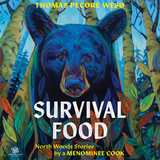
In these coming-of-age tales set on the Menominee Indian Reservation of the 1980s and 1990s, Thomas Pecore Weso explores the interrelated nature of meals and memories. As he puts it, “I cannot separate foods from the moments in my life when I first tasted them.” Weso’s stories recall the foods that influenced his youth in northern Wisconsin: subsistence meals from hunted, fished, and gathered sources; the culinary traditions of the German, Polish, and Swedish settler descendants in the area; and the commodity foods distributed by the government—like canned pork, dried beans, and powdered eggs—that made up the bulk of his family’s pantry. His mom called this “survival food.”
These stories from the author’s teen and tween years—some serious, some laugh-out-loud funny—will take readers from Catholic schoolyards to Native foot trails to North Woods bowling alleys, while providing Weso’s perspective on the political currents of the era. The book also contains dozens of recipes, from turtle soup and gray squirrel stew to twice-baked cheesy potatoes. This follow-up to Weso’s Good Seeds: A Menominee Indian Food Memoir is a hybrid of modern foodways, Indigenous history, and creative nonfiction from a singular storyteller.
2024 Wisconsin Library Association Outstanding Achievement Award
2024 PEN Oakland Josephine Miles Award for Excellence
Silver winner of the 2023 Midwest Book Award for Cookbooks/Crafts/Hobbies
Thomas Pecore Weso’s Survival Food was selected by the Wisconsin Center for the Book as the Wisconsin entry in the “Great Reads from Great Places” program of the Library of Congress.
“This book is not only about survival food, but about the singular beauty, creativity, and fortitude that comes out of that survival.”
—Chef Sean Sherman, author, The Sioux Chef’s Indigenous Kitchen
“Survival Food is interesting because it’s one part cookbook, three parts memoir, one part history, and one part multidisciplinary exploration of its setting, northern Wisconsin."
—James Norton, The Cookbook Test
“Nothing brings people together like good food and good stories. There’s an abundance of both in Thomas Pecore Weso’s latest memoir. As Weso attests, food can bring back happy, loving memories of times that were far from happy. Even a tray of funeral sandwiches brings a kind of comfort. This is a wonderful, honest portrait of northeastern Wisconsin, enlightening even to those of us who call this area home.”
—Jared Santek, Founder & Artistic Director, Write On Door County
“Survival Food provides ample nourishment for the mind and body. . . . The stories, told with humor and affection, are complemented by recipes ranging from mouth-watering instructions for cooking wild asparagus to ever-so-interesting advice for preparing bear stew.”
—Lucille Lang Day, author of Birds of San Pancho and Other Poems of Place and coeditor of Red Indian Road West: Native American Poetry from California
“His grandmother cooked according to Native traditions; his mother, ‘a nontraditional college student during my teens,’ resorted to instant meals. His grandfather was town constable and days spent with him brought Weso to the meatloaf, sausage and sauerkraut of German and Polish neighbors. Uncle Buddy’s flash car brings buckwheat pancakes to Weso’s mind, and he lived for a time near Cheese Box Curve—so called after a truck hauling dairy products overturned. Weso includes a few recipes, but mostly, Survival Food is an entertaining look back at life in Wisconsin’s rural north.”
—David Luhrssen, Shepherd Express
“Survival Food: North Woods Stories by a Menominee Cook by Thomas Pecore Weso is a posthumous sequel to his celebrated collection of family stories, Good Seeds: A Menominee Food Memoir. . . . Rich with captivating tales that include driving a convertible on logging roads, agreeing on terms before throwing eggs at passing cars, and his grandmother’s brief stay in a jailhouse she’d later purchase, Weso’s entries offer readers catharsis—demonstrating how to laugh, boast, debate, eat, mourn, and heal.”
—Ryan Winn, College of Menominee Nation, Tribal College Journal
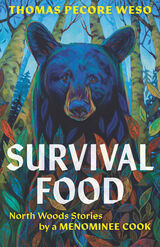
In these coming-of-age tales set on the Menominee Indian Reservation of the 1980s and 1990s, Thomas Pecore Weso explores the interrelated nature of meals and memories. As he puts it, “I cannot separate foods from the moments in my life when I first tasted them.” Weso’s stories recall the foods that influenced his youth in northern Wisconsin: subsistence meals from hunted, fished, and gathered sources; the culinary traditions of the German, Polish, and Swedish settler descendants in the area; and the commodity foods distributed by the government—like canned pork, dried beans, and powdered eggs—that made up the bulk of his family’s pantry. His mom called this “survival food.”
These stories from the author’s teen and tween years—some serious, some laugh-out-loud funny—will take readers from Catholic schoolyards to Native foot trails to North Woods bowling alleys, while providing Weso’s perspective on the political currents of the era. The book also contains dozens of recipes, from turtle soup and gray squirrel stew to twice-baked cheesy potatoes. This follow-up to Weso’s Good Seeds: A Menominee Indian Food Memoir is a hybrid of modern foodways, Indigenous history, and creative nonfiction from a singular storyteller.
2024 Wisconsin Library Association Outstanding Achievement Award
2024 PEN Oakland Josephine Miles Award for Excellence
Silver winner of the 2023 Midwest Book Award for Cookbooks/Crafts/Hobbies
Thomas Pecore Weso’s Survival Food was selected by the Wisconsin Center for the Book as the Wisconsin entry in the “Great Reads from Great Places” program of the Library of Congress.
“This book is not only about survival food, but about the singular beauty, creativity, and fortitude that comes out of that survival.”
—Chef Sean Sherman, author, The Sioux Chef’s Indigenous Kitchen
“Survival Food is interesting because it’s one part cookbook, three parts memoir, one part history, and one part multidisciplinary exploration of its setting, northern Wisconsin."
—James Norton, The Cookbook Test
“Nothing brings people together like good food and good stories. There’s an abundance of both in Thomas Pecore Weso’s latest memoir. As Weso attests, food can bring back happy, loving memories of times that were far from happy. Even a tray of funeral sandwiches brings a kind of comfort. This is a wonderful, honest portrait of northeastern Wisconsin, enlightening even to those of us who call this area home.”
—Jared Santek, Founder & Artistic Director, Write On Door County
“Survival Food provides ample nourishment for the mind and body. . . . The stories, told with humor and affection, are complemented by recipes ranging from mouth-watering instructions for cooking wild asparagus to ever-so-interesting advice for preparing bear stew.”
—Lucille Lang Day, author of Birds of San Pancho and Other Poems of Place and coeditor of Red Indian Road West: Native American Poetry from California
“His grandmother cooked according to Native traditions; his mother, ‘a nontraditional college student during my teens,’ resorted to instant meals. His grandfather was town constable and days spent with him brought Weso to the meatloaf, sausage and sauerkraut of German and Polish neighbors. Uncle Buddy’s flash car brings buckwheat pancakes to Weso’s mind, and he lived for a time near Cheese Box Curve—so called after a truck hauling dairy products overturned. Weso includes a few recipes, but mostly, Survival Food is an entertaining look back at life in Wisconsin’s rural north.”
—David Luhrssen, Shepherd Express
“Survival Food: North Woods Stories by a Menominee Cook by Thomas Pecore Weso is a posthumous sequel to his celebrated collection of family stories, Good Seeds: A Menominee Food Memoir. . . . Rich with captivating tales that include driving a convertible on logging roads, agreeing on terms before throwing eggs at passing cars, and his grandmother’s brief stay in a jailhouse she’d later purchase, Weso’s entries offer readers catharsis—demonstrating how to laugh, boast, debate, eat, mourn, and heal.”
—Ryan Winn, College of Menominee Nation, Tribal College Journal
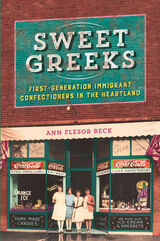
Ann Flesor Beck's charming personal account recreates the atmosphere of her grandfather's candy kitchen with its odors of chocolate and popcorn and the comings-and-goings of family members. "The Store" represented success while anchoring the business district of Gus's chosen home. It also embodied the Midwest émigré experience of chain migration, immigrant networking, resistance and outright threats by local townspeople, food-related entrepreneurship, and tensions over whether later generations would take over the business.
An engaging blend of family memoir and Midwest history, Sweet Greeks tells how Greeks became candy makers to the nation, one shop at a time.
READERS
Browse our collection.
PUBLISHERS
See BiblioVault's publisher services.
STUDENT SERVICES
Files for college accessibility offices.
RECENTLY PUBLISHED





UChicago Accessibility Resources
home | accessibility | search | about | contact us
BiblioVault ® 2001 - 2026
The University of Chicago Press