
 A SCHOLARLY BOOK REPOSITORY
5 start with T start with T
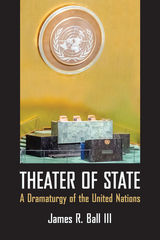
This study of the lived experience of spectacular politics on the world stage draws on theories of theater, performance, and politics to offer new ways of approaching issues of war, cosmopolitanism, international justice, governance, and activism. Situated at the nexus of two disciplines, performance studies and political science, this volume encourages conversations between the two so that each might offer lessons to the other.
The Peloponnesian War (431–404 BCE) ostensibly arose because of the fear that a rising Athens would threaten Sparta’s power in the Mediterranean. The idea of Thucydides’ Trap warns that all rising powers threaten established powers. As China increases its power relative to the United States, the theory argues, the two nations are inevitably set on a collision course toward war. How enlightening is an analogy based on the ancient Greek world of 2,500 years ago for understanding contemporary international relations? How accurate is the depiction of the history of other large armed conflicts, such as the two world wars, as a challenge mounted by a rising power to displace an incumbent hegemon?Thucydides’s Trap?: Historical Interpretation, Logic of Inquiry, and the Future of Sino-American Relations offers a critique of the claims of Thucydides’s Trap and power-transition theory. It examines past instances of peaceful accommodation to uncover lessons that can ease the frictions in ongoing Sino-American relations.
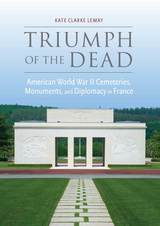
Between 1948 and 1956, the United States government planned an enormous project to build fourteen permanent overseas military cemeteries in Europe. These park-like burial grounds eventually would hold the graves of approximately 80,000 American soldiers and nurses who died during or immediately after World War II. Five of these cemeteries are located in France, more than any other nation: two in Normandy; one in Provence; and two in Lorraine.
In Triumph of the Dead: American World War II Cemeteries, Monuments, and Diplomacy in France, Kate Clarke Lemay explores the relationship between art, architecture, war memory, and Franco-American relations. She addresses the many functions, both original and more recent, that the American war cemeteries have performed, such as: war memorials, diplomatic gestures, Cold War political statements, prompts for debate about Franco-American relations, and the nature of French identity itself. Located on or near former battlefields, the American war cemeteries are at once history lessons, sites of memory, and commemorative monuments. As places of mourning, war cemeteries are considerably different than civic cemeteries in their rituals, designs, and influences on collective memory. As transatlantic sites, the cemeteries both construct and sustain an American memory of World War II for a Francophile and European audience.
The book features ten color photographs, fifty black and white photographs, and four maps. Scholars as well as enthusiasts of World War II history, mid-century art and architecture, and cultural diplomacy will be interested in reading this richly researched book, the first in-depth history of some of the most important sites of American World War II remembrance.
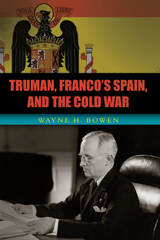
President Harry S. Truman harbored an abiding disdain for Spain and its government. During his presidency (1945–1953), the State Department and the Department of Defense lobbied Truman to form an alliance with Spain to leverage that nation’s geostrategic position, despite Francisco Franco’s authoritarian dictatorship. The eventual alliance between the two countries came only after years of argument for such a shift by nearly the entire U.S. diplomatic and military establishment. This delay increased the financial cost of the 1953 defense agreements with Spain, undermined U.S. planning for the defense of Europe, and caused dysfunction over foreign policy at the height of the Cold War.
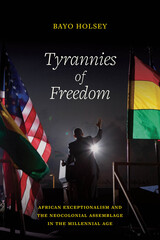
Examines the enduring myth of Ghanaian exceptionalism and neoliberal freedom.
What is the legacy of the African Revolution today? Black Studies scholar and anthropologist Bayo Holsey addresses this question by examining the twenty-first-century relationship between the United States and Ghana, a nation that was once associated with a powerful vision of Black freedom. In Tyrannies of Freedom, she demonstrates that the period that saw the expansion of the US counterterror state also witnessed attempts to discredit this vision of freedom and replace it with another—one that centers the agency of US politicians, media pundits, and development experts.
Analyzing international development discourses, the anti-trafficking regime’s representational economy, and the expansion of Ghana’s branding as a homeland of the African diaspora, Holsey interrogates the operation of a millennial neocolonial assemblage that asserts, in various ways, that the United States is the guarantor of Ghanaian freedom while simultaneously implementing policies of surveillance, endangerment, and exploitation. At the same time, Holsey shows how Ghanaians and other Black subjects have contested these projects. Tracking the transformation of the Ghanaian nation from a beacon of Black freedom and Pan-African possibility to a battleground over the meanings of African sovereignty in a post-9/11 world, this important book addresses pressing questions concerning the operation of US power in Africa and the production and legitimation of a racialized global hierarchy.
READERS
Browse our collection.
PUBLISHERS
See BiblioVault's publisher services.
STUDENT SERVICES
Files for college accessibility offices.
RECENTLY PUBLISHED


UChicago Accessibility Resources
home | accessibility | search | about | contact us
BiblioVault ® 2001 - 2026
The University of Chicago Press