
 A SCHOLARLY BOOK REPOSITORY
12 start with T start with T
Nancy L. Diekelmann
Karin Dahlberg
Margaretha Ekebergh
Pamela M. Ironside
Kathryn Hopkins Kavanagh
Melinda M. Swenson
Sharon L. Sims
Rosemary A. McEldowney
Jan D. Sinnott

While many states cut back on their Medicaid enrollments from 1993 to 2001, TennCare grew from 750,000 to 1.47 million enrollees. The state was less successful in controlling costs, however. Each major stakeholder group (the state, the managed care organizations, the providers, and the enrollees and their advocates) pushed back against parts of the state's strategy that adversely affected their interests, and they eventually dismantled the mechanisms of cost constraint.
The author lays out the four stakeholder perspectives for each period in the history of TennCare and provides a link to difficult-to-access primary documents.
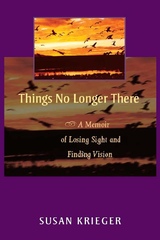
Krieger's touching memoir explores the ways that outer landscapes may change and sight may be lost, but inner visions persist, giving meaning, jarring the senses with a very different picture than what appears before the eyes. This book will reward both the general reader and those interested in disability studies, feminist ethnography, and lesbian studies.
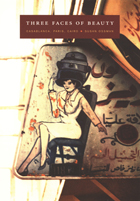
By examining how images from fashion magazines, film, and advertising are enacted in beauty salons, Ossman demonstrates how embodiment is able to display and rework certain hierarchies. While offering the possibility of freedom from the tethers of status, nation, religion, and nature, beauty is created by these very categories and values, Ossman shows. Drawing on hundreds of interviews, she documents the various rituals of welcome, choice-making, pricing practices, and spatial arrangements in multiple salons . She also reveals ways in which patrons in all three cities imagine and co-opt looks they believe are fashionable in the other cities. By observing salons as scenes of instruction, Ossman reveals that beautiful bodies evolve within the intertwining contexts of media, modernity, location, time, postcolonialism, and male expectation.
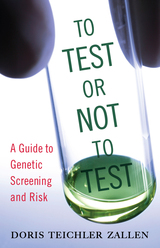
To Test or Not to Test arms readers with questions that should be considered before they pursue genetic screening.
- Am I at higher risk for a disorder?
- Can genetic testing give me useful information?
- Is the timing right for testing?
- Do the benefits of having the genetic information outweigh the problems that testing can bring?
Determining the answers to these questions is no easy task. In this highly readable book, Doris Teichler Zallen provides a template that can guide individuals and families through the decision-making process and offers additional resources where they can gain more information. She shares interviews with genetic specialists, doctors, and researchers, as well as the personal stories of nearly 100 people who have faced genetic-testing decisions. Her examples focus on genetic testing for four types of illnesses: breast/ovarian cancer (different disorders but closely connected), colon cancer, late-onset Alzheimer's disease, and hereditary hemochromatosis. From the more common diseases to the rare hereditary conditions, we learn what genetic screening is all about and what it can tell us about our risks.
Given that we are now bombarded with ads in magazines and on television hawking the importance of pursuing genetic-testing, it is critical that we approach this tough issue with an arsenal of good information. To Test or Not to Test is an essential consumer tool-kit for the genetic decision-making process.
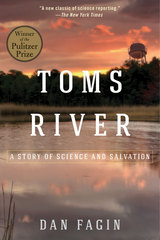
A new classic of science reporting.”—The New York Times
The true story of a small town ravaged by industrial pollution, Toms River won the 2014 Pulitzer Prize and has been hailed by The New York Times as "a new classic of science reporting." Now available in paperback with a new afterword by acclaimed author Dan Fagin, the book masterfully blends hard-hitting investigative journalism, scientific discovery, and unforgettable characters.
One of New Jersey’s seemingly innumerable quiet seaside towns, Toms River became the unlikely setting for a decades-long drama that culminated in 2001 with one of the largest environmental legal settlements in history. For years, large chemical companies had been using Toms River as their private dumping ground, burying tens of thousands of leaky drums in open pits and discharging billions of gallons of acid-laced wastewater into the town’s namesake river. The result was a notorious cluster of childhood cancers scientifically linked to local air and water pollution.
Fagin recounts the sixty-year saga of rampant pollution and inadequate oversight that made Toms River a cautionary tale. He brings to life the pioneering scientists and physicians who first identified pollutants as a cause of cancer and the everyday people in Toms River who struggled for justice: a young boy whose cherubic smile belied the fast-growing tumors that had decimated his body from birth; a nurse who fought to bring the alarming incidence of childhood cancers to the attention of authorities who didn’t want to listen; and a mother whose love for her stricken child transformed her into a tenacious advocate for change.
Rooted in a centuries-old scientific quest, Toms River is an epic of dumpers at midnight and deceptions in broad daylight, of corporate avarice and government neglect, and of a few brave individuals who refused to keep silent until the truth was exposed.
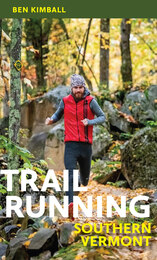
The wild and rural landscape of southern Vermont offers a true bounty of great trail-running opportunities, from out-and-back (or pointtopoint) runs on popular long-distance routes, such as segments of the Long Trail or Appalachian Trail, to quiet, little-known loops hidden away in the woods. This helpful guide is just the resource needed for trip planning or for a spontaneous run in a beautiful place.
Local expert trail runner Ben Kimball offers a range of suggested route options, sometimes even several at the same site, for runners of all skill levels. He also provides important practical information, such as the full distance of the suggested route; a difficulty rating; the trail style and type; the total ascent; and directions, along with a detailed description of the trail itself. There are also scannable codes for downloading trail maps to your smartphone. The trails included vary in difficulty and terrain type, and range from low elevations in the Connecticut River Valley to as high as 4,000 feet at Killington Peak in the Green Mountains. This indispensable book is the perfect companion for adventurous runners and hikers interested in exploring southern Vermont.

Trails of Central Arkansas delivers:
* Sixty trails in 36 parks or locations from Benton and Bryant to Cabot, from Wrightsville to Conway
* Color maps of every trail
* GPS coordinates for every trailhead
* Color-coded distinctions between paved and unpaved trails
* Level of difficulty ratings
* Scenery Scores
* Top-ten lists: Most Scenic, Trails for Kids, and Trails for Solitude

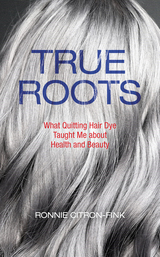
So after twenty-five years of coloring, Ronnie took a leap and decided to ditch the dye. Suddenly everyone, from friends and family to rank strangers, seemed to have questions about her hair. How’d you do it? Are you doing that on purpose? Are you OK? Armed with a mantra that explained her reasons for going gray—the upkeep, the cost, the chemicals—Ronnie started to ask her own questions.
What are the risks of coloring? Why are hair dye companies allowed to use chemicals that may be harmful? Are there safer alternatives? Maybe most importantly, why do women feel compelled to color? Will I still feel like me when I have gray hair?
True Roots follows Ronnie’s journey from dark dyes to a silver crown of glory, from fear of aging to embracing natural beauty. Along the way, readers will learn how to protect themselves, whether by transitioning to their natural color or switching to safer products. Like Ronnie, women of all ages can discover their own hair story, one built on individuality, health, and truth.
READERS
Browse our collection.
PUBLISHERS
See BiblioVault's publisher services.
STUDENT SERVICES
Files for college accessibility offices.
RECENTLY PUBLISHED




UChicago Accessibility Resources
home | accessibility | search | about | contact us
BiblioVault ® 2001 - 2025
The University of Chicago Press