
 A SCHOLARLY BOOK REPOSITORY
7 start with T start with T
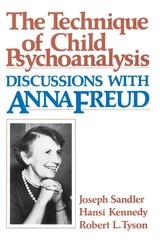
This book distills the essence of child psychoanalysis from the practice and thought of its founder Anna Freud, who for over 50 years has been at the forefront of this controversial field. Children are the most refractory of all subjects to treat analytically. Here, for the first time, is a primer on the difficult technique as practiced at the Hampstead Clinic in London, which was founded by Anna Freud and is today the leading child analytic center in the world. She and her colleagues expose their wealth of experience to systematic review, which yields up rich insights not only into child psychoanalysis and psychotherapy but also into basic child development. In addition, their findings have relevance to the understanding of emotional disturbance at all ages.
The book follows the treatment situation through all its stages, from the first session to termination and follow-up. It focuses on the interaction between therapist and child in the treatment room, illustrating the points with copious clinical vignettes. One point examined is the structure of treatment with respect to such matters as scheduling sessions and handling interruptions. Another element that comes under scrutiny is the development of the child's relationship to the therapist, which subsumes such factors as establishing an alliance, transference, and resistance. The child's repertoire of expressions, both verbal and nonverbal, is explored, as is the therapist's armamentarium of interpretations and interventions. Woven throughout the description of these elements is incisive commentary by Anna Freud. Her commonsense approach gives the book unique value, lifting it to a rare level of human wisdom.
Individuals with a mental illnesses—such as schizophrenia, bipolar disorder, and depression—have a double burden, Otto Wahl writes. Not only must they cope with disabling disorders, but they also must contend with the negative attitudes of the public toward those disorders. To truly understand the full extent of this stigma, we need to hear from the consumers (the term used in this book for people with mental illness) themselves. Telling is Risky Business is the first book to examine what these people have to say about their own experiences of stigma.
The center of Wahl’s research was a nationwide survey in which mental health consumers across the United States were asked, both through questionnaires and interviews, to tell about their experiences of stigma and discrimination. The research comes to life as many of the over 1,300 respondents’ acute observations are reported directly, in their own words.
Telling is Risky Business vividly covers topics such as isolation, rejection, discouragement, and discrimination. Consumers also offer perceptive observations of how our society depicts people with mental illness. The book ends with suggestions for strategies and coping; an invaluable section on resources available for fighting stigma guarantees its place on many bookshelves. As Laura Lee Hall writes, “This book will likely open your eyes to a topic that you probably did not understand.”

Beginning with a discussion of the profound impact of World War II and the Cold War on mental health, Halliwell moves from the influence of work, family, and growing up in the Eisenhower years to the critique of institutional practice and the search for alternative therapeutic communities during the 1960s. Blending a discussion of such influential postwar thinkers as Erich Fromm, William Menninger, Erving Goffman, Erik Erikson, and Herbert Marcuse with perceptive readings of a range of cultural text that illuminate mental health issues--among them Spellbound, Shock Corridor, Revolutionary Road, and I Never Promised You a Rose Garden--this compelling study argues that the postwar therapeutic revolutions closely interlink contrasting discourses of authority and liberation.
Waiting lists in psychiatric clinics and increasing numbers of patients in long-term psychotherapy have highlighted the need for shorter methods of treatment. Existing forms of short-term psychotherapy tend to be vague and uncertain, lacking as they do a clearly formulated rationale and methodology.
The bold and challenging technique for brief psychotherapy designed around the factor of time itself, which James Mann introduces here, is a method he hopes will revolutionize current practice. The significance of time in human life is examined in terms of the development of time sense as well as its unconscious meaning and the ways these are experienced in both the categorical and existential senses. The author shows how the interplay between the regressive pressures of the child’s sense of infinite time and the adult reality of categorical time determine the patient’s unconscious expectations of psychotherapy.

According to the poet Elias Canetti, “All the things one has forgotten / scream for help in dreams.” To the ancient Egyptians they were prophecies, and in world folklore they have often marked visitations from the dead. For Freud they were expressions of “wish fulfillment,” and for Jung, symbolic representations of mythical archetypes. Although there is still much disagreement about the significance and function of dreams, they seem to serve as a barometer of current mind and body states.
In this volume, Deirdre Barrett brings together the study of dreams and the psychology of trauma. She has called on a distinguished group of psychiatrists, psychologists, and social workers—among them Rosalind Cartwright, Robert J. Lifton, and Oliver Sacks—to consider how trauma shapes dreaming and what the dreaming mind might reveal about trauma. The book focuses on catastrophic events, such as combat, political torture, natural disasters, and rape. The lasting effects of childhood trauma, such as sexual abuse or severe burns, on personality formation, the nature of memories of early trauma, and the development of defenses related to amnesia and dissociation are all considered. The book also takes up trauma and adult dreams, including Vietnam veterans and Post-Traumatic Stress Disorder, Holocaust survivors and perpetrators, rape victims, and firestorm survivors. Finally, this volume concludes with a look at the potential “traumas of normal life,” such as divorce, bereavement, and life-threatening illness, and the role of dreams in working through normal grief and loss.
Taken together, these diverse perspectives illuminate the universal and the particular effects of traumatic experience. For physicians and clinicians, determining the etiology of nightmares offers valuable diagnostic and therapeutic insights for individual treatment. This book provides a way of juxtaposing the research in the separate fields of trauma and dreams, and learning from their discoveries.
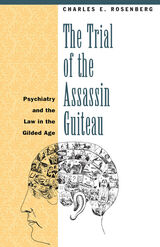
Although the role of genetics in behavior was widely accepted, these psychiatrists fiercely debated whether heredity had predisposed Guiteau to assassinate Garfield. Rosenberg's account allows us to consider one of the opening rounds in the controversy over the criminal responsibility of the insane, a debate that still rages today.

Lying on the couch, the patient must tell all. And yet, as the psychoanalyst well knows, the patient is endlessly unable--unwilling--to speak the truth. This perversity at the heart of psychoanalysis, a fine focus on intimate truths even as the lines between truth and lies are being redrawn, is also at the center of this book of essays by the renowned historian of psychoanalysis John Forrester. Continuing the work begun in Dispatches from the Freud Wars, Truth Games offers a rich philosophical and historical perspective on the mechanics, moral dilemmas, and rippling implications of psychoanalysis.
Lacan observed that the psychoanalyst's patient is, even when lying, operating in the dimension of truth. Beginning with Lacan's reading of Freud's case history of the Rat Man, Forrester pursues the logic and consequences of this assertion through Freud's relationship with Lacan into the general realm of psychoanalysis and out into the larger questions of anthropology, economics, and metaphysics that underpin the practice. His search takes him into the parallels between money and speech through an exploration of the metaphors of circulation, exchange, indebtedness, and trust that so easily glide from one domain to the other.
Original, witty, incisive, these essays provide a new understanding of the uses and abuses and the ultimate significance of truth telling and lying, trust and confidence as they operate in psychoanalysis--and in the intimate world of the self and society that it seeks to know.
READERS
Browse our collection.
PUBLISHERS
See BiblioVault's publisher services.
STUDENT SERVICES
Files for college accessibility offices.
RECENTLY PUBLISHED






UChicago Accessibility Resources
home | accessibility | search | about | contact us
BiblioVault ® 2001 - 2026
The University of Chicago Press