
 A SCHOLARLY BOOK REPOSITORY
10 start with T start with T
With all units enlarged or significantly modified, the new and improved edition of Testing Your Grammar features reworked grammatical explanations and more example sentences so grammar points are easier to understand. Other features of the new edition:
- Explanations have been added to the answer key.
- A review test is found at the end of every two units.
- At the end of the book are four examinations that can be used for either pre-testing or post-testing.
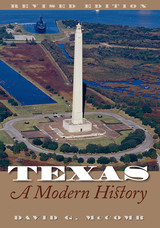
Since its publication in 1989, Texas, A Modern History has established itself as one of the most readable and reliable general histories of Texas. David McComb paints the panorama of Lone Star history from the earliest Indians to the present day with a vigorous brush that uses fact, anecdote, and humor to present a concise narrative. The book is designed to offer an adult reader the savor of Texan culture, an exploration of the ethos of its people, and a sense of the rhythm of its development. Spanish settlement, the Battle of the Alamo, the Civil War, cattle trails, oil discovery, the growth of cities, changes in politics, the Great Depression, World War II, recreation, economic expansion, and recession are each a part of the picture. Photographs and fascinating sidebars punctuate the text.
In this revised edition, McComb not only incorporates recent scholarship but also tracks the post–World War II rise of the Republican Party in Texas and the evolution of the state from rural to urban, with 88 percent of the people now living in cities. At the same time, he demonstrates that, despite many changes that have made Texas similar to the rest of the United States, much of its unique past remains.

The highly acclaimed first edition of this major work convincingly established Gerald Holton’s analysis of the ways scientific ideas evolve. His concept of “themata,” induced from case studies with special attention to the work of Einstein, has become one of the chief tools for understanding scientific progress. It is now one of the main approaches in the study of the initiation and acceptance of individual scientific insights.
Three principal consequences of this perspective extend beyond the study of the history of science itself. It provides philosophers of science with the kind of raw material on which some of the best work in their field is based. It helps intellectual historians to redefine the place of modern science in contemporary culture by identifying influences on the scientific imagination. And it prompts educators to reexamine the conventional concepts of education in science.
In this new edition, Holton has masterfully reshaped the contents and widened the coverage. Significant new material has been added, including a penetrating account of the advent of quantum physics in the United States, and a broad consideration of the integrity of science, as exemplified in the work of Niels Bohr. In addition, a revised introduction and a new postscript provide an updated perspective on the role of themata. The result of this thoroughgoing revision is an indispensable volume for scholars and students of scientific thought and intellectual history.

Through diagrams, sketches, and models, along with explications of the essential tools and materials required, Payne defines and delineates the precise step-by-step procedures of scenographic modelmaking: the basic preparations of construction, the process of making the model, and the experimental aspects of modelmaking. This new edition with 50 additional illustrations and other new information offers teachers, students, and beginning professionals alike a complete and comprehensive approach to creating and constructing the scenographic model.
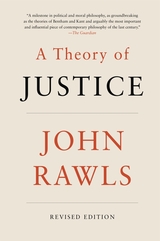
“A milestone in political and moral philosophy, as groundbreaking as the theories of Bentham and Kant and arguably the most important and influential piece of contemporary philosophy of the last century.” —The Guardian
The principles of justice that Rawls set forth in this book are those that free and rational people would accept in an “original position” of equality. In this hypothetical situation, which corresponds to the state of nature in social contract theory, no one knows their place in society; their class or social status; their fortune in the distribution of natural assets and abilities—their intelligence, strength, and the like—or even their conception of the good. Deliberating behind this “veil of ignorance,” people naturally determine their proper rights and duties. Thus, as Rawls writes, “each person possesses an inviolability founded on justice that even the welfare of society as a whole cannot override.”
Incorporating the ideas of Rousseau, Kant, Emerson, and Lincoln, Rawls’s theory is as powerful today as it was when first published in 1971. For more than half a century, A Theory of Justice has been taught and debated, celebrated and translated into more than thirty languages. This revised edition includes changes, discussed in the preface, that Rawls considered to be significant, especially to the discussions of liberty and primary social goods.
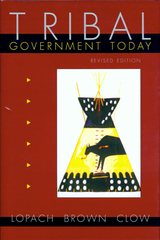
An account of Fourth World peoples within a First World nation, Tribal Government Today, Revised Edition is a critical analysis of the contemporary progress of Indian tribes toward self-government and economic sufficiency. Focusing on seven reservations in Montana representing the diverse opportunities and problems facing Indian tribes in the West, this book approaches tribal government from the twin perspectives of reservation politics and the legal context within which reservation conflicts must be solved.
Unlike previous studies of Indian politics, Tribal Government Today is neither a critique of American Indian policy over the years nor an analysis of federal, state, and tribal jurisdictional ambiguities. The authors—a political scientist, a lawyer, and a historian—focus instead on the distinctive political culture that has evolved on each reservation in terms of the reservation settings, governmental structures and procedures, and a particular brand of politics. The critical inquiry is how far the reservations are from genuine self-determination and whether that goal is impossibility for some. The authors conclude with suggestions for reforming tribal government within three main areas: the separation of powers, the role of the Bureau of Indian Affairs, and tribal acceptance of the concept of fundamental law.
The contents include: The Contours of Reservations Politics, Indian Law and Tribal Government; The Blackfeet: Their Own Government to Help Them; The Crow: A Politics of Rick; The Northern Cheyenne: A Politics of Values; The Fort Peck Reservation: The Factor of Leadership; The Fort Belknap Reservation: The Reality of Poverty; The Rocky Boy's Reservation: A Struggle for Government; The Flathead Reservation: A Struggle for Government; The Flathead Reservation: From Enclave to Self-Government; and Reflection on Tribal Government.
There has been surprisingly little writing about the condition of contemporary tribal government. Library shelves are filled with works on other American and foreign governments, but an inquirer must learn about tribal government incidentally and in piecemeal fashion. This state of scholarship is regrettable because of the importance of the modern Indian self-determination movement. Reservation politics certainly affect the quality of life in Indian communities, and the outlook for Indian self-determination cannot be assessed without an understanding of tribal government.

This diary of the exiled Trotsky is a powerfully evocative fragment of history and human personality. Of all the great figures of the Russian revolution Leon Trotsky touches our senses as the one who lived, and felt, and died as other men. He breaks through, or is forced through the screen of dialectic and bombast that conceals his colleagues. Understandably, we feel curiosity about and some sympathy for the man who was driven out as he had driven others, who wandered the world in danger foreseeing assassination, and who was struck down by his enemies in his last sanctuary so close to us. His life as a fugitive is a single human tragedy and he is, simply, more interesting than the others.
This extremely personal record is no disappointment. Written in France and Norway, it gives the day-to-day reflections of a fallen leader, of one who had wielded power and was now in an exceptional position to observe it in the hands of others. Naturally there are penetrating comments here on local and international politics, often timeless in their relevance, but with them comes admission to the private world of the revolutionary intellectual. Here Trotsky lived with anguish, was beset by loneliness, and sustained himself by pride and fanaticism.
But his concern was not wholly with himself and the impersonalities of politics. He set down his continuing anxiety for the safety of his beloved son, Sergei, and of his first wife to whom he was still deeply attached. They were in Russia, their fate unknown to him. In extraordinarily moving and unaffected words, he wrote, too, of his tender, still youthful passion for his adored second wife, Natasha (Natalia Ivanovna Sedov), the wise and courageous companion of his fighting years, the loyal woman who accompanied him into exile.
Finally, and until now unknown, there is his Testament, written in Mexico in February 1940 near the close of his life. Knowing that death was near, from illness if not from Stalin’s agents, he envisaged the form it might take, restated his defiance of Stalin and his imperishable confidence in the triumph of the People, and once more affirmed his love for Natasha. At the end there is the discontinued and unexplained sentence, “In case we both die...”
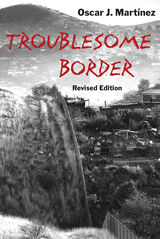
Oscar Martínez’s words may come as a surprise to those who associate the U.S. southern border with banditry, racial strife, illegal migration, drug smuggling, and official corruption—all attributed to Mexico. In Troublesome Border, now revised to reflect the dramatic changes over the last two decades, a distinguished scholar and long-time resident of the border area addresses these and other problems that have caused increasing concern to federal governments on both sides of the border.
This second edition of Troublesome Border has been updated and revised to cover dramatic developments since the book’s first publication in 1988 that have once again transformed the region in fundamental ways. Martinez includes new information on migration and drugs, including the extraordinary rise of violence traced largely to the rampant illegal drug trade; the devastating effects of U.S. Border Patrol “blockades” that have resulted in thousands of deaths; and the impact of the North American Free Trade Agreement (NAFTA).
READERS
Browse our collection.
PUBLISHERS
See BiblioVault's publisher services.
STUDENT SERVICES
Files for college accessibility offices.
RECENTLY PUBLISHED





UChicago Accessibility Resources
home | accessibility | search | about | contact us
BiblioVault ® 2001 - 2025
The University of Chicago Press