
 A SCHOLARLY BOOK REPOSITORY
3 start with U start with U
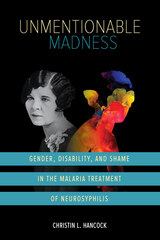
Christin L. Hancock looks through the lens of feminist disability to examine the popular but ethically suspect treatment and its consequences. As Hancock shows, the treatment’s purported success rate relied on the disabled minds and bodies of people incarcerated in mental hospitals. The backgrounds and identities of these patients reflected and perpetuated attitudes around poverty, gender, race, and disability while betraying authorities’ desire to protect the public from women and men perceived as abnormal, sexually tainted, and unworthy of community life.
Paying special attention to the patients’ voices and experiences, Unmentionable Madness offers a disability history that confronts the ethics of experimentation.

Monosson reveals that the very code of life is more fluid than once imagined. When our powerful chemicals put the pressure on to evolve or die, beneficial traits can sweep rapidly through a population. Species with explosive population growth—the bugs, bacteria, and weeds—tend to thrive, while bigger, slower-to-reproduce creatures, like ourselves, are more likely to succumb.
Monosson explores contemporary evolution in all its guises. She examines the species that we are actively trying to beat back, from agricultural pests to life-threatening bacteria, and those that are collateral damage—creatures struggling to adapt to a polluted world. Monosson also presents cutting-edge science on gene expression, showing how environmental stressors are leaving their mark on plants, animals, and possibly humans for generations to come.
Unnatural Selection is eye-opening and more than a little disquieting. But it also suggests how we might lessen our impact: manage pests without creating super bugs; protect individuals from disease without inviting epidemics; and benefit from technology without threatening the health of our children.

Unstable Frontiers was first published in 1994. Minnesota Archive Editions uses digital technology to make long-unavailable books once again accessible, and are published unaltered from the original University of Minnesota Press editions.
"John Erni's heartfelt and insightful book is a valuable contribution to the study of the cultural politics of AIDS."–Jeff Nunokawa Princeton University
The "cure" for AIDS: The search goes on, keeping pace with our belief that AIDS is incurable. How such a seeming paradox works-and how it may well work against the proper treatment of the disease-is the subject of Unstable Frontiers, a probing, critical look at the cultural politics behind the quest for a cure for AIDS.
This massive commercial and scientific project, John Erni suggests, actually hinges on our contradictory definitions of the disease as curable and incurable at the same time. Drawing on diverse sources, from popular media to medical literature to cultural theory, he shows how the dual discourse of curability/incurability frames the way we think about and act on issues of medical treatment for AIDS. His work makes a major advance in our understanding of—and, perhaps, humane response to—a national crisis.
In his critique of the logic and fantasies underlying the double definition of AIDS, Erni explores a broad range of issues: the scientific paradigm used to develop AZT; the politics of alternative treatment practices, of clinical drug trials, and of AIDS activism; and the notions of time and temporality operating in AIDS treatment science. He also addresses the problematic popular themes, such as "AIDS is invariably fatal" and "Knowledge = Cure."
Unique in its approach to a social and political issue still in the making, the book reveals how AIDS has challenged technomedicine's historical position of authority-and in doing so, recasts this challenge in a powerful and ultimately hopeful way.
John Nguyet Erni is assistant professor of communication at the University of New Hampshire. He has published essays on AIDS and is currently working on a book about AIDS in Thailand.
READERS
Browse our collection.
PUBLISHERS
See BiblioVault's publisher services.
STUDENT SERVICES
Files for college accessibility offices.
RECENTLY PUBLISHED






UChicago Accessibility Resources
home | accessibility | search | about | contact us
BiblioVault ® 2001 - 2026
The University of Chicago Press