
 A SCHOLARLY BOOK REPOSITORY
9 start with U start with U
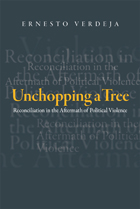
Employing a normative theory of reconciliation that differs from prevailing approaches, Verdeja outlines a concept that emphasizes the importance of shared notions of moral respect and tolerance among adversaries in transitional societies. Drawing heavily from cases such as reconciliation efforts in Latin America and Africa—and interviews with people involved in such efforts—Verdeja debates how best to envision reconciliation while remaining realistic about the very significant practical obstacles such efforts face
Unchopping a Tree addresses the core concept of respect across four different social levels—political, institutional, civil society, and interpersonal—to explain the promise and challenges to securing reconciliation and broader social regeneration.
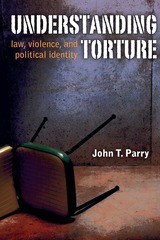
"John Parry's Understanding Torture is an important contribution to our understanding of how torture fits within the practices and beliefs of the modern state. His juxtaposition of the often indeterminate nature of the law of torture with the very specific state practices of torture is both startling and revealing."
---Paul W. Kahn is Robert W. Winner Professor of Law and the Humanities at Yale Law School and author of Sacred Violence
"Parry is effective in building, deploying, and supporting his argument . . . that the law does not provide effective protections against torture, but also that the law is in itself constitutive of a political order in which torture is employed to create---and to destroy or re-create---political identities.”
---Margaret Satterthwaite, Faculty Director of the Center for Human Rights and Global Justice and Associate Professor of Clinical Law, NYU School of Law
"A beautifully crafted, convincingly argued book that does not shy away from addressing the legal and ethical complexities of torture in the modern world. In a field that all too often produces simple or superficial responses to what has become an increasingly challenging issue, Understanding Torture stands out as a sophisticated and intellectually responsible work."
---Ruth Miller, Associate Professor of History, University of Massachusetts, Boston
Creating a separate category for an intentionally narrow set of practices labeled and banned as torture, Parry argues, serves to normalize and legitimate the remaining practices that are "not torture." Consequently, we must question the hope that law can play an important role in regulating state violence.
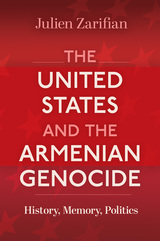
This is the first book to examine how and why the United States refused to acknowledge the Armenian Genocide until the early 2020s. Although the American government expressed sympathy towards the plight of the Armenians in the 1910s and 1920s, historian Julien Zarifian explores how, from the 1960s, a set of geopolitical and institutional factors soon led the United States to adopt a policy of genocide non-recognition which it would cling to for over fifty years, through Republican and Democratic administrations alike. He describes the forces on each side of this issue: activists from the US Armenian diaspora and their allies, challenging Cold War statesmen worried about alienating NATO ally Turkey and dealing with a widespread American reluctance to directly confront the horrors of the past. Drawing from congressional records, rare newspapers, and interviews with lobbyists and decision-makers, he reveals how genocide recognition became such a complex, politically sensitive issue.
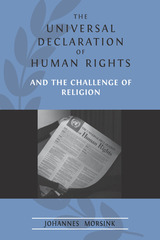
Repulsed by evil Nazi practices and desiring to create a better world after the devastation of World War II, in 1948 the UN General Assembly adopted the Universal Declaration of Human Rights (UDHR). Because of the secular imprint of this text, it has faced a series of challenges from the world’s religions, both when it was crafted and in subsequent political and legal struggles.
The book mixes philosophical, legal, and archival arguments to make the point that the language of human rights is a valid one to address the world’s disputes. It updates the rationale used by the early UN visionaries and makes it available to twenty-first-century believers and unbelievers alike. The book shows how the debates that informed the adoption of this pivotal normative international text can be used by scholars to make broad and important policy points.

Karen McElrath questions US government attempts to portray an impartial role in the Irish conflict, arguing that historical and contemporary evidence reveals otherwise. She shows that, far from being a neutral process, the success of bids for political asylum often depends on the relationship between the US and the government of the applicant’s country of origin. Drawing on exclusive interviews with Irish Republicans who have faced deportation or extradition from the United States, or who have been prosecuted in the US for politically-motivated offences, McElrath explores the links between deportation and extradition outcomes and foreign policy issues. The tools of exclusion are defined in their historical context, and the history of US extradition law is described, with particular focus on the treaties with Britain. McElrath also examines the offences for which Irish and Irish-American Republicans have been charged, discusses the various levels of support for Irish political prisoners in the US, and summarises the findings by international human rights organisations.
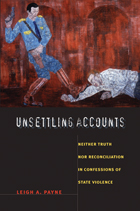
Payne draws on interviews, unedited television film, newspaper archives, and books written by perpetrators to analyze confessions of state violence in Argentina, Chile, Brazil, and South Africa. Each of these four countries addressed its past through a different institutional form—from blanket amnesty, to conditional amnesty based on confessions, to judicial trials. Payne considers perpetrators’ confessions as performance, examining what they say and what they communicate nonverbally; the timing, setting, and reception of their confessions; and the different ways that they portray their pasts, whether in terms of remorse, heroism, denial, or sadism, or through lies or betrayal.
In his new book, Andreas Kossert—the renowned expert on emigration and expulsion in the twentieth century and author of the bestselling Cold Home—places the early twenty-first-century refugee movement in a wider historical context. Movingly told and interwoven with personal accounts, The Uprooted: The Refugee in World History reveals the existential experiences of uprootedness and hostility that go hand in hand with losing one's homeland and explains why refugees and displaced persons have always found it so difficult to settle into a new country. Whether they have come from East Prussia, Syria, or India, refugees are agents of world history—and with this book Kossert gives them a voice.
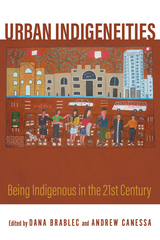
Today a majority of Indigenous peoples live in urban areas: they are builders and cleaners, teachers and lawyers, market women and masons, living in towns and cities surrounded by the people and pollution that characterize life for most individuals in the twenty-first century. Despite this basic fact, the vast majority of studies on Indigenous peoples concentrate solely on rural Indigenous populations.
Aiming to highlight these often-overlooked communities, this is the first book to look at urban Indigenous peoples globally and present the urban Indigenous experience—not as the exception but as the norm. The contributing essays draw on a wide range of disciplines, including sociology, anthropology, architecture, land economy, and area studies, and are written by both Indigenous and non-Indigenous scholars. The analysis looks at Indigenous people across the world and draws on examples not usually considered within the study of indigeneity, such as Fiji, Japan, and Russia.
Indigeneity is often seen as being “authentic” when it is practiced in remote rural areas, but these essays show that a vigorous, vibrant, and meaningful indigeneity can be created in urban spaces too. The book challenges many of the imaginaries and tropes of what constitutes “the Indigenous” and offers perspectives and tools to understand a contemporary Indigenous urban reality. As such, it is a must-read for anyone interested in the real lives of Indigenous people today.
Contributors
Aiko Ikemura Amaral
Chris Andersen
Giuliana Borea
Dana Brablec
Andrew Canessa
Sandra del Valle Casals
Stanislav Saas Ksenofontov
Daniela Peluso
Andrey Petrov
Marya Rozanova-Smith
Kate Stevens
Kanako Uzawa
READERS
Browse our collection.
PUBLISHERS
See BiblioVault's publisher services.
STUDENT SERVICES
Files for college accessibility offices.
RECENTLY PUBLISHED


UChicago Accessibility Resources
home | accessibility | search | about | contact us
BiblioVault ® 2001 - 2026
The University of Chicago Press