
 A SCHOLARLY BOOK REPOSITORY
12 start with U start with U
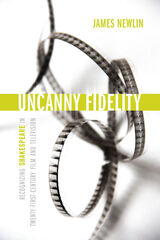
How the study of Shakespeare’s legacy, specifically in film and television, can radically challenge what we consider to be authentically Shakespearean
In the field of adaptation studies today, the idea of reading an adapted text as “faithful” or “unfaithful” to its original source strikes many scholars as too simplistic, too conservative, and too moralizing. In Uncanny Fidelity: Recognizing Shakespeare in Twenty-First Century Film and Television, James Newlin challenges these critical orthodoxies. Instead, recognizing how a film or television series closely recalls Shakespeare’s drama encourages an interrogation of what we consider to be “Shakespeare” in the first place.
Drawing upon Sigmund Freud’s model of the uncanny—the sudden sensation of peculiar, discomforting familiarity—this book focuses on films and television series that were not marketed as adaptations of Shakespeare. Yet these works unexpectedly invoke lost, even troubling aspects of Shakespeare’s original playtexts, their performance history, or their reception. Broadening the scope of fidelity readings beyond familiar concerns like plot and language, Newlin demonstrates how the study of Shakespeare’s afterlife can clarify both the historical context of his drama and its relevance for the current political moment. Engaging contemporary debates in literary and psychoanalytic theory, this book features provocative close readings of The Tempest, Othello, and The Winter’s Tale alongside recent films and television series, from art-house movies such as The Master and Manchester by the Sea to the cult favorites Brigsby Bear and Vice Principals. These works conjure widely overlooked qualities of Shakespeare’s drama by recalling the casting practices or the generic contexts of the early modern stage or by making a meaningful intervention in the plays’ critical reception. Closely examining these surprisingly faithful adaptations of Shakespeare’s drama helps us to articulate the original experience of the early modern stage and better consider its resonance in the present.
This book will benefit students and scholars of Shakespeare on film and psychoanalytic theory. Yet Uncanny Fidelity will also be of interest to scholars of performance history, source studies, and early modern discourses of race and gender—as well as anyone interested in the unexpected connections between canonical literature and contemporary culture. By examining adaptation as an instance of uncanny return, Newlin demonstrates how the study of Shakespeare’s afterlife can radically challenge what we consider to be authentically Shakespearean.
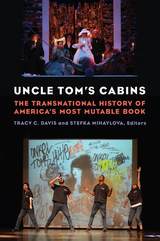
Throughout these encounters, Stowe’s story of American slavery serves as a paradigm for understanding oppression, selectively and strategically refracting the African American slave onto other iconic victims and freedom fighters. The book brings together performance historians, literary critics, and media theorists to demonstrate how the myriad cultural and political effects of Stowe’s enduring story has transformed it into a global metanarrative with national, regional, and local specificity.
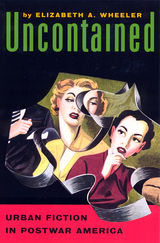
In the postwar era, American urban fiction is dominated by the imagery of containment. Across the fictional landscape, the city is divided into segregated zones, marked by the threat of inevitable violence, and set off from the safety of equally contained suburbs. Mean and dangerous, the city can only be navigated by a solitary expert, alienated and male. In Uncontained, Elizabeth A. Wheeler offers a critique of this familiar story-evident in the noir. narratives of James M. Cain and in work by Ellison, Roth, Salinger, Percy, Capote, and others —and challenges its link to the postwar city.
Discussing film, short stories, and novels from a cross-section of American cities, Wheeler integrates these stories of containment into a shared pattern and reads them across a broad spectrum of famous and forgotten works by men and women of various ethnic and literary traditions to reveal a larger vision of postwar America. Knowing that containment is never the entire story, that diversity or trauma always shows itself, she shows how the uncontained has shaped the historical moment. Aware that liberating counterstories do get told, she places them in dialogue with those of the alienated man, the war veteran, Beat hipster, noir detective, and ironic suburbanite — in historical context — and revives the idea of urban space as a place of openness, thereby challenging a literary containment of racial difference, gender, and sexuality. By reading Paule Marshall in tandem with Philip Roth, Wheeler explores the relationships between adjacent neighborhoods and reconnects separate literary and geographic areas. By bringing Ann Bannon's lesbian pulp fiction, Hubert Selby's cult novels, or the work of John Okada, Hisaye Yamamoto, Chester Himes, Gwendolyn Brooks's, Jo Sinclair, and many others to bear on more canonical texts, she offers a more complete understanding of this period of American fiction — one that points toward a city that is open and inclusive.
Uncontained suggests that while decline, division, and decay form a major part of the story of mid-century urban America, the postwar city also represents much of what is best about American life. Rather than reproducing the containment of culture, Wheeler places together the wildly disparate to show how we move beyond containment.
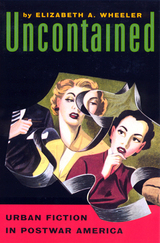
In the postwar era, American urban fiction is dominated by the imagery of containment. Across the fictional landscape, the city is divided into segregated zones, marked by the threat of inevitable violence, and set off from the safety of equally contained suburbs. Mean and dangerous, the city can only be navigated by a solitary expert, alienated and male. In Uncontained, Elizabeth A. Wheeler offers a critique of this familiar story-evident in the noir. narratives of James M. Cain and in work by Ellison, Roth, Salinger, Percy, Capote, and others —and challenges its link to the postwar city.
Discussing film, short stories, and novels from a cross-section of American cities, Wheeler integrates these stories of containment into a shared pattern and reads them across a broad spectrum of famous and forgotten works by men and women of various ethnic and literary traditions to reveal a larger vision of postwar America. Knowing that containment is never the entire story, that diversity or trauma always shows itself, she shows how the uncontained has shaped the historical moment. Aware that liberating counterstories do get told, she places them in dialogue with those of the alienated man, the war veteran, Beat hipster, noir detective, and ironic suburbanite — in historical context — and revives the idea of urban space as a place of openness, thereby challenging a literary containment of racial difference, gender, and sexuality. By reading Paule Marshall in tandem with Philip Roth, Wheeler explores the relationships between adjacent neighborhoods and reconnects separate literary and geographic areas. By bringing Ann Bannon's lesbian pulp fiction, Hubert Selby's cult novels, or the work of John Okada, Hisaye Yamamoto, Chester Himes, Gwendolyn Brooks's, Jo Sinclair, and many others to bear on more canonical texts, she offers a more complete understanding of this period of American fiction — one that points toward a city that is open and inclusive.
Uncontained suggests that while decline, division, and decay form a major part of the story of mid-century urban America, the postwar city also represents much of what is best about American life. Rather than reproducing the containment of culture, Wheeler places together the wildly disparate to show how we move beyond containment.

Uncovering the spirit of freedom and self-determination in New Orleans
In Under a Black Star, Amari Johnson explores what he defines as the “maroon impulse” among the BlackStar Community in the Algiers neighborhood of New Orleans. This community sought autonomy for Black people facing systemic marginalization through denied employment, insufficient education, and a housing crisis following Hurricane Katrina, establishing initiatives such as Kamali Academy, a homeschool collective, and BlackStar Books and Caffé, a bookstore and gathering place. Instead of appealing to the city, they built the community they desired by employing legacies of marronage: disengagement, flight, and reengagement.
An active participant in the physical and ideological development of these autonomous spaces, Johnson provides nuanced insights into the community’s work toward liberation and self-determination. Demonstrating that marronage is a cultural tradition throughout the African Diaspora, he focuses on the transtemporal maroon process to show how it is central to the pursuit of autonomy, community, and freedom.
From the swamps of southeastern Louisiana, across urban obstacles, and into BlackStar’s creative spaces, Johnson’s path leads him to ask: How did the New Orleans community mobilize the tradition of marronage to create autonomous spaces amid gentrification? What forms might the maroon impulse take in the twenty-first century? This dynamic ethnographic memoir ultimately illuminates marronage as a potent form of liberatory potential, offering strategies for similar communities across the country and around the world.

Johannes Morsink argues that the 1948 UN Universal Declaration of Human Rights and the human rights movement today are direct descendants of revulsion to the Holocaust and the desire to never let it happen again.
Much recent scholarship about human rights has severed this link between the Holocaust, the Universal Declaration, and contemporary human rights activism in favor of seeing the 1970s as the era of genesis. Morsink forcefully presents his case that the Universal Declaration was indeed a meaningful though underappreciated document for the human rights movement and that the declaration and its significance cannot be divorced from the Holocaust. He reexamines this linkage through the working papers of the commission that drafted the declaration as well as other primary sources.
This work seeks to reset scholarly understandings of the Universal Declaration of Human Rights and the foundations of the contemporary human rights movement.
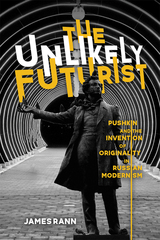
Through systematic and detailed readings of Futurist texts, James Rann offers the first book-length study of the tensions between the outspoken literary group and the great national poet. He observes how those in the movement engaged with and invented a new Pushkin, who by turns became a founding father to rebel against, a source of inspiration to draw from, a prophet foreseeing the future, and a monument to revive.
Rann's analysis contributes to the understanding of both the Futurists and Pushkin's complex legacy. The Unlikely Futurist will appeal broadly to scholars of Slavic studies, especially those interested in literature and modernism.
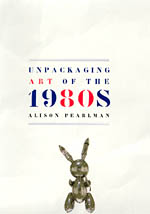
Pearlman reassesses the works and careers of six artists who became critics' biggest targets. In each of three chapters, she pairs two artists the critics viewed as emblematic of a given trend: Julian Schnabel and David Salle in association with Neo-Expressionism; Jean-Michel Basquiat and Keith Haring vis-à-vis Graffiti Art; and Peter Halley and Jeff Koons in relation to Simulationism. Pearlman shows how all these artists shared important but unrecognized influences and approaches: a crucial and overwhelming inheritance of 1960s and 1970s Conceptualism, a Warholian understanding of public identity, and a deliberate and nuanced use of past styles and media. Through in-depth discussions of works, from Haring's body-paintings of Grace Jones to Schnabel's movie Basquiat, Pearlman demonstrates how these artists' interests exemplified a broader, generational shift unrecognized by critics. She sees this shift as starting not in the 1980s but in the mid-1970s, when key developments in artistic style, art-world structures, and consumer culture converged to radically alter the course of American art.
Unpackaging Art of the 1980s offers an innovative approach to one of the most significant yet least understood episodes in twentieth-century art.
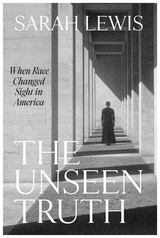
American Book Award Winner
Anisfield-Wolf Book Award Finalist
Chicago Tribune, 10 Best Books of the Year
A Hyperallergic Best Book of the Year
The award-winning art historian and founder of Vision & Justice uncovers a pivotal era in the story of race in the United States when Americans came to ignore the truth about the false foundations of the nation’s racial regime.
In a masterpiece of historical detective work, Sarah Lewis exposes one of the most damaging lies in American history. There was a time when Americans were confronted with the fictions shoring up the nation’s racial regime and learned to disregard them. The true significance of this hidden history has gone unseen—until now.
The surprising catalyst occurred in the nineteenth century when the Caucasian War—the fight for independence in the Caucasus that coincided with the end of the US Civil War—revealed the instability of the entire regime of racial domination. Images of the Caucasus region and peoples captivated the American public but also showed that the place from which we derive “Caucasian” for whiteness was not white at all. Cultural and political figures ranging from P. T. Barnum to Frederick Douglass, W. E. B. Du Bois to Woodrow Wilson recognized these fictions and more, exploiting, unmasking, critiquing, or burying them.
To acknowledge the falsehood at the core of racial order proved unthinkable, especially as Jim Crow and segregation took hold. Sight became a form of racial sculpture, vision a knife excising what no longer served the stability of racial hierarchy. That stability was shaped, crucially, by what was left out, what we have been conditioned not to see. Groundbreaking and profoundly resonant, The Unseen Truth shows how visual tactics have long secured our regime of racial hierarchy in spite of its false foundations—and offers a way to begin to dismantle it.
READERS
Browse our collection.
PUBLISHERS
See BiblioVault's publisher services.
STUDENT SERVICES
Files for college accessibility offices.
RECENTLY PUBLISHED



UChicago Accessibility Resources
home | accessibility | search | about | contact us
BiblioVault ® 2001 - 2025
The University of Chicago Press