
 A SCHOLARLY BOOK REPOSITORY
22 start with U start with U
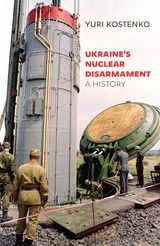
In December 1994, Ukraine gave up the third-largest nuclear arsenal in the world and signed the Non-Proliferation Treaty, having received assurances that its sovereignty would be respected and secured by Russia, the United States, and the United Kingdom. Based on original and heretofore unavailable documents, Yuri Kostenko’s account of the negotiations between Ukraine, Russia, and the US reveals for the first time the internal debates of the Ukrainian government as well as the pressure exerted upon it by its international partners.
Kostenko presents an insider’s view on the issue of nuclear disarmament and raises the question of whether the complete and immediate dismantlement of the country’s enormous nuclear arsenal was strategically the right decision, especially in view of the 2014 annexation of Crimea by Russia, one of the guarantors of Ukraine’s sovereignty under denuclearization.
The Russian invasion of Ukraine in 2022 jeopardizes the country's independence and its chances for Western-style development. However, the heroic attitude of the Ukrainian people, combined with a solidifying national identity, makes the domestic foundations for a western turn stronger than ever. After the invasion, building strong foundations of liberal democracy will be a top priority. In addition to alleviating immediate problems, the country must also address its post-communist legacy and address the constraints of patronalism.
The authors of this edited volume, leading Ukrainian scholars supplemented by colleagues from Hungary, examine the chances of an anti-patronal transformation after the war. The book provides an overview of the development of Ukraine's political-economic system: color revolutions in 2004 and 2014 brought democratic transformation, but no change in the patronage system The result was patronal regime cycles instead of the emergence of a Western-type liberal democracy in the country. Building on the conceptual framework of the editors' The Anatomy of Post-Communist Regimes (CEU Press, 2020), the 12 chapters examine the impact of the war on patronal democracy, the relational economy, clientelist society, and the international environment in which Ukraine operates.
This collection is complemented by the book entitled Russia. Imperial Endeavor and Geopolitical Consequences.
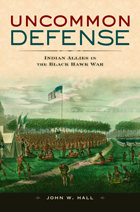
In the spring of 1832, when the Indian warrior Black Hawk and a thousand followers marched into Illinois to reoccupy lands earlier ceded to American settlers, the U.S. Army turned to rival tribes for military support. Elements of the Menominee, Dakota, Potawatomi, and Ho Chunk tribes willingly allied themselves with the United States government against their fellow Native Americans in an uncommon defense of their diverse interests. As the Black Hawk War came only two years after the passage of the Indian Removal Act and is widely viewed as a land grab by ravenous settlers, the military participation of these tribes seems bizarre. What explains this alliance?
In order to grasp Indian motives, John Hall explores their alliances in earlier wars with colonial powers as well as in intertribal antagonisms and conflicts. In the crisis of 1832, Indians acted as they had traditionally, leveraging their relationship with a powerful ally to strike tribal enemies, fulfill important male warrior expectations, and pursue political advantage and material gain. However, times had changed and, although the Indians achieved short-term objectives, they helped create conditions that permanently changed their world.
Providing a rare view of Indian attitudes and strategies in war and peace, Hall deepens our understanding of Native Americans and the complex roles they played in the nation’s history. More broadly, he demonstrates the risks and lessons of small wars that entail an “uncommon defense” by unlikely allies in pursuit of diverse, even conflicting, goals.

The Marine Corps has always considered itself a breed apart. Since 1775, America’s smallest armed service has been suspicious of outsiders and deeply loyal to its traditions. Marines believe in nothing more strongly than the Corps’ uniqueness and superiority, and this undying faith in its own exceptionalism is what has made the Marines one of the sharpest, swiftest tools of American military power. Along with unapologetic self-promotion, a strong sense of identity has enabled the Corps to exert a powerful influence on American politics and culture.
Aaron O’Connell focuses on the period from World War II to Vietnam, when the Marine Corps transformed itself from America’s least respected to its most elite armed force. He describes how the distinctive Marine culture played a role in this ascendancy. Venerating sacrifice and suffering, privileging the collective over the individual, Corps culture was saturated with romantic and religious overtones that had enormous marketing potential in a postwar America energized by new global responsibilities. Capitalizing on this, the Marines curried the favor of the nation’s best reporters, befriended publishers, courted Hollywood and Congress, and built a public relations infrastructure that would eventually brand it as the most prestigious military service in America.
But the Corps’ triumphs did not come without costs, and O’Connell writes of those, too, including a culture of violence that sometimes spread beyond the battlefield. And as he considers how the Corps’ interventions in American politics have ushered in a more militarized approach to national security, O’Connell questions its sustainability.
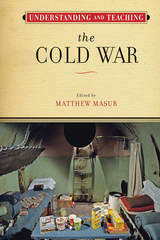
Teaching the Cold War is both necessary and challenging. Understanding and Teaching the Cold War is designed to help collegiate and high school teachers navigate the complexity of the topic, integrate up-to-date research and concepts into their classes, and use strategies and tools that make this important history meaningful to students.
The volume opens with Matthew Masur’s overview of models for approaching the subject, whether in survey courses or seminars. Two prominent historians, Carole Fink and Warren Cohen, offer accounts of their experience as longtime scholars and teachers of the Cold War from European and Asian perspectives. Sixteen essays dig into themes including the origins and end of the conflict, nuclear weapons, diplomacy, propaganda, fear, popular culture, and civil rights, as well as the Cold War in Eastern Europe, Western Europe, East Asia, Africa, Latin America, and the nonaligned nations. A final section provides practical advice for using relevant, accessible primary sources to implement the teaching ideas suggested in this book.
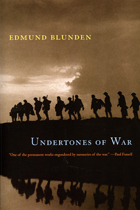
In Undertones of War, one of the finest autobiographies to come out of World War I, the acclaimed poet Edmund Blunden records his devastating experiences in combat. After enlisting at the age of twenty, he took part in the disastrous battles at the Somme, Ypres, and Passchendaele, describing them as “murder, not only to the troops but to their singing faiths and hopes.”
All the horrors of trench warfare, all the absurdity and feeble attempts to make sense of the fighting, all the strangeness of observing war as a writer—of being simultaneously soldier and poet—pervade Blunden’s memoir. In steely-eyed prose as richly allusive as any poetry, he tells of the endurance and despair found among the men of his battalion, including the harrowing acts of bravery that won him the Military Cross.
Now back in print for American readers, the volume includes a selection of Blunden’s war poems that unflinchingly juxtapose death in the trenches with the beauty of Flanders’s fields. Undertones of War deserves a place on anyone’s bookshelf between Siegfried Sassoon’s poetry and Robert Graves’s Goodbye to All That.
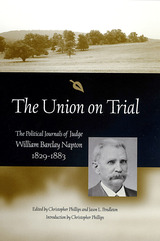
The heart of this volume is the verbatim diary of a union soldier stationed in the deep south immediately after the Civil War.
A Union Soldier in the Land of the Vanquished is a vivid and authentic diary that transports readers to the tense and uncertain months following the Civil War. Edited by historian F. N. Boney, this work presents the unvarnished words of Sergeant Mathew Woodruff, a seasoned veteran of the 21st Missouri Infantry. After fighting in the major campaigns of the western theater, Woodruff returned to duty in June 1865 for occupation service along the Gulf Coast of Mississippi and Alabama—a region still reeling from defeat.
Spanning June through December of 1865, Woodruff’s daily entries capture the raw texture of life as a Union soldier in a conquered land. His observations range from the mundane to the profound: enforcing discipline among restless troops, navigating the challenges of Reconstruction, and finding moments of respite in hunting, fishing, and social gatherings. Through his candid reflections—complete with misspellings and colloquial phrasing—readers gain insight into the frustrations, hopes, and humanity of men tasked with rebuilding a fractured nation.
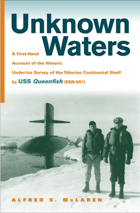
“A first-person view of submarine under-ice operations that appears in very few other works.” —Gary E. Weir, author of Rising Tide: The Untold Story of the Russian Submarines that Fought the Cold War
Unknown Waters tells the story of the brave officers and men of the nuclear attack submarine USS Queenfish (SSN-651), who made the first survey of an extremely important and remote region of the Arctic Ocean. The unpredictability of deep-draft sea ice, shallow water, and possible Soviet discovery, all played a dramatic part in this engrossing 1970 voyage.
Covering 3,100 miles over a period of some 20 days at a laborious average speed of 6.5 knots or less, the attack submarine carefully threaded its way through innumerable underwater canyons of ice and over irregular seafloors, at one point becoming entrapped in an “ice garage.” Only cool thinking and skillful maneuvering of the nearly 5,000-ton vessel enabled a successful exit.
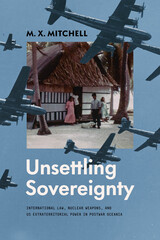
Marshall Islanders and their ancestral lands and waters played important roles in reshaping the United States’ offshore power, state sovereignty, and the international politics of decolonization.
In the years following World War II, the United States conducted sixty-seven devastating nuclear blasts in the Marshall Islands—yet the archipelago was never a US territory. Working through the United Nations, US diplomats engineered a new, one-of-a-kind extraterritorial status, called strategic trusteeship, to control the Native lands, waters, and peoples of the Marshall, Caroline, and Northern Mariana Islands. Strategic trusteeship permitted the US to militarize a vast expanse of Western Oceania. This novel and racialized legal form of international dependency was integral to US nuclear weapons detonations and damage in the region.
In Unsettling Sovereignty, M. X. Mitchell recounts this untold legal history, exploring how nuclear weapons changed claims and practices of sovereignty from the 1940s to the present. US nuclear blasting in the Marshall Islands troubled conventional renderings of state sovereignty under international law. The explosions, disastrous for Marshallese communities and their ancestral atolls, also caused hazardous nuclear fallout, which spread around the globe. Islanders and their allies turned to law, using legal wrangling over blasting and fallout to raise new questions about the location, time, and subjects of state violence in a period of decolonization; the intersections between race, Indigeneity, and wide-scale technogenic harm; and the pitfalls and unfulfilled promises of international law. Mitchell shows that the Marshallese people and their lands and waters were, and remain, central to redefining sovereignty in an era of boundless pollution and climate change.
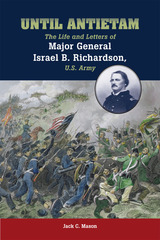
While researching this book, Jack C. Mason made the kind of discovery that historians dream of. He found more than one hundred unpublished and unknown letters from Union general Israel B. Richardson to his family, written from his time as a West Point cadet until the day before his fatal wounding at the Battle of Antietam, the bloodiest day in American history. Using these freshly uncovered primary sources as well as extensive research in secondary materials, Mason has written the first-ever biography of Israel Bush Richardson.
Mason traces Richardson’s growth as a soldier through his experiences and the guidance of his superiors, and then as a leader whose style reflected the actions of the former commanders he respected. Though he was a disciplinarian, Richardson took a relaxed attitude toward military rules, earning him the affection of his men. Unfortunately, his military career was cut short just as high-ranking officials began to recognize his aggressive leadership. He was mortally wounded while leading his men at Antietam and died on November 3, 1862.
Until Antietam brings to life a talented and fearless Civil War infantry leader. Richardson’s story, placed within the context of nineteenth-century warfare, exemplifies how one soldier’s life influenced his commanders, his men, and the army as a whole.
Winner of the Army Historical Foundation 2009 Distinguished Book Award
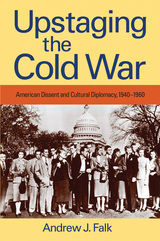
Traditional interpretations of the 1950s have emphasized how American anti-communists deployed censorship and the blacklist to silence dissent, particularly in the realm of foreign policy. Yet those efforts at repression did not always succeed. Throughout the early years of the Cold War, a significant number of writers and performers continued to express controversial views about international relations in Hollywood films, through the new medium of television, on the Broadway stage, and from behind the scenes.
By promoting superpower cooperation, decolonization, nuclear disarmament, and other taboo causes, dissident artists such as Lillian Hellman, Arthur Miller, Rod Serling, Dalton Trumbo, Reginald Rose, and Paddy Chayefsky managed both to stretch the boundaries of Cold War ideology and to undermine some of its basic assumptions. Working at times under assumed names and in some cases outside the United States, they took on the role of informal diplomats who competed with Washington in representing America to the world.
Ironically, the dissidents' international appeal eventually persuaded the U.S. foreign policy establishment that their unconventional views could be an asset in the Cold War contest for “hearts and minds,” and their artistic work an effective means to sell American values and culture abroad. By the end of the 1950s, the Eisenhower administration not only appropriated the work of these talented artists but enlisted some of them to serve as official voices of Cold War cultural diplomacy.
This two-volume work by historian Robert Quimby presents a comprehensive and detailed analysis of military strategy, operations, and management during one of America’s most neglected and least understood military campaigns, the War of 1812. With causes that can be traced to the epic contest against Napoleon in Europe beginning in 1803, the war itself was the first conducted by the young Constitutional government of the United States. Quimby demonstrates that failed American initiatives at the beginning of hostilities shattered the unrealistic optimism of the war’s staunchest advocates; and while initial failures were followed by military success in 1813, whatever advantage might have been gained was soon lost to incompetent leadership. Major exceptions occurred in the Old Northwest, and in what was then the Southwest, where U.S. forces finally broke the strength of the long-successful Indian-British alliance.
In retrospect, what occurred during the War of 1812 demonstrated the necessity for gaining citizen support before committing the nation to armed conflict; it also provided a series of object lessons on how not to conduct a military campaign. Finally Quimby argues that, notwithstanding several victories at war’s end, including the fabled Battle of New Orleans, American perceptions that the United States "won" the war are erroneous; at best the struggle ended in a draw. The United States Army in the War of 1812 is an up-to-date and long overdue reassessment of military actions conducted during a pivotal conflict in American history, one that shaped U.S. military doctrine for a half century.
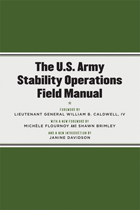
Field Manual 3-07, Stability Operations, represents a milestone in Army doctrine.
With a focus on transforming conflict, managing violence when it does occur and maintaining stable peace, The U.S. Army Stability Operations Field Manual (otherwise known as FM 3-07) signals a stark departure from traditional military doctrine. The Army officially acknowledges the complex continuum from conflict to peace, outlines the military's responsibility to provide stability and security, and recognizes the necessity of collaboration, coordination, and cooperation among military, state, commercial, and non-government organizations in nation-building efforts.
The manual reflects a truly unique collaboration between the Army and a wide array of experts from hundreds of groups across the United States Government, the intergovernmental and non-governmental communities, America's allies around the world, and the private sector. All branches of the armed forces, U.S. agencies ranging from the State Department to Homeland Security to Health and Human Services, international agencies from the United Nations to the Red Cross to the World Bank, countries from the United Kingdom to India to South Africa, private think tanks from RAND to the United States Institute of Peace to the Center for New American Security, all took part in the shaping of this document.
The U.S. Army Stability Operations FieldManual, marks just the second time in modern history that the U.S. Army has worked with a private publisher to produce a military doctrinal document.
Lieutenant General William B. Caldwell, IV is Commander of the Combined Arms Center at Fort Leavenworth, Kansas.
Michèle Flournoy, Under Secretary of Defense for Policy
Shawn Brimley, Fellow, Center for a New American Security
Janine Davidson, Deputy Assistant Secretary of Defense for Plans
"It is a roadmap from conflict to peace, a practical guidebook for adaptive, creative leadership at a critical time in our history. It institutionalizes the hard-won lessons of the past while charting a path for tomorrow. This manual postures our military forces for the challenges of an uncertain future, an era of persistent conflict where the unflagging bravery of our Soldiers will continue to carry the banner of freedom, hope, and opportunity to the people of the world."
—From the foreword by Lieutenant General William B. Caldwell, IV, Commander of the Combined Arms Center at Fort Leavenworth, Kansas
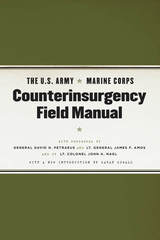
When the U.S. military invaded Iraq, it lacked a common understanding of the problems inherent in counterinsurgency campaigns. It had neither studied them, nor developed doctrine and tactics to deal with them. It is fair to say that in 2003, most Army officers knew more about the U.S. Civil War than they did about counterinsurgency.
The U.S. Army / Marine Corps Counterinsurgency Field Manual was written to fill that void. The result of unprecedented collaboration among top U.S. military experts, scholars, and practitioners in the field, the manual espouses an approach to combat that emphasizes constant adaptation and learning, the importance of decentralized decision-making, the need to understand local politics and customs, and the key role of intelligence in winning the support of the population. The manual also emphasizes the paradoxical and often counterintuitive nature of counterinsurgency operations: sometimes the more you protect your forces, the less secure you are; sometimes the more force you use, the less effective it is; sometimes doing nothing is the best reaction.
An new introduction by Sarah Sewall, director of the Carr Center for Human Rights Policy at Harvard’s Kennedy School of Government, places the manual in critical and historical perspective, explaining the significance and potential impact of this revolutionary challenge to conventional U.S. military doctrine.
An attempt by our military to redefine itself in the aftermath of 9/11 and the new world of international terrorism, The U.S. Army / Marine Corps Counterinsurgency Field Manual will play a vital role in American military campaigns for years to come.
The University of Chicago Press will donate a portion of the proceeds from this book to the Fisher House Foundation, a private-public partnership that supports the families of America’s injured servicemen. To learn more about the Fisher House Foundation, visit www.fisherhouse.org.
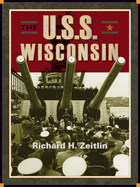
Battleships were instrumental in America’s rise to world dominance at the end of the 19th century. Two battleships in particular, the U.S.S. Wisconsin BB-9 and BB-64, participated in wars and conflicts around the globe, demonstrating America’s strength and technological power. The keel of the BB-9 was laid down on the eve of the Spanish-American War, and she sailed with the Great White Fleet on its famous world voyage of 1907-1909. Representing a major advance in American naval technology, the Wisconsin both demonstrated American strength in the Pacific and served as the setting for peace talks between Panama and Colombia when the former gained independence in 1903. Recommissioned during World War I as a training ship, the BB-9 was then decommissioned in 1920. More than twenty years later, on December 7, 1943, the fast battleship Wisconsin (BB-64) was launched in response to Japan’s attack on Pearl Harbor. The BB-64 served in the Pacific to the end of World War II and again in the Korean War. One of the Iowa- class battleships, the BB-64 was one of the fastest and sleekest on the ocean. In 1988, she was refitted and recommissioned for yet another tour of duty. This is the story of two proud vessels and their role in American naval and diplomatic history.
READERS
Browse our collection.
PUBLISHERS
See BiblioVault's publisher services.
STUDENT SERVICES
Files for college accessibility offices.
RECENTLY PUBLISHED





UChicago Accessibility Resources
home | accessibility | search | about | contact us
BiblioVault ® 2001 - 2026
The University of Chicago Press