
 A SCHOLARLY BOOK REPOSITORY
7 start with U start with U
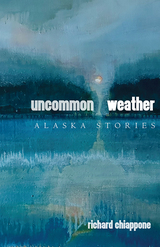
Richard Chiappone’s characters hail from a wide range of socioeconomic strata, each one attempting to figure out the difficult question of how best to live among others. Odd connections abound. In the seriocomic title story, a lonely middle-aged woman, weary of her austere Alaskan life and her crumbling marriage, picks up a hockey stick and a younger man and tries to brawl her way to some better future. A man diagnosed with an apparently terminal illness is caught up in a catastrophic criminal undertaking masterminded by a precocious seventeen-year-old girl. A young boy, determined to fit in with his edgier peers, goes through a metamorphosis, becoming a strange new creature he’s never seen before. With sometimes hilarious missteps, each character stumbles in and out of predicaments that are by turns tender, heartbreaking, dangerous, and even violent.
Told with great empathy and often deeply ironic, wry, and sardonic humor, these stories are a counterpoint to the usual mythos, illuminating an Alaska not usually portrayed in books, on TV, or in movies.

Winner of the Independent Publishers Book Awards’ Silver Prize for Multicultural Fiction
Alarmed by her father’s unexplained disappearance, Julia Castro travels from California to her family’s ancestral home in the Azores to find the islands abuzz with tales of ghost ships, seductive sirens, and witchcraft. The mystery deepens when a drowned man’s body is discovered on a mountainside and an unknown island emerges from the sea. While she is on the hunt for her father, Julia succumbs to the bewitching allure of the islands—and to Nicolau, a fellow musician. History, legend, poetry, and myth are seamlessly interwoven as the novel explores relationships between personal and cultural identity, fate and self-determination, reality and illusion. This revised edition of The Undiscovered Island features a new introduction from Katherine Vaz.
Winner of the 2023 National Indie Excellence Award in Multicultural Fiction
Winner of the 2022 Forward INDIES Silver Award for Literary Fiction
Finalist of the 2023 National Indie Excellence Award in New Fiction
Finalist of the 2023 Eric Hoffer Book Award
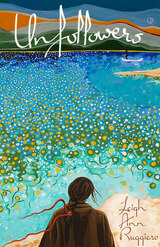
Barb Matheson doesn’t fit in: not on the Standing Rock Reservation where her mother was born; not at the mission in rural Ethiopia where she grew up; and certainly not at the Pennsylvania church where her husband preaches. Expansive and lyrical, Unfollowers is a tale of religious angst, unrequited love, and the upheaval of racial and economic privilege. Equally adrift on both sides of the Atlantic, Barb must negotiate the distance between white America and Africa, between the spirituality of her ancestors and the straight tones of evangelicalism, and between rules and grace. When a former lover crashes her daughter’s third birthday party, she’s offered the chance to find her way home to Ethiopia, leaving her to choose between a rote life in America and an improvised life abroad.
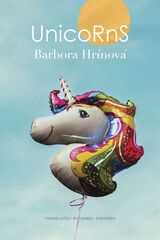
The award-winning Slovak writer Barbora Hrínová’s short stories paint an intimate portrait of people searching for happiness in a world that feels increasingly unstable and uncertain. Across the eight stories in this volume, we meet a rich cast of ordinary yet unconventional people trying to find their place in a society that often prefers conformity over authenticity. Taking us to such settings as a bustling cafe, a small village shack, a rental flat, or a psychiatric ward, Hrínová captures the texture of everyday life with piercing accuracy and a fresh, original voice.
Unicorns is a remarkable debut that resonates across generations. With compassion, wit, and an eye for detail, it shows us that weirdness isn’t rare—it’s a universal human experience.
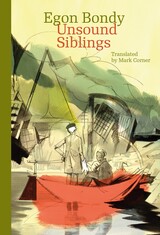
Bondy's merry utopia, or rather anti-utopia, was written during the bleakest years of “normalization” in Communist Czechoslovakia during the 1970s. Once considered a cult novel of the Czech underground, Unsound Siblings is not only a celebration of the “alternative way of life” of people living deliberately outside of (Communist) state power and a mockery of the contemporary consumerist ideas of the police state, but also a light parody of science fiction, organically incorporating philosophical themes. As much as this work can also be described as “adventure literature,” evoking, for example, the scenery of a “mysterious island,” its overall message reaches the power of a religious, gospel message that it is, despite all odds, possible to live in this world after all. Unsound Siblings, first published in Czech by the exiled 68 Publishers in Toronto and circulated in samizdat copies in Czechoslovakia, later won the Egon Hostovský Prize.
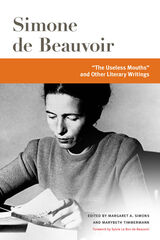
The volume begins with a new translation of the 1945 play The Useless Mouths, written in Paris during the Nazi occupation. Other pieces were discovered after Beauvoir's death in 1986, such as the 1965 short novel "Misunderstanding in Moscow," involving an elderly French couple who confront their fears of aging. Two additional previously unknown texts include the fragmentary "Notes for a Novel," which contains the seed of what she later would call "the problem of the Other," and a lecture on postwar French theater titled Existentialist Theater. The collection notably includes the eagerly awaited translation of Beauvoir's contribution to a 1965 debate among Jean-Paul Sartre and other French writers and intellectuals, "What Can Literature Do?"
Prefaces to well-known works such as Bluebeard and Other Fairy Tales,La Bâtarde, and James Joyce in Paris: His Final Years are also available in English for the first time, alongside essays and other short articles. A landmark contribution to Beauvoir studies and French literary studies, the volume includes informative and engaging introductory essays by prominent and rising scholars.
Contributors are Meryl Altman, Elizabeth Fallaize, Alison S. Fell, Sarah Gendron, Dennis A. Gilbert, Laura Hengehold, Eleanore Holveck, Terry Keefe, J. Debbie Mann, Frederick M. Morrison, Catherine Naji, Justine Sarrot, Liz Stanley, Ursula Tidd, and Veronique Zaytzeff.
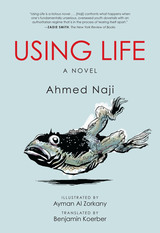
Upon its initial release in Arabic in the fall of 2014, Using Life received acclaim in Egypt and the wider Arab world. But in 2016, Ahmed Naji was sentenced to two years in prison after a reader complained that an excerpt published in a literary journal harmed public morality. His imprisonment marks the first time in modern Egypt that an author has been jailed for a work of literature. Writers and literary organizations around the world rallied to support Naji, and he was released in December 2016. His original conviction was overturned in May 2017 but, at the time of printing, he is awaiting retrial and banned from leaving Egypt.
Set in modern-day Cairo, Using Life follows a young filmmaker, Bassam Bahgat, after a secret society hires him to create a series of documentary films about the urban planning and architecture of Cairo. The plot in which Bassam finds himself ensnared unfolds in the novel’s unique mix of text and black-and-white illustrations.
The Society of Urbanists, Bassam discovers, is responsible for centuries of world-wide conspiracies that have shaped political regimes, geographical boundaries, reigning ideologies, and religions. It is responsible for today’s Cairo, and for everywhere else, too. Yet its methods are subtle and indirect: it operates primarily through manipulating urban architecture, rather than brute force. As Bassam immerses himself in the Society and its shadowy figures, he finds Cairo on the brink of a planned apocalypse, designed to wipe out the whole city and rebuild anew.
READERS
Browse our collection.
PUBLISHERS
See BiblioVault's publisher services.
STUDENT SERVICES
Files for college accessibility offices.
RECENTLY PUBLISHED


UChicago Accessibility Resources
home | accessibility | search | about | contact us
BiblioVault ® 2001 - 2026
The University of Chicago Press