
 A SCHOLARLY BOOK REPOSITORY
5 start with V start with V
Part of a look-alike generation of all-purpose stadiums erected around the country, the Vet took on its own personality over the years. For all its deficiencies, it left fans loving it in the way they loved their own families—warts and all. Almost 100 photographs and Rich Westcott's yarns make Veterans Stadium the one book that will help Philadelphians—and Philadelphia visitors—remember thirty years of their history.
Beginning with the Cleveland Indians’ hard luck during World War II, this thrilling history follows the team through its historic role in racial integration and its legendary postwar comeback. Rich with player photographs and stories, this book is sure to excite American history buffs and baseball fans alike.
In early 1942, baseball team owners across the country scrambled to assemble makeshift rosters from the remaining ballplayers who had not left the sport for the armed forces. The Cleveland Indians suffered a tremendous loss when star pitcher Bob Feller became the first Major Leaguer to enlist, taking his twenty-plus wins per year with him. To make matters worse, the Indians’ new player-manager, Lou Boudreau, had no coaching or managing experience. The resulting team was mediocre, and players struggled to keep up morale.
Feller’s return in late 1945 sparked a spectacular comeback. A year later Bill Veeck bought the franchise and, over the next two years, signed the first American League players to break the color barrier: Larry Doby and Satchel Paige. The 1948 season ended with the Indians and Boston Red Sox tied, resulting in the American League’s first playoff game. Thanks in part to rookie Gene Bearden’s outstanding pitching, the Indians went on to beat the National League’s Boston Braves for their second World Series title.
-Bill James, in The New Bill James Historical Baseball Abstract, on the journals of Red Rolfe
"Red Rolfe's journal for his years as manager of the Detroit Tigers is the kind of precious source researchers yearn for. In combination with William M. Anderson's well-done text, The View from the Dugout will be of great interest to general readers and of immense value to students of baseball history."
-Charles C. Alexander, author of Breaking the Slump: Baseball in the Depression Era
"Red Rolfe was one of baseball's most astute observers. This is 'inside' baseball from the inside."
-Donald Honig, author of Baseball America, Baseball When the Grass Was Real, and other books in the Donald Honig Best Players of All Time series
"In his lucid journals Red Rolfe has provided an inside look at how an intelligent baseball manager thinks and prepares."
-Ray Robinson, Yankee historian and author of Iron Horse: Lou Gehrig in His Time
Baseball players as a rule aren't known for documenting their experiences on the diamond. Red Rolfe, however, during his time as manager of the Detroit Tigers from 1949 to 1952, recorded daily accounts of each game, including candid observations about his team's performance. He used these observations to coach his players and to gain an advantage by recording strengths, weaknesses, and tendencies of opposing players and managers. Rolfe's journals carry added value considering his own career as an All-Star Yankee third baseman on numerous world champion teams, where he was a teammate of Lou Gehrig and Joe DiMaggio.
Today, in the era of televised broadcasts, networks often wire a manager so that viewers can listen to his spontaneous comments throughout the game. Red Rolfe's journals offer an opportunity to find out what a manager is thinking when no one is around to hear.
William M. Anderson is Director of the Department of History, Arts and Libraries for the State of Michigan. His books include The Detroit Tigers: A Pictorial Celebration of the Greatest Players and Moments in Tigers' History.
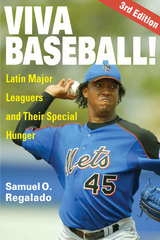
Lively and filled with vivid anecdotes, Viva Baseball! chronicles the struggles of Latin American professional baseball players in the United States from the late 1800s to the present.
As Latino players, managers, and owners continue to blossom into baseball's biggest stars, they have benefited from a growing Spanish-language media, a group identity, an increase in financial leverage and attention, and a burgeoning Latino culture in the United States. Although there have been several positive developments in the treatment of Latin American players, many, such as Albert Pujols, Pedro Martinez, Alex Rodriguez, and Ozzie Guillen, still face shocking racism. Samuel O. Regalado draws upon archives and rich interviews with Latin baseball stars like Felipe Alou, Orlando Cepeda, and Minnie Minoso to show the changing tenor of discrimination in the twenty-first-century game.
READERS
Browse our collection.
PUBLISHERS
See BiblioVault's publisher services.
STUDENT SERVICES
Files for college accessibility offices.
RECENTLY PUBLISHED





UChicago Accessibility Resources
home | accessibility | search | about | contact us
BiblioVault ® 2001 - 2025
The University of Chicago Press