
 A SCHOLARLY BOOK REPOSITORY
12 start with V start with V
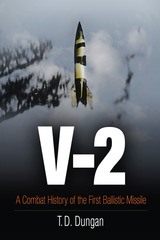
In August 1944, Londoners thought the war might be over by Christmas. But on September 8, 1944, in the London suburb of Chiswick, a thunderous double-boom was heard followed by a huge plume of black smoke rising high into the air. Several minutes later another explosion rocked the earth near Epping. There had been no warnings, no drone of aircraft above, just sudden devastation. "Operation Penguin," the V-2 offensive, had begun. The A-4 rocket, better known as the V-2, Vergeltungswaffen Zwei, or "Vengeance Weapon 2," was the first ballistic missile to be used in combat. Soaring over 50 miles high at supersonic speeds, the V-2 would strike its target within 5 minutes of launching. Once in the air its deadly warhead was unstoppable. The ancestor of all Cold War and modern day ballistic missiles, as well as the rockets used for space exploration, the V-2 could not win the war for Germany—it was too expensive, too complicated, too inaccurate, and its warhead was too small—but its unprecedented invulnerability and influence on Allied planning made the V-2 and the advancements it represented the ultimate war prize, and British, American, and Soviet forces scrambled to seize German rocket technology along with its scientists and engineers. In V-2: A Combat History of the First Ballistic Missile, T. D. Dungan relies on an unparalleled collection of original documents, unpublished photographs, and accounts from those who were there to provide a complete description of the V-2 program, the missile's use in combat, and the race to capture its secrets.
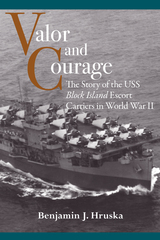
Recounts the stories of the USS Block Island CVE 21 and CVE 106 and their crews, many of whom served on both ships in the Atlantic and Pacific theatres.
In Valor and Courage: The Story of the USS Block Island Escort Carriers in World War II Benjamin Hruska explores the history and commemoration of the USS Block Island—or, more properly, the Block Islands, as two escort carriers bore that name during WWII. The first, CVE 21, bears the distinction of having been the only American aircraft carrier sunk in the Atlantic Theatre after being torpedoed by a German U-boat off the coast of North Africa.
Of the CVE 21’s 957 crew members, six sailors were killed and eighteen injured in the strike, and four of the Block Island’s fighter pilots were lost later in the day searching for a safe place to land their planes. When the CVE 106 was commissioned to replace its predecessor, Captain Massie Hughes successfully persuaded the Navy to keep the CVE 21’s crew together in manning the new ship. After resurrection as the CVE 106, the Block Island was assigned to the Pacific theater where it fought until the end of the war. The saga of these two ships and the crew that navigated two very different theaters of war offers a unique lens on naval strategy and engineering as it evolved during WWII, especially as pertains to the escort carrier class—generally underappreciated both in naval studies and in public memory.
Using archival materials, dozens of oral histories, primary sources, and official records, Hruska traces the life of the Block Island from the CVE 21’s construction through its missions in the Atlantic, its work as an antisubmarine hunter, its destruction, and the lasting impact of those experiences on its crew. Hruska’s study juxtaposes traditional military history with an examination of the acts of remembrance and commemoration by veterans who served on the escort carriers, how those practices evolved over time, and how the meanings of personal wartime experiences and memories gradually shifted throughout that process.

Vanguard of Nazism is the first full history of the German Free Corps and of its contributions to the rise of Nazism. This dramatic and horrifying story sheds new light on a dark corner of the recent past, and it has an unhappy relevance to neo-Nazist tendencies in Germany today.
The newly established Weimar Republic, defenseless against the Communists, hired groups of volunteer soldiers (the Free Corps) to fight for it. These volunteers—born of the pre–World War I youth movement, nourished on the battlefields of the War, unreconciled to defeat and determined to avenge it—fought for the Republic (which they despised) from Munich to Berlin, from Düsseldorf to the Baltic. When the Republic, in fear, tried to disband them, they went underground until they reappeared in the brown shirts of the Nazis.
The savage spirit, brutal acts, and perverted ideology of the men whom Hermann Goering called “the first soldiers of the Third Reich” stand out in glaring relief in this record. The book is based on contemporary newspaper accounts and government documents, but the story it tells would hardly be credible were it not for the memoirs of the Free Corps fighters themselves, from which Robert G. L. Waite quotes liberally. With this material, Waite is able to show that the Free Corps contributed to Hitler’s Germany powerful political shock troops, labor camps, a youth movement, a well-developed Führer concept, and the basic tenets of National Socialist ideology.
The movement, half a million strong, swept Germany at a time when Hitler was an unknown political agitator. But when Hitler came to power, leaders of the Free Corps emerged as leaders of the Third Reich. Waite lists the names of these men in a valuable appendix to the book, which shows the activities of each man in both movements.
Waite emphasizes and substantiates the thesis that National Socialism really began in the months and years immediately following World War I. Aside from its importance as history, the story of these self-styled Freebooters has all the ingredients of a fantastic adventure tale: intrigues, conspiracies, quick reversals, and sudden death follow each other in dramatic succession.
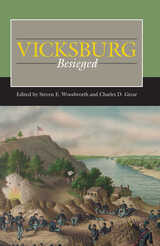
Vicksburg, Mississippi, held strong through a bitter, hard-fought, months-long Civil War campaign, but General Ulysses S. Grant’s forty-day siege ended the stalemate and, on July 4, 1863, destroyed Confederate control of the Mississippi River. In the first anthology to examine the Vicksburg Campaign’s final phase, nine prominent historians and emerging scholars provide in-depth analysis of previously unexamined aspects of the historic siege.
Ranging in scope from military to social history, the contributors’ invitingly written essays examine the role of Grant’s staff, the critical contributions of African American troops to the Union Army of the Tennessee, both sides’ use of sharpshooters and soldiers’ opinions about them, unusual nighttime activities between the Union siege lines and Confederate defensive positions, the use of West Point siege theory and the ingenuity of Midwestern soldiers in mining tunnels under the city’s defenses, the horrific experiences of civilians trapped in Vicksburg, the Louisiana soldier's defense of Jackson amid the strains of piano music, and the effect of the campaign on Confederate soldiers from the Trans-Mississippi region.
The contributors explore how the Confederate Army of Mississippi and residents of Vicksburg faced food and supply shortages as well as constant danger from Union cannons and sharpshooters. Rebel troops under the leadership of General John C. Pemberton sought to stave off the Union soldiers, and though their morale plummeted, the besieged soldiers held their ground until starvation set in. Their surrender meant that Grant’s forces succeeded in splitting in half the Confederate States of America.
Editors Steven E. Woodworth and Charles D. Grear, along with their contributors—Andrew S. Bledsoe, John J. Gaines, Martin J. Hershock, Richard H. Holloway, Justin S. Solonick, Scott L. Stabler, and Jonathan M. Steplyk—give a rare glimpse into the often overlooked operations at the end of the most important campaign of the Civil War.

This book seeks to reformulate the canon of writings on what is called “the Viet Nam War” in America and “the American War” in Viet Nam. Until recently, the accepted canon has consisted almost exclusively of American white male combat narratives, which often reflect and perpetuate Asian stereotypes. Renny Christopher introduces material that displays a bicultural perspective, including works by Vietnamese exile writers and by lesser-known Euro-Americans who attempt to bridge the cultural gap.
Christopher traces the history of American stereotyping of Asians and shows how Euro-American ethnocentricity has limited most American authors' ability to represent fairly the Vietnamese in their stories. By giving us access to Vietnamese representations of the war, she creates a context for understanding the way the war was experienced from the “other” side, and she offers perceptive, well-documented analyses of how and why Americans have so emphatically excised the Vietnamese from narratives about a war fought in their own country.
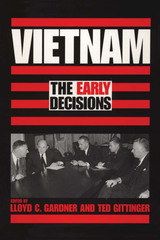
Haunting questions remain about our involvement in Vietnam. Perhaps the most persistent of these is whether President Kennedy would have ended American involvement in Vietnam if he had lived.
For many Americans, Oliver Stone's film JFK left no doubt that before his assassination Kennedy had determined to quit Vietnam. Yet the historical record offers a more complex answer. In this fresh look at the archival evidence, noted scholars take up the challenge to provide us with their conclusions about the early decisions that put the United States on the path to the greatest American tragedy since the Civil War. The tensions and turmoil that accompanied those decisions reveal the American presidency at the center of a storm of conflicting advice.
The book is divided into four sections. Parts one and two delve into the political and military contexts of the early decisions. Part three raises the intriguing questions of Kennedy's and Johnson's roles in the conflict, particularly the thorny issue of whether Kennedy did, in fact, intend to withdraw from Vietnam and whether Johnson reversed that policy. Part four reveals an uncanny parallel between early Soviet policy toward Hanoi and U.S. policy toward Saigon.
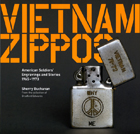
—from an engraving on a Vietnam-era Zippo lighter
In 1965, journalist Morley Safer followed the United States Marines on a search and destroy mission into Cam Ne. When the Marines he accompanied reached the village, they ordered the civilians there to evacuate their homes—grass huts whose thatched roofs they set ablaze with Zippo lighters. Safer’s report on the event soon aired on CBS and was among the first to paint a harrowing portrait of the War in Vietnam. LBJ responded to the segment furiously, accusing Safer of having “shat on the American flag.” For the first time since World War II, American boys in uniform had been portrayed as murderers instead of liberators. Our perception of the war—and the Zippo lighter—would never be the same.
But as this stunning book attests, the Zippo was far more than an instrument of death and destruction. For the American soldiers who wielded them, they were a vital form of social protest as well. Vietnam Zippos showcases the engravings made by U.S. soldiers on their lighters during the height of the conflict, from 1965 to 1973. In a real-life version of the psychedelic war portrayed in Francis Ford Coppola’s Apocalypse Now, Sherry Buchanan tells the fascinating story of how the humble Zippo became a talisman and companion for American GIs during their tours of duty. Through a dazzling array of images, we see how Zippo lighters were used during the war, and we discover how they served as a canvas for both personal and political expression during the Age of Aquarius, engraved with etchings of peace signs and marijuana leaves and slogans steeped in all the rock lyrics, sound bites, combat slang, and antiwar mottos of the time.
Death from Above. Napalm Sticks to Kids. I Love You Mom, From a Lonely Paratrooper. The engravings gathered in this copiously illustrated volume are at once searing, caustic, and moving, running the full emotional spectrum with both sardonic reflections—I Love the Fucking Army and the Army Loves Fucking Me—and poignant maxims—When the Power of Love Overcomes the Love of Power, the World Will Know Peace. Part pop art and part military artifact, they collectively capture the large moods of the sixties and the darkest days of Vietnam—all through the world of the tiny Zippo.
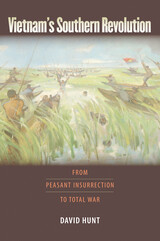
In Vietnam, the American government vowed to win the “hearts and minds” of the people. On the other side, among those who led and sympathized with the insurgents, the term “people's war” gained a wide currency. Yet while much has been written about those who professed to speak for the Vietnamese population, we know surprisingly little about the everyday life of the peasants who made up the bulk of the country's inhabitants. This book illuminates that subject. Drawing on a wide range of sources, including interviews conducted by the Rand Corporation with informants from My Tho Province in the Mekong Delta, David Hunt brings to light the daily experience of villagers in the midst of war and revolution.
The peasants of southern Vietnam were neither onlookers nor mere victims as fighting raged throughout their country. From the “concerted uprising” in 1959–1960 to the Tet Offensive of 1968, the revolutionary movement they created was in fact the driving force within the war. Known as the “Viet Cong” to their adversaries, the rebels called themselves the “Liberation Front.” They demanded an end to landlordism and an egalitarian distribution of the means of subsistence as well as a democratization of relations between town and countryside, parents and children, men and women. They hoped the Vietnamese people would achieve a fuller sense of their place in the world and of the power they possessed to fashion their own destinies, without reliance on supernatural forces.In the first half of the book, Hunt analyzes this cultural revolution. As fighting spread and became more destructive, especially after the U.S. escalation in 1965, villagers were driven from their homes, the rural infrastructure collapsed, and customary notions of space and time lost purchase on an increasingly chaotic world. In the second half of the book, Hunt shows how peasants, who earlier had aspired to a kind of revolutionary modernism, now found themselves struggling to survive and to cope with the American intruders who poured into My Tho, and how they managed to regroup and spearhead the Tet Offensive that irrevocably altered the course of the war.
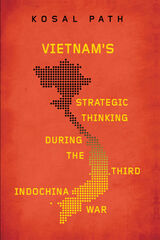
In contrast to earlier studies, Path traces the moving target of these changing policy priorities, providing a vital addition to existing scholarship on asymmetric wartime decision-making and alliance formation among small states. The result uncovers how this critical period had lasting implications for the ways Vietnam continues to conduct itself on the global stage.
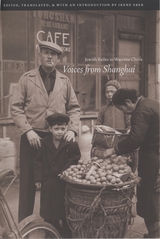
When Hitler came to power and the German army began to sweep through Europe, almost 20,000 Jewish refugees fled to Shanghai. A remarkable collection of the letters, diary entries, poems, and short stories composed by these refugees in the years after they landed in China, Voices from Shanghai fills a gap in our historical understanding of what happened to so many Jews who were forced to board the first ship bound for anywhere.
Once they arrived, the refugees learned to navigate the various languages, belief systems, and ethnic traditions they encountered in an already booming international city, and faced challenges within their own community based on disparities in socioeconomic status, levels of religious observance, urban or rural origin, and philosophical differences. Recovered from archives, private collections, and now-defunct newspapers, these fascinating accounts make their English-languge debut in this volume. A rich new take on Holocaust literature, Voices from Shanghai reveals how refugees attempted to pursue a life of creativity despite the hardships of exile.
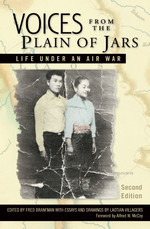
When first published in 1972, this book was instrumental in exposing the bombing. In this expanded edition, Branfman follows the story forward in time, describing the hardships that Laotians faced after the war when they returned to find their farm fields littered with cluster munitions—explosives that continue to maim and kill today.
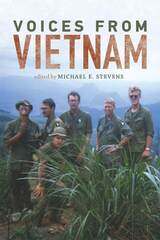
An unforgettable collection of 174 letters and diary entries written by 92 wisconsin men and women who served in Vietnam. Includes a journal kept by Menasha native Frederic Flom on cigarette wrappers during his final 16 days of captivity — the only known diary smuggled out by a Vietnam prisoner of war.
READERS
Browse our collection.
PUBLISHERS
See BiblioVault's publisher services.
STUDENT SERVICES
Files for college accessibility offices.
RECENTLY PUBLISHED


UChicago Accessibility Resources
home | accessibility | search | about | contact us
BiblioVault ® 2001 - 2026
The University of Chicago Press