logo for Intellect Books
World Film Locations
Dublin
Edited by Jez Conolly and Caroline Whelan
Intellect Books, 2011
With its rich political and literary history, Dublin is a sought after destination for cinematographers who have made use of the city’s urban streetscapes and lush pastoral settings in many memorable films—among them Braveheart, The Italian Job, and the 2006 musical drama Once. World Film Locations: Dublin offers an engaging look at the many incarnations of the city onscreen through fifty synopses of the key scenes—either shot or set in Dublin—accompanied by a generous selection of full-color film stills.
 
Throughout the book, a series of essays by leading film scholars spotlight familiar actors, producers, and directors as well as some of the themes common to films shot in Dublin, including literature, politics, the city’s thriving music scene, and its long history of organized crime. Also included is a look at the representations of Dublin before, during, and after the Celtic Tiger era. Sophisticated yet accessible, this volume will undoubtedly take its place on the shelves of film buffs and those interested in Irish culture.
[more]

logo for Intellect Books
World Film Locations
Florence
Edited by Alberto Zambenedetti
Intellect Books, 2014
Florence, with its rich history, privileged place in the canon of Western art, and long-standing relationship with the moving image, is a cinematic city equal to Venice or Rome. This edition in the well-established World Film Locations series explores Florence as it is manifested in the minds of filmmakers and filmgoers. Contributors to the collection consider a wide range of topics, including the tourist’s perception of Florence, representations of art and artists on screen, the camera-friendly Tuscan countryside and mouthwatering local cuisine, and filmic adaptations of canonical Italian literature. Through scene reviews of films including Bobby Deerfield, A Room with a View, Tea with Mussolini, and Under the Tuscan Sun, contributors delve deeper into the makeup of the city, looking at both familiar and unfamiliar locations through the lens of such filmmakers as Roberto Rossellini, Mario Monicelli, Brian DePalma, and Ridley Scott.

From the Duomo to the Uffizi gallery, Florence is filled with history, art, and culture. For those who crave a passport to this Tuscan capital, World Film Locations: Florence will take you there without you ever having to leave your library.
[more]

logo for Intellect Books
World Film Locations
Glasgow
Edited by Nicola Balkind
Intellect Books, 2013
World Film Locations: Glasgow explores Scotland’s biggest city and the many locations in which its films are viewed, set, and shot. Taking in the important moments and movements in its rich cinematic history, this book seeks to discover the city’s culture, character, and comedy through its cinematic identity. Essays cover a variety of topics including a background of Glasgow’s cinema-goers and picture houses, the evolution of Scots comedy, and the role of the city as inspiration for grassroots and underground filmmakers, as well as big Hollywood productions. Thirty-eight films are featured, from classics like Forsyth’s Gregory’s Girl and Loach’s Carla’s Song to cult hits like Boyle’s Trainspotting. Bollywood is also represented, alongside European titles and grim Scots realism like Sweet Sixteen, My Name is Joe, and Red Road, and new titles including Fast Romance, Perfect Sense, and NEDs, making this an essential guide to Scotland in film.

[more]

logo for Intellect Books
World Film Locations
Havana
Edited by Ann Marie Stock
Intellect Books, 2014
Havana is among the world’s leading cinematic locales. In films made beyond the island as well as those created by local cineastes, Havana is depicted as a vibrant Caribbean city. The quantity and quality of the works representing this tropical cityscape attest to the prominence of this film location and underscore the need for a book dedicated to it.

World Film Locations: Havana situates Havana as a modern city in prerevolutionary times, noting the architectural and cultural shifts evident during the revolution, and comments on recent reconfigurations of the city and its inhabitants in the wake of global forces. Among the forty-six scene reviews chosen to show the city in all its multifaceted glory, films such as Our Man in Havana, I Am Cuba, Hello Hemingway, Habana Blues and Chico and Rita are bookended by seven insightful essays. The essays look at the history of revolutionary cinema in Cuba and consider documentary films, from the Latin American Newsreel to avant-garde experimental work, including the island’s documentary tradition showcasing local faces and places that have paved the way for present-day media and audiovisual art. The essays also explore the multifaceted film culture of the capital, the cine club movement, historic cinemas and film venues around the city, the abundance of film festivals such as the International Festival of New Latin American Cinema, and film-themed cafeterias, restaurants, bookstores, and markets.
[more]

logo for Intellect Books
World Film Locations
Helsinki
Edited by Pietari Kääpä and Silja Laine
Intellect Books, 2013
Part of Intellect’s World Film Locations series, World Film Locations: Helsinki explores the relationship between the city, cinema, and Finnish cultural history. Cinematic representations of Helsinki range from depictions of a northern periphery to a space of cosmopolitanism, from a touristic destination to a substitute for Moscow and St. Petersburg during the Cold War. The city also looks different depending on one’s perspective, and World Film Locations: Helsinki illustrates this complexity by providing a visual collection of cinematic views of Helsinki.
This cinematic city is a collective work where individual pieces construct a whole, and one which we, as viewers, then shape according to our perspectives. The contributors emphasize the role of the city in identity and cultural politics throughout Finnish film history and its central role as the locus for negotiating Finland’s globalization.

[more]

logo for Intellect Books
World Film Locations
Hong Kong
Edited by Linda Chiu-Han Lai and Kimburley Wing-Yee Choi
Intellect Books, 2013
The rapid development of Hong Kong has occasioned the demolition of buildings and landscapes of historic significance, but film acts as a repository for memories of lost places, vanished vistas, and material objects. Location shoots in Hong Kong have preserved many disappearing landmarks of the city, and the resulting films function as valuable and irreplaceable archives of the city’s evolution.
Far more than a simple collection of movie locations, this book delivers a rare glimpse into the history of film production practices in Hong Kong. The locations described here are often not the most iconic; rather, they are the anonymous streets and back alleys used by local film studios in the 1960s and 70. They are the garden cafes with outdoor seating near the Chinese University of Hong Kong where moments of conflict in romantic comedies erupt and dissipate. They are the old Kai Tak Airport, which channels rage and desire, and the tenement housing, which splits citizens into greedy landlords and the diligent working class and embodies old-day communal values. Modern Hong Kong horror films draw their power from the material character of home-grown convenient stores, shopping arcades, and lost mansions found under modern high rises.
As in the films of Wong Kar-wai and Johnnie To, readers will drift and dash through the streets of Central to the district’s periphery, almost recklessly, automatically, or for the sheer pleasure of roaming. The first of its kind in English, this book is more than a city guide to Hong Kong through the medium of film; it is a unique exploration of relationship between location and place and genre innovations in Hong Kong cinema. 

[more]

logo for Intellect Books
World Film Locations
Istanbul
Edited by Özlem Köksal
Intellect Books, 2012
From Head-On to Murder on the Orient Express, World Film Locations: Istanbul offers a compelling look at the many films shot on location in this multicultural metropolis on the Black Sea. Central to this volume are the film industry’s changing representations of Istanbul, which have ranged from progressive cultural center to the authoritarian police state of Alan Parker’s Midnight Express. Evident in both in films made in the West and throughout Turkey over time, these divergent accounts are analyzed with regard to their role in continually reshaping our perception of the city. Essays explore this topic and many others, including the significance of Istanbul to the works of critically-acclaimed directors, among them Nuri Bilge Ceylan.
 
Illustrated throughout with film stills as well as photographs of featured locations as they appear today, World Film Locations: Istanbul visits all of the important cinematic landmarks, including the Topkapi Palace and the Haydarpasa train station and offers a vivid picture of this historic and culturally stimulating city.
[more]

logo for Intellect Books
World Film Locations
Las Vegas
Edited by Marcelline Block
Intellect Books, 2011
Sin and redemption. The ridiculous and the sublime. The carnivalesque excess of the Strip and the barrenness of the desert surrounding the city. Visited by millions of fortune seekers—and starry-eyed lovers—each year, Las Vegas is a city with as many apparent contradictions as Elvis impersonators, and this complexity is reflected in the diversity of films that have been shot on location there. 
            A copiously illustrated retrospective of Vegas’s appearances on the big screen, this new volume in Intellect’sWorld Film Locations series presents synopses of scenes from a broad selection of films—from big-budget blockbusters like Oceans 11 to acclaimed classics Rain Man,Casino, and The Godfather to cult favorites like Showgirls and Fear and Loathing in Las Vegas. Insightful essays throughout explore a range of topics, including the Rat Pack’s Las Vegas, the cinematized Strip, Las Vegas as a frequent backdrop for science fiction, and the various film portrayals of iconic pop-cultural figures like Elvis and Frank Sinatra. Rounding out this information are film stills juxtaposed with photographs of the locations as they appear today.
            World Film Locations: Las Vegas goes beyond the clichés of Sin City to examine what Hal Rothman and Mike Davis called “the grit beneath the glitter,” thus providing an opportunity to find out more about the unique position Vegas occupies in the popular imagination.
[more]

logo for Intellect Books
World Film Locations
Liverpool
Edited by Jez Conolly and Caroline Whelan
Intellect Books, 2013
Outside of the capital London, no other British city has attracted more filmmakers than Liverpool. Sometimes standing in for London, New York, Chicago, Paris, Rome, or Moscow, and sometimes playing itself—or a version of its own past in Beatles biopics—Liverpool is an adaptable filmic backdrop that has attracted filmmakers to its ports for decades. A place of passion, humor, and pride, Liverpool evokes caverns and cathedrals, ferries and football grounds; it is a city so vivid we see it clearly even if we’ve never been there. From the earliest makers of moving images—among them the Mitchell & Kenyon film company, the Lumière brothers, and pioneering early cinematographer Claude Friese-Greene—who preserved the city, the river, the docks, the streets, and the people, Liverpool has endured as a cinematic destination. This collection celebrates that survival instinct and will be welcomed by enthusiasts of British cities, films, and culture.

[more]

logo for Intellect Books
World Film Locations
London
Edited by Neil Mitchell
Intellect Books, 2011

An exciting and visually focused tour of the diverse range of films shot on location in London, World Film Locations: London presents contributions spanning the Victorian era, the swinging ’60s, and the politically charged atmosphere following the 2005 subway bombings. Essays exploring key directors, themes, and historical periods are complemented by reviews of important scenes that offer particular insight into London's relationship to cinema. The book is illustrated throughout with full-color film stills and photographs of cinematic landmarks as they appear now—as well as city maps to aid those keen to investigate them.

From Terror on the Underground to Thames Tales to Richard Curtis's affectionate portrayal of the city in Love Actually, this user-friendly guide explores the diversity and distinctiveness of films shot in location in London.

[more]

logo for Intellect Books
World Film Locations
Los Angeles
Edited by Gabriel Solomons
Intellect Books, 2011
The heart of Hollywood’s star-studded film industry for more than a century, Los Angeles and its abundant and ever-changing locales—from the Santa Monica Pier to the infamous and now-defunct Ambassador Hotel—have set the scene for a wide variety of cinematic treasures, from Chinatown to Forrest Gump, Falling Down to the coming-of-age classic Boyz n The Hood. This volume marks an engaging citywide tour of the many films shot on location in this birthplace of cinema and the screen spectacle.
 
World Film Locations: Los Angeles pairs fifty incisive synopses of carefully chosen film scenes—both famous and lesser-known—with an accompanying array of evocative full-color film stills, demonstrating how motion pictures have contributed to the multifarious role of the city in our collective consciousness, as well as how key cinematic moments reveal aspects of its life and culture that are otherwise largely hidden from view. Insightful essays throughout turn the spotlight on the important directors, thematic elements, and historical periods that provide insight into Los Angeles and its vibrant cinematic culture. Rounding out this information are city maps with information on how to locate key features, as well as photographs showing featured locations as they appear now.
 
A guided tour of the City of Angels conducted by the likes of Robert Altman, Nicholas Ray, Michael Mann, and Roman Polanski, World Film Locations: Los Angeles is moreover a concise and user-friendly guide to how Los Angeles has captured the imaginations of both filmmakers and those of us sitting transfixed in theatres worldwide.
[more]

logo for Intellect Books
World Film Locations
Madrid
Edited by Lorenzo J. Torres Hortelano
Intellect Books, 2011
From Death of a Cyclist to Open Your Eyes to The Limits of Control, Madrid has graced the big screen countless times across a wide variety of genres enacted by a similarly eclectic array of directors, including Carlos Saura, Luis Buñuel, and Pedro Almodovar. With the aim of capturing the full range of portrayals of the city onscreen, this volume pairs short synopses of scenes from fifty films with an accompanying array of dynamic full-color film stills. These scenes are set in context through a series of incisive essays that examine significant periods from Madrid’s rich film history, as well as its key industry figures and recurring themes.
 
Packed with fun facts, World Film Locations: Madrid offers a fascinating—and often surprising—tour of the many film representations of Madrid. For jetsetters planning a jaunt to this richly cinematic city, the book also includes photographs of locations as they appear now and city maps with information on how to locate key features.
[more]

logo for Intellect Books
World Film Locations
Malta
Edited by Jean Pierre Borg and Charlie Cauchi
Intellect Books, 2015
Malta has served as a beautiful backdrop for films for nearly as long as there has been a film industry. This entry in the World Film Locations series traces the history of Malta on screen, from big-budget blockbusters to modest indie pictures. The locations Malta offers range widely, from grand fortified harbors and stunning cliffs to quaint villages and Baroque palaces. That diversity has enabled the island to double for countless locations, including ancient Troy and Alexandria, as well as Greece, Israel, and other Mediterranean and Middle Eastern regions, while its well-known water tanks have proved to be perfect for shooting ocean scenes. Packed with illustrations, World Film Locations: Malta examines a number of films made in Malta to date, and will be a must-read for tourists, film buffs, and scholars alike.
[more]

logo for Intellect Books
World Film Locations
Marseilles
Edited by Marcelline Block
Intellect Books, 2013
As France’s oldest city, Marseilles has a significant cinematic culture, dating back to the 1890s when the Lumière brothers shot many films there. Due to its prolific film industry in the 1920s, Marseilles was referred to as “the French Los Angeles.”

World Film Locations: Marseilles examines the representations of this port city in cinema, through essays and film scene reviews devoted to an exploration of its topography as depicted by Jean Epstein, Jean-Luc Godard, Jean-Pierre Melville, Jean Renoir, Jean-Jacques Beineix, and many others. This volume showcases Marseilles’s diversity as articulated onscreen: from the winding streets of the Panier to the Old Port’s noisy markets, from the bustling Canebière to the dockyards of the Grand Port Maritime, from the cliffs of Provençal encircling the city to sun-drenched calanques leading to the dazzling cerulean sea. World Film Locations: Marseilles features maps of film scenes, high-quality screengrabs, and images of movie locations as they appear today, accompanied by original texts penned by leading international film scholars and critics and an interview with Marseillais director Robert Guédiguian. Marseilles has been named a 2013–14 European Capital of Culture and this book is a fitting and timely tribute.

[more]

logo for Intellect Books
World Film Locations
Melbourne
Edited by Neil Mitchell
Intellect Books, 2012
Tracing cinematic depictions of life in Melbourne from the Victorian era to the present day, World Film Locations: Melbourne serves as an illuminating and visually rich guide to films set wholly or partially in one of Australia’s most diverse and culturally important cities.
 
In a series of short analyses of iconic scenes and longer essays focusing on key directors, recurring themes, and notable locations, the contributors examine the city’s relationship to cinema from a variety of angles. Covering everything from sporting dramas to representations of the outlaw Ned Kelly to the coming-of-age films of the 1980s and beyond, this accessible trip around the birthplace of Australian cinema validates Melbourne’s reputation as a creative hotbed and reveals the true significance of the films and filmmakers associated with the city. Illustrated throughout with full-color film stills and photographs of the locations as they are now, World Film Locations: Melbourne also contains city maps for those wishing to explore Melbourne’s cinematic streets with this volume’s expert guidance.
[more]

logo for Intellect Books
World Film Locations
Moscow
Edited by Birgit Beumers
Intellect Books, 2014
A megalopolis of more than twelve million inhabitants, Moscow is a city with a rich and varied history. In 1918, following the Revolution, Moscow became the capital of the Soviet Union, and it remained capital of the Russian Federation after 1991. Moscow’s status as capital, from 1918 to the present, more or less coincides with its life on the silver screen, since there are very few preserved filmic depictions of the city from pre-Revolutionary years. In the Soviet era, film often served propaganda purposes; therefore, the image of Moscow on celluloid echoes the political ambitions of the country, and film locations and settings reflect the cultural agenda of the times.

World Film Locations: Moscow compares and contrasts images from the past and present, giving the forty-six carefully selected scene reviews and seven spotlight essays a historical focus. With an inside look at the city’s film studio, Mosfilm, the book is essential for all armchair travelers and cinephiles alike.
[more]

logo for Intellect Books
World Film Locations
Mumbai
Edited by Helio San Miguel
Intellect Books, 2012
 
Mumbai, formerly known as Bombay, is a megalopolis of dramatic diversity and heartbreaking extremes, with wealthy areas located just steps away from the searing poverty of its huge slums. The home of Bollywood, Mumbai is also the epicenter of India’s film industry and its foremost film location. Through the lens of Mumbai’s manifold cinematic representations, World Film Locations: Mumbai explores the sheer complexity of this incomparable city.
 
This volume comprises insightful essays and beautifully illustrated scene analyses by leading scholars and film critics who explore the ways filmmakers from India and abroad have represented Mumbai’s astonishing urban and human landscape. Taken together, these contributions show how movies have created in the imaginations of billions of spectators the vivid image of a city that constantly tempts people to escape their dreary existence and offers them chances to fulfill their dreams. The first book to focus on cinematic representations of what is perhaps the world’s most-filmed city, World Film Locations: Mumbai will be necessary reading for scholars and film buffs alike.
[more]

logo for Intellect Books
World Film Locations
New Orleans
Edited by Scott Jordan Harris
Intellect Books, 2012
With more and more filmmakers taking advantage of its rich and varied settings, New Orleans has earned star-studded status as the “Hollywood of the South.” From the big-screen adaptation of the stage classic A Streetcar Named Desire to the Elvis Presley musical King Creole, many well-known films have a special connection with the Big Easy, and this user-friendly guide explores the integral role of New Orleans in American film history.
 
World Film Locations: New Orleans features essays that reflect on the city’s long-standing relationship with the film industry. Among the topics discussed are popular depictions of Hurricane Katrina on film, the prevalence of the supernatural in New Orleans cinema, and recent changes to city ordinances that have made New Orleans even more popular as a film destination. As the most frequently filmed area of New Orleans, the French Quarter is given particular attention in this volume with synopses of scenes shot or set there, including The Big Easy, Interview with the Vampire, and the much-loved Bond film Live and Let Die. Additional synopses highlight numerous other film scenes spanning the city, and all are accompanied by evocative full-color stills.
 
The historic neighborhoods and landmarks of New Orleans have provided the backdrop for some of the most memorable moments in film history, and World Film Locations: New Orleans offers fans a guided tour of the many films that made the city their home.
[more]

logo for Intellect Books
World Film Locations
New York
Edited by Scott Jordan Harris
Intellect Books, 2011

Be they period films, cult classics, or elaborate directorial love letters, New York City has played—and continues to play—a central role in the imaginations of filmmakers and moviegoers worldwide. The stomping grounds of King Kong, it is also the place where young Jakie Rabinowitz of The Jazz Singer realizes his Broadway dream. Later, it is the backdrop against which taxi driver Travis Bickle exacts a grisly revenge.

The inaugural volume in an exciting new series from Intellect, World Film Locations: New York pairs incisive profiles of quintessential New York filmmakers—among them Woody Allen, Martin Scorsese, Sidney Lumet, and Spike Lee—with essays on key features of the city’s landscape that have appeared on the big screen, from the docks to Coney Island, Times Square to the Statue of Liberty. More than forty-five location-specific scenes from films made and set in New York are separately considered and illustrated with screen shots and photographs of the locations as they appear now. For film fans keen to follow the cinematic trail either physically or in the imagination, this pocket-sized guide also includes city maps with information on how to locate key features.
 
Presenting a varied and thought-provoking collage of the city onscreen—from the silent era to the present—World Film Locations: New York provides a fascinating and historic look back at the rich diversity of locations that have provided the backdrop for some of the most memorable films.
[more]

logo for Intellect Books
World Film Locations
Paris
Edited by Marcelline Block
Intellect Books, 2011
“We’ll always have Paris,” Humphrey Bogart assures Ingrid Bergman in the oft-quoted farewell scene from Casablanca in which Bogart’s character, hard-hearted restaurateur Rick Blaine, bids former lover Ilsa Lund goodbye. The backdrop against which they first fell in love, Paris later serves as a reminder of their deep mutual longings. And with a host of different realizations by filmmakers from Philip Kaufman to Julien Leclercq to Woody Allen, there is no question that Paris has likewise endured in the memories of cinephiles worldwide.
 
World Film Locations: Paris takes readers on an unforgettable tour of the City of Lights past and present through the many films that have been set there. Along the way, we revisit iconic tourist sites from the Eiffel Tower—whose stairs and crossbars inspired more than one famous chase scene—to the Moulin Rouge overlooking the famously seedy Place Pigalle. Other films explore lesser-known quartiers usually tucked away from the tourist’s admiring gaze. Handsomely illustrated with full-color film stills and contemporary photographs, more than fifty scenes are individually considered with special attention to their use of Paris’s topography as it intersects with characters, narrative, and plot. A host of important genres and cinematic movements are featured, including poetic realism, the New Wave, cinéma-verité, the literary works of the Left Bank Group, and Luc Besson’s slickly stylized cinéma du look. Meanwhile, essays foreground contributions from Francophone African directors and émigré filmmakers.
 
For centuries, Paris has reigned over the popular imagination. For those who have visited or those who have only imagined it through art, literature, and film, World Film Locations: Paris presents a wonder-filled cinematic exploration of the mythical city that fans of French cinema—and new initiates—will appreciate.
[more]

logo for Intellect Books
World Film Locations
Prague
Edited by Marcelline Block
Intellect Books, 2013
Prague, the “Hollywood of the East,” has played an important role in the history of cinema and World Film Locations: Prague traverses the city’s topography to examine an internationally diverse range of movies made in the Czech capital: landmark early films such as Ecstasy, controversial due to the female nudity that catapulted Hedy Lamarr into stardom in the United States; Steven Soderbergh’s biopic Kafka, starring Jeremy Irons; adaptations of Kafka’s literary works such as The Trial, with a screenplay by Harold Pinter and starring Anthony Hopkins; and action blockbusters like Mission Impossible, The Bourne Identity, and Casino Royale. Exploring legendary Prague landmarks as they appear onscreen—including the Charles Bridge, Old Town, Malá Strana, Liechtenstein Palace, Wenceslas Square, and Prague Castle—the book also discusses the intersection of the capital city and its cinematic representations; Prague and the Czech New Wave; the iconic Barrandov Studios; and the impact of political events such as the Prague Spring, the Soviet Invasion of 1968, and the Velvet Revolution on the city’s film industry. 
An invaluable resource for scholars, students, and aficionados of film and cinematic psychogeography, this collection will be heralded by students of East European literary, cultural, and sociopolitical history.

[more]

logo for Intellect Books
World Film Locations
Reykjavík
Edited by Jez Conolly and Caroline Whelan
Intellect Books, 2012
Though the creative community of Reykjavík, Iceland, has earned a well-deserved reputation for its unique artistic output—most notably the popular music that has emerged from the city since the 1980s—Reykjavík’s filmmakers have received less attention than they merit. World Film Locations: Reykjavík corrects this imbalance, shedding new light on the role of cinema in a country that, partly because of its small population, produces more films per capita than any other in the world.
 
The contributors to this volume trace cinema in Iceland from the 1979 establishment of the Icelandic Film Fund—before which the country’s film industry barely existed—through today. In a series of illuminating scene reviews, they show how rapidly the city has changed over the past thirty years. In thematic spotlight articles, they go on to explore such topics as the relationship between Iceland and its capital city; youth culture and night life; the relationship between film and the local music community; cinematic representations of Scandinavian crime; and filmmakers’ response to the 2008 banking crisis. Together, these varied contributions show how films shot in Reykjavík have been shaped both by Iceland’s remoteness from the rest of the world and by Icelandic filmmakers’ sense that the city remains forever on the brink of desolate and harsh wilderness.
[more]

logo for Intellect Books
World Film Locations
Rome
Edited by Gabriel Solomons
Intellect Books, 2014
This volume of the World Film Locations series explores the city of Rome, a city rich in history and culture and imbued with a realism and romanticism that has captured the imaginations of filmmakers throughout the twentieth and twenty-first centuries. With over two and a half thousand years of continuing history, Rome has served as the setting for countless memorable films, creating a backdrop that spans all genres and emotions.

World Film Locations: Rome takes the reader on a cinematic journey through the city with stops at key locations that include the Pantheon, Piazza Navona, Via Veneto, Piazza del Popolo, Sant'Angelo Bridge and, of course, the Trevi Fountain, made famous worldwide in its appearances in Federico Fellini’s La Dolce Vita and Jean Negulesco’s Three Coins in the Fountain. A carefully selected compilation of forty-six key films set in Rome, including The Belly of an Architect, The Facts of Murder, The Bicycle Thief, Roman Holiday, and The Talented Mr. Ripley, is complemented by essays that further examine the relationship between the city and cinema to provide an engaging, colorful, and insightful page-turning journey for both travelers and film buffs alike.
[more]

logo for Intellect Books
World Film Locations
San Francisco
Edited by Scott Jordan Harris
Intellect Books, 2013
An extraordinarily beautiful city that has been celebrated, criticized, and studied in many films, San Francisco is both fragile and robust, at once a site of devastation caused by 1906 earthquake but also a symbol of indomitability in its effort to rebuild afterwards. Its beauty, both natural and manmade, has provided filmmakers with an iconic backdrop since the 1890s, and this guidebook offers an exciting tour through the film scenes and film locations that have made San Francisco irresistible to audiences and auteurs alike.
Gathering more than forty short pieces on specific scenes from San Franciscan films, this book includes essays on topics that dominate the history of filmmaking in the city, from depictions of the Golden Gate Bridge, to the movies Alfred Hitchcock, to the car chases that seem to be mandatory features of any thriller shot there. Some of America’s most famous movies—from Steven Spielberg’s Raiders of the Lost Ark to Hitchcock’s Vertigo to Don Siegel’s Dirty Harry —are celebrated alongside smaller movies and documentaries, such as The Wild Parrots of Telegraph Hill, to paint a complete picture of San Francisco in film. A range of expert contributors, including several members of the San Francisco Film Critics Circle, discuss a range of films from many genres and decades, from nineteenth-century silents to twentieth-century blockbusters

Audiences across the world, as well as many of the world’s greatest film directors—including Buster Keaton, Orson Welles, George Lucas, Francis Ford Coppola, David Fincher, and Steven Soderbergh—have been seduced by San Francisco. This book is the ideal escape to the city by the bay for arm chair travelers and cinephiles alike.

[more]

logo for Intellect Books
World Film Locations
Shanghai
Edited by John Berra and Wei Ju
Intellect Books, 2014
Celebrating Shanghai’s rich cinematic history, the films covered here represent a lengthy time period, from the first Golden Age of Chinese Cinema in the 1930s to the city’s status as an international production hub in 2013. Given the enduring status of Shanghai as the “Paris of the East,” World Film Locations: Shanghai emphasizes the city’s cosmopolitan glamour through locations that are steeped in cinematic exoticism, while also probing the reality behind the image by investigating its backstreets and residential zones. To facilitate this study of Shanghai’s dual identity through reference to film locations, the book includes films from both the commercial and independent sectors, with a balance between images captured by local filmmakers and the visions of Western directors who have also utilized the city for their projects.

With numerous essays that reflect Shanghai’s relationship to film and scene reviews of such iconic titles as Street Angel, Temptress Moon, Kung Fu Hustle, and Skyfall, World Film Locations: Shanghai is essential reading for all scholars of China’s urban culture.
[more]

logo for Intellect Books
World Film Locations
Singapore
Edited by Lorenzo Codelli
Intellect Books, 2014
A vibrant city and country nestled at the foot of the Malaysian peninsula, Singapore has long been a crossroads, a stopping point, and a cultural hub where goods, inventions, and ideas are shared and traded.

Though Singapore was home to a flourishing Chinese and Malay film industry in the 1950s and 1960s, between independence in 1965 and the early 1990s, few movies were made there. A new era for cinema in the sovereign city-state started with the international recognition of Eric Khoo’s first features, followed by a New Wave comprised of graduates from local film schools. In recent years the Singapore film industry has produced commercially successful fare, such as the horror movie The Maid, as well as more artistic films like Sandcastle, the first Singaporean film to be selected for International Critic’s Week at Cannes, and Ilo Ilo, which won the Caméra d’or at Cannes in 2013.  Covering the myths that surround Singaporean film and exploring the realities of the movies that come from this exciting city, World Film Locations: Singapore introduces armchair travelers to a rich, but less known, national cinema.
[more]

logo for Intellect Books
World Film Locations
São Paulo
Edited by Natália Pinazza and Louis Bayman
Intellect Books, 2013
São Paulo is the largest city in South America and the powerhouse of Brazil’s economy. A multi-racial metropolis with a diverse population of Asian, Arabic, and European immigrants as well as migrants from other parts of Brazil, it is a global city with international reach. Films set in São Paulo often replace the postcard images of beautiful tropical beaches and laidback lifestyles with working environments and the search for better opportunities. Bikinis and flip flops give way to urban subcultures, sport, entertainment, and artistic movements. The ability to transcend national boundaries, and its resistance to stereotypical images of an “exotic” Brazil, make São Paulo a fascinating location in which to explore Brazil’s changing economic and cultural landscapes. 
The first comprehensive guide to filmic representations of São Paulo, this book serves as an introduction to the city for film enthusiasts, visitors, and tourists while simultaneously opening scholarly debates on global concerns such as marginalization, rapid urbanization, and child poverty.

[more]

logo for Intellect Books
World Film Locations
Tokyo
Edited by Chris MaGee
Intellect Books, 2011

From Tokyo Story to Godzilla, You Only Live Twice to Enter the Void, World Film Locations: Tokyo presents a kaleidoscopic view of one of the world’s most exciting cities through the lens of cinema. Illustrated throughout with dynamic screen shots, this volume in Intellect’s World Film Locations series spotlights fifty key scenes from classic and contemporary films shot in Tokyo, accompanied by insightful essays that take us from the wooden streets of pre-nineteenth-century Edo to the sprawling “what-if” megalopolis of science fiction and fantasy anime. Important themes and players—among them Akira Kurosawa, Samuel Fuller, and Sofia Coppola—are individually considered. For the film scholar, or for all those who love Japanese cinema and want to learn more, World Film Locations: Tokyo will be an essential guide.

[more]

logo for Intellect Books
World Film Locations
Toronto
Edited by Tom Ue
Intellect Books, 2014
Toronto is a changing city that has been a source of reflection and inspiration to writers and artists whose work focuses on the conditions and prospects of human life. A city on the move, it demands policies and regulation, and it offers the pleasures and perils of the massive and the anonymous. As a site of study, the city is inherently multidisciplinary, with natural ties to history, geography, sociology, architecture, art history, literature, and many other fields.

World Film Locations: Toronto explores and reveals the relationship between the city and cinema using a predominately visual approach. The juxtaposition of the images used in combination with insightful essays helps to demonstrate the role that the city has played in a number of hit films, including Cinderella Man, American Psycho, and X-Men and encourages the reader to frame an understanding of Toronto and the world around us. The contributors trace Toronto’s emergence as an international city and demonstrate the narrative interests that it has continued to inspire among filmmakers, both Canadian and international.

With support from experts in Canadian studies, the book’s selection of films successfully shows the many facets of Toronto and also provides insider’s access to a number of sites that are often left out of scholarship on Toronto in films, such as the Toronto International Film Festival. The 2014 release of this attractive volume will be a particularly welcome addition to the international celebrations of the city’s 180th anniversary.
[more]

logo for Intellect Books
World Film Locations
Vancouver
Edited by Rachel Walls
Intellect Books, 2013
Vancouver, the fourth largest film and television production center in North America, has hosted Hollywood filmmakers from Robert Altman and Dennis Hopper to Jason Reitman and Brad Bird, and is home to independent talent such as Bruce Sweeney and Mina Shum. World Film Locations: Vancouver offers insight into how so-called “runaway” productions from Hollywood use Vancouver as a stand-in for other locations and it highlights the work of Canadian filmmakers who deserve more attention. Thirty-eight analyses of different film scenes reveal the cinematic city in its myriad forms, while spotlight essays provide insight into the creativity and contradictions of Vancouver’s film industry throughout the ages. The volume presents Vancouver’s rich diversity and complexity, where magnificent marine and mountain views are both showcased and masked, downtown landmarks provide the backdrop for thrilling sequences, and lesser-known neighborhoods frame intriguing characters and plotlines. This book offers new perspectives on the relationship between the movies and the metropolis.

[more]

logo for Intellect Books
World Film Locations
Venice
Edited by Michael Pigott
Intellect Books, 2013
This book explores the rich history of films that have used the floating city as evocative backdrop and integral character. Few cities are as densely packed with picturesque cinematic locations. Extensively illustrated with maps, film stills, and present-day location photos, this book provides both a colorful guide to, and an incisive examination of, Venice on film. It contains insightful film entries describing carefully chosen scenes from each film, as well as six thematic essays, written by an impressive international selection of film critics, academics, and Venice experts. The grand and familiar tourist spots take on new significances, and the book highlights less well-known spots beyond the tourist trail, including gondola repair yards and legendary, but well-hidden, restaurants. From one of the earliest mobile shots in film history—a voyage up the Grand Canal shot in 1896—to classic depictions of the city like Summertime, Death in Venice, and Don’t Look Now, as well as recent big budget productions such as The Tourist, this book spans the history of filmmaking in Venice.

[more]

logo for Intellect Books
World Film Locations
Vienna
Edited by Robert Dassanowsky
Intellect Books, 2012

Vienna appears in cinema as, among other things, a historical crossroads, a source of great music, and a site of world-famous architecture ranging from gothic cathedrals and baroque palaces to landmark modern structures. A panorama that encompasses all these perspectives, World Film Locations: Vienna sheds new light on the movies shot in the former imperial capital—and on the city itself.

The first English-language book to explore Vienna’s relationship with film beyond the waltz fantasies once shot in studios around the world, this volume shows how specific urban sites contribute to films that, in turn, play a role in our changing ideas about the city. In addition to reviews of key scenes from forty-six films from the silent era to the present, contributors explore such wide-ranging topics as the Austro-Hungarian Empire as cinematic myth; the Viennese film and Golden Age Hollywood; Jewish filmmakers and their take on lost cultural imagery; postwar nation building through film: and the startling “other Vienna” in the New Wave films of Michael Haneke, Barbara Albert, Ulrich Seidl, and Götz Spielmann. Illuminating the rich multicultural cinematic history that eventually gave rise to the new Austrian films that began to capture international attention more than a decade ago, World Film Locations: Vienna will fascinate readers interested in film, art, architecture, literature, music, Jewish studies, or Central European history.
[more]

logo for Intellect Books
World Film Locations
Washington D.C.
Edited by Katherine Larsen
Intellect Books, 2015
Freedom and democracy. Bills and laws. Bureaucracy and red tape. Washington, DC, the capital of the United States, is known for many things, mostof them related to the inner workings of the government. But it is also a city of carefully planned parks, trees exploding with cherry blossoms in spring, and bright sunshine polishing the gleaming white of stately memorials. With no shortage of iconic American landscapes, such as the vast National Mall; buildings, from the White House and the Capitol to the Watergate Hotel and the Kennedy Center for the Performing Arts; and monuments, including the Washington Monument and the Vietnam Veterans Memorial, it is at once synonymous with the country it governs and a world apart.
This friction animates and attracts filmmakers, who use the District's landmarks as a shorthand to express and investigate contemporary ideals and concerns about American society. Films set there both celebrate and castigate the grand American experiment it symbolizes. From Frank Capra’s 1939 Mr. Smith Goes to Washington to the alien invasion blockbuster Independence Day, films set in Washington depict our most ardent hopes and bring to life our darkest fears.
World Film Locations: Washington, D.C., collects essays and articles about Washington film history and locations. Featuring explorations of carefully chosen film scenes and key historical periods, the book examines themes, directors, and depictions and is illustrated with evocative movie stills, city maps, and location photographs. Taken as a whole, this is essential reading for any cinephile who has ever wondered how a bill becomes a law.
[more]

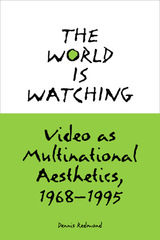
front cover of The World is Watching
The World is Watching
Dennis Redmond
Southern Illinois University Press, 2003

Evolving rapidly from the movie screen to the television screen to the computer screen, video culture has blossomed from its origins as an obscure spin-off of the 1960s Anglo-American media culture into one of the leading art forms of the late twentieth century. And as such, video culture has grown from being the dominion of small but dedicated cult followings to becoming a near mainstream cinematic interest. The World Is Watching: Video as Multinational Aesthetics, 1968–1995 explores the origins and implications of this powerful visual medium which crosses national, cultural, and political boundaries to present provocative tales of the highest quality. Dennis Redmond’s probing study is rooted in close readings of three stylish and highly successful video efforts—The Prisoner (1967), The Decalogue (1988), and Neon Genesis: Evangelion (1995).

Irish director and star Patrick McGoohan’s classic science fiction vision, The Prisoner, established many of the basic conventions of video for such elements as shot selection, set design, scripting, scoring, and editing techniques. In The Prisoner, a government agent has resigned his position only to be immediately abducted and confined to an isolated town. Thus imprisoned, the agent faces the sinister and surreal efforts of his captors to break him and learn the secret cause of his resignation. Saturated with Cold War allegory, this seventeen-part series was groundbreaking in its exploration of new types of global content, ranging from gender and ethnic identity to the politics of information. Part futuristic thriller, part James Bond parody, the cult series remains hugely popular among partisans of science fiction, and has had an indelible influence on its mainstream descendants.


Set in a Polish housing complex, each episode of The Decalogue examines one of the ten commandments. The provocative series synthesized elements of the Eastern European auteur film with the consumerism of its Western European counterparts, establishing the new genre of Eurovideo. Paying special attention to director Krzysztof Kieslowski's micropolitics of gender, as well as his innovations in scripting, lighting, and framing, Redmond locates The Decalogue within the broader context of Polish filmmaking and as a harbinger of the subsequent Velvet Revolutions of Eastern Europe. Now available on DVD for English-speaking audiences, The Decalogue remains a stunning specimen of video artistry.


Aided by transcripts that are far superior to the flawed English dubbing in some video versions, Redmond’s analysis of Hideaki Anno’s acclaimed television series Neon Genesis: Evangelion explores the increasingly popular narrative form of anime. This animated series is set in the post-apocalyptic future, where young pilots in robotic battle suits combat alien invaders. In discussing this twenty-six part epic undertaking, Redmond identifies the impact of the Godzilla narratives, videogame culture, the Japanese mecha, the Hong Kong action thriller and the American sci-fi blockbuster on the formation of a uniquely East Asian identity and aesthetic sensibility. Anime is proving itself to be exceedingly apt and able at crossing national borders and is now enjoying mass popularity among global audiences, thus making it an ideal subject for Redmond’s telling assessment of the impact of video culture worldwide.
[more]

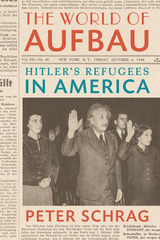
front cover of The World of Aufbau
The World of Aufbau
Hitler's Refugees in America
Peter Schrag
University of Wisconsin Press, 2019
Aufbau—a German-language weekly, published in New York and circulated nationwide—was an essential platform for the generation of refugees from Hitler and the displaced people and concentration camp survivors who arrived in the United States after the war. The publication served to link thousands of readers looking for friends and loved ones in every part of the world. In its pages Aufbau focused on concerns that strongly impacted this community in the aftermath of World War II: anti-Semitism in the United States and in Europe, the ever-changing immigration and naturalization procedures, debates about the designation of Hitler refugees as enemy aliens, questions about punishment for the Holocaust and other Nazi crimes, the struggle for compensation and restitution, and the fight for a Jewish homeland.

The book examines the columns and advertisements that chronicled the social and cultural life of that generation and maintained a detailed account of German-speaking cultures in exile. Peter Schrag is the first to present a definitive account of the influential publication that brought postwar refugees together and into the American mainstream.
[more]

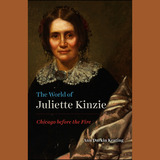
front cover of The World of Juliette Kinzie
The World of Juliette Kinzie
Chicago before the Fire
Ann Durkin Keating
University of Chicago Press, 2019
This is an auto-narrated audiobook edition of this book.

When Juliette Kinzie first visited Chicago in 1831, it was anything but a city. An outpost in the shadow of Fort Dearborn, it had no streets, no sidewalks, no schools, no river-spanning bridges. And with two hundred disconnected residents, it lacked any sense of community. In the decades that followed, not only did Juliette witness the city’s transition from Indian country to industrial center, but she was instrumental in its development.

Juliette is one of Chicago’s forgotten founders. Early Chicago is often presented as “a man’s city,” but women like Juliette worked to create an urban and urbane world, often within their own parlors. With The World of Juliette Kinzie, we finally get to experience the rise of Chicago from the view of one of its most important founding mothers.

Ann Durkin Keating, one of the foremost experts on nineteenth-century Chicago, offers a moving portrait of a trailblazing and complicated woman. Keating takes us to the corner of Cass and Michigan (now Wabash and Hubbard), Juliette’s home base. Through Juliette’s eyes, our understanding of early Chicago expands from a city of boosters and speculators to include the world that women created in and between households. We see the development of Chicago society, first inspired by cities in the East and later coming into its own midwestern ways. We also see the city become a community, as it developed its intertwined religious, social, educational, and cultural institutions. Keating draws on a wealth of sources, including hundreds of Juliette’s personal letters, allowing Juliette to tell much of her story in her own words.

Juliette’s death in 1870, just a year before the infamous fire, seemed almost prescient. She left her beloved Chicago right before the physical city as she knew it vanished in flames. But now her history lives on. The World of Juliette Kinzie offers a new perspective on Chicago’s past and is a fitting tribute to one of the first women historians in the United States.
[more]

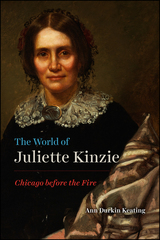
front cover of The World of Juliette Kinzie
The World of Juliette Kinzie
Chicago before the Fire
Ann Durkin Keating
University of Chicago Press, 2019
When Juliette Kinzie first visited Chicago in 1831, it was anything but a city. An outpost in the shadow of Fort Dearborn, it had no streets, no sidewalks, no schools, no river-spanning bridges. And with two hundred disconnected residents, it lacked any sense of community. In the decades that followed, not only did Juliette witness the city’s transition from Indian country to industrial center, but she was instrumental in its development.

Juliette is one of Chicago’s forgotten founders. Early Chicago is often presented as “a man’s city,” but women like Juliette worked to create an urban and urbane world, often within their own parlors. With The World of Juliette Kinzie, we finally get to experience the rise of Chicago from the view of one of its most important founding mothers.

Ann Durkin Keating, one of the foremost experts on nineteenth-century Chicago, offers a moving portrait of a trailblazing and complicated woman. Keating takes us to the corner of Cass and Michigan (now Wabash and Hubbard), Juliette’s home base. Through Juliette’s eyes, our understanding of early Chicago expands from a city of boosters and speculators to include the world that women created in and between households. We see the development of Chicago society, first inspired by cities in the East and later coming into its own midwestern ways. We also see the city become a community, as it developed its intertwined religious, social, educational, and cultural institutions. Keating draws on a wealth of sources, including hundreds of Juliette’s personal letters, allowing Juliette to tell much of her story in her own words.

Juliette’s death in 1870, just a year before the infamous fire, seemed almost prescient. She left her beloved Chicago right before the physical city as she knew it vanished in flames. But now her history lives on. The World of Juliette Kinzie offers a new perspective on Chicago’s past and is a fitting tribute to one of the first women historians in the United States.
[more]

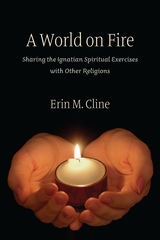
front cover of A World On Fire
A World On Fire
Sharing the Ignatian Spiritual Exercises with Other Religions
Erin M. Cline
Catholic University of America Press, 2018
The Spiritual Exercises of St. Ignatius of Loyola give shape to the spiritual lives of Jesuits and many other Christians. But might these different ways of praying, meditating, and reading scripture be helpful to members of other faiths as well? In response to the call of Fr. Adolfo Nicolas, SJ, the thirtieth Superior General of the Jesuits (2008-2016) to explore how the Ignatian Spiritual Exercises can be fruitfully appropriated by non-Christians, A World on Fire analyzes the prospects for adapting the Spiritual Exercises in order to make them accessible to members of other faith traditions while still maintaining their core meaning and integrity.

Erin Cline examines why this ought to be done, for whom, and what the aims of such an adaptation would be, including the different theological justifications for this practice. She concludes that there are compelling reasons for sharing the Exercises with members of other religions and that doing so coheres with the central mission of the Jesuits. A World on Fire goes on to examine the question of how the Exercises can be faithfully adapted for members of other religions. In outlining adaptations for the Hindu, Buddhist, and Confucian traditions that draw upon the traditional content of the Exercises supplemented by the texts of these religious traditions, Cline shows how Ignatian spirituality can help point the way to a different kind of inter-religious dialogue – one that is not bound up in technical terminology or confined to conversations between theologians and religious leaders. Rather, in making the Spriitual Exercises accessible to members of other faith traditions, we are as Pope Francis puts it, “living on a frontier, one in which the Gospel meets the needs of the people to whom it should be proclaimed in an understandable and meaningful way.”

A World on Fire will be of interest to comparative theologians and scholars working on inter-religious dialogue, religious pluralism, contemplative studies, and spirituality, as well as Jesuit priests and other practitioners who employ the Spiritual Exercises in their ministry.
[more]

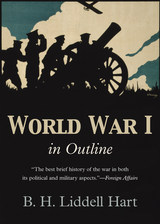
front cover of World War 1 in Outline
World War 1 in Outline
B. H. Liddell Hart
Westholme Publishing, 1936
A Concise Account of All the Major Battles, Innovations, and Political Events of the First World War by an Important Military Analyst
An abridgement of the author’s History of the World War, 1914–1918, and first published in 1936, World War I in Outline is a compact but comprehensive history of the “war to end all wars.” Divided into five parts representing each year of the war, Liddell Hart discusses the war on land, at sea, and in the air while skillfully incorporating the political events occurring at the same time. From his own experiences in the war and through studying the conflict in detail, the author developed and expressed his most important observation about military principles: direct attacks against an enemy firmly in position should not be attempted. He also put forth the notion that battles are more often decided by the commander’s actions and not the armies themselves. A lively and engrossing read, World War I in Outline is an ideal overview in time for the centennial of one of the major wars in history.
[more]

front cover of The World Wars Through the Female Gaze
The World Wars Through the Female Gaze
Jean Gallagher
Southern Illinois University Press, 1998

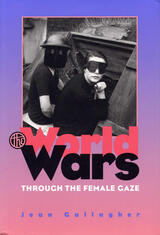
For some women writers and photographers during the two world wars—Edith Wharton, Mildred Aldrich, Martha Gellhorn, Lee Miller, H.D., and Gertrude Stein—the construction of the female subject as an observer of combat became a vital concern. Their explorations of vision took place against the backdrop of a larger shift in Western culture's understanding of what "seeing" meant in common practice and philosophical discourse alike. The role of visuality in their lives was massively transformed not only by the rigid gender roles of war but by the introduction of new combat practices and technologies such as aerial surveillance, trench warfare, and civilian bombardment.

In The World Wars Through the Female Gaze, Jean Gallagher maps one portion of the historicized, gendered territory of what Nancy K. Miller calls the "gaze in representation." Expanding the notion of the gaze in critical discourse, Gallagher situates a number of visual acts within specific historic contexts to reconstruct the wartime female subject. She looks at both the female observer's physical act of seeing—and the refusal to see—for example, a battlefield, a wounded soldier, a torture victim, a national flag, a fashion model, a bombed city, or a wartime hallucination.

The book begins with two instances of wartime propaganda written by American women in France in 1915. Both Edith Wharton's Fighting France and Mildred Aldrich's A Hilltop on the Marne offer a complex and often contradictory sense of a woman writer's struggles with authority, resistance, and killing. In the process, Gallagher teases out the role of specular vision and the impossibility of "directly" seeing the war.

Gallagher then turns to literary and visual texts produced by two female journalists between 1940 and 1945. Martha Gellhorn's 1940 novel A Stricken Field exhibits a range of gendered seeing positions within and in opposition to the visual ideologies of fascism during the Nazi occupation of Czechoslovakia. Lee Miller's war correspondence and photography for Vogue show how Miller constructed herself and her predominantly female American audience as antifascist observers of war by working with and against some of the conventions of surrealist fashion photography.

Gallagher concludes by focusing on the experimental autobiographical prose of H.D. and Gertrude Stein to explore the functions of vision on two World War II "homefronts"—London during the Blitz and Vichy France.

[more]

front cover of Worthy of Freedom
Worthy of Freedom
Indenture and Free Labor in the Era of Emancipation
Jonathan Connolly
University of Chicago Press, 2024
This is an auto-narrated audiobook version of this book.

A study of Indian indentured labor in Mauritius, British Guiana, and Trinidad that explores the history of indenture’s normalization.

 
In this book, historian Jonathan Connolly traces the normalization of indenture from its controversial beginnings to its widespread adoption across the British Empire during the nineteenth century. Initially viewed as a covert revival of slavery, indenture caused a scandal in Britain and India. But over time, economic conflict in the colonies altered public perceptions of indenture, now increasingly viewed as a legitimate form of free labor and a means of preserving the promise of abolition. Connolly explains how the large-scale, state-sponsored migration of Indian subjects to work on sugar plantations across Mauritius, British Guiana, and Trinidad transformed both the notion of post-slavery free labor and the political economy of emancipation.
 
Excavating legal and public debates and tracing practical applications of the law, Connolly carefully reconstructs how the categories of free and unfree labor were made and remade to suit the interests of capital and empire, showing that emancipation was not simply a triumphal event but, rather, a deeply contested process. In so doing, he advances an original interpretation of how indenture changed the meaning of “freedom” in a post-abolition world.
[more]

front cover of Worthy of Freedom
Worthy of Freedom
Indenture and Free Labor in the Era of Emancipation
Jonathan Connolly
University of Chicago Press, 2024
A study of Indian indentured labor in Mauritius, British Guiana, and Trinidad that explores the history of indenture’s normalization.
 
In this book, historian Jonathan Connolly traces the normalization of indenture from its controversial beginnings to its widespread adoption across the British Empire during the nineteenth century. Initially viewed as a covert revival of slavery, indenture caused a scandal in Britain and India. But over time, economic conflict in the colonies altered public perceptions of indenture, now increasingly viewed as a legitimate form of free labor and a means of preserving the promise of abolition. Connolly explains how the large-scale, state-sponsored migration of Indian subjects to work on sugar plantations across Mauritius, British Guiana, and Trinidad transformed both the notion of post-slavery free labor and the political economy of emancipation.
 
Excavating legal and public debates and tracing practical applications of the law, Connolly carefully reconstructs how the categories of free and unfree labor were made and remade to suit the interests of capital and empire, showing that emancipation was not simply a triumphal event but, rather, a deeply contested process. In so doing, he advances an original interpretation of how indenture changed the meaning of “freedom” in a post-abolition world.
[more]

front cover of Wounded City
Wounded City
The Social Impact of 9/11 on New York City
Nancy Foner
Russell Sage Foundation, 2005
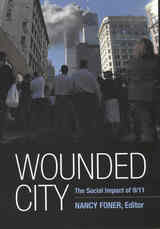
New York has eight million deeply personal and unique stories of pain and perseverance from September 11, 2001. But the toll of tragedy is greater than the anguish it inflicts on individuals—communities suffer as well. In Wounded City, editor Nancy Foner brings together an accomplished group of scholars to document how a broad range of communities—residential, occupational, ethnic, and civic—were affected and changed by the World Trade Center attacks. Using survey data and in-depth ethnographies, the book offers sophisticated analysis and gives voice to the human experiences behind the summary statistics, revealing how the nature of these communities shaped their response to the disaster. Sociologists Philip Kasinitz, Gregory Smithsimon, and Binh Pok highlight the importance of physical space in the recovery process by comparing life after 9/11 in two neighborhoods close to ground zero—Tribeca, which is nestled close to the city's downtown, and Battery Park City, which is geographically and structurally separated from other sections of the city. Melanie Hildebrandt looks at how social solidarity changed in a predominantly Irish, middle class community that was struck twice with tragedy: the loss of many residents on 9/11 and a deadly plane crash two months later. Jennifer Bryan shows that in the face of hostility and hate crimes, many Arab Muslims in Jersey City stressed their adherence to traditional Islam. Contributor Karen Seeley interviews psychotherapists who faced the challenge of trying to help patients deal with a tragedy that they themselves were profoundly affected by. Economist Daniel Beunza and sociologist David Stark paint a picture of organizational resilience as they detail how securities traders weathered successive crises after evacuating their downtown office and moving temporarily to New Jersey. Francesca Polletta and Lesley Wood look at a hopeful side of a horrible tragedy: civic involvement in town meetings and public deliberations to discuss what should be done to rebuild at ground zero and help New Yorkers create a better future in the footprints of disaster. New Yorkers suffered tremendous losses on September 11, 2001: thousands of lives, billions of dollars, the symbols of their skyline, and their peace of mind. But not lost in the rubble of the World Trade Center were the residential, ethnic, occupational, and organizational communities that make up New York's rich mosaic. Wounded City gives voice to some of those communities, showing how they dealt with unforeseen circumstances that created or deepened divisions, yet at the same brought them together in suffering and hope. It is a unique look at the aftermath of a devastating day and the vitality of a diverse city. A Russell Sage Foundation September 11 Initiative Volume
[more]

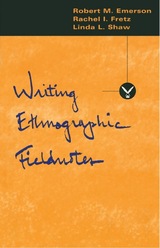
front cover of Writing Ethnographic Fieldnotes
Writing Ethnographic Fieldnotes
Robert M. Emerson, Rachel I. Fretz, and Linda L. Shaw
University of Chicago Press, 1995
In this companion volume John van Maanen's Tales of the Field, three scholars reveal how the ethnographer turns direct experience and observation into written fieldnotes upon which an ethnography is based.

Drawing on years of teaching and field research experience, the authors develop a series of guidelines, suggestions, and practical advice about how to write useful fieldnotes in a variety of settings, both cultural and institutional. Using actual unfinished, "working" notes as examples, they illustrate options for composing, reviewing, and working fieldnotes into finished texts. They discuss different organizational and descriptive strategies, including evocation of sensory detail, synthesis of complete scenes, the value of partial versus omniscient perspectives, and of first person versus third person accounts. Of particular interest is the author's discussion of notetaking as a mindset. They show how transforming direct observations into vivid descriptions results not simply from good memory but more crucially from learning to envision scenes as written. A good ethnographer, they demonstrate, must learn to remember dialogue and movement like an actor, to see colors and shapes like a painter, and to sense moods and rhythms like a poet.

The authors also emphasize the ethnographer's core interest in presenting the perceptions and meanings which the people studied attach to their own actions. They demonstrate the subtle ways that writers can make the voices of people heard in the texts they produce. Finally, they analyze the "processing" of fieldnotes—the practice of coding notes to identify themes and methods for selecting and weaving together fieldnote excerpts to write a polished ethnography.

This book, however, is more than a "how-to" manual. The authors examine writing fieldnotes as an interactive and interpretive process in which the researcher's own commitments and relationships with those in the field inevitably shape the character and content of those fieldnotes. They explore the conscious and unconscious writing choices that produce fieldnote accounts. And they show how the character and content of these fieldnotes inevitably influence the arguments and analyses the ethnographer can make in the final ethnographic tale.

This book shows that note-taking is a craft that can be taught. Along with Tales of the Field and George Marcus and Michael Fisher's Anthropology as Cultural Criticism, Writing Ethnographic Fieldnotes is an essential tool for students and social scientists alike.
[more]

front cover of Writing Ethnographic Fieldnotes, Second Edition
Writing Ethnographic Fieldnotes, Second Edition
Robert M. Emerson, Rachel I. Fretz, and Linda L. Shaw
University of Chicago Press, 2011
In Writing Ethnographic Fieldnotes, Robert M. Emerson, Rachel I. Fretz, and Linda L. Shaw present a series of guidelines, suggestions, and practical advice for creating useful fieldnotes in a variety of settings, demystifying a process that is often assumed to be intuitive and impossible to teach. Using actual unfinished notes as examples, the authors illustrate options for composing, reviewing, and working fieldnotes into finished texts. They discuss different organizational and descriptive strategies and show how transforming direct observations into vivid descriptions results not simply from good memory but from learning to envision scenes as written. A good ethnographer, they demonstrate, must learn to remember dialogue and movement like an actor, to see colors and shapes like a painter, and to sense moods and rhythms like a poet.
 
This new edition reflects the extensive feedback the authors have received from students and instructors since the first edition was published in 1995. As a result, they have updated the race, class, and gender section, created new sections on coding programs and revising first drafts, and provided new examples of working notes. An essential tool for budding social scientists, the second edition of Writing Ethnographic Fieldnotes will be invaluable for a new generation of researchers entering the field.
[more]

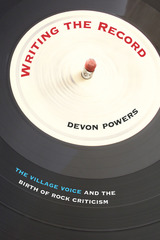
front cover of Writing the Record
Writing the Record
The Village Voice and the Birth of Rock Criticism
Devon Powers
University of Massachusetts Press, 2013

During the mid-1960s, a small group of young journalists made it their mission to write about popular music, especially rock, as something worthy of serious intellectual scrutiny. Their efforts not only transformed the perspective on the era's music but revolutionized how Americans have come to think, talk, and write about popular music ever since. 

In Writing the Record, Devon Powers explores this shift by focusing on The Village Voice, a key publication in the rise of rock criticism. Revisiting the work of early pop critics such as Richard Goldstein and Robert Christgau, Powers shows how they stood at the front lines of the mass culture debates, challenging old assumptions and hierarchies and offering pioneering political and social critiques of the music. Part of a college-educated generation of journalists, Voice critics explored connections between rock and contemporary intellectual trends such as postmodernism, identity politics, and critical theory. In so doing, they became important forerunners of the academic study of popular culture that would emerge during the 1970s. 

Drawing on archival materials, interviews, and insights from media and cultural studies, Powers not only narrates a story that has been long overlooked but also argues that pop music criticism has been an important channel for the expression of public intellectualism. This is a history that is particularly relevant today, given the challenges faced by criticism of all stripes in our current media environment. Powers makes the case for the value of well-informed cultural criticism in an age when it is often suggested that “everyone is a critic.”
[more]

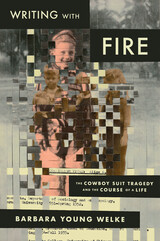
front cover of Writing with Fire
Writing with Fire
The Cowboy Suit Tragedy and the Course of a Life
Barbara Young Welke
University of Chicago Press, 2026

A cultural and legal history intertwined with a deeply emotional meditation on the course of life, memory, and the documents that define us.

During the 1940s and 1950s, an untold number of American children suffered devastating injuries when the fur-like fabric on the chaps of their Gene Autry–branded cowboy playsuits exploded into flame. Barbara Young Welke was researching this history when her teenage daughter unexpectedly died.

The shock of Welke’s loss transformed her understanding of the children and their families. Her experience also led her to question the norms of scholarship and of writing. Historians are trained to separate the personal from the intellectual, to be suspicious of emotion. These and other norms are embedded in and reinforced by the calling card of academics, the curriculum vitae. Welke wondered how that cold document—with its literal meaning, “the course of life”—had become a form that excludes so much of what gives life meaning. What impact did that have on what we know, how we know it, and how we understand ourselves? Similarly, Welke wondered, what might we see if we looked at the history of the cowboy suit tragedy as more than a matter of lawsuits brought by grieving families? Here, Welke traces the making, marketing, and selling of the cowboy suits; the lengths the defendants went to avoid and limit liability; and the meaning of the injuries, deaths, and legal settlements in the course of these children’s and families’ lives.

Writing with Fire interweaves the histories of the cowboy suit tragedy and the curriculum vitae. Grounded in archival and legal research, oral histories, and letters Welke wrote her daughter following her death, Welke offers an inimitable examination of trauma, law, autobiography, and identity. The result is revelatory and unforgettable: a provocative historical reflection on life and death, depression and war, markets and families, law, power, and precarity in modern America.
[more]

front cover of Writings; Writings; Commonitories; Grace and Free Will
Writings; Writings; Commonitories; Grace and Free Will
Nicetas of Remesiana
Catholic University of America Press, 2008
No description available
[more]

front cover of The WTO as an International Organization
The WTO as an International Organization
Edited by Anne O. Krueger
University of Chicago Press, 1997
In this volume, some of the world's foremost authorities analyze the many challenges and opportunities confronting the WTO, addressing issues such as national policies, labor standards, and the environment. Presuming no technical background in economics, this is a comprehensive introduction to the WTO's place in the global economy and will appeal to anyone interested in world trade.
"[T]his book is a tour de force, with consistently fine papers by leading experts, and it is worthy of any bookshelf." —Joel P. Trachtman, American Journal of International Law

"This latest conference volume from the National Bureau of Economic Research is likely to be the definitive reference work on the WTO for years to come. . . . Specialists and non-specialists alike will gain a great deal from a careful reading of this impressive volume." —John Ravenhill, Australian Journal of Political Science

"For anyone who is interested in the further development of the rule system for the world economy, this book is a must." —Horst Siebert, Review of World Economics
[more]


Send via email Share on Facebook Share on Twitter