
 A SCHOLARLY BOOK REPOSITORY
8 start with W start with W
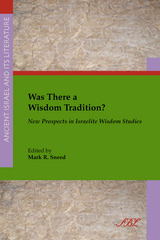
Essential reading for scholars and students in wisdom studies
This collection of essays explores questions that challenge the traditional notion of a wisdom tradition among the Israelite literati, such as: Is the wisdom literature a genre or mode of literature or do we need new terminology? Who were the tradents? Is there such a thing as a “wisdom scribe” and what would that look like? Did the scribes who composed wisdom literature also have a hand in producing the other “traditions,” such as the priestly, prophetic, and apocalyptic, as well as other non-sapiential works? Were Israelite sages open to non-sapiential forms of knowledge in their conceptualization of wisdom?
Features:
- Recent genre theory in distinction from traditional form criticism
- Ancient Near Eastern comparative material
- A balanced collection that includes essays that seriously challenge and affirm the consensus view, as well as those that reconfigure it

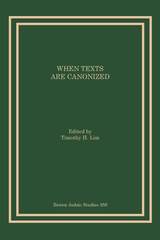
How did canonization take place, and what difference does it make?
Essays in this collection probe the canonical process: Why were certain books, but not others, included in the canon? What criteria were used to select the books of the canon? Was canonization a divine fiat or human act? What was the nature of the authority of the laws and narratives of the Torah? How did prophecy come to be included in the canon? Others reflect on the consequences of canonization: What are the effects in elevating certain writings to the status of “Holy Scriptures”? What happens when a text is included in an official list? What theological and hermeneutical questions are at stake in the fact of the canon? Should the canon be unsealed or reopened to include other writings?
Features:
- Essays that contribute to our understanding of the complex processes of canonization
- Exploration of early concepts of canonicity
- Discussion of reopening the New Testament canon
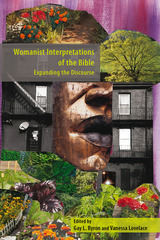
Expand the discourse and open the spheres of engagement to include new voices of scholars and bold, innovative interpretive approaches
This edited volume brings together cross-generational and cross-cultural readings of the Bible and other sacred sources by including scholars from the Caribbean, India, and Africa who have not traditionally fit into the narrow U.S., African American paradigm for understanding womanist biblical interpretation. The volume engages the reader in a wide range of interdisciplinary methods and perspectives, such as gender and feminist criticism, social-scientific methods, post-colonial and psychoanalytical theory that emphasize the inherently intersectional dynamics of race, ethnicity, and class at work in womanist thought and analysis.
Features
- Topics include the Black Lives Matter movement, domestic violence, and AIDS, while at the same time uncovering the roles of children, women, and other marginalized persons in biblical narratives
- Coverage of Hebrew Bible and New Testament texts, as well as Ifa spiritual narratives, Hindu scripture, and Ethiopic texts
- Responses from four respected womanist and feminist critics: Katherine Doob Sakenfeld, Emilie Townes, Layli (Phillips) Maparyan, and Sarojini Nadar

A thorough study of the socio-economic and literary contexts of women in the Deuteronomistic History
Mercedes L. García Bachmann examines the key texts in the Deuteronomistic History that mention women in service occupations: slaves and dependents, cooks, wet nurses, childcare givers, prostitutes, and scribes. The mostly anonymous women who performed this work for others are sometimes mentioned only in a single verse. Consequently, they often are as unrecognized in modern scholarship as they seem in the biblical text. García Bachmann shows that these women were honored not in relation to matters such as sexual purity or marital faithfulness but on account of the valuable service that they provided.
- A close examination of unnamed women
- A review of previous work in feminist, ancient Near Eastern, biblical, and social-scientific studies
- Extensive coverage of Hebrew terms used for women workers
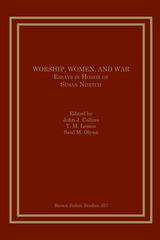
Celebrate the career of an inspirational scholar and teacher concerned with revealing voices from the margins
This volume of essays honors Susan Niditch, author of War in the Hebrew Bible: A Study in the Ethics of Violence (1993), “My Brother Esau Is a Hairy Man”: Hair and Identity in Ancient Israel (2008), and most recently, The Responsive Self: Personal Religion in Biblical Literature of the Neo-Babylonian and Persian Periods (forthcoming), among other influential publications. Essays touch on topics such as folklore, mythology, and oral history, Israelite religion, ancient Judaism, warfare, violence, and gender.
Features:
- Essays from nineteen scholars, all experts in their fields
- Exploration of texts from Mesopotamia, the Hebrew Bible, and the New Testament
- Bibliography of Niditch's scholarly contributions
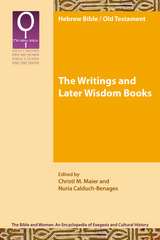
An international collection of ecumenical, gender-sensitive interpretations
The latest volume in the Bible and Women series seeks to provide an ecumenical, gender-sensitive interpretation and reception history of the Writings and later wisdom traditions including Ben Sira and the Wisdom of Solomon. Articles trace the living conditions of women, examine the presentation of female figures in the Israelite wisdom tradition, discuss women and gender relations in single books, and explore narratives about great female protagonists, such as Ruth, Esther, and Susanna, who prove their wit and strength in situations of conflict.
Features:
- Essays by scholars from five European countries, Israel, and the United States
- An introduction and fourteen essays focused on women and gender relations
- Coverage of power relations and ideologies within the texts and in current interpretations.
READERS
Browse our collection.
PUBLISHERS
See BiblioVault's publisher services.
STUDENT SERVICES
Files for college accessibility offices.
RECENTLY PUBLISHED


UChicago Accessibility Resources
home | accessibility | search | about | contact us
BiblioVault ® 2001 - 2026
The University of Chicago Press