
 A SCHOLARLY BOOK REPOSITORY
3 start with W start with W
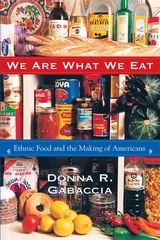
Ghulam Bombaywala sells bagels in Houston. Demetrios dishes up pizza in Connecticut. The Wangs serve tacos in Los Angeles. How ethnicity has influenced American eating habits—and thus, the make-up and direction of the American cultural mainstream—is the story told in We Are What We Eat. It is a complex tale of ethnic mingling and borrowing, of entrepreneurship and connoisseurship, of food as a social and political symbol and weapon—and a thoroughly entertaining history of our culinary tradition of multiculturalism.
The story of successive generations of Americans experimenting with their new neighbors’ foods highlights the marketplace as an important arena for defining and expressing ethnic identities and relationships. We Are What We Eat follows the fortunes of dozens of enterprising immigrant cooks and grocers, street hawkers and restaurateurs who have cultivated and changed the tastes of native-born Americans from the seventeenth century to the present. It also tells of the mass corporate production of foods like spaghetti, bagels, corn chips, and salsa, obliterating their ethnic identities. The book draws a surprisingly peaceful picture of American ethnic relations, in which “Americanized” foods like Spaghetti-Os happily coexist with painstakingly pure ethnic dishes and creative hybrids.
Donna Gabaccia invites us to consider: If we are what we eat, who are we? Americans’ multi-ethnic eating is a constant reminder of how widespread, and mutually enjoyable, ethnic interaction has sometimes been in the United States. Amid our wrangling over immigration and tribal differences, it reveals that on a basic level, in the way we sustain life and seek pleasure, we are all multicultural.

We are living in a moment in which famous chefs, Michelin stars, culinary techniques, and gastronomical accolades attract moneyed tourists to Spain from all over the world. This has prompted the Spanish government to declare its cuisine as part of Spanish patrimony. Even with this widespread global attention, we know little about how Spanish cooking became a litmus test for demonstrating Spain's modernity and, relatedly, the roles ascribed to the modern Spanish women responsible for daily cooking.
Efforts to articulate a new, modern Spain infiltrated writing in multiple genres and media. Women's Work offers a sharp reading of diverse sources, placed in their historical context, that yields a better understanding of the roles of food within an inherently uneven modernization process. Further, author Rebecca Ingram's perceptive critique reveals the paradoxical messages women have navigated, even in texts about a daily practice that shaped their domestic and work lives. Women's Work posits that this is significant because of the degree to which domestic activities, including cooking, occupied women's daily lives, even while issues like their fitness as citizens and participation in the public sphere were hotly debated. At the same time, progressive intellectuals from diverse backgrounds began to invoke Spanish cooking and eating as one measure of Spanish modernity.
Women's Work shows how culinary writing engaged these debates and reached women at the site of much of their daily labor—the kitchen—and, in this way, shaped their thinking about their roles in modernizing Spain.
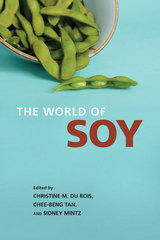
As the most ecologically efficient and economical source of complete protein in human food, soy is gradually attracting more use in the American diet for its nutritional and financial value. Derived from soybean plants--the leading export crop of the United States and the world's most traded crop--soy produced for human consumption is part of a global enterprise affecting the likes of farmers, economists, dieticians, and grocery shoppers. An international group of expert food specialists--including an agricultural economist, an agricultural sociologist, a former Peace Corps development expert, and numerous food anthropologists and agricultural historians--discusses important issues central to soy production and consumption: genetically engineered soybeans, increasing soybean cultivation, soyfood marketing techniques, the use of soybeans as an important soil restorative, and the rendering of soybeans for human consumption.
Contributors are Katarzyna Cwiertka, Christine M. Du Bois, H. T. Huang, Lawrence Kaplan, Jian-Hua Mao, Sidney W. Mintz, Akiko Moriya, Can Van Nguyen, Donald Z. Osborn, Erino Ozeki, Myra Sidharta, Ivan Sergio Freire de Sousa, Chee-Beng Tan, and Rita de Cássia Milagres Teixeira Vieira.
READERS
Browse our collection.
PUBLISHERS
See BiblioVault's publisher services.
STUDENT SERVICES
Files for college accessibility offices.
RECENTLY PUBLISHED



UChicago Accessibility Resources
home | accessibility | search | about | contact us
BiblioVault ® 2001 - 2026
The University of Chicago Press