
 A SCHOLARLY BOOK REPOSITORY
35 start with A start with A
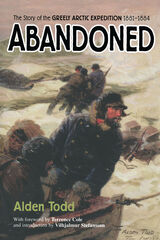
Abandoned is the gripping account of men battling for survival as they are pitted against the elements and each other. It is also the most complete and authentic account of the controversial Greely Expedition ever published, an exemplar of the best in chronicles of polar exploration.
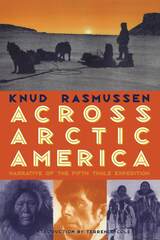
It was the people who most captivated the Greenland-born Rasmussen, who had become a virtual adopted son to the Eskimos of the far northern district still known by the name of the trading post he established there, Thule. His first four Thule Expeditions extended the limits of the known world in Greenland solely, but Rasmussen’s Fifth Thule Expedition demonstrated the unity of the Eskimo world from the Atlantic Ocean to the Chukchi Sea, proving the people all shared the same basic language and culture. As historian Terrence Cole notes in his introductory biography, “The intellectual and spiritual life of the people themselves were his primary interest, not simply geographical discovery, and thus even when following the tracks of previous explorers, he found uncharted territory. His basic principle was to first earn the trust of the local people by showing understanding and patience: living with the people and not apart from them, sharing their work and their food….” That was how Rasmussen approached the entire Arctic: he did not live apart from it, skimming over its surface like the fame-seeking polar explorers of the time such as Peary and Cook, but immersed himself in it—so successfully that a Canadian Inuit elder once marveled that he was “the first white man [he had ever seen] who was also an Eskimo.”
Of most significance to readers today, though, is that Rasmussen was also a noted writer. He wanted to share not just the observations he made but the feelings he experienced, and so in Across Arctic America offered what fellow arctic explorer Vilhjalmur Stefansson described as “not only a work of literary charm but also one of the deepest and soundest interpretations” of Eskimo life ever put into a book.
This volume, published in commemoration of the 75th anniversary of the completion of the Fifth Thule Expedition, includes an introduction by Classic Reprint Series editor Terrance Cole and an index.
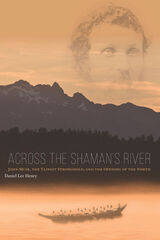
Tucked in the corner of Southeast Alaska, the Tlingits had successfully warded off the Anglo influences that had swept into other corners of the territory. This tribe was viewed by European and American outsiders as the last wild tribe and a frustrating impediment to access. Missionaries and prospectors alike had widely failed to bring the Tlingit into their power. Yet, when John Muir arrived in 1879, accompanied by a fiery preacher, it only took a speech about “brotherhood”—and some encouragement from the revered local shaman Skandoo’o—to finally transform these “hostile heathens.”
Using Muir’s original journal entries, as well as historic writings of explorers juxtaposed with insights from contemporary tribal descendants, Across the Shaman’s River reveals how Muir’s famous canoe journey changed the course of history and had profound consequences on the region’s Native Americans.
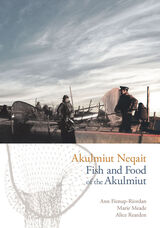
This bilingual book details the lives of the Akulmiut living in the lake country west of Bethel, Alaska, in the villages of Kasigluk, Nunapitchuk, and Atmautluak. Akulmiut Neqait is based in conversations recorded with the people of these villages as they talk about their uniquely Yup'ik view of the world and how it has weathered periods of immense change in southwest Alaska. While many predicted that globalization would sound the death knoll for many distinctive traditions, these conversations show that Indigenous people all over the planet have sought to appropriate the world in their own terms. For all their new connectedness, the continued relevance of traditional admonitions cannot be denied.
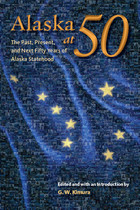
In 2009 Alaska celebrates its fiftieth anniversary of U.S. statehood. To commemorate that milestone, Alaska at 50 brings together some of today’s most noteworthy and recognizable writers and researchers to address the past, present, and future of Alaska. Divided into three overarching sections—art, culture, and humanities; law, economy, and politics; and environment, people, and place—Alaska at 50 is written in highly accessible prose. Illustrations and photographs of significant artefacts of Alaska history enliven the text. Each contributor brings a strong voice and prescription for the next fifty years, and the resulting work presents Alaskans and the nation with an overview of Alaska statehood and ideas for future development.
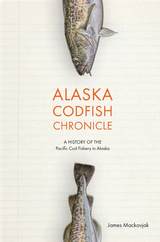
Alaska Codfish Chronicle is the first comprehensive history of this fishery. It looks at the early decades of the fishery’s history, a period marked by hardship and danger, as well as the dominance of foreign fishermen. And the modern era, beginning in 1976 when the United States claimed an exclusive economic zone around the Alaska coasts, “Americanizing” the fishery and replacing the foreign fleets that had been ravaging the resources in the Gulf of Alaska and the Bering Sea. Today, the Pacific cod fishery is, in terms of poundage, the second largest fishery in Alaska, and considered among the best-managed fisheries in the world.
This history is extremely well documented, does not spare details, and is accessible to general readers. It incorporates nearly a hundred photographs and illustrations and is sprinkled with numerous observations from fishing industry journals and reports, even incorporating poems and recipes, making this an especially thorough and unique account of one of Alaska’s most iconic and important industries.

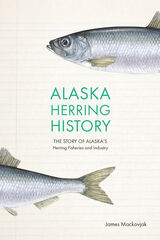
The book is divided into three parts based on the purposes for which herring have been harvested. Part I is a history of the reduction (fertilizer/fish meal/fish oil) and cured (salted) herring industries and the
bait-herring fisheries; part II is a history of the roe-herring fisheries in Southeast Alaska, Prince William Sound, Kodiak Island, lower Cook Inlet, Togiak, and Norton Sound; and part III is a history of the herring spawn-on-kelp industry. Historical and contemporary photos and illustrations—as well as graphs and charts that help summarize the development and, in some cases, the demise of the fisheries—augment this detailed look at the evolution of Alaska's herring fisheries.
Balancing scientific details, historical facts, and personal anecdotes from experts in the field, Alaska Herring History will be of interest to historians, social scientists, biologists, and fishery managers and makes an important contribution to Alaska fisheries literature.

Alaska in the Progressive Age looks at how this national movement affected the Alaska territory. Though the reigning view is that Alaska was neglected and even abused by the federal government, Alton argues that from 1896 to 1916 the territory benefitted richly in the age of Progressive Democracy. As the population of Alaska grew, Congress responded to the needs of the nation’s northern possession, giving the territory a delegate to Congress, a locally elected legislature, and ultimately in 1914, the federally funded Alaska Railroad.
Much has been written about the development of modern-day Alaska, especially in terms of the Gold Rush and the origins of the Alaska Railroad. But this is the first history to put this era in the context of Progressive Age American politics. This unexplored look at how Progressivism reached the furthest corners of the United States is an especially timely book as the Progressive Movement shows signs of affecting Alaska again.
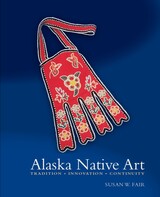
Making up more than ten percent of Alaska's population, Native Alaskans are the state's largest minority group. Yet most non-Native Alaskans know surprisingly little about the histories and cultures of their indigenous neighbors, or about the important issues they face. This concise book compiles frequently asked questions and provides informative and accessible responses that shed light on some common misconceptions. With responses composed by scholars within the represented communities and reviewed by a panel of experts, this easy-to-read compendium aims to facilitate a deeper exploration and richer discussion of the complex and compelling issues that are part of Alaska Native life today.
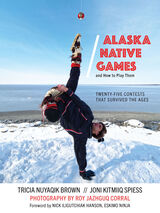
As Tricia Nuyaqik Brown shows, even though today’s competitions are a big media event in Alaska, the games themselves are really no different from those of long ago. Ancestral communities once pitted their strongest, their most agile, their fastest men and women against those from neighboring villages or tribal groups. Those games never died, but rather than gathering in a sod meeting place, competitions are now held in gyms and arenas. Each game today can be linked to some aspect of surviving in a harsh environment, of drawing sustenance from the land and sea. From the Seal Hop to the Bench Reach to the Four-Man Carry, these ancient games still require athletes to be in top physical condition and possess sharp mental focus. They hold dear the traditional Native values of honoring the elders, responsibility to tribe, sportsmanship, humor, patience, and hunter success. This book offers an engaging introduction to these games and their history, inviting people to jump in and try them for themselves!

Journalist and Alaska resident Erin Kirkland knows every corner of the state, and she has crossed thousands of miles with her son. In Alaska on the Go, she offers a fresh take on exploring some of the most beautiful land in the world, with tips and tricks that only an insider knows. Serving as the perfect tour guide, Kirkland identifies the best and most kid-friendly destinations in cities across Alaska. She offers practical advice on everything from restaurants to rest stops and from weather surprises to wild animals. Photos, maps, and sample itineraries make it easy for parents to plan a trip that will delight and entertain everyone.
The only family travel guide to Alaska written by a current Alaskan, Alaska on the Go makes the state more accessible than ever. Whether traveling via car, cruise ship, or dogsled, this practical, portable guide will open up a new world of memorable adventures.
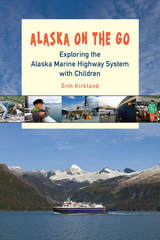
A staple of coastal transportation since the 1950s, the Alaska Marine Highway System is a vital link to cities that are often inaccessible except by air. Alaska on the Go offers fascinating accounts of both the small coastal towns and the larger population centers serviced by the highway along with easy-to-navigate route descriptions, helpful packing lists, and tips for inland and onboard adventures. Portable and personable, and covering all thirty routes that make up the Alaska Marine Highway System, Alaska on the Go is the perfect companion for the intrepid traveler.

This book, the most comprehensive on the subject to date, focuses on the question of how beliefs, institutions, personalities, and power interact to shape Alaska politics and public policy. Drawing on these interactions, the contributors explain how and why certain issues get dealt with successfully and others unsuccessfully, and why some issues are taken up quickly while others are not addressed at all. This comprehensive guide to the political climate of Alaska will be essential to anyone studying the politics of America’s largest—and in some ways most unusual—state.
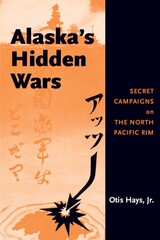
Alaska's Hidden Wars tells the story of the war in the North Pacific, a story of savage weather, isolation, and sacrifice.
Two island chains, the Aleutians and the Kuriles, became the focus of a series of major campaigns that pitted the Americans against the Japanese. Alaska's Hidden Wars chronicles the role of Japanese-American intelligence specialists and reveals a Japanese eyewitness account of the defense of Attu. Two virtually unknown aspects of the North Pacific war are also exposed: the brutal North Pacific weather and the imprisonment of American airmen in Kamchatka.
In 1942, the Japanese raided Dutch Harbor in the Aleutian Islands and occupied the islands of Kiska and Attu. The Americans mounted a vigorous campaign, and the Japanese retreated to the Kuriles. For the next two years, the Americans launched air raids and fleet bombardments, while American soldiers maintained lonely outposts along Aleutian coasts. But in 1945, when Japan finally surrendered, the Kuriles were taken, not by the waiting Americans, but by the Soviets.
Alaska's Hidden Wars is a fast-moving history that brings declassified archival sources to light and draws the reader into the lonely, bitter war fought in the North Pacific.
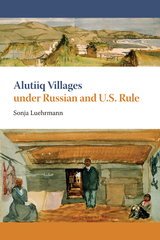
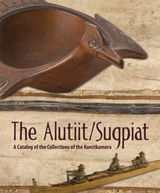
This beautifully photographed book catalogs the collection of nearly five hundred Alutiiq cultural items held by the Peter the Great Museum of Anthropology and Ethnography, or the Kunstkamera, in St. Petersburg, Russia. Gathered between 1780 and 1867, many of the artifacts are composed of fur, feathers, gut, hair, and other delicate materials, which prevent their transport for display or study.
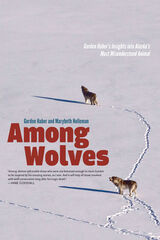
He weathered brutal temperatures in the wild to document the wolves and provided exceptional insights into wolf behavior. Haber’s writings and photographs reveal an astonishing degree of cooperation between wolf family members as they hunt, raise pups, and play, social behaviors and traditions previously unknown. With the wolves at risk of being destroyed by hunting and trapping, his studies advocated for a balanced approach to wolf management. His fieldwork registered as one of the longest studies in wildlife science and had a lasting impact on wolf policies.
Haber’s field notes, his extensive journals, and stories from friends all come together in Among Wolves to reveal much about both the wolves he studied and the researcher himself. Wolves continue to fascinate and polarize people, and Haber’s work continues to resonate.
The book is presented in bilingual format, with facing-page translations, and it will be hailed as a landmark work in the study of Alaska Native history and anthropology.
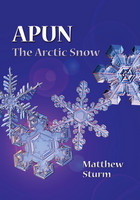
There are some twenty-five words for “snow” in the Inupiaq language. Each word denotes a different kind of snow—fresh powder snow, hard pack, soft snow, very wet snow, or just snow. Such fine distinction is reasonable, for over the centuries, Natives of the Arctic have had to rely on their knowledge of the snow to survive. Now Matthew Sturm has prepared an educational children’s book designed to teach a new generation of Arctic residents the importance of Arctic snow cover. Fully illustrated to demonstrate the cycle of the snow cover, Apun covers each phase of the “snow year.” Geared towards grades 3–4, this is a must read for elementary science classes.
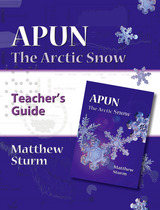
There are some twenty-five words for “snow” in the Inupiaq language. Each word denotes a different kind of snow—fresh powder snow, hard pack, soft snow, very wet snow, or just snow. Such fine distinction is reasonable, for over the centuries, Natives of the Arctic have had to rely on their knowledge of the snow to survive. Now Matthew Sturm has prepared an educational children’s book designed to teach a new generation of Arctic residents the importance of Arctic snow cover. Fully illustrated to demonstrate the cycle of the snow cover, Apun covers each phase of the “snow year.” Geared towards grades 3–4, this is a must read for elementary science classes.
For thousands of years, fisheries were crucial to the sustenance of the First Peoples of the Pacific Coast. Yet human impact has left us with a woefully incomplete understanding of their histories prior to the industrial era. Covering Alaska, British Columbia, and Puget Sound, The Archaeology of North Pacific Fisheries illustrates how the archaeological record reveals new information about ancient ways of life and the histories of key species. Individual chapters cover salmon, as well as a number of lesser-known species abundant in archaeological sites, including pacific cod, herring, rockfish, eulachon, and hake. In turn, this ecological history informs suggestions for sustainable fishing in today’s rapidly changing environment.
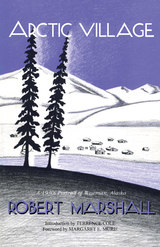
The richness of statistical coverage in this book, and Marshall's careful descriptions of the characters he met, provide readers with a window to the world of 1930 and a nearly complete record of the Koyukuk civilization as he saw it. Readers learn what the people of Wiseman thought about sex, religion, politics, and the myriad of ways they found to cope with and enjoy life in a wilderness community.
As a military veteran, Miles also centers his poetry amongst war. Through tone and voice, warfare permeates these poems, providing poetry that relies less on the traditional, Christian tension of doubt and shaken faith than on the inherent tension of a broken world. This resonant new collection melds deep-rooted spirituality with contemporary tensions, offering modern psalms for a tumultuous and uncertain age.

One of those survivors, Nick Golodoff, became a prisoner of war at just six years old. He was among the dozens of Unangan Attu residents swept away to Hokkaido, and one of only twenty-five to survive. Attu Boy tells Golodoff’s story of these harrowing years as he found both friendship and cruelty at the hands of the Japanese. It offers a rare look at the lives of civilian prisoners and their captors in WWII-era Japan. It also tells of Golodoff’s bittersweet return to a homeland torn apart by occupation and forced internments. Interwoven with other voices from Attu, this richly illustrated memoir is a testament to the struggles, triumphs, and heartbreak of lives disrupted by war.

Starting at a basic level, the handbook begins appropriately with matters of immediate concern to someone who hopes to see an auroral display: what causes the aurora, where and when it is most often seen, and how best to capture it on film. Later sections provide a thorough and clear review of all aspects of auroral science, including the mysterious realm of auroral sound. In a concise and readable fashion, the handbook covers what is known about auroras, encompassing overviews of the northern Natives' legends and myths and the several theories geophysicists have produced to explain why auroras behave as they do. The Aurora Watcher's Handbook includes numerous illustrations, ranging from cartoons to color plates and drawings.
"I am confident [this book] will become the aurora watcher's bible for many years to come." (Sky & Telescope)
"This is participatory science at its best!" (Midwest Book Review)
"A delightful book, highly recommended." (CHOICE )
"A complete course for the layman with an interest in the northern lights." (Fairbanks Daily News-Miner)
"[Davis] has written the book in a smooth, how-it-works style, and his presentation is remarkably clear. . . . [He] expended much effort on this book, forming from his lifetime of knowledge a coherent and comprehensible picture of the aurora for the non-specialist." (ARCTIC)
"For a comprehensive guide to the northern lights, read Neil Davis's The Aurora." (Small Press Magazine)
READERS
Browse our collection.
PUBLISHERS
See BiblioVault's publisher services.
STUDENT SERVICES
Files for college accessibility offices.
RECENTLY PUBLISHED







UChicago Accessibility Resources
home | accessibility | search | about | contact us
BiblioVault ® 2001 - 2024
The University of Chicago Press