front cover of Ibn Khaldun
Ibn Khaldun
An Essay in Reinterpretation
Aziz Al-Azmeh
Central European University Press, 2003

Since its publication in 1981, this book has established itself as the major new interpretation of the historical concept of Ibn Khaldûn, the great figure of Arab-Islamic letters and of historical thought overall--a figure generally thought to be on a par with Thucydides, Vico, Herder and others of similar stature.

The author has eschewed the ahistorical interpretations to which Ibn Khaldûn has normally been subjected, both by authors who have sought unduly to modernise his thought, and by those who sought to freeze it in stereotypical models of Islamic philosophy.

Ibn Khaldûn is not only a true historical source of his time; he is also taken as the unchallenged sociological and cultural interpreter of medieval North Africa and much of medieval and modern Arab-Islamic culture as well. The validity of his discourse is considered to be so universal as to confer upon his ideas the status of progenitor--or, at least, anticipator--of a great variety of modern ideas.


[more]

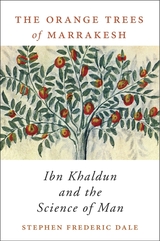
front cover of The Orange Trees of Marrakesh
The Orange Trees of Marrakesh
Ibn Khaldun and the Science of Man
Stephen Frederic Dale
Harvard University Press, 2015

In his masterwork Muqaddimah, the Arab Muslim Ibn Khaldun (1332–1406), a Tunisian descendant of Andalusian scholars and officials in Seville, developed a method of evaluating historical evidence that allowed him to identify the underlying causes of events. His methodology was derived from Aristotelian notions of nature and causation, and he applied it to create a dialectical model that explained the cyclical rise and fall of North African dynasties. The Muqaddimah represents the world’s first example of structural history and historical sociology. Four centuries before the European Enlightenment, this work anticipated modern historiography and social science.

In Stephen F. Dale’s The Orange Trees of Marrakesh, Ibn Khaldun emerges as a cultured urban intellectual and professional religious judge who demanded his fellow Muslim historians abandon their worthless tradition of narrative historiography and instead base their works on a philosophically informed understanding of social organizations. His strikingly modern approach to historical research established him as the premodern world’s preeminent historical scholar. It also demonstrated his membership in an intellectual lineage that begins with Plato, Aristotle, and Galen; continues with the Greco-Muslim philosophers al-Farabi, Avicenna, and Averroes; and is renewed with Montesquieu, Hume, Adam Smith, and Durkheim.

[more]


Send via email Share on Facebook Share on Twitter