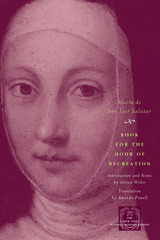
front cover of Book for the Hour of Recreation
Book for the Hour of Recreation
María de San José Salazar
University of Chicago Press, 2002
María de San José Salazar (1548-1603) took the veil as a Discalced ("barefoot") Carmelite nun in 1571, becoming one of Teresa of Avila's most important collaborators in religious reform and serving as prioress of the Seville and Lisbon convents. Within the parameters of the strict Catholic Reformation in Spain, María fiercely defended women's rights to define their own spiritual experience and to teach, inspire, and lead other women in reforming their church.

María wrote this book as a defense of the Discalced practice of setting aside two hours each day for conversation, music, and staging of religious plays. Casting the book in the form of a dialogue, María demonstrates through fictional conversations among a group of nuns during their hours of recreation how women could serve as very effective spiritual teachers for each other. The book includes one of the first biographical portraits of Teresa and Maria's personal account of the troubled founding of the Discalced convent at Seville, as well as her tribulations as an Inquisitional suspect. Rich in allusions to women's affective relationships in the early modern convent, Book for the Hour of Recreation also serves as an example of how a woman might write when relatively free of clerical censorship and expectations.

A detailed introduction and notes by Alison Weber provide historical and biographical context for Amanda Powell's fluid translation.
[more]

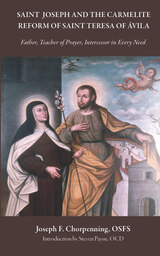
front cover of Saint Joseph and the Carmelite Reform of Saint Teresa of Avila
Saint Joseph and the Carmelite Reform of Saint Teresa of Avila
Father, Teacher of Prayer, Intercessor in Every Need
Joseph F. Chorpenning, OSFS
Catholic University of America Press, 2024
It is a commonplace in devotional literature, historical scholarship, and papal writings that Saint Teresa of Ávila played a key role in the development of veneration of Saint Joseph. Saint Joseph and the Carmelite Reform of Saint Teresa of Ávila unpacks this commonplace by recovering the often-overlooked back story to Teresa’s story, namely, the extraordinarily rich liturgical cult of Saint Joseph in the Ancient Order of Carmel which fully flowered in the Teresian Carmel and beyond, to the universal Church. This volume charts a narrative arc from the liturgical cult of Saint Joseph in the Carmelite Order of Ancient Observance; to Saint Joseph’s vital formative presence in Saint Teresa’s life and reformed Carmel as father, teacher of prayer, and intercessor in every need; to the Carmelite family as a whole giving liturgical expression to its privileged relationship with Saint Joseph by the establishment of the Feast of the Patronage of Saint Joseph; to this feast becoming widespread outside Carmel and ultimately extended to the Universal Church (1847); and, finally, to Saint Joseph’s proclamation as Patron of the Universal Church (1870). An epilogue considers the absence of Joseph’s title “Patron of the Universal Church” in the post-Vatican II liturgical calendar and books, while the papal magisterium has consistently insisted that this patronage is ever necessary for the Church as not only a protection against all dangers, but also an impetus for its mission of evangelization and re-evangelization. An appendix reprints the letter, “Saint Joseph, Patron of Carmel,” jointly issued by the Prior General of the Order of Carmelites of the Ancient Observance and the Superior General of the Order of Discalced Carmelites, to mark the 150th anniversary of the proclamation of Saint Joseph as Patron of the Universal Church.
[more]

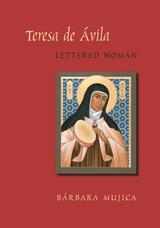
front cover of Teresa de Avila, Lettered Woman
Teresa de Avila, Lettered Woman
Barbara Mujica
Vanderbilt University Press, 2009
In 1562, Teresa de Avila founded the Discalced Carmelites and launched a reform movement that would pit her against the Church hierarchy and the male officials of her own religious order. This new spirituality, which stressed interiority and a personal relationship with God, was considered dangerous and subversive. It provoked the suspicion of the Inquisition and the wrath of unreformed Carmelites, especially the Andalusian friars, who favored the lax practices of their traditional monasteries. The Inquisition investigated Teresa repeatedly, and the Carmelite General had her detained. But even during the most terrible periods of persecution, Teresa continued to fight for the reform using the weapon she wielded best: the pen. Teresa wrote hundreds, perhaps thousands, of letters to everyone from the King to prelates to mothers of novices.

Teresa's epistolary writing reveals how she used her political acumen to dodge inquisitors and negotiate the thorny issues of the reform, facing off the authorities--albeit with considerable tact--and reprimanding priests and nuns who failed to follow her orders. Her letters bring to light the different strategies she used--code names, secret routing--in order to communicate with nuns and male allies. They show how she manipulated language, varying her tone and rhetoric according to the recipient or slipping into deliberate vagueness in order to avoid divulging secrets. What emerges from her correspondence is a portrait of extraordinary courage, ability, and shrewdness.

In the sixteenth century, the word letrado (lettered) referred to the learned men of the Church. Teresa treated letrados with great respect and always insisted on her own lack of learning. The irony is that although women could not be letradas, Teresa was, as her correspondence shows, "lettered" in more ways than one.

[more]


Send via email Share on Facebook Share on Twitter