
 A SCHOLARLY BOOK REPOSITORY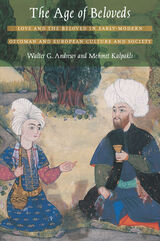
The authors show that the “age of beloveds” was not just an Ottoman, eastern European, or Islamic phenomenon. It extended into western Europe as well, pervading the cultures of Venice, Florence, Rome, and London during the same period. Andrews and Kalpakli contend that in an age dominated by absolute rulers and troubled by war, cultural change, and religious upheaval, the attachments of dependent courtiers and the longings of anxious commoners aroused an intense interest in love and the beloved. The Age of Beloveds reveals new commonalities in the cultural history of two worlds long seen as radically different.
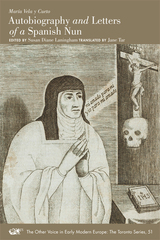
When María Vela y Cueto (1561–1617) declared that God had personally ordered her to take only the Eucharist as food and to restore primitive dress and public penance in her aristocratic convent, the entire religious community, according to her confessor, “rose up in wrath.” Yet, when Vela died, her peers joined with the populace to declare her a saint. In her autobiography and personal letters, Vela speaks candidly of the obstacles, perils, and rewards of re-negotiating piety in a convent where devotion to God was no longer expressed through rigorous asceticism. Vela’s experience, told in her own words, reveals her shrewd understanding of the persuasive power of a woman’s body.
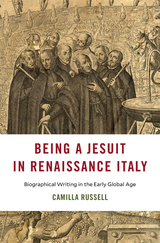
A new history illuminates the Society of Jesus in its first century from the perspective of those who knew it best: the early Jesuits themselves.
The Society of Jesus was established in 1540. In the century that followed, thousands sought to become Jesuits and pursue vocations in religious service, teaching, and missions. Drawing on scores of unpublished biographical documents housed at the Roman Jesuit Archive, Camilla Russell illuminates the lives of those who joined the Society, building together a religious and cultural presence that remains influential the world over.
Tracing Jesuit life from the Italian provinces to distant missions, Russell sheds new light on the impact and inner workings of the Society. The documentary record reveals a textual network among individual members, inspired by Ignatius of Loyola’s Spiritual Exercises. The early Jesuits took stock of both quotidian and spiritual experiences in their own records, which reflect a community where the worldly and divine overlapped. Echoing the Society’s foundational writings, members believed that each Jesuit’s personal strengths and inclinations offered a unique contribution to the whole—an attitude that helps explain the Society’s widespread appeal from its first days.
Focusing on the Jesuits’ own words, Being a Jesuit in Renaissance Italy offers a new lens on the history of spirituality, identity, and global exchange in the Renaissance. What emerges is a kind of genetic code—a thread connecting the key Jesuit works to the first generations of Jesuits and the Society of Jesus as it exists today.
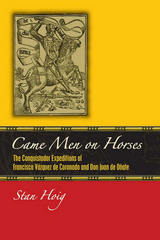
Guided by myths of golden cities and worldly rewards, policy makers, conquistador leaders, and expeditionary aspirants alike came to the new world in the sixteenth century and left it a changed land. Came Men on Horses follows two conquistadors—Francisco Vázquez de Coronado and Don Juan de Oñate—on their journey across the southwest.
Driven by their search for gold and silver, both Coronado and Oñate committed atrocious acts of violence against the Native Americans, and fell out of favor with the Spanish monarchy. Examining the legacy of these two conquistadors Hoig attempts to balance their brutal acts and selfish motivations with the historical significance and personal sacrifice of their expeditions. Rich human details and superb story-telling make Came Men on Horses a captivating narrative scholars and general readers alike will appreciate.
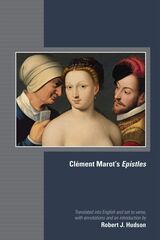
Clément Marot (1496–1544), a royal poet in Renaissance France who ushered in new verse forms and renewed existing ones, stands as one of the most important literary voices of the first half of the sixteenth century. Clément Marot’s Epistles represents a first attempt to offer a sustained English-language translation and critical edition of what is widely considered his most personal, historically relevant, and crowning verse form. Aiming for integrality and poetic precision, the volume translates and sets to verse all seventy-four of Marot’s epistles, employing the same meter and rhyme scheme used by the poet in the original compositions. Likewise focused on capturing Marot’s poetic voice, thus maintaining idiomatic and literary integrity, the resulting translation is an attempt to relate the playfulness and pathos of Marot’s verse, rendering it accessible to an anglophone public.
Beyond the more traditional verse epistles included in the primary base text, Marot’s authorized complete works from 1538, the volume also offers translations of the introductory prose epistles penned by Marot for his Adolescence clémentine of 1532 and the 1538 edition (Lyon, Dolet), as well as the coq-à-l’âne and other versified satirical epistles, the “artificial epistle” retelling of a popular medieval romance, and more. A robust critical apparatus includes ample footnotes, an extensive introduction, illustrations, a bibliography, a chronological table, and a concordance with the principal modern French-language editions of Marot’s epistles.
The book should appeal to English-speaking historians and literary scholars alike, as well as to poetry lovers, who will appreciate a new acquaintance with this distinctive voice from poetry’s past.

Published by University of Delaware Press. Distributed worldwide by Rutgers University Press.
This collection of essays focuses on teaching at the intersection of early modern literature, book history, and digital media. It considers how teaching different fields and methods of study can be enhanced and facilitated by digital technologies. The volume provides a snapshot of current thinking on digital pedagogy as practiced by leading scholars in the field and offers a series of models that may be adapted, personalized, and repurposed by future teachers seeking to bring digital methodologies to their classrooms. Supplementary materials for this title are available on the Iter Press website (iterpress.org): see under Books/Supplementary Materials.
A pathbreaking history of early modern education argues that Europe’s oldest university, often seen as a bastion of traditionalism, was in fact a vibrant site of intellectual innovation and cultural exchange.
The University of Bologna was among the premier universities in medieval Europe and an international magnet for students of law. However, a long-standing historiographical tradition holds that Bologna—and Italian university education more broadly—foundered in the early modern period. On this view, Bologna’s curriculum ossified and its prestige crumbled, due at least in part to political and religious pressure from Rome. Meanwhile, new ways of thinking flourished instead in humanist academies, scientific societies, and northern European universities.
David Lines offers a powerful counternarrative. While Bologna did decline as a center for the study of law, he argues, the arts and medicine at the university rose to new heights from 1400 to 1750. Archival records show that the curriculum underwent constant revision to incorporate contemporary research and theories, developed by the likes of René Descartes and Isaac Newton. From the humanities to philosophy, astronomy, mathematics, and medicine, teaching became more systematic and less tied to canonical texts and authors. Theology, meanwhile, achieved increasing prominence across the university. Although this religious turn reflected the priorities and values of the Catholic Reformation, it did not halt the creation of new scientific chairs or the discussion of new theories and discoveries. To the contrary, science and theology formed a new alliance at Bologna.
The University of Bologna remained a lively hub of cultural exchange in the early modern period, animated by connections not only to local colleges, academies, and libraries, but also to scholars, institutions, and ideas throughout Europe.
Published by the University of Delaware Press. Distributed worldwide by Rutgers University Press.
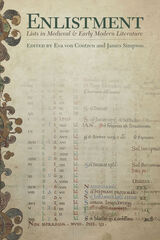
Contributors: Suzanne Conklin Akbari, Ingo Berensmeyer, Eva von Contzen, Alex Davis, Andrew James Johnston, Wolfram R. Keller, Alexis Kellner Becker, Kathryn Mogk Wagner, Martha Rust, James Simpson

Back by popular demand and new in paperback, this spirited collection of nearly twenty papers celebrates the 450th anniversary of Hernando de Soto’s epic expedition across the Southeast and West.
Originally presented at two symposia conducted by the University Museum at the University of Arkansas, the collection offers an array of viewpoints and diverse approaches to de Soto scholarship. Archaeologists, anthropologists, historians, museum curators, and folklorists all contribute to this lively debate on the Spanish explorer and his travels.
The book focuses on research that challenges traditional interpretation of de Soto’s entrada and travel route, particularly after the expedition crossed the Mississippi River. David H. Dye hypothesizes a route across the river and the alluvial plain by linking the narrative accounts with geography and archaeological knowledge. Phyllis A. Morse asserts that the Parkin site is the location of the capital of Casqui, one of the polities visited by de Soto. Charles M. Hudson repostulates his version of the expedition route, which in 1988 severely challenged the De Soto Commission theory of 1939. Ann M. Early redraws the trail in the uplands of the Ouachita Mountains And Frank E. Schambach tests the possibility that the expedition wandered through Caddoan territory in east Texas after de Soto’s death.
Several chapters examine the Native Americans whom de Soto and his expedition encountered in their journey; other contributions provide a fresh look at the chronicles of the expedition that have survived. What emerges is a redrawn map of de Soto’s exploration—and a deeper understanding of the impact of European contact on the New World.
In Figurations of France: Literary Nation-Building in Times of Crisis (1550-1650), Marcus Keller explores the often indirect and subtle ways in which key texts of early modern French literature, from Joachim Du Bellay’s Défense et illustration de la langue française to Corneille’s Le Cid, contribute to the fiction of France as a nation. Through his fresh take on these and other classics, he shows that they not only create the French as an imaginary community but also provide venues for an incisive critique of the political and cultural construct that underpins the modern nation-state.
Current theories of nationhood, in particular the concepts of the nation form and fictive ethnicity (Étienne Balibar), inform the close readings of Du Bellay’s Défense, Ronsard’s Discours, d’Aubigné’s Tragiques, Montaigne’s Essays, Malherbe’s odes, and Corneille’s Le Cid and Horace. They reveal the imaginary power and unifying force of early modern figurations of France that come to bear in this heteregoneous corpus of French literature, with texts ranging from manifesto and epic poem to essay and tragedy. Situating each author and text in their particular historical context, the study suggests that the literary invention of France in the sixteenth and seventeenth centuries is as abundant as it is conceptually innovative: Du Bellay, for example, develops an idea of France by portraying the French language as a pruned and grafted tree while d’Aubigné proposes to think of the French as a nuclear but fatherless family. Blood functions as a highly charged metaphor of nationhood in all texts.
Opening up new perspectives on these canonical works, the focus on literary nation-building also puts them into unexpected and thought-provoking relationships to each other. Figurations of France deliberately crosses the fictive boundary between the sixteenth and the seventeenth centuries and argues that, in terms of imaginary nation-building, the contours that delineate the early modern period and separate it from what we call the modern era quickly begin to dissolve. Ultimately, the book makes the case for early modern literature as a creative and critical discourse, able to nourish and nuance our thinking about the nation as the postmodern nation-state is increasingly called into question by the economical, political, and cultural effects of globalization.
Published by University of Delaware Press. Distributed worldwide by Rutgers University Press.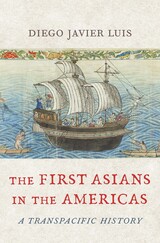
The definitive account of transpacific Asian movement through the Spanish empire—from Manila to Acapulco and beyond—and its implications for the history of race and colonization in the Americas.
Between 1565 and 1815, the so-called Manila galleons enjoyed a near-complete monopoly on transpacific trade between Spain’s Asian and American colonies. Sailing from the Philippines to Mexico and back, these Spanish trading ships also facilitated the earliest migrations and displacements of Asian peoples to the Americas. Hailing from Gujarat, Nagasaki, and many places in between, both free and enslaved Asians boarded the galleons and made the treacherous transpacific journey each year. Once in Mexico, they became “chinos” within the New Spanish caste system.
Diego Javier Luis chronicles this first sustained wave of Asian mobility to the early Americas. Uncovering how and why Asian peoples crossed the Pacific, he sheds new light on the daily lives of those who disembarked at Acapulco. There, the term “chino” officially racialized diverse ethnolinguistic populations into a single caste, vulnerable to New Spanish policies of colonial control. Yet Asians resisted these strictures, often by forging new connections across ethnic groups. Social adaptation and cultural convergence, Luis argues, defined Asian experiences in the Spanish Americas from the colonial invasions of the sixteenth century to the first cries for Mexican independence in the nineteenth.
The First Asians in the Americas speaks to an important era in the construction of race, vividly unfolding what it meant to be “chino” in the early modern Spanish empire. In so doing, it demonstrates the significance of colonial Latin America to Asian diasporic history and reveals the fundamental role of transpacific connections to the development of colonial societies in the Americas.
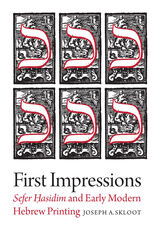
In 1538, a partnership of Jewish silk makers in the city of Bologna published a book entitled Sefer Hasidim, a compendium of rituals, stories, and religious instruction that primarily originated in medieval Franco-Germany. How these men, of Italian and Spanish descent, came to produce a book that would come to shape Ashkenazic culture, and Jewish culture more broadly, over the next four centuries is the basis of this kaleidoscopic study of the history of Hebrew printing in the sixteenth century.
During these early years of printing, the classic works of ancient and medieval Hebrew and Jewish literature became widely available to Jewish (and non-Jewish) readers for the first time. Printing, though, was not merely the duplication and distribution of pre-existing manuscripts, it was the creative adaptation and transformation of those manuscripts by printers. Ranging from Catholic Bologna to Protestant Basel to the Jewish heartland of the Polish-Lithuanian Commonwealth, Joseph A. Skloot uncovers the history of that creativity by examining the first two print editions of Sefer Hasidim. Along the way, he demonstrates how volumes that were long thought to be eternal and unchanging were in fact artifacts of historical agency and contingency, created by and for human beings.
Recent years have witnessed a surge in early modern ecostudies, many devoted to Shakespearean drama. Yet in this burgeoning discipline, travel writing appears moored in historicization, inorganic subjects are far less prevalent than organic ones, and freshwater sites are hardly visited. For All Waters explores these uncharted wetscapes.
Lowell Duckert shows that when playwrights and travel writers such as Sir Walter Raleigh physically interacted with rivers, glaciers, monsoons, and swamps, they composed “hydrographies,” or bodily and textual assemblages of human and nonhuman things that dissolved notions of human autonomy and its singular narrativity. With a playful, punning touch woven deftly into its theoretical rigor, For All Waters disputes fantasies of ecological solitude that would keep our selves high and dry and that would try to sustain a political ecology excluding water and the poor. The lives of both humans and waterscapes can be improved simultaneously through direct engagement with wetness.
For All Waters concludes by investigating waterscapes in peril today—West Virginia’s chemical rivers and Iceland’s vanishing glaciers—and outlining what we can learn from early moderns’ eco-ontological lessons. By taking their soggy and storied matters to heart, and arriving at a greater realization of our shared wetness, we can conceive new directions to take within the hydropolitical crises afflicting us today.
In the middle decades of the sixteenth century, the republican city-state of Florence--birthplace of the Renaissance--failed. In its place the Medici family created a principality, becoming first dukes of Florence and then grand dukes of Tuscany. The Fruit of Liberty examines how this transition occurred from the perspective of the Florentine patricians who had dominated and controlled the republic. The book analyzes the long, slow social and cultural transformations that predated, accompanied, and facilitated the institutional shift from republic to principality, from citizen to subject.
More than a chronological narrative, this analysis covers a wide range of contributing factors to this transition, from attitudes toward office holding, clothing, and the patronage of artists and architects to notions of self, family, and gender. Using a wide variety of sources including private letters, diaries, and art works, Nicholas Baker explores how the language, images, and values of the republic were reconceptualized to aid the shift from citizen to subject. He argues that the creation of Medici principality did not occur by a radical break with the past but with the adoption and adaptation of the political culture of Renaissance republicanism.
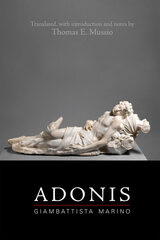
Translated, with introduction and notes by Thomas E. Mussio.
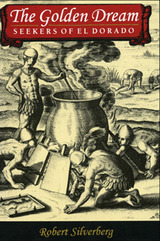
One of the most persistent legends in the annals of New World exploration is that of the Land of Gold. This mythical site was located over vast areas of South America (and later, North America); the search for it drove some men mad with greed and, as often as not, to their untimely deaths.
In this history of quest and adventure, Robert Silverberg traces the fate of Old World explorers lured westward by the myth of El Dorado. From the German conquistadores licensed by the Spanish king to operate out of Venezuela, to the journeys of Gonzalo Pizarro in the Amazon basin, and to the nearly miraculous voyage of Francisco Orellana to the mouth of the Amazon River, encountering the warlike women who gave the river its name, violence and bloodshed accompanied the determined adventurers. Sir Walter Raleigh and a host of other explorers spent small fortunes and many lives trying to locate Manoa, a city that was rumored to be El Dorado—City of Gold. Celebrated science fiction author Robert Silverberg recreates these legendary quests in The Golden Dream: Seekers of El Dorado.

Here is the first full-length biography in English of the most important political figure in premodern Japan.
Hideyoshi—peasant turned general, military genius, and imperial regent of Japan—is the subject of an immense legendary literature. He is best known for the conquest of Japan’s sixteenth-century warlords and the invasion of Korea. He is known, too, as an extravagant showman who rebuilt cities, erected a colossal statue of the Buddha, and entertained thousands of guests at tea parties. But his lasting contribution is as governor whose policies shaped the course of Japanese politics for almost three hundred years.
In Japan’s first experiment with federal rule, Hideyoshi successfully unified two hundred local domains under a central authority. Mary Elizabeth Berry explores the motives and forms of this new federalism which would survive in Japan until the mid-nineteenth century, as well as the philosophical question it raised: What is the proper role of government? This book reflects upon both the shifting political consciousness of the late sixteenth century and the legitimation rituals that were invoked to place change in a traditional context. It also reflects upon the architect of that change—a troubled parvenu who acted often with moderation and sometimes with explosive brutality.

The exemplar of Indo-Persian history, at once a biography of Emperor Akbar and a chronicle of sixteenth-century Mughal India.
Akbarnāma, or The History of Akbar, by Abu’l-Fazl (d. 1602), is one of the most important works of Indo-Persian history and a touchstone of prose artistry. Marking a high point in a long, rich tradition of Persian historical writing, it served as a model for historians across the Persianate world. The work is at once a biography of the Mughal emperor Akbar (r. 1556–1605) that includes descriptions of political and martial feats and cultural achievements, and a chronicle of sixteenth-century India.
The eighth and final volume spans the thirty-ninth to fiftieth years of Akbar’s reign, detailing the conquest of Ahmadnagar, Prince Salim’s rebellion, and the emperor’s final days.
The Persian text, presented in the Naskh script, is based on a careful reassessment of the primary sources.
The exemplar of Indo-Persian history, at once a biography of Emperor Akbar and a chronicle of sixteenth-century Mughal India.
Akbarnāma, or The History of Akbar, by Abu’l-Fazl (d. 1602), is one of the most important works of Indo-Persian history and a touchstone of prose artistry. Marking a high point in a long, rich tradition of Persian historical writing, it served as a model for historians across the Persianate world. The work is at once a biography of the Mughal emperor Akbar (r. 1556–1605) that includes descriptions of political and martial feats and cultural achievements, and a chronicle of sixteenth-century India.
The seventh volume details the twenty-ninth to thirty-eighth years of Akbar’s reign, including accounts of the marriage of his son and heir Salim (Jahangir); conquests of Swat, Orissa, Kashmir, Sind, and the Saurashtra Peninsula; the pacification of Bengal; and the emperor’s visits to Kashmir, the Punjab, and Kabul.
The Persian text, presented in the Naskh script, is based on a careful reassessment of the primary sources.
The exemplar of Indo-Persian history, at once a biography of Emperor Akbar and a chronicle of sixteenth-century Mughal India.
Akbarnāma, or The History of Akbar, by Abu’l-Fazl (d. 1602), is one of the most important works of Indo-Persian history and a touchstone of prose artistry. Marking a high point in a long, rich tradition of Persian historical writing, it served as a model for historians across the Persianate world. The work is at once a biography of the Mughal emperor Akbar (r. 1556–1605) that includes descriptions of his political and martial feats and cultural achievements, and a chronicle of sixteenth-century India.
The sixth volume details the twenty-third to twenty-eighth years of Akbar’s reign, including accounts of the quelling of rebellions in Bihar, Bengal, and Kabul, and final victory in Gujarat.
The Persian text, presented in the Naskh script, is based on a careful reassessment of the primary sources.
The exemplar of Indo-Persian history, at once a biography of Emperor Akbar and a chronicle of sixteenth-century Mughal India.
Akbarnāma, or The History of Akbar, by Abu’l-Fazl (d. 1602), is one of the most important works of Indo-Persian history and a touchstone of prose artistry. Marking a high point in a long, rich tradition of Persian historical writing, it served as a model for historians across the Persianate world. The work is at once a biography of the Mughal emperor Akbar (r. 1556–1605) that includes descriptions of his political and martial feats and cultural achievements, and a chronicle of sixteenth-century India.
The fifth volume details the bellicose seventeenth to twenty-second years of Akbar’s reign, including accounts of the conquest of Gujarat, the capture of Rohtas fort from rebel Afghans, and the invasions of Patna and Bengal.
The Persian text, presented in the Naskh script, is based on a careful reassessment of the primary sources.
The exemplar of Indo-Persian history, at once a biography of Emperor Akbar and a chronicle of sixteenth-century Mughal India.
Akbarnāma, or The History of Akbar, by Abu’l-Fazl (d. 1602), is one of the most important works of Indo-Persian history and a touchstone of prose artistry. Marking a high point in a long, rich tradition of Persian historical writing, it served as a model for historians across the Persianate world. The work is at once a biography of the Mughal emperor Akbar (r. 1556–1605) that includes descriptions of his political and martial feats and cultural achievements, and a chronicle of sixteenth-century India.
The fourth volume narrates the second eight years of Akbar’s reign, including an account of his visit to Ajmer, the arrival of an embassy from the Safavid court, and the beginning of the author’s brother Faizi’s career as court poet.
The Persian text, presented in the Naskh script, is based on a careful reassessment of the primary sources.
The exemplar of Indo-Persian history, at once a biography of Emperor Akbar and a chronicle of sixteenth-century Mughal India.
Akbarnāma, or The History of Akbar, by Abu’l-Fazl (d. 1602), is one of the most important works of Indo-Persian history and a touchstone of prose artistry. Marking a high point in a long, rich tradition of Persian historical writing, it served as a model for historians across the Persianate world. The work is at once a biography of the Mughal emperor Akbar (r. 1556–1605) that includes descriptions of his political and martial feats and cultural achievements, and a chronicle of sixteenth-century India.
The third volume details the first eight years of Akbar’s reign, when he consolidated his power, quelled the rebellion of his guardian Bayram Khan, conquered Malwa, and married a Rajput princess.
The Persian text, presented in the Naskh script, is based on a careful reassessment of the primary sources.
The exemplar of Indo-Persian history, at once a biography of Emperor Akbar and a chronicle of sixteenth-century Mughal India.
Akbarnāma, or The History of Akbar, by Abu’l-Fazl (d. 1602), is one of the most important works of Indo-Persian history and a touchstone of prose artistry. Marking a high point in a long, rich tradition of Persian historical writing, it served as a model for historians across the Persianate world. The work is at once a biography of the Mughal emperor Akbar (r. 1556–1605) that includes descriptions of his political and martial feats and cultural achievements, and a chronicle of sixteenth-century India.
The second volume details the turbulent reign of his father Humayun, his years in exile, his return to power, and his untimely death that brought Akbar to the throne as a youth.
The Persian text, presented in the Naskh script, is based on a careful reassessment of the primary sources.
The exemplar of Indo-Persian history, at once a biography of Emperor Akbar and a chronicle of sixteenth-century Mughal India.
Akbarnāma, or The History of Akbar, by Abu’l-Fazl (d. 1602), is one of the most important works of Indo-Persian history and a touchstone of prose artistry. Marking a high point in a long, rich tradition of Persian historical writing, it served as a model for historians throughout the Persianate world. The work is at once a biography of the Mughal emperor Akbar (r. 1556–1605) that includes descriptions of his political and martial feats and cultural achievements, and a chronicle of sixteenth-century India.
The first volume details the birth of Akbar, his illustrious genealogy, and in particular the lives and exploits of his grandfather, Babur, and his father, Humayun, who laid the foundations of the Mughal Empire.
The Persian text, presented in the Naskh script, is based on a careful reassessment of the primary sources.
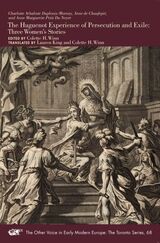
Edited by Colette H. Winn. Translated by Lauren King and Colette H. Winn
The Other Voice in Early Modern Europe: The Toronto Series, Vol. 68
Written in the early seventeenth century, the Hustynja Chronicle represents the first attempt of early modern chroniclers to write a systematic history of Ukraine. The chronological sweep of the text is ambitious, describing the history of Kyivan Rus´ and Ukraine from biblical times until the Union of Brest in 1596. The text covers many critical periods in Ukrainian history, including pre-Mongol Rus´, the expansion of the Grand Duchy of Lithuania, and the emergence of the Cossacks. Its unique style blends the older tradition of presenting information under yearly entries with a newer, more narrative style of chronicle modeled on the works of Polish chroniclers such as Stryjkowski and Bielski.
This publication marks the first time that the Hustynja Chronicle has appeared in a scholarly edition. One copy originally found in the Mharsk Monastery serves as the exemplar for the main text and is accompanied by notes representing variants from six other copies of the text. An introduction by Ukrainian historian Dr. Oleksiy Tolochko, in both the original Ukrainian and English translation, provides a detailed description and history of the chronicle. The Hustynja Chronicle is an essential source for scholars interested in medieval and early-modern Ukrainian history, philology, and chronicle writing.
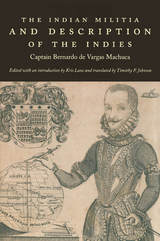
Containing advice on curing rattlesnake bites with amethysts and making saltpeter for gunpowder from concentrated human urine, The Indian Militia is a manual in four parts, the first of which outlines the ideal qualities of the militia commander. Addressing the organization and outfitting of conquest expeditions, Book Two includes extended discussions of arms and medicine. Book Three covers the proper behavior of soldiers, providing advice on marching through peaceful and bellicose territories, crossing rivers, bivouacking in foul weather, and carrying out night raids and ambushes. Book Four deals with peacemaking, town-founding, and the proper treatment of conquered peoples. Appended to these four sections is a brief geographical description of all of Spanish America, with special emphasis on the indigenous peoples of New Granada (roughly modern-day Colombia), followed by a short guide to the southern coasts and heavens. This first English-language edition of The Indian Militia includes an extensive introduction, a posthumous report on Vargas Machuca’s military service, and a selection from his unpublished attack on the writings of Fray Bartolomé de Las Casas.
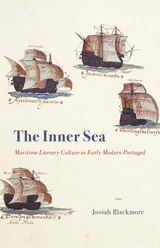
In this book, Josiah Blackmore considers how the sea and seafaring shaped literary creativity in early modern Portugal during the most active, consequential decades of European overseas expansion. Blackmore understands “literary” in a broad sense, including a diverse archive spanning genres and disciplines—epic and lyric poetry, historical chronicles, nautical documents, ship logs, shipwreck narratives, geographic descriptions, and reference to texts of other seafaring powers and literatures of the period—centering on the great Luís de Camões, arguably the sea poet par excellence of early modern Europe.
Blackmore shows that the sea and nautical travel for Camões and his contemporaries were not merely historical realities; they were also principles of cultural creativity that connected to larger debates in the widening field of the maritime humanities. For Blackmore, the sea, ships, and nautical travel unfold into a variety of symbolic dimensions, and the oceans across the globe that were traversed in the fifteenth and sixteenth centuries correspond to vast reaches within the literary self. The sea and seafaring were not merely themes in textual culture but were also principles that created individual and collective subjects according to oceanic modes of perception. Blackmore concludes with a discussion of depth and sinking in shipwreck narratives as metaphoric and discursive dimensions of the maritime subject, foreshadowing empire’s decline.

Jesuit Letters From China, 1583–84 was first published in 1986. Minnesota Archive Editions uses digital technology to make long-unavailable books once again accessible, and are published unaltered from the original University of Minnesota Press editions.
The first eight letters from Jesuit missionaries on mainland China were written in 1583–84 and published in Europe in 1586. M Howard Rienstra's translated marks their first appearance in English. The letters chronicle the patient efforts of Michele Ruggieri and the famed Matteo Ricci to learn Chinese, to gain acceptance in Chinese society, and to explain Christianity to a highly sophisticated non-Christian culture. They also described the China of the late Ming dynasty (1368–1644), a country whose immense size and population had excited the imagination of Europeans for generations.
It was Francis Xavier's dream that this mighty kingdom and civilization be opened to the Christian gospel. His dream was at least tentatively fulfilled when Michele Ruggieri was granted residence first in Canton and then in Chao-ch'ing in 1583. Accompanied first by Francesco Pasio and later by Matteo Ricci, Ruggieri initiated the Christian mission in China. Their letters, published initially as an appendix to a volume of Jesuit letters from Japan, were abbreviated and censored by their European editor. In edited form, the letters appeared in 1586 in one French, on German, and three Italian editions.
The China of Ruggieri and Matteo Ricci had remained, however, both suspicious of, and closed to, foreigners - a fact which the original letters do not gloss over. Rienstra was carefully compared the abbreviated and censored versions of these letters in their originals, still preserved in the Jesuit archives in Rome. The letters in general indicate how tenuous the Jesuits' situation was and note candidly that only two baptisms had been performed on the mainland during their stay. These results stand in marked contracts to the reports from Japan of tens of thousands of baptisms and to the reports from Portuguese Macao, where Chinese converts were compelled to wear European cloths and to take European names.
Such Europeanization was thought to be inappropriate to a successful Christian mission in China. Though criticized at the time by their colleagues in Macao, Ruggieri, Pasio, and Ricci committed themselves to a program of cultural respect and accommodation. They learned both written and spoken Chinese, ingratiated themselves with the ruling classes by exhibiting their learning and courtesy, and appeared to have become Chinese themselves. When Matteo Ricci became Ruggieri's successor and his name became synonymous with the success of the Jesuit mission in China, it was to these methods that its success was owed. Unfortunately, the prevailing European ethnocentrism could not accept the concept of cultural accommodation. The editors thus censored the letters to convey the impression of a triumphant and culturally superior Christian mission in China.
Jesuit Letters From China is a publication of the James Ford Bell Library at the University of Minnesota.
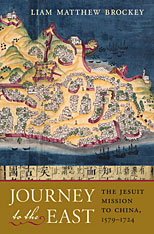
It was one of the great encounters of world history: highly educated European priests confronting Chinese culture for the first time in the modern era. This “journey to the East” is explored by Liam Brockey as he retraces the path of the Jesuit missionaries who sailed from Portugal to China, believing that, with little more than firm conviction and divine assistance, they could convert the Chinese to Christianity. Moving beyond the image of Jesuits as cultural emissaries, his book shows how these priests, in the first concerted European effort to engage with Chinese language and thought, translated Roman Catholicism into the Chinese cultural frame and eventually claimed two hundred thousand converts.
The first narrative history of the Jesuits’ mission from 1579 until the proscription of Christianity in China in 1724, this study is also the first to use extensive documentation of the enterprise found in Lisbon and Rome. The peril of travel in the premodern world, the danger of entering a foreign land alone and unarmed, and the challenge of understanding a radically different culture result in episodes of high drama set against such backdrops as the imperial court of Peking, the villages of Shanxi Province, and the bustling cities of the Yangzi Delta region. Further scenes show how the Jesuits claimed conversions and molded their Christian communities into outposts of Baroque Catholicism in the vastness of China. In the retelling, this story reaches across continents and centuries to reveal the deep political, cultural, scientific, linguistic, and religious complexities of a true early engagement between East and West.

Medieval scholars imagined the library as a microcosm of the world, but as novel early modern ways of managing information facilitated empire in both the New and Old Worlds, the world became a projection of the library. In The Librarian’s Atlas, Seth Kimmel offers a sweeping material history of how the desire to catalog books coincided in the sixteenth and seventeenth centuries with the aspiration to control territory. Through a careful study of library culture in Spain and Morocco—close readings of catalogs, marginalia, indexes, commentaries, and maps—Kimmel reveals how the booklover’s dream of a comprehensive and well-organized library shaped an expanded sense of the world itself.
From the intense and brooding Magellan and the glamorous and dashing Sir Francis Drake; to Thomas Cavendish, who set off to plunder Spain’s American gold and the Dutch circumnavigators, whose numbers included pirates as well as explorers and merchants, Robert Silverberg captures the adventures and seafaring exploits of a bygone era.
Over the course of a century, European circumnavigators in small ships charted the coast of the New World and explored the Pacific Ocean. Characterized by fierce nationalism, competitiveness, and bloodshed, The Longest Voyage: Circumnavigators in the Age of Discovery captures the drama, danger, and personalities in the colorful story of the first voyages around the world. These accounts begin with Magellan’s unprecedented 1519–22 circumnavigation, providing an immediate, exciting, and intimate glimpse into that historic venture. The story includes frequent threats of mutiny; the nearly unendurable extremes of heat, cold, hunger, thirst, and fatigue; the fear, tedium, and moments of despair; the discoveries of exotic new peoples and strange new lands; and, finally, Magellan’s own dramatic death during a fanatical attempt to convert native Philippine islanders to Christianity.
Capturing the total context of political climate and historical change that made the Age of Discovery one of excitement and drama, Silverberg brings a motley crew of early ocean explorers vividly to life.
The Margins of Late Medieval London seeks to unpack the complexity of urban life in the medieval age, offering a detailed and novel approach to understanding London beyond its grand institutions and social bodies. Using a combination of experimental digital, quantitative, and qualitative methodologies, the volume casts new light on urban life at the level of the neighborhood and considers the differences in economy, society, and sociability which existed in different areas of a vibrant premodern city. This book focuses on the dynamism and mobility that shaped city life, integrating the experiences of London’s poor and migrant communities and how they found their place within urban life. It describes how people found themselves marginalized in the city, and the strategies they would employ to mitigate that precarious position.
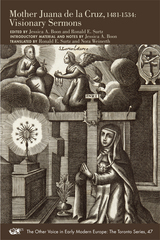
Juana de la Cruz (1481–1534) is a unique figure in the history of the Catholic Church, thanks to her public visionary experiences during which she lost consciousness, while a deep voice, identifying itself as Christ, issued from her, narrating the feasts and pageants taking place in heaven. Juana’s so called “sermons,” collected in a manuscript called Libro del Conorte, form a fascinating window into Castilian religiosity in the early sixteenth century. There is much to reap from these sermons concerning Spanish Renaissance culture, theology, mysticism, gender roles, and interreligious interactions.
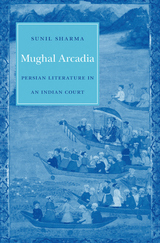
At its height in the sixteenth and seventeenth centuries, the Mughal Empire was one of the largest empires in Eurasia, with territory extending over most of the Indian subcontinent and much of present-day Afghanistan. As part of the Persianate world that spanned from the Bosphorus to the Bay of Bengal, Mughal rulers were legendary connoisseurs of the arts. Their patronage attracted poets, artists, and scholars from all parts of the eastern Islamic world. Persian was the language of the court, and poets from Safavid Iran played a significant role in the cultural life of the nobility. Mughal Arcadia explores the rise and decline of Persian court poetry in India and the invention of an enduring idea—found in poetry, prose, paintings, and architecture—of a literary paradise, a Persian garden located outside Iran, which was perfectly exemplified by the valley of Kashmir.
Poets and artists from Iran moved freely throughout the Mughal empire and encountered a variety of cultures and landscapes that inspired aesthetic experiments which continue to inspire the visual arts, poetry, films, and music in contemporary South Asia. Sunil Sharma takes readers on a dazzling literary journey over a vast geographic terrain and across two centuries, from the accession of the first emperor, Babur, to the throne of Hindustan to the reign of the sixth great Mughal, Aurangzeb, in order to illuminate the life of Persian poetry in India. Along the way, we are offered a rare glimpse into the social and cultural life of the Mughals.
During the colonial period, Nahuatl became a means of empowerment, oppression, and indoctrination. In modern times, Nahuatl continues to serve as an ideological lightning rod for both the Mexican government and Indigenous communities. Contributors to this volume focus on Nahua intellectual production from the sixteenth century to the present; contact and the negotiation of meaning; adaptations of Christian lore that show how representations of creation, hell, and the Passion of Christ reflected Nahua perceptions and understandings; Nahua cultural expressions, including poetry, healing rituals, and even running; language and geography; Nahuatl place-names; and the transformation of Nahuatl speakers from antiquity to the present.
Showcasing how Nahuatl’s cultural resilience permanently shaped the region’s social geography, The Nahua engages the field’s interest in the nonhomogenous character of the language, with regional and subregional dialects and pronunciations that reflect the history of pre-Columbian migrations and modern-era influences. Bridging the study of Nahuatl as a “historical” Indigenous language tradition with the study of modern-day speakers and their experiences, this work is of significance to students, scholars, and speakers of the languages as well as those studying colonial New Spain, Indigenous resilience, or Indigenous linguistics.
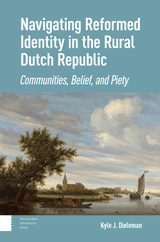
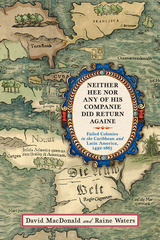
In Neither Hee Nor Any of His Companie Did Return Againe: Failed Colonies in the Caribbean and Latin America, 1492–1865, historians David MacDonald and Raine Waters examine the European, and later American, failures to establish permanent settlements in the region. Beginning with Columbus’s ill-conceived ventures, the authors discuss the efforts, from German claims in Venezuela and Scottish attempts in Panama to defeated Confederates fleeing to Mexico, Brazil, and elsewhere. For each colony, the primary source information is contextualized and evaluated. Along the way, the authors determine commonalities across these ill-fated colonies as well as underscore the fact that while Indigenous peoples of the region often vigorously resisted predatory European colonization, their numbers were decimated by relentless warfare, slave raids, and European diseases. As Indian populations declined, colonists imported African slaves in large numbers. The brutal treatment of slaves resulted in those who escaped creating their own settlements that existed in a state of endemic warfare with European colonists. An important contribution to Atlantic World studies, this volume reveals the fine line between colonies that thrived and those that failed.
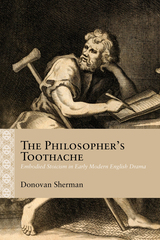
Informed by work in both classical philosophy and performance studies, Donovan Sherman argues that Stoicism infused the complex theatrical culture of early modern England. Plays written and performed during this period gave life to Stoic exercises that instructed audiences to cultivate their virtue, self-awareness, and creativity. By foregrounding Stoicism’s embodied nature, Sherman recovers a vital dimension too often lost in reductive portrayals of the Stoics by early modern writers and contemporary scholars alike. The Philosopher’s Toothache features readings of dramatic works by William Shakespeare, Cyril Tourneur, and John Marston alongside considerations of early modern adaptations of classical Stoics (Seneca, Epictetus, and Marcus Aurelius) and Neo-Stoics such as Justus Lipsius. These plays model Stoic virtues like unpredictability, indifference, vulnerability, and dependence—attributes often framed as negative but that can also rekindle a sense of responsible public action.
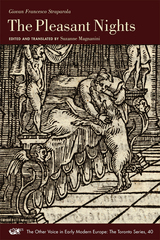
In Giovan Francesco Straparola’s The Pleasant Nights, a group of men and women gather together in a villa on the Venetian island of Murano during Carnival to sing songs, tell tales, and solve riddles. A sixteenth-century bestseller, The Pleasant Nights is today a fundamental text for European folk and fairy tale studies, for alongside triumphal and tragic love stories, comical tales of practical jokes, and accounts of witty retorts, Straparola (1480? – 1557?) placed some of the first fairy tales printed in Europe. Straparola’s eloquent female narrators and the fairy tales they recount became a model for a generation of French women writers in Parisian salons, who used the fairy tale to interrogate the gender norms of their day. This book presents the first new and complete English translation of Straparola’s tales and riddles to be published since the nineteenth century.
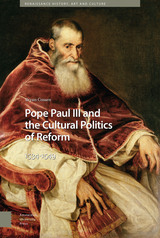
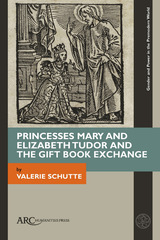
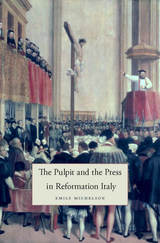
Italian preachers during the Reformation era found themselves in the trenches of a more desperate war than anything they had ever imagined. This war—the splintering of western Christendom into conflicting sects—was physically but also spiritually violent. In an era of tremendous religious convolution, fluidity, and danger, preachers of all kinds spoke from the pulpit daily, weekly, or seasonally to confront the hottest controversies of their time. Preachers also turned to the printing press in unprecedented numbers to spread their messages.
Emily Michelson challenges the stereotype that Protestants succeeded in converting Catholics through superior preaching and printing. Catholic preachers were not simply reactionary and uncreative mouthpieces of a monolithic church. Rather, they deftly and imaginatively grappled with the question of how to preserve the orthodoxy of their flock and maintain the authority of the Roman church while also confronting new, undeniable lay demands for inclusion and participation.
These sermons—almost unknown in English until now—tell a new story of the Reformation that credits preachers with keeping Italy Catholic when the region’s religious future seemed uncertain, and with fashioning the post-Reformation Catholicism that thrived into the modern era. By deploying the pulpit, pen, and printing press, preachers in Italy created a new religious culture that would survive in an unprecedented atmosphere of competition and religious choice.

Race and Romance: Coloring the Past explores the literary and cultural genealogy of colorism, white passing, and white presenting in the romance genre. The scope of the study ranges from Heliodorus’ Aithiopika to the short novels of Aphra Behn, to the modern romance novel Forbidden by Beverly Jenkins. This analysis engages with the troublesome racecraft of “passing” and the instability of racial identity and its formation from the premodern to the present. The study also looks at the significance of white settler colonialism to early modern romance narratives. A bridge between studies of early modern romance and scholarship on twenty-first-century romance novels, this book is well-suited for those interested in the romance genre.
This study in religious anthropology explores the social history of popular belief. The book begins with an evocation of the river towns, open fields, and vineyards of Champagne. In addition to the historical geography and quantitative material that are hallmarks of the French tradition, the author studies the rich artistic evidence that still graces the provincial churches.
Galpern interprets religious behavior at the beginning of the century as a lingering response to difficulties of the late Middle Ages. The nascent Protestant movement highlights the ways in which many Catholics modified their practices, yet remained orthodox. The book charts the paths of antipathy that converged in civil war, and concludes with a discussion of the late-sixteenth-century atmosphere of revivalism, which mimicked the earlier spiritualclimate.
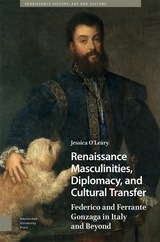
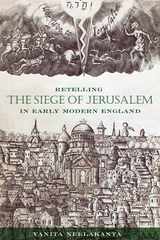
Published by University of Delaware Press. Distributed worldwide by Rutgers University Press.
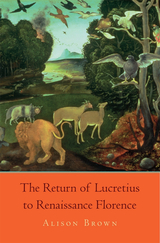
In this first comprehensive study of the effect of Lucretius's De rerum natura on Florentine thought in the Renaissance, Alison Brown demonstrates how Lucretius was used by Florentine thinkers—earlier and more widely than has been supposed—to provide a radical critique of prevailing orthodoxies.
To answer the question of why ordinary Florentines were drawn to this recently discovered text, despite its threat to orthodox Christian belief, Brown tracks interest in it through three humanists—the most famous of whom was Machiavelli—all working not as philologists but as practical administrators and teachers in the Florentine chancery and university. Interpreting their direct use of Lucretius within the context of mercantile Florence, Brown highlights three dangerous themes that had particular appeal: Lucretius's attack on superstitious religion and an afterlife; his pre-Darwinian theory of evolution; and his atomism, with its theory of free will and the chance creation of the world.
The humanists' challenge to established beliefs encouraged the growth of a "Lucretian network" of younger, politically disaffected Florentines. Brown thus adds a missing dimension to our understanding of the "revolution" in sixteenth-century political thinking, as she enriches our definition of the Renaissance in a context of newly discovered worlds and new social networks.
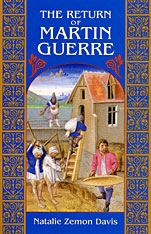
The clever peasant Arnaud du Tilh had almost persuaded the learned judges at the Parlement of Toulouse when, on a summer’s day in 1560, a man swaggered into the court on a wooden leg, denounced Arnaud, and reestablished his claim to the identity, property, and wife of Martin Guerre. The astonishing case captured the imagination of the continent. Told and retold over the centuries, the story of Martin Guerre became a legend, still remembered in the Pyrenean village where the impostor was executed more than 400 years ago.
Now a noted historian, who served as consultant for a new French film on Martin Guerre, has searched archives and lawbooks to add new dimensions to a tale already abundant in mysteries: we are led to ponder how a common man could become an impostor in the sixteenth century, why Bertrande de Rols, an honorable peasant woman, would accept such a man as her husband, and why lawyers, poets, and men of letters like Montaigne became so fascinated with the episode.
Natalie Zemon Davis reconstructs the lives of ordinary people, in a sparkling way that reveals the hidden attachments and sensibilities of nonliterate sixteenth-century villagers. Here we see men and women trying to fashion their identities within a world of traditional ideas about property and family and of changing ideas about religion. We learn what happens when common people get involved in the workings of the criminal courts in the ancien régime, and how judges struggle to decide who a man was in the days before fingerprints and photographs. We sense the secret affinity between the eloquent men of law and the honey-tongued village impostor, a rare identification across class lines.
Deftly written to please both the general public and specialists, The Return of Martin Guerre will interest those who want to know more about ordinary families and especially women of the past, and about the creation of literary legends. It is also a remarkable psychological narrative about where self-fashioning stops and lying begins.

In his compelling retelling of the conflict, Anton van der Lem explores the main issues at stake on both sides of the struggle and why it took eighty years to achieve peace. He recounts in vivid detail the roles of the key protagonists, the decisive battles, and the war’s major turning points, from the Spanish governor’s Council of Blood to the Twelve Years Truce, while all the time unraveling the shifting political, religious, and military alliances that would entangle the foreign powers of France, Italy, and England. Featuring striking, rarely seen illustrations, this is a timely and balanced account of one of the most historically important conflicts of the early modern period.
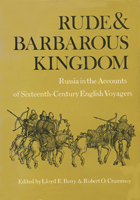
Lloyd E. Berry and Robert O. Crummey offer edited accounts of six English voyagers and their experiences in Muscovy Russia between 1553 and 1600. With modernized spelling and presentation, these accounts are accompanied by a glossary of Russian terms, introductions of their authors, and annotations that help put the travelers’ narratives into perspective.
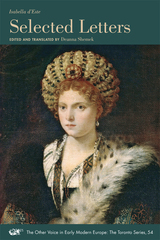
Isabella d’Este (1474–1539), daughter of the Este dukes of Ferrara and wife of Marchese Francesco II Gonzaga of Mantua, co-regent of the Gonzaga state, art collector, musician, diplomat, dynastic mother, traveler, reader, gardener, fashion innovator, and consummate politician, was also, as this volume attests, a prolific letter writer with a highly developed epistolary network. Presented here for the first time in any language is a representative selection from over 16,000 letters sent by Isabella to addressees across a wide social spectrum. Together, they paint a nuanced and colorful portrait of a brilliant and influential female protagonist of early modern European society.
Published by University of Delaware Press. Distributed worldwide by Rutgers University Press.
From the distinguished literary scholar Gordon Teskey comes an essay collection that restores Spenser to his rightful prominence in Renaissance studies, opening up the epic of The Faerie Queene as a grand, improvisatory project on human nature, and arguing—controversially—that it is Spenser, not Milton, who is the more important and relevant poet for the modern world.
There is more adventure in The Faerie Queene than in any other major English poem. But the epic of Arthurian knights, ladies, and dragons in Faerie Land, beloved by C. S. Lewis, is often regarded as quaint and obscure, and few critics have analyzed the poem as an experiment in open thinking. In this remarkable collection, the renowned literary scholar Gordon Teskey examines the masterwork with care and imagination, explaining the theory of allegory—now and in Edmund Spenser’s Elizabethan age—and illuminating the poem’s improvisatory moments as it embarks upon fairy tale, myth, and enchantment.
Milton, often considered the greatest English poet after Shakespeare, called Spenser his “original.” But Teskey argues that while Milton’s rigid ideology in Paradise Lost has failed the test of time, Spenser’s allegory invites engagement on contemporary terms ranging from power, gender, violence, and virtue ethics, to mobility, the posthuman, and the future of the planet. The Faerie Queene was unfinished when Spenser died in his forties. It is the brilliant work of a poet of youthful energy and philosophical vision who opens up new questions instead of answering old ones. The epic’s grand finale, “The Mutabilitie Cantos,” delivers a vision of human life as dizzyingly turbulent and constantly changing, leaving a future open to everything.
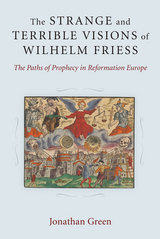
Dutch scholars have recognized that Frans Fraet was executed for printing a prognostication by Willem de Vriese, but this prognostication was thought to be lost. A few scholars of sixteenth-century German apocalypticism have briefly noted the prophecies of Wilhelm Friess but have not studied them in depth. The Strange and Terrible Visions of Wilhelm Friess is the first to connect de Vriese and Friess, as well as recognize the prophecy of Wilhelm Friess as an adaptation of a French version of theVademecum of Johannes de Rupescissa, making these pamphlets by far the most widespread source for Rupescissa’s apocalyptic thought in Reformation Germany. The book explains the connection between the first and second prophecies of Wilhelm Friess and discovers the Calvinist context of the second prophecy and its connection to Johann Fischart, one of the most important German writers of the time.
Jonathan Green provides a study of how textual history interacts with print history in early modern pamphlets and proposes a model of how early modern prophecies were created and transmitted. The Strange and Terrible Visions of Wilhelm Friess makes important contributions to the study of early modern German and Dutch literature, apocalypticism and confessionalization during the Reformation, and the history of printing in the sixteenth century.
A Taste for the Foreign examines foreignness as a crucial aesthetic category for the development of prose fiction from Jacques Amyot’s 1547 translation of The Ethiopian Story to Antoine Galland’s early eighteenth-century version of The Thousand and One Nights. While fantastic storylines and elements of magic were increasingly shunned by a neo-classicist literary culture that valued verisimilitude above all else, writers and critics surmised that the depiction of exotic lands could offer a superior source for the novelty, variety, and marvelousness that constituted fiction’s appeal. In this sense, early modern fiction presents itself as privileged site for thinking through the literary and cultural stakes of exoticism, or the taste for the foreign. Long before the term exoticism came into common parlance in France, fiction writers thus demonstrated their understanding of the special kinds of aesthetic pleasure produced by evocations of foreignness, developing techniques to simulate those delights through imitations of the exotic. As early modern readers eagerly consumed travel narratives, maps, and international newsletters, novelists discovered ways to blur the distinction between true and imaginary representations of the foreign, tantalizing readers with an illusion of learning about the faraway lands that captured their imaginations.
This book analyzes the creative appropriations of those scientific or documentary forms of writing that claimed to inform the French public about exotic places. Concentrating on the most successful examples of some of the most important sub-genres of prose fiction in the long seventeenth century—heroic romances, shorter urban novels, fictional memoirs, and extraordinary voyages—the book examines how these types of fiction creatively appropriate the scientific or documentary forms of writing that claimed to inform the French public about exotic places.
Published by University of Delaware Press. Distributed worldwide by Rutgers University Press.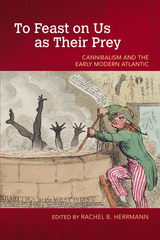
Winner, 2020 Association for the Study of Food and Society Book Award, Edited Volume
Long before the founding of the Jamestown, Virginia, colony and its Starving Time of 1609–1610—one of the most famous cannibalism narratives in North American colonial history—cannibalism played an important role in shaping the human relationship to food, hunger, and moral outrage. Why did colonial invaders go out of their way to accuse women of cannibalism? What challenges did Spaniards face in trying to explain Eucharist rites to Native peoples? What roles did preconceived notions about non-Europeans play in inflating accounts of cannibalism in Christopher Columbus’s reports as they moved through Italian merchant circles?
Asking questions such as these and exploring what it meant to accuse someone of eating people as well as how cannibalism rumors facilitated slavery and the rise of empires, To Feast on Us as Their Prey posits that it is impossible to separate histories of cannibalism from the role food and hunger have played in the colonization efforts that shaped our modern world.
This book proposes that in a number of French Renaissance texts, produced in varying contexts and genres, we observe a shift in thinking about memory and forgetting. Focusing on a corpus of texts by Marguerite de Navarre, Pierre de Ronsard, and Michel de Montaigne, it explores several parallel transformations of and challenges to traditional discourses on the human faculty of memory.
Throughout Classical Antiquity and the Middle Ages, a number of influential authors described memory as a powerful tool used to engage important human concerns such as spirituality, knowledge, politics, and ethics. This tradition had great esteem for memory and made great efforts to cultivate it in their pedagogical programs. In the early sixteenth century, this attitude toward memory started to be widely questioned. The invention of the printing press and the early stages of the scientific revolution changed the intellectual landscape in ways that would make memory less important in intellectual endeavors. Sixteenth-century writers began to question the reliability and stability of memory. They became wary of this mental faculty, which they portrayed as stubbornly independent, mysterious, unruly, and uncontrollable–an attitude that became the norm in modern Western thought as is illustrated by the works of Descartes, Locke, Freud, Proust, Foucault, and Nora, for example.
Writing in this new intellectual landscape, Marguerite de Navarre, Ronsard, and Montaigne describe memory not as a powerful tool of the intellect but rather as an uncontrollable mental faculty that mirrored the uncertainty of human life. Their characterization of memory emerges from an engagement with a number of traditional ideas about memory. Notwithstanding the great many differences in concerns of these writers and in the nature of their texts, they react against or transform their classical and medieval models in similar ways. They focus on memory’s unruly side, the ways that memory functions independently of the will. They associate memory with the fluctuations of the body (the organic soul) rather than the stability of the mind (the intellectual soul). In their descriptions of memory, these authors both reflect and contribute to a modern understanding of and attitude towards this mental faculty.
Published by University of Delaware Press. Distributed worldwide by Rutgers University Press.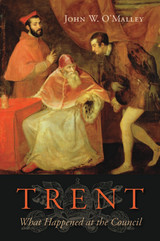
Winner of the John Gilmary Shea Prize
The Council of Trent (1545–1563), the Catholic Church’s attempt to put its house in order in response to the Protestant Reformation, has long been praised and blamed for things it never did. Now, in this first full one-volume history in modern times, John W. O’Malley brings to life the volatile issues that pushed several Holy Roman emperors, kings and queens of France, and five popes—and all of Europe with them—repeatedly to the brink of disaster.
During the council’s eighteen years, war and threat of war among the key players, as well as the Ottoman Turks’ onslaught against Christendom, turned the council into a perilous enterprise. Its leaders declined to make a pronouncement on war against infidels, but Trent’s most glaring and ironic silence was on the authority of the papacy itself. The popes, who reigned as Italian monarchs while serving as pastors, did everything in their power to keep papal reform out of the council’s hands—and their power was considerable. O’Malley shows how the council pursued its contentious parallel agenda of reforming the Church while simultaneously asserting Catholic doctrine.
Like What Happened at Vatican II, O’Malley’s Trent: What Happened at the Council strips mythology from historical truth while providing a clear, concise, and fascinating account of a pivotal episode in Church history. In celebration of the 450th anniversary of the council’s closing, it sets the record straight about the much misunderstood failures and achievements of this critical moment in European history.
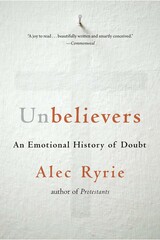
“How has unbelief come to dominate so many Western societies? The usual account invokes the advance of science and rational knowledge. Ryrie’s alternative, in which emotions are the driving force, offers new and interesting insights into our past and present.”
—Charles Taylor, author of A Secular Age
Why have societies that were once overwhelmingly Christian become so secular? We think we know the answer, pointing to science and reason as the twin culprits, but in this lively, startlingly original reconsideration, Alec Ryrie argues that people embraced unbelief much as they have always chosen their worldviews: through the heart more than the mind.
Looking back to the crisis of the Reformation and beyond, he shows how, long before philosophers started to make the case for atheism, powerful cultural currents were challenging traditional faith. As Protestant radicals eroded time-honored certainties and ushered in an age of anger and anxiety, some defended their faith by redefining it in terms of ethics, setting in motion secularizing forces that soon became transformational. Unbelievers tells a powerful emotional history of doubt with potent lessons for our own angry and anxious times.
“Well-researched and thought-provoking…Ryrie is definitely on to something right and important.”
—Christianity Today
“A beautifully crafted history of early doubt…Unbelievers covers much ground in a short space with deep erudition and considerable wit.”
—The Spectator
“Ryrie traces the root of religious skepticism to the anger, the anxiety, and the ‘desperate search for certainty’ that drove thinkers like…John Donne to grapple with church dogma.”
—New Yorker
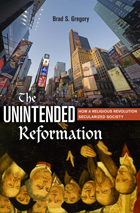
In a work that is as much about the present as the past, Brad Gregory identifies the unintended consequences of the Protestant Reformation and traces the way it shaped the modern condition over the course of the following five centuries. A hyperpluralism of religious and secular beliefs, an absence of any substantive common good, the triumph of capitalism and its driver, consumerism—all these, Gregory argues, were long-term effects of a movement that marked the end of more than a millennium during which Christianity provided a framework for shared intellectual, social, and moral life in the West.
Before the Protestant Reformation, Western Christianity was an institutionalized worldview laden with expectations of security for earthly societies and hopes of eternal salvation for individuals. The Reformation’s protagonists sought to advance the realization of this vision, not disrupt it. But a complex web of rejections, retentions, and transformations of medieval Christianity gradually replaced the religious fabric that bound societies together in the West. Today, what we are left with are fragments: intellectual disagreements that splinter into ever finer fractals of specialized discourse; a notion that modern science—as the source of all truth—necessarily undermines religious belief; a pervasive resort to a therapeutic vision of religion; a set of smuggled moral values with which we try to fertilize a sterile liberalism; and the institutionalized assumption that only secular universities can pursue knowledge.
The Unintended Reformation asks what propelled the West into this trajectory of pluralism and polarization, and finds answers deep in our medieval Christian past.
Tracing journeys of Cantonese migrants along the West River and its tributaries, this book describes the circulation of people through one of the world’s great river systems between the late sixteenth and mid-nineteenth centuries. Steven B. Miles examines the relationship between diaspora and empire in an upriver frontier, and the role of migration in sustaining families and lineages in the homeland of what would become a global diaspora. Based on archival research and multisite fieldwork, this innovative history of mobility explores a set of diasporic practices ranging from the manipulation of household registration requirements to the maintenance of split families.
Many of the institutions and practices that facilitated overseas migration were not adaptations of tradition to transnational modernity; rather, they emerged in the early modern era within the context of riverine migration. Likewise, the extension and consolidation of empire required not only unidirectional frontier settlement and sedentarization of indigenous populations. It was also responsible for the regular circulation between homeland and frontier of people who drove imperial expansion—even while turning imperial aims toward their own purposes of socioeconomic advancement.
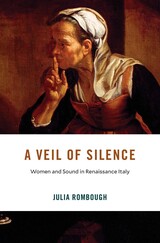
An illuminating study of early modern efforts to regulate sound in women’s residential institutions, and how the noises of city life—both within and beyond their walls—defied such regulation.
Amid the Catholic reforms of the sixteenth and seventeenth centuries, the number of women and girls housed in nunneries, reformatories, and charity homes grew rapidly throughout the city of Florence. Julia Rombough follows the efforts of legal, medical, and ecclesiastical authorities to govern enclosed women, and uncovers the experiences of the women themselves as they negotiated strict sensory regulations. At a moment when quiet was deeply entangled with ideals of feminine purity, bodily health, and spiritual discipline, those in power worked constantly to silence their charges and protect them from the urban din beyond institutional walls.
Yet the sounds of a raucous metropolis found their way inside. The noise of merchants hawking their wares, sex workers laboring and socializing with clients, youth playing games, and coaches rumbling through the streets could not be contained. Moreover, enclosed women themselves contributed to the urban soundscape. While some embraced the pursuit of silence and lodged regular complaints about noise, others broke the rules by laughing, shouting, singing, and conversing. Rombough argues that ongoing tensions between legal regimes of silence and the inevitable racket of everyday interactions made women’s institutions a flashpoint in larger debates about gender, class, health, and the regulation of urban life in late Renaissance Italy.
Attuned to the vibrant sounds of life behind walls of stone and sanction, A Veil of Silence illuminates a revealing history of early modern debates over the power of the senses.
From one of our foremost church historians comes an overarching analysis of the three modern Catholic councils—an assessment of what Catholicism was and has become today.
Catholic councils are meetings of bishops. In this unprecedented comparison of the three most recent meetings, John O’Malley traverses more than 450 years of Catholic history and examines the councils’ most pressing and consistent concerns: questions of purpose, power, and relevance in a changing world. By offering new, sometimes radical, even troubling perspectives on these convocations, When Bishops Meet analyzes the evolution of the church itself.
The Catholic Church today is shaped by the historical arc starting from Trent in the sixteenth century to Vatican II. The roles of popes, the laity, theologians, and others have varied from the bishop-centered Trent, to Vatican I’s declaration of papal infallibility, to a new balance of power in the mid-twentieth century. At Trent, lay people had direct influence on proceedings. By Vatican II, their presence was token. At each gathering, fundamental issues recurred: the relationship between bishops and the papacy, the very purpose of a council, and doctrinal change. Can the teachings of the church, by definition a conservative institution, change over time?
Councils, being ecclesiastical as well as cultural institutions, have always reflected and profoundly influenced their times. Readers familiar with John O’Malley’s earlier work as well as those with no knowledge of councils will find this volume an indispensable guide for essential questions: Who is in charge of the church? What difference did the councils make, and will there be another?
Here is a lively study of marriage and the family during the Reformation, primarily in Gemany and Switzerland, that dispels the commonly held notion of fathers as tyrannical and families as loveless.
Did husbands and wives love one another in Reformation Europe? Did the home and family life matter to most people? In this wide-ranging work, Steven Ozment has gathered the answers of contemporaries to these questions. His subject is the patriarchal family in Germany and Switzerland, primarily among Protestants. But unlike modern scholars from Philippe Ariès to Lawrence Stone, Ozment finds the fathers of early modern Europe sympathetic and even admirable. They were not domineering or loveless men, nor were their homes the training ground for passive citizenry in an age of political absolutism. From prenatal care to graveside grief, they expressed deep love for their wives and children. Rather than a place where women and children were bullied by male chauvinists, the Protestant home was the center of a domestic reform movement against Renaissance antifeminism and was an attempt to resolve the crises of family life. Demanding proper marriages for all women, Martin Luther and his followers suppressed convents and cloisters as the chief institutions of womankind’s sexual repression, cultural deprivation, and male clerical domination. Consent, companionship, and mutual respect became the watchwords of marriage. And because they did, genuine divorce and remarriage became possible among Christians for the first time.
This graceful book restores humanity to the Reformation family and to family history.

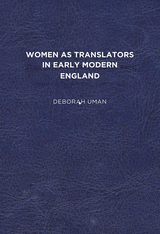
Women as Translators in Early Modern England offers a feminist theory of translation that considers both the practice and representation of translation in works penned by early modern women. It argues for the importance of such a theory in changing how we value women’s work. Because of England’s formal split from the Catholic Church and the concomitant elevation of the written vernacular, the early modern period presents a rich case study for such a theory. This era witnessed not only a keen interest in reviving the literary glories of the past, but also a growing commitment to humanist education, increasing literacy rates among women and laypeople, and emerging articulations of national sentiment. Moreover, the period saw a shift in views of authorship, in what it might mean for individuals to seek fame or profit through writing. Until relatively recently in early modern scholarship, women were understood as excluded from achieving authorial status for a number of reasons—their limited education, the belief that public writing was particularly scandalous for women, and the implicit rule that they should adhere to the holy trinity of “chastity, silence, and obedience.”
While this view has changed significantly, women writers are still understood, however grudgingly, as marginal to the literary culture of the time. Fewer women than men wrote, they wrote less, and their “choice” of genres seems somewhat impoverished; add to this the debate over translation as a potential vehicle of literary expression and we can see why early modern women’s writings are still undervalued. This book looks at how female translators represent themselves and their work, revealing a general pattern in which translation reflects the limitations women faced as writers while simultaneously giving them the opportunity to transcend these limitations. Indeed, translation gave women the chance to assume an authorial role, a role that by legal and cultural standards should have been denied to them, a role that gave them ownership of their words and the chance to achieve profit, fame, status and influence.
Published by University of Delaware Press. Distributed worldwide by Rutgers University Press.
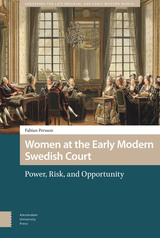
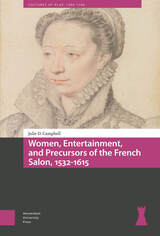
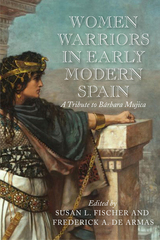
Published by University of Delaware Press. Distributed worldwide by Rutgers University Press.
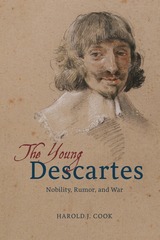
In The Young Descartes, Harold J. Cook tells the story of a man who did not set out to become an author or philosopher—Descartes began publishing only after the age of forty. Rather, for years he traveled throughout Europe in diplomacy and at war. He was present at the opening events of the Thirty Years' War in Central Europe and Northern Italy, and was also later involved in struggles within France. Enduring exile, scandals, and courtly intrigue, on his journeys Descartes associated with many of the most innovative free thinkers and poets of his day, as well as great noblemen, noblewomen, and charismatic religious reformers. In his personal life, he expressed love for men as well as women and was accused of libertinism by his adversaries.
These early years on the move, in touch with powerful people and great events, and his experiences with military engineering and philosophical materialism all shaped the thinker and philosopher Descartes became in exile, where he would begin to write and publish, with purpose. But though it is these writings that made ultimately made him famous, The Young Descartes shows that this story of his early life and the tumultuous times that molded him is sure to spark a reappraisal of his philosophy and legacy.
READERS
Browse our collection.
PUBLISHERS
See BiblioVault's publisher services.
STUDENT SERVICES
Files for college accessibility offices.
RECENTLY PUBLISHED





UChicago Accessibility Resources
home | accessibility | search | about | contact us
BiblioVault ® 2001 - 2024
The University of Chicago Press