Masterful…not only comprehensive and groundbreaking; it is a scintillating read. I couldn’t recommend this monograph more…a master class in reading the colonial archives against the grain.
-- Ernest Rafael Hartwell Sixteenth Century Journal
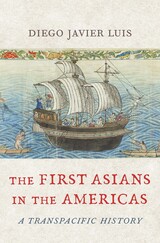
This book is a brilliant exercise of global microhistory and essential reading for anyone hoping to get a full picture of colonial Spanish America, Asian diaspora studies, or protoglobalization. The author never ceases to show empathy toward the people whose history he is carefully reconstructing from widely scattered fragments of evidence. Luis successfully conveys an emotional underpinning to the experience of the first Asians in the Americas in a way that any historian can appreciate and that, importantly, undergraduate and graduate history students should constantly be exposed to.
-- Rubén Carillo Martín Hispanic American Historical Review
A broadly thought-provoking book. …Although the modern Western use of ‘Asian’ is perhaps better (and arguably more benign) than the colonial use of ‘chino’ as an identifier, it suffers from much the same problem of ‘collapsing’ various ‘diverse ethnolinguistic groups’ to the benefit of some, perhaps, but the detriment of others. Luis’s book is a salutary reminder that all this started long ago.
-- Peter Gordon Asian Review of Books
Challenges [the] dominant framework to offer the most comprehensive analysis to date about the transnational migrations of approximately one hundred thousand Asians who traveled to the Americas from the late sixteenth century through the eighteenth century…essential reading for scholars of Asians
in the Americas, Afro-Asian studies, and colonial Latin American history.
-- Ramaesh J. Bhagirat-Rivera American Historical Review
Fascinating…While expertly summarizing and engaging existing historical studies, the author also indicates new avenues of research…[This] book thus stands as a bellwether for shifting trajectories of analysis that invite micro-historical follow-up.
-- Rainer Buschmann H-Net Reviews
Drawing upon an impressive array of sources spanning two oceans, three centuries, and four countries, Diego Javier Luis examines the first sustained movement of Asians to the Americas aboard Baroque Era Spanish trading ships sailing from the Philippines to Mexico…With its beautiful prose, The First Asians in the Americas reminds us that history—at its best—functions as an exchange of past and present, in which ‘the archival records of peoples long gone come alive as they lift off from tattered pages and alight in our minds’.
-- Alexander Jin Pacific Historical Review
Through rigorous archival use, historical and cultural analysis, and an approach through critical race theory, [this book] offers an invaluable perspective… [it] not only intellectually satisfies the reader with a necessary and innovative view on these issues but also makes us want to learn more about this essential and still insufficiently explored topic...will become a fundamental pillar within the discipline.
-- Javier Zapata Clavería Colonial Latin American Review
A monumental work of scholarship…Devoted to tracking the experiences and transformations of Asians in the Americas, the book sheds much needed light on a topic that has until relatively recently remained one of the dark spots of global history.
-- Juan José Rivas Moreno Southeast Asian Studies
Diego Javier Luis has expanded our understanding of Asian transpacific migration by studying the lives of both the free and the enslaved, focusing on the processes by which Asians were racialized…will be of interest to any scholar interested in how transoceanic spaces of movement and encounter have worked historically, and how they have helped shape subaltern lives.
-- Ricardo Padrón International Journal of Maritime History
Offers a valuable contribution to our understanding of the lived experiences of Asians who crossed the Pacific in the early modern period…enlightening and thought-provoking.
-- Kaori Mizukami International Quarterly for Asian Studies
Brilliantly demonstrates that the experiences of Asian peoples in the Americas are, plain and simple, part of history…calls us to expand the US-centric model of Asian American studies, while boldly urging us to go beyond the earliest iterations of the ‘model minority’.
-- Paula C. Park Journal of Latin American Cultural Studies
The First Asians in the Americas is essential reading for anybody interested in the histories of global migration, race, and colonization in the Americas. Through painstaking archival research in Spain, Mexico, the United States, and the Philippines, Diego Javier Luis offers a bold reconceptualization of Asian migration to the Americas and restores heretofore little-known people and communities to their rightful places in history.
-- Erika Lee, author of The Making of Asian America: A History
No clue is too small for this modern-day detective-historian. Diego Javier Luis has pieced together the most comprehensive and fascinating history to date of Asians in colonial Mexico.
-- Andrés Reséndez, author of Conquering the Pacific
A groundbreaking study of Asian diasporic experiences in the Spanish Empire. The decks of the Manila galleons, the coastal Acapulco-to-Colima corridor, and much of Pacific Mexico emerge here as spaces of Asian adaptability and social, cultural, and linguistic exchanges. Through the lens of global microhistory, Luis recovers and humanizes the history of colonial ‘chino’ populations in all their complexity.
-- Pablo Miguel Sierra Silva, author of Urban Slavery in Colonial Mexico
Diego Javier Luis has given us the first of its kind: a study of the transpacific Asian migration to the Americas under Spanish imperial rule. This book radically revolutionizes our understanding of race-making and mestizaje in the Spanish Americas and the Spanish transpacific.
-- Christina H. Lee, author of Saints of Resistance