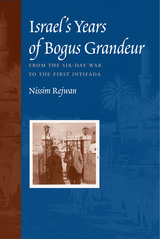
On the eve of the Six-Day War in 1967, Israel was nineteen years old and as much an adolescent as the average nineteen-year-old person. Issues of identity and transition were the talk among Israeli intellectuals, including the writer Nissim Rejwan. Was Israel a Jewish state or a democratic state? And, most frustratingly, who was a Jew? As Nancy Berg's foreword makes clear, these issues became more critical and complex in the two decades after the war as Israel matured into a regional power. Rejwan, an Iraqi-born Jew whose own fate was tied to the answers, addresses the questions of those days in his letters, essays, and remembrances collected in Israel's Years of Bogus Grandeur.
Israel's overwhelming victory in 1967 brought control of the former Palestinian territories; at the same time, Oriental Jews (i.e., those not from Europe) became a majority in the Israeli population. The nation, already surrounded by hostile, recently humiliated Arab neighbors, now had an Arab majority (Jewish, Muslim, Druze, and Christian) within its borders—yet European Jews continued to run the country as their own. Rejwan wrote tirelessly about the second-class status of Arab Israelis (and especially of Arab Jews), encouraging a more inclusive attitude that might eventually help heal the wounds left by the Six-Day War. His studies in sociology at Tel Aviv University informed his work. For his cause, Rejwan lost his job and many of his friends but never his pen. Through Munich, Entebbe, political scandals, economic crises, and the beginning of the Intifada, Rejwan narrates Israel's growing pains with feisty wit and unwavering honesty.