front cover of Archaeological Investigations in a Northern Albanian Province
Archaeological Investigations in a Northern Albanian Province
Results of the Projekti Arkeologjik i Shkodrës (PASH): Volume One: Survey and Excavation Results
Michael L. Galaty and Lorenc Bejko, Editors
University of Michigan Press, 2023
To date, very few northern Albanian archaeological sites have been surveyed and excavated. Situated beyond the reach, and allure, of the Classical Greek colonies of south-central Albania, the region has drawn less scholarly attention. But in various ways, northern Albania is just as important to the ongoing archaeological debates regarding the origins of inequality and the rise of social complexity.

Some of the earliest and largest hill forts and tumuli (burial mounds) in Albania, dating to the Bronze and Iron Age, are located in Shkodër. Shkodër (Rozafa) Castle became the capital of the so-called Illyrian Kingdom, which was conquered by Rome in the early 3rd century BC. This research report, focused on the province of Shkodër, is based on five years of field and laboratory work and is the first synthetic archaeological treatment of this region.

The results of the Projekti Arkeologjik i Shkodrës (or PASH) are presented here in two volumes. Volume 1 includes geological context, a literature review, historical background, and reports on the regional survey and test excavations at three settlements and three tumuli. In Volume 2, the authors describe the artifacts recovered through survey and excavation, including chipped stone, small finds, and pottery from the prehistoric, Classical, Roman, medieval, and post-medieval periods. They also present results of faunal, petrographic, chemical, carpological, and strontium isotope analyses of the artifacts. Extensive supporting data is available on the University of Michigan's Deep Blue data repository: 
https://doi.org/10.7302/xnpy-0e60

These two volumes place northern Albania—and the Shkodër Province in particular—at the forefront of archaeological research in the Balkans.

 
[more]

front cover of Archaeological Investigations in a Northern Albanian Province
Archaeological Investigations in a Northern Albanian Province
Results of the Projekti Arkeologjik i Shkodrës (PASH): Volume Two: Artifacts and Artifact Analysis
Michael L. Galaty and Lorenc Bejko, Editors
University of Michigan Press, 2023
To date, very few northern Albanian archaeological sites have been surveyed and excavated. Situated beyond the reach, and allure, of the Classical Greek colonies of south-central Albania, the region has drawn less scholarly attention. But in various ways, northern Albania is just as important to the ongoing archaeological debates regarding the origins of inequality and the rise of social complexity.

Some of the earliest and largest hill forts and tumuli (burial mounds) in Albania, dating to the Bronze and Iron Age, are located in Shkodër. Shkodër (Rozafa) Castle became the capital of the so-called Illyrian Kingdom, which was conquered by Rome in the early 3rd century BC. This research report, focused on the province of Shkodër, is based on five years of field and laboratory work and is the first synthetic archaeological treatment of this region.

The results of the Projekti Arkeologjik i Shkodrës (or PASH) are presented here in two volumes. Volume 1 includes geological context, a literature review, historical background, and reports on the regional survey and test excavations at three settlements and three tumuli. In Volume 2, the authors describe the artifacts recovered through survey and excavation, including chipped stone, small finds, and pottery from the prehistoric, Classical, Roman, medieval, and post-medieval periods. They also present results of faunal, petrographic, chemical, carpological, and strontium isotope analyses of the artifacts. Extensive supporting data is available on the University of Michigan's Deep Blue data repository: 
https://doi.org/10.7302/xnpy-0e60

These two volumes place northern Albania—and the Shkodër Province in particular—at the forefront of archaeological research in the Balkans.

 
[more]

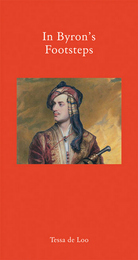
front cover of In Byron's Footsteps
In Byron's Footsteps
Tessa de Loo
Haus Publishing, 2010
When Tessa de Loo saw Albania for the first time, no foreigners were allowed to enter. Filled with a great curiosity, longing, and a sense of wonderment by this isolated land, de Loo gazed toward the mountains that stood like "the backs of patiently waiting elephants" across the water from Corfu. Inspired by the famous Thomas Phillips portrait of Lord Byron in Albanian national costume, and enthralled by the image of Lord Byron since her teenage years, she sets about exploring not only his physical journey, but attempts to understand his inner one as well. de Loo stole her way in and found a country suffering the hardships of post-communist reality and the constant and sometimes fractious clash between tradition and modernity. In the tradition of Bruce Chatwin, de Loo, the award-winning author of The Twins, has written a fascinating travelogue and a very personal reassessment of the a formative chapter in Lord Byron's short life.

[more]

front cover of Royal Fraud
Royal Fraud
The Story of Albania’s First and Last King
Robert Austin
Central European University Press, 2024

Beginning its narrative in 1961, when Albanian King Zog I died in a Paris hospital after 22 years in exile, this book tells the colourful story of this Balkan country's first and only monarch. The road to becoming Europe's youngest president in 1925 and then king of Albania in 1928 was paved with feuds and assassinations, a political career-path common in the region. He craved the throne for several reasons; the Balkans were mostly run by kings, and Zog wanted to impress his mother and also give his six sisters an easy social rise. 

Once king, his accomplishments were decidedly meagre. He spent most of his time keeping up appearances as a monarch despite the obvious fraud he had imposed on an illiterate and uninterested population. His one great success was that he had almost all his opponents assassinated, usually in broad daylight abroad. 

Zog retained his power until his "friend" Mussolini ousted him in 1939. On the surface a Westernizer, this self-proclaimed ruler left Albania almost as he found it, with almost no roads or trains, thoroughly uneducated and utterly impoverished. 

In his book, Robert Austin combines Zog’s adventurous life story with a studious analysis of Albania's political history from the fall of the Ottoman Empire to the threshold of Euro-Atlantic integration. 

[more]

front cover of Sugarland
Sugarland
The Transformation of the Countryside in Communist Albania
Artan R. Hoxha
Central European University Press, 2023

In this historical monograph on non-urban communist Albania, Artan Hoxha discusses the ambitious development project that turned a swampland into a site of sugar production after 1945. The author seeks to free the history of Albanian communism from the stereotypes that still circulate about it with stigmas of an aberration, paranoia, extreme nationalism, and xenophobia.

This micro-history of the agricultural and industrial transformation of a zone in southeastern Albania, explores a wide range of issues including modernization, development, and social, cultural, and economic policies. In addition to analyzing the collectivization of agriculture, Hoxha shows how communism affected the lives of ordinary rural people. As elsewhere in the Communist Bloc, the Albanian regime borrowed developmental projects from the past and implemented them using social mobilization and a command economy. The abundant archival resources along with interviews in the field attest to the authorities’ efforts to increase consumption and to radically transform people’s tastes. But the book argues that despite the repressive environment, people involved in the sugar project were not simply passive receivers of models from the nation's capital. The author also describes that—in defiance of Cold War bipolarity—technological requirements and social policy considerations required a degree of engagement with the broader world.

[more]

front cover of Tirana Modern
Tirana Modern
Biblio-Ethnography on the Margins of Europe
Matthew Rosen
Vanderbilt University Press, 2022
Guided by the thesis that literature can transform social reality, Tirana Modern draws on ethnographic and historical material to examine the public culture of reading in modern Albania. As its starting point, this book asks: How has Albanian literature and literary translation shaped social action during the longue durée of Albanian modernity?

Drawing on material collected through fieldwork with a community of readers, writers, and translators attached to the independent Albanian publisher Pika pa sipërfaqe (Point without Surface), Tirana Modern provides a tightly focused ethnography of literary culture in Albania that brings into relief the more general dialectic between social imagination and social reality as mediated by reading and literature.
[more]

front cover of Traveler, Scholar, Political Adventurer
Traveler, Scholar, Political Adventurer
A Transylvanian Baron at the Birth of Albanian Independence: The memoirs of Franz Nopcsa
Robert Elsie
Central European University Press, 2014
The Austro-Hungarian aristocrat of Transylvanian origin, Baron Franz Nopcsa (1877-1933), was one of the most adventuresome travelers and scholars of Southeast Europe in the early decades of the twentieth century. He was also a paleontologist of renown and a noted geologist of the Balkan Peninsula : many of his assumptions have been confirmed by science. The Memoirs of this fascinating figure deal mainly with his travels in the Balkans, and specifically in the remote and wild mountains of northern Albania, in the years from 1903 to 1914. They thus cover the period of Ottoman Rule, the Balkan Wars and the outbreak of the First World War. Nopcsa was a keen adventurer who hiked through regions of northern Albania. With time, he became a leading expert in Albanian studies. He was also deeply involved in the politics of the period. In 1913, Nopcsa even offered himself as a candidate for the vacant Albanian throne. The Introduction also tells of Nopcsa's tragic death: he shot his Albanian secretary and partner before killing himself. The memoirs themselves reveal some references to his homosexuality for those who can read between the lines.
[more]


Send via email Share on Facebook Share on Twitter