
 A SCHOLARLY BOOK REPOSITORY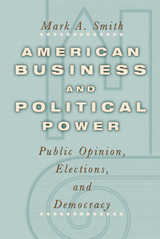
Rather than succumbing to corporate America, Smith argues, representatives paradoxically become more responsive to their constituents when facing a united corporate front. Corporations gain the most influence over legislation when they work with organizations such as think tanks to shape Americans' beliefs about what government should and should not do.
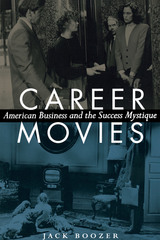
Achieving the American Dream became inextricably linked with career/business success after World War II, as an increasingly consumerist America learned to define the dream through possessions and status. Not surprisingly, Hollywood films in the postwar years reflected the country's preoccupation with work and career success, offering both dramatic and comedic visions of the career quest and its effects on personal fulfillment, family relations, women's roles, and the creation (or destruction) of just and caring communities.
In this book, Jack Boozer argues that the career/business film achieved such variety and prominence in the years between 1945 and 2001 that it should be considered a legitimate film genre. Analyzing numerous well-known films from the entire period, he defines the genre as one in which a protagonist strives for career success that often proves to be either elusive despite hard work, or unfulfilling despite material rewards and status. Boozer also explores several distinct subgenres of the career movie—the corporate executive films of the 1950s; the career struggles of (single, married, and/or parenting) women; the entrepreneurial film as it is also embodied in texts about immigrants and racial and ethnic minorities and business-oriented femmes fatales; the explosion of promotionalism and the corporatization of employment; and, finally, the blurring of work and private life in the brave new world of the televirtuality film.

Occupational Mobility in American Business and Industry, 1928–1952 was first published in 1955. Minnesota Archive Editions uses digital technology to make long-unavailable books once again accessible, and are published unaltered from the original University of Minnesota Press editions.
Is the American occupational system rigid or flexible? How has it changed in the last twenty-five years? What factors help to influence the selection of business leaders? Questions like these are answered in this comprehensive study of occupational mobility, made by two social scientists at the University of Chicago. The study is based on information about 8,000 executives in the largest business firms of America. The rate of movement of men from various occupational backgrounds into positions of business leadership today is compared with that of 1928, as reported in the well-known study of Taussig and Joslyn, American Business Leaders. Warner and Abegglen present their complete research data, many of the findings in tabular form. The research encompasses all kinds of businesses and industries in every part of the country and persons at all levels of top management.
READERS
Browse our collection.
PUBLISHERS
See BiblioVault's publisher services.
STUDENT SERVICES
Files for college accessibility offices.
RECENTLY PUBLISHED




UChicago Accessibility Resources
home | accessibility | search | about | contact us
BiblioVault ® 2001 - 2026
The University of Chicago Press