
 A SCHOLARLY BOOK REPOSITORY
Foucault analyzes the practices of self-examination and confession in Greco-Roman antiquity and in the first centuries of Christianity in order to highlight a radical transformation from the ancient Delphic principle of “know thyself” to the monastic precept of “confess all of your thoughts to your spiritual guide.” His aim in doing so is to retrace the genealogy of the modern subject, which is inextricably tied to the emergence of the “hermeneutics of the self”—the necessity to explore one’s own thoughts and feelings and to confess them to a spiritual director—in early Christianity. According to Foucault, since some features of this Christian hermeneutics of the subject still determine our contemporary “gnoseologic” self, then the genealogy of the modern subject is both an ethical and a political enterprise, aiming to show that the “self” is nothing but the historical correlate of a series of technologies built into our history. Thus, from Foucault’s perspective, our main problem today is not to discover what “the self” is, but to try to analyze and change these technologies in order to change its form.
In contemporary discussions of abortion, both sides argue well-worn positions, particularly concerning the question, When does human life begin? Though often invoked by the Catholic Church for support, Thomas Aquinas in fact held that human life begins after conception, not at the moment of union. But his overall thinking on questions of how humans come into being, and cease to be, is more subtle than either side in this polarized debate imagines. Fabrizio Amerini—an internationally-renowned scholar of medieval philosophy—does justice to Aquinas’ views on these controversial issues.
Some pro-life proponents hold that Aquinas’ position is simply due to faulty biological knowledge, and if he knew what we know today about embryology, he would agree that human life begins at conception. Others argue that nothing Aquinas could learn from modern biology would have changed his mind. Amerini follows the twists and turns of Aquinas’ thinking to reach a nuanced and detailed solution in the final chapters that will unsettle familiar assumptions and arguments.
Systematically examining all the pertinent texts and placing each in historical context, Amerini provides an accurate reconstruction of Aquinas’ account of the beginning and end of human life and assesses its bioethical implications for today. This major contribution is available to an English-speaking audience through translation by Mark Henninger, himself a noted scholar of medieval philosophy.

Examining Genesis in a philosophical light, Kass presents it not as a story of what happened long ago, but as the enduring story of humanity itself. He asserts that the first half of Genesis contains insights about human nature that “rival anything produced by the great philosophers.” Kass here reads these first stories—from Adam and Eve to the tower of Babel—as a mirror for self-discovery that reveals truths about human reason, speech, freedom, sexual desire, pride, shame, anger, and death. Taking a step further in the second half of his book, Kass explores the struggles in Genesis to launch a new way of life that addresses mankind’s morally ambiguous nature by promoting righteousness and holiness.
Even readers who don’t agree with Kass’s interpretations will find The Beginning of Wisdom acompelling book—a masterful philosophical take on one of the world’s seminal religious texts.
“A learned and fluent, delightfully overstuffed stroll through the Gates of Eden. . . . Mix Harold Bloom with Stephen Jay Gould and you’ll get something like Kass. A wonderfully intelligent reading of Genesis.”—Kirkus Reviews, starred review
“Throughout his book, Kass uses fruitful, fascinating techniques for getting at the heart of Genesis. . . . Innumerable times [he] makes a reader sit back and rethink what has previously been tediously familiar or baffling.”—Washington Post
“It is important to state that this is a book not merely rich, but prodigiously rich with insight. Kass is a marvelous reader, sensitive and careful. His interpretations surprise again and again with their cogency and poignancy.”—Jerusalem Post
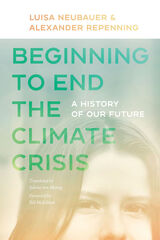
“Act as though your house is on fire. Because it is.” Following Greta Thunberg, millions of young climate activists have been taking to the streets around the globe as part of the Fridays For Future movement. They demand that we “unite behind the science,” as, for too long, climate scientists have been ringing the alarm bells about rising temperatures, tipping points, and the devastating consequences of extreme weather—but politicians do nothing.
So how do you begin to end the climate crisis? Luisa Neubauer and Alexander Repenning begin by telling stories. Neubauer cofounded the youth climate activist group in Germany and has become its most prominent voice. In this book she and Repenning weave in personal accounts of their evolution as climate activists with a thorough analysis of how climate change impacts their generation, and what every one of us can and must do about it. The young and old in the United States and around the world can learn valuable lessons from their European counterparts.
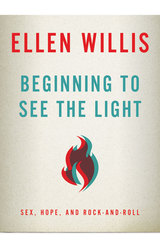
From the New Yorker’s inimitable first pop music critic comes this pioneering collection of essays by a conscientious writer whose political realm is both radical and rational, and whose prime preoccupations are with rock ’n’ roll, sexuality, and above all, freedom. Here Ellen Willis assuredly captures the thrill of music, the disdain of authoritarian culture, and the rebellious spirit of the ’60s and ’70s.

Beginning with Plato was first published in 1944. Minnesota Archive Editions uses digital technology to make long-unavailable books once again accessible, and are published unaltered from the original University of Minnesota Press editions.
These selected poems of Joseph Warren Beach range in time from the present year to the age of Pericles; in place from California to Shangri-La, from Paris to the Middle West; in theme from current political issues to the timeless problems of Greek philosophy; in mood from tender love to trenchant satire. In these fifty-odd poems is a rich variety—Anthony Eden and Cordell Hull, the French capital in the summer preceding the first World War, the skylines of the American West, the skylines of Minneapolis, soldier and swan maiden, and the inner life of man wherever lived. Mr. Beach can tell home truths without bitterness, and handle nostalgic emotion without sentimentality.
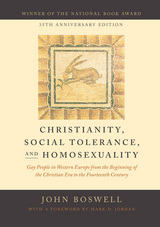
Now in this thirty-fifth anniversary edition with a new foreword by leading queer and religious studies scholar Mark D. Jordan, Christianity, Social Tolerance, and Homosexuality is still fiercely relevant. This landmark book helped form the disciplines of gay and gender studies, and it continues to illuminate the origins and operations of intolerance as a social force.
John Boswell's National Book Award-winning study of the history of attitudes toward homosexuality in the early Christian West was a groundbreaking work that challenged preconceptions about the Church's past relationship to its gay members—among them priests, bishops, and even saints—when it was first published twenty-five years ago. The historical breadth of Boswell's research (from the Greeks to Aquinas) and the variety of sources consulted make this one of the most extensive treatments of any single aspect of Western social history. Christianity, Social Tolerance, and Homosexuality, still fiercely relevant today, helped form the disciplines of gay and gender studies, and it continues to illuminate the origins and operations of intolerance as a social force.
Originally conceived as a centennial history of Chicago, the project became, under the guidance of renowned historian Bessie Louise Pierce, a definitive, three-volume set describing the city’s growth—from its humble frontier beginnings to the horrors of the Great Fire, the construction of some of the world’s first skyscrapers, and the opulence of the 1893 World’s Fair. Pierce and her assistants spent over forty years transforming historical records into an inspiring human story of growth and survival.
Rich with anecdotal evidence and interviews with the men and women who made Chicago great, all three volumes will now be available for the first time in years. A History of Chicago will be essential reading for anyone who wants to know this great city and its place in America.
“With this rescue of its history from the bright, impressionable newspapermen and from the subscription-volumes, Chicago builds another impressive memorial to its coming of age, the closing of its first ‘century of progress.’”—E. D. Branch, New York Times (1937)

This volume contains fourteen essays by authoritative academics studying the field of mystery and detective fiction. The essays all concentrate on the first novels in established series, analyzing ways in which the opening books of the series do or do not create patterns followed in succeeding novels.
2021 PROSE Awards Finalist, Music & the Performing Arts
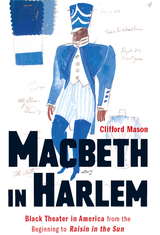
In 1936 Orson Welles directed a celebrated all-black production of Macbeth that was hailed as a breakthrough for African Americans in the theater. For over a century, black performers had fought for the right to perform on the American stage, going all the way back to an 1820s Shakespearean troupe that performed Richard III, Othello, and Macbeth, without relying on white patronage.
"Macbeth" in Harlem tells the story of these actors and their fellow black theatrical artists, from the early nineteenth century to the dawn of the civil rights era. For the first time we see how African American performers fought to carve out a space for authentic black voices onstage, at a time when blockbuster plays like Uncle Tom’s Cabin and The Octoroon trafficked in cheap stereotypes. Though the Harlem Renaissance brought an influx of talented black writers and directors to the forefront of the American stage, they still struggled to gain recognition from an indifferent critical press.
Above all, "Macbeth" in Harlem is a testament to black artistry thriving in the face of adversity. It chronicles how even as the endemic racism in American society and its theatrical establishment forced black performers to abase themselves for white audiences’ amusement, African Americans overcame those obstacles to enrich the nation’s theater in countless ways.

Modern Hebrew for Beginners—which is now revised and updated—and Modern Hebrew for Intermediate Students are the core of a multimedia program for the college-level Hebrew classroom developed at the University of Texas at Austin in the early 2000s. Within an intensive framework of instruction that assumes six weekly hours in the classroom, the program provides for two semesters of instruction, at the end of which most successful students will reach the intermediate-mid or intermediate-high levels of proficiency in speaking and reading, and some will reach advanced-low proficiency, as defined by the American Council on the Teaching of Foreign Languages (ACTFL).
In addition to a variety of written exercises, the workbook includes vocabulary lists, reading selections, discussions of cultural topics, illustrations of grammar points, notes on registers, suggestions for class and individual activities, and glossaries. The workbook is complemented by a website (http://www.laits.utexas.edu/hebrew) that provides short video segments originally scripted and filmed in Israel and the United States, vocabulary flashcards with sound, interactive exercises on topics included in the workbook, sound files parallel to the reading selections in the workbook, and additional materials that enhance the learning experience. The stability of the workbook, combined with the dynamic nature of the website and the internet searches the students are directed to conduct, allows language instructors to reshape the curriculum and adapt it to the needs of their students and the goals of their programs.
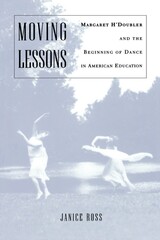
Ross brings together many discourses—from dance history, pedagogical theory, women's history, feminist theory, American history, and the history of the body—in intelligent, exciting, and illuminating ways and adds a new chapter to each of them. She shows how H'Doubler, like Isadora Duncan and other modern dancers, helped to raise dance in the eyes of the middle class from its despised status as lower-class entertainment and "dangerous" social interaction to a serious enterprise. Taking a nuanced critical approach to the history of women's bodies and their representations, Moving Lessons fills a very large gap in the history of dance education.
A comprehensive study of public culture, The Newton Wars and the Beginning of the French Enlightenment digsbelow the surface of the commonplace narratives that link Newton with Enlightenment thought to examine the actual historical changes that brought them together in eighteenth-century time and space. Drawing on the full range of early modern scientific sources, from studied scientific treatises and academic papers to book reviews, commentaries, and private correspondence, J. B. Shank challenges the widely accepted claim that Isaac Newton’s solitary genius is the reason for his iconic status as the father of modern physics and the philosophemovement.
For Derrida, the problem of genesis in Husserl's philosophy is that both temporality and meaning must be generated by prior acts of the transcendental subject, but transcendental subjectivity must itself be constituted by an act of genesis. Hence, the notion of genesis in the phenomenological sense underlies both temporality and atemporality, history and philosophy, resulting in a tension that Derrida sees as ultimately unresolvable yet central to the practice of phenomenology.
Ten years later, Derrida moved away from phenomenology entirely, arguing in his introduction to Husserl's posthumously published Origin of Geometry and his own Speech and Phenomena that the phenomenological project has neither resolved this tension nor expressly worked with it. The Problem of Genesis complements these other works, showing the development of Derrida's approach to phenomenology as well as documenting the state of phenomenological thought in France during a particularly fertile period, when Levinas, Sartre, Merleau-Ponty, Ricoeur, and Tran-Duc-Thao, as well as Derrida, were all working through it. But the book is most important in allowing us to follow Derrida's own development as a philosopher by tracing the roots of his later work in deconstruction to these early critical reflections on Husserl's phenomenology.
"A dissertation is not merely a prerequisite for an academic job. It may set the stage for a scholar's life project. So, the doctoral dissertations of Max Weber and Jacques Derrida, never before available in English, may be of more than passing interest. In June, the University of Chicago Press will publish Mr. Derrida's dissertation, The Problem of Genesis in Husserl's Philosophy, which the French philosopher wrote in 1953-54 as a doctoral student, and which did not appear in French until 1990. From the start, Mr Derrida displayed his inventive linguistic style and flouting of convention."—Danny Postel, Chronicle of Higher Education
Set in Petersburg in 1857, on the eve of the great reforms that would include the emancipation of the serfs, Prologue expresses the author's hostility toward Russian liberals, their halfhearted attempts to alleviate the sufferings of peasants, and their insufficient support of revolution, while also exploring the obstacles in the path of women's social and personal development in the Victorian era. Michael R. Katz's new translation makes this singular work available to the non-Russian reading public for the first time.
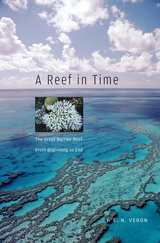
Like many coral specialists fifteen years ago, J. E. N. Veron thought Australia's Great Barrier Reef was impervious to climate change. "Owned by a prosperous country and accorded the protection it deserves, it would surely not go the way of the Amazon rain forest or the parklands of Africa, but would endure forever. That is what I thought once, but I think it no longer." This book is Veron's Silent Spring for the world's coral reefs.
Veron presents the geological history of the reef, the biology of coral reef ecosystems, and a primer on what we know about climate change. He concludes that the Great Barrier Reef and, indeed, most coral reefs will be dead from mass bleaching and irreversible acidification within the coming century unless greenhouse gas emissions are curbed. If we don't have the political will to confront the plight of the world's reefs, he argues, current processes already in motion will become unstoppable, bringing on a mass extinction the world has not seen for 65 million years.
Our species has cracked its own genetic code and sent representatives of its kind to the moon--we can certainly save the world's reefs if we want to. But to achieve this goal, we must devote scientific expertise and political muscle to the development of green technologies that will dramatically reduce greenhouse emissions and reverse acidification of the oceans.

But there is a dark underside to the exercise of these skills. A growing number of babies live only to be tethered to life-support systems, unconscious or suffering incessant pain for years and sometimes for the duration of their lives. The ethical issues raised by these children are among the most difficult in our society. Should life be maintained no matter what its quality? Or is there a point at which treatment should be stopped on humane grounds? Who is to make decisions on continuing or ending therapy for damaged children? Is the law a suitable instrument for regulating medical decisions in intensive care nurseries? Should the growing cost of intensive care influence therapy decisions?
Special Care explores the moral and legal issues in neonatal intensive care. Fred M. Frohock spent four months in a special care nursery, observing the daily actions of doctors and nurses and interviewing staff and parents of patients. This engaging, human drama is told through the author's own journal entries interspersed with generous excerpts from taped interviews that display the practical reasoning of staff and parents as they address the moral problems raised by intensive care medicine. Several case studies of infants highlight the often contradictory directions in which medical staffs are pulled and the painful decisions that doctors and parents together are often called upon to make. The result is a book that reconstructs the ordinary life of a neonatal nursery and presents the moral views of those who are most intimately involved in therapy decisions.
This book is an urgently needed entry in the current discussions of treatment for badly damaged babies. Frohock argues that our tradition of rights language, which rests on the premise that we know what a human being is, is inappropriate when dealing with the paradoxes of decision making in neonatal nurseries. Calling for a new moral vocabulary better adapted to the world of medicine, he introduces the notion of harm in place of rights, a concept drawn from medicine's Hippocratic oath that pledges to "do no harm," as a way to begin framing questions and making decisions. Special Care will interest anyone who wants to understand medical decisions at the margins of human life.
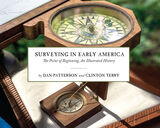
In Surveying Early America: The Point of Beginning, An Illustrated History, award-winning photographer Dan Patterson and American historian Clinton Terry vividly and succinctly unpack the profession of surveying during the eighteenth century. Over 100 full color photographs exclusively shot for the book depict authentic and historically accurate reproductions of techniques and tools through the use of American reenactors from the Department of Geographer, which provide an interpretive look at surveying as a primary means to building the American nation.
Through the lens of Patterson’s camera and Terry’s narrative, readers see what Washington saw as he learned his trade, explored the vast American wilderness, and occasionally laid personal claim to great expanses of land. Readers are visually and intellectually immersed in the historically accurate details of the surveying practices of George Washington, Virginia’s first surveyor and his team.
Step-by-step, readers learn how early America, in particular the east to the Ohio River Valley was initially divided and documented. Terry characterizes both the profession and methods of land measurement and surveying in British colonial North America—techniques that did not substantially change until the invention of GPS technology 200 years later. Along the way Terry details the various tools of the trade early surveyors used.
Photographer Dan Patterson, working with the Department of the Geographer, restages Washington’s actual expeditions during his time with the Geographers to the Army, the technical staff department consisting of American and French soldiers, whose work in the field supported the Continental Army. Patterson brilliantly displays the processes and instruments Washington used 260 years ago.
Together Ohio based photographer and author team up to create a single story, expanding the understanding of primary source material for general readers and those with a passion for early American history.
We know the universe has a history, but does it also have a story of self-creation to tell? Yes, in Roy R. Gould’s account. He offers a compelling narrative of how the universe—with no instruction other than its own laws—evolved into billions of galaxies and gave rise to life, including humans who have been trying for millennia to comprehend it. Far from being a random accident, the universe is hard at work, extracting order from chaos.
Making use of the best current science, Gould turns what many assume to be true about the universe on its head. The cosmos expands inward, not outward. Gravity can drive things apart, not merely together. And the universe seems to defy entropy as it becomes more ordered, rather than the other way around. Strangest of all, the universe is exquisitely hospitable to life, despite its being constructed from undistinguished atoms and a few unexceptional rules of behavior. Universe in Creation explores whether the emergence of life, rather than being a mere cosmic afterthought, may be written into the most basic laws of nature.
Offering a fresh take on what brought the world—and us—into being, Gould helps us see the universe as the master of its own creation, not tethered to a singular event but burgeoning as new space and energy continuously stream into existence. It is a very old story, as yet unfinished, with plotlines that twist and churn through infinite space and time.
Utah’s leading social scientists and population-related scholars draw on their specific areas of expertise and analyze Utah’s population using recent sources of data such as the 2000 U.S. Census. The chapters are organized into three broad topical sections: the foundations of Utah’s population (basic demographics), how the nature of the population affects our daily lives (quality of life issues), and the public policy challenges that will face Utah’s leaders (emerging issues).
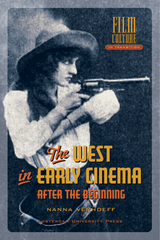
Verhoeff analyzes the earliest American and European Westerns—made between 1894 and 1915—and finds them to be an international repository for anxieties about modernity and identity, not the instructional morality tales we assume them to be. She draws on an array of archival materials—photography, paintings, Wild West shows, popular ethnographic studies, and pulp literature—to locate these early Westerns more precisely in their original social and cultural contexts. These early films—which coincided with the “closing” of the West and rises in rates of immigration, railroad travel, and urbanization—drove the transformation of film, Verhoeff argues, from just another new technology into the dominant cultural vehicle for dealing with issues of national and personal nostalgia, as well as uncertainty in the face of modernity. From these fragmentary early films Verhoeff extracts a rich historical analysis that radically reorients our view of the first two decades of cinema history in America and provocatively connects the evolution of Westerns to our transition today into a new media culture.
The West in Early Cinema challenges established history and criticism of the Western film and will be an invaluable resource for the film scholar and John Wayne fan alike.
READERS
Browse our collection.
PUBLISHERS
See BiblioVault's publisher services.
STUDENT SERVICES
Files for college accessibility offices.
RECENTLY PUBLISHED


UChicago Accessibility Resources
home | accessibility | search | about | contact us
BiblioVault ® 2001 - 2024
The University of Chicago Press