
 A SCHOLARLY BOOK REPOSITORY
Results by Title
3 books about Antislavery
3 books about Antislavery
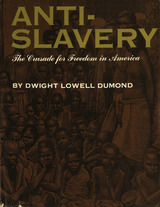
Antislavery
The Crusade for Freedom in America
Dwight Lowell Dumond
University of Michigan Press, 1961
Beliving all men to be created equal, we plundered peaceful nations, hunted men like wild beasts, and advertised and sold them with cattle and hogs. Believing freedom to be the sacred right of every man, we made nearly four million men slaves. This work of dedicated scholarship and immense learning reveals with extraordinary force the truth behind the Civil War. Year by year slavery in the United States became more sinister. It contaminated the body politic, it tainted all institutional life, it became a colossus of arbitrary power and greed. On these pages you will see battle waged in constitutional conventions, legistlative halls, courtrooms, churches, schools, in the hearts of men, and finally on the battle field. You will see ill manners turn to brutality. Printing presses are destroyed, schools closed, churches, private homes, and public buildings burned, the mails pillaged, men beaten, stoned, hanged, and shot. And there appear the men and women who before the Civil War courageously fought that all America might be free: the mystic John Woolman, tailor from New Jersey; the distinguished Philadelphia physician Benjamin Rush; the most remarkable Samuel Doak; the brilliant Denmark Vesey; the lonely, wandering saddle maker, Benjamin Lundy; the fearless Angelina Grimke. This life work of the notable American historian Dwight L. Dumond is a major testament for our time, essential reading for everyone interested in justice and equality under the law. The Declaration of Independence assumes new dignity and importance. Birney, Garrison, Lundy, Weld, and a dozen other abolitionists emerge as superior in integrity, patriotism, and vision. Tricky legalistic defenses fall before the frankness of the defenders of human rights. Natural rights, the equality of man, and the higher law come back with pristine gusto. A basic text in the history of race relations and the origins of the Civil War, Antislavery tells of belief, betrayal, and glory in the crusade for freedom in America.
[more]
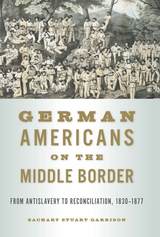
German Americans on the Middle Border
From Antislavery to Reconciliation, 1830–1877
Zachary Stuart Garrison
Southern Illinois University Press, 2020
Before the Civil War, Northern, Southern, and Western political cultures crashed together on the middle border, where the Ohio, Mississippi, and Missouri Rivers meet. German Americans who settled in the region took an antislavery stance, asserting a liberal nationalist philosophy rooted in their revolutionary experience in Europe that emphasized individual rights and freedoms. By contextualizing German Americans in their European past and exploring their ideological formation in failed nationalist revolutions, Zachary Stuart Garrison adds nuance and complexity to their story.
Liberal German immigrants, having escaped the European aristocracy who undermined their revolution and the formation of a free nation, viewed slaveholders as a specter of European feudalism. During the antebellum years, many liberal German Americans feared slavery would inhibit westward progress, and so they embraced the Free Soil and Free Labor movements and the new Republican Party. Most joined the Union ranks during the Civil War.
After the war, in a region largely opposed to black citizenship and Radical Republican rule, German Americans were seen as dangerous outsiders. Facing a conservative resurgence, liberal German Republicans employed the same line of reasoning they had once used to justify emancipation: A united nation required the end of both federal occupation in the South and special protections for African Americans. Having played a role in securing the Union, Germans largely abandoned the freedmen and freedwomen. They adopted reconciliation in order to secure their place in the reunified nation. Garrison’s unique transnational perspective to the sectional crisis, the Civil War, and the postwar era complicates our understanding of German Americans on the middle border.
Liberal German immigrants, having escaped the European aristocracy who undermined their revolution and the formation of a free nation, viewed slaveholders as a specter of European feudalism. During the antebellum years, many liberal German Americans feared slavery would inhibit westward progress, and so they embraced the Free Soil and Free Labor movements and the new Republican Party. Most joined the Union ranks during the Civil War.
After the war, in a region largely opposed to black citizenship and Radical Republican rule, German Americans were seen as dangerous outsiders. Facing a conservative resurgence, liberal German Republicans employed the same line of reasoning they had once used to justify emancipation: A united nation required the end of both federal occupation in the South and special protections for African Americans. Having played a role in securing the Union, Germans largely abandoned the freedmen and freedwomen. They adopted reconciliation in order to secure their place in the reunified nation. Garrison’s unique transnational perspective to the sectional crisis, the Civil War, and the postwar era complicates our understanding of German Americans on the middle border.
[more]
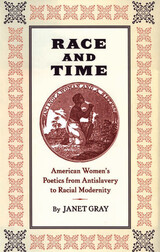
Race and Time
American Women's Poetics from Antislavery to Racial Modernity
Janet Gray
University of Iowa Press, 2004
Race and Time urges our attention to women’s poetry in considering the cultural history of race. Building on close readings of well known and less familiar poets—including Elizabeth Margaret Chandler, Sarah Louisa Forten, Hannah Flagg Gould, Frances Ellen Watkins Harper, Sarah Piatt, Mary Eliza Tucker Lambert, Sarah Josepha Hale, Eliza Follen, and Mary Mapes Dodge—Gray traces tensions in women’s literary culture from the era of abolitionism to the rise of the Plantation tradition. She devotes a chapter to children’s verse, arguing that racial stereotypes work as “nonsense” that masks conflicts in the construction of white childhood. A compilation of the poems cited, most of which are difficult to find elsewhere, is included as an appendix.
Gray clarifies the cultural roles women’s poetry played in the nineteenth-century United States and also reveals that these poems offer a fascinating, dynamic, and diverse field for students of social and cultural history. Gray’s readings provide a rich sense of the contexts in which this poetry is embedded and examine its aesthetic and political vitality in meticulous detail, linking careful explication of the texts with analysis of the history of poetry, canons, literacy, and literary authority.
Race and Time distinguishes itself from other critical studies not only through its searching, in-depth readings but also through its sustained attention to less known poets and its departure from a Dickinson-centered model. Most significantly, it offers a focus on race, demonstrating how changes in both the U.S. racial structure and women’s place in public culture set the terms for change in how women poets envisioned the relationship between poetry and social power.
Gray’s work makes contributions to several fields of study: poetry, U.S. literary history and American studies, women’s studies, African American studies and whiteness studies, children’s literature, and cultural studies. While placing the works of figures who have been treated elsewhere (e.g., Dickinson and Harper) into revealing new relationships, Race and Time does much to open interdisciplinary discussion of unfamiliar works.
Gray clarifies the cultural roles women’s poetry played in the nineteenth-century United States and also reveals that these poems offer a fascinating, dynamic, and diverse field for students of social and cultural history. Gray’s readings provide a rich sense of the contexts in which this poetry is embedded and examine its aesthetic and political vitality in meticulous detail, linking careful explication of the texts with analysis of the history of poetry, canons, literacy, and literary authority.
Race and Time distinguishes itself from other critical studies not only through its searching, in-depth readings but also through its sustained attention to less known poets and its departure from a Dickinson-centered model. Most significantly, it offers a focus on race, demonstrating how changes in both the U.S. racial structure and women’s place in public culture set the terms for change in how women poets envisioned the relationship between poetry and social power.
Gray’s work makes contributions to several fields of study: poetry, U.S. literary history and American studies, women’s studies, African American studies and whiteness studies, children’s literature, and cultural studies. While placing the works of figures who have been treated elsewhere (e.g., Dickinson and Harper) into revealing new relationships, Race and Time does much to open interdisciplinary discussion of unfamiliar works.
[more]
READERS
Browse our collection.
PUBLISHERS
See BiblioVault's publisher services.
STUDENT SERVICES
Files for college accessibility offices.
RECENTLY PUBLISHED



UChicago Accessibility Resources
home | accessibility | search | about | contact us
BiblioVault ® 2001 - 2026
The University of Chicago Press