
 A SCHOLARLY BOOK REPOSITORY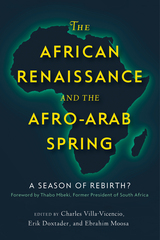
The African Renaissance and the Afro-Arab Spring addresses the often unspoken connection between the powerful call for a political-cultural renaissance that emerged with the end of South African apartheid and the popular revolts of 2011 that dramatically remade the landscape in Egypt, Libya, and Tunisia. Looking between southern and northern Africa, the transcontinental line from Cape to Cairo that for so long supported colonialism, its chapters explore the deep roots of these two decisive events and demonstrate how they are linked by shared opposition to legacies of political, economic, and cultural subjugation. As they work from African, Islamic, and Western perspectives, the book’s contributors shed important light on a continent’s difficult history and undertake a critical conversation about whether and how the desire for radical change holds the possibility of a new beginning for Africa, a beginning that may well reshape the contours of global affairs.
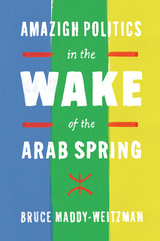
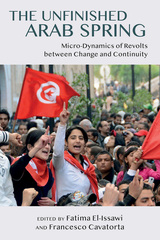
On television, the Arab Spring took place in Cairo, Tunis, and the city-states of the Persian Gulf. Yet the drama of 2010, and the decade of subsequent activism, extended beyond the cities—indeed, beyond Arabs. Bruce Maddy-Weitzman brings to light the sustained post–Arab Spring political movement of North Africa’s Amazigh people.
The Amazigh movement did not begin with the Arab Spring, but it has changed significantly since then. Amazigh Politics in the Wake of the Arab Spring details the increasingly material goals of Amazigh activism, as protest has shifted from the arena of ethnocultural recognition to that of legal and socioeconomic equality. Amazigh communities responded to the struggles for freedom around them by pressing territorial and constitutional claims while rejecting official discrimination and neglect. Arab activists, steeped in postcolonial nationalism and protective of their hegemonic position, largely refused their support, yet flailing regimes were forced to respond to sharpening Amazigh demands or else jeopardize their threadbare legitimacy. Today the Amazigh question looms larger than ever, as North African governments find they can no longer ignore the movement’s interests.
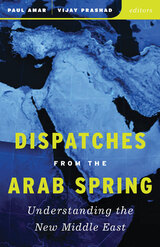
The Arab Spring unleashed forces of liberation and social justice that swept across North Africa and the Middle East with unprecedented speed, ferocity, and excitement. Although the future of the democratic uprisings against oppressive authoritarian regimes remains uncertain in many places, the revolutionary wave that started in Tunisia in December 2010 has transformed how the world sees Arab peoples and politics. Bringing together the knowledge of activists, scholars, journalists, and policy experts uniquely attuned to the pulse of the region, Dispatches from the Arab Spring offers an urgent and engaged analysis of a remarkable ongoing world-historical event that is widely misinterpreted in the West.
Tracing the flows of protest, resistance, and counterrevolution in every one of the countries affected by this epochal change—from Morocco to Iraq and Syria to Sudan—the contributors provide ground-level reports and new ways of teaching about and understanding the Middle East in general, and contextualizing the social upheavals and political transitions that defined the Arab Spring in particular. Rejecting outdated and invalid (yet highly influential) paradigms to analyze the region—from depictions of the “Arab street” as a mindless, reactive mob to the belief that Arab culture was “unfit” for democratic politics—this book offers fresh insights into the region’s dynamics, drawing from social history, political geography, cultural creativity, and global power politics. Dispatches from the Arab Spring is an unparalleled introduction to the changing Middle East and offers the most comprehensive and accurate account to date of the uprisings that profoundly reshaped North Africa and the Middle East.
Contributors: Sheila Carapico, U of Richmond; Nouri Gana, UCLA; Toufic Haddad; Adam Hanieh, SOAS/U of London; Toby C. Jones, Rutgers U; Anjali Kamat; Khalid Medani, McGill U; Merouan Mekouar; Maya Mikdashi, NYU; Paulo Gabriel Hilu Pinto, U Federal Fluminense, Brazil; Jillian Schwedler, Hunter College, CUNY; Ahmad Shokr; Susan Slyomovics, UCLA; Haifa Zangana.
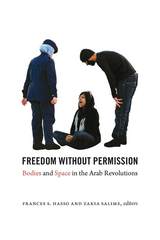

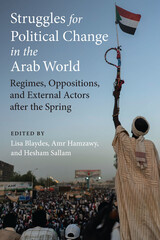
The advent of the Arab Spring in late 2010 was a hopeful moment for partisans of progressive change throughout the Arab world. Authoritarian leaders who had long stood in the way of meaningful political reform in the countries of the region were either ousted or faced the possibility of political if not physical demise. The downfall of long-standing dictators as they faced off with strong-willed protesters was a clear sign that democratic change was within reach. Throughout the last ten years, however, the Arab world has witnessed authoritarian regimes regaining resilience, pro-democracy movements losing momentum, and struggles between the first and the latter involving regional and international powers.
This volume explains how relevant political players in Arab countries among regimes, opposition movements, and external actors have adapted ten years after the onset of the Arab Spring. It includes contributions on Egypt, Morocco, Kuwait, Saudi Arabia, Syria, Algeria, Sudan, Lebanon, Iraq, Jordan, Yemen, and Tunisia. It also features studies on the respective roles of the United States, China, Iran, and Turkey vis-à-vis questions of political change and stability in the Arab region, and includes a study analyzing the role of Saudi Arabia and its allies in subverting revolutionary movements in other countries.

A wide-ranging examination of the causes of war in Syria and the Middle East.
In War in Syria and the Middle East, Federico Manfredi Firmian uses historical, political, and economic lenses to examine how Syria’s civil war is part of a broad pattern of social breakdown increasingly prevalent across the Arab and Islamic worlds. This expansive book argues that many conflicts across the Middle East today are rooted in fundamental ideological divides that originated with European imperialism. In Syria, the iniquities of French rule gave way to the radicalism of the Arab Socialist Baʿth Party, which promised to dismantle imperial legacies and capitalist logics through nationalizations, land redistribution, and central planning.
Baʿthist Syria, however, ultimately failed to provide a viable alternative to capitalism. In fact, its failures, and the failures of other revolutionary regimes of socialist inspiration, provided an opening for armed Islamist movements to challenge both secular authoritarian rule and US foreign policies—ultimately leading to civil war. Combining a multidisciplinary approach with fieldwork, War in Syria and the Middle East argues for a global perspective on a pressing, ongoing conflict.
READERS
Browse our collection.
PUBLISHERS
See BiblioVault's publisher services.
STUDENT SERVICES
Files for college accessibility offices.
RECENTLY PUBLISHED







UChicago Accessibility Resources
home | accessibility | search | about | contact us
BiblioVault ® 2001 - 2026
The University of Chicago Press