
 A SCHOLARLY BOOK REPOSITORY
23 start with A start with A

Swallowtail butterflies frolic on the wind. Vireos and rock wrens sing their hearts out by the recovering creek. Spiders and other predators chase their next meal. Through it all, John Alcock observes, records, and delights in what he sees. In a once-burnt area, life resurges. Plants whose seeds and roots withstood an intense fire become habitat for the returning creatures of the wild. After the Wildfire describes the remarkable recovery of wildlife in the Mazatzal Mountains in central Arizona.
It is the rare observer who has the dedication to revisit the site of a wildfire, especially over many years and seasons. But naturalist John Alcock returned again and again to the Mazatzals, where the disastrous Willow fire of 2004 burned 187 square miles. Documenting the fire’s aftermath over a decade, Alcock thrills at the renewal of the once-blackened region. Walking the South Fork of Deer Creek in all seasons as the years passed, he was rewarded by the sight of exuberant plant life that in turn fostered an equally satisfying return of animals ranging from small insects to large mammals.
Alcock clearly explains the response of chaparral plants to fire and the creatures that reinhabit these plants as they come back from a ferocious blaze: the great spreadwing damselfly, the western meadowlark, the elk, and birds and bugs of rich and colorful varieties. This book is at once a journey of biological discovery and a celebration of the ability of living things to reoccupy a devastated location. Alcock encourages others to engage the natural world—even one that has burnt to the ground.
Contributors to this volume examine the migration process under two explanatory frameworks: alliance and landscape. These frameworks are used to explore competing hypotheses, positing either a rapid colonization associated with an alliance organized for warfare at a regional scale, or a more protracted migration as this landscape became comparatively more attractive for migrating farmers in the late thirteenth century.
As the first major publication on the archaeology of Perry Mesa, this volume contributes to theoretical perspectives on migration and ethnogenesis, the study of warfare in the prehistoric Southwest, the study of intensive agricultural practices in a marginal environment, and the cultural history of a little studied and largely unknown portion of the ancient Southwest. It not only documents the migration but also the ensuing birth of a new ethnic identity that arose from the coalescence of diverse groups atop Perry Mesa.
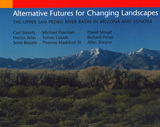
Leading landscape architect and planner Carl Steinitz has developed an innovative GIS-based simulation modeling strategy that considers the demographic, economic, physical, and environmental processes of an area and projects the consequences to that area of various land-use planning and management decisions. The results of such projections, and the approach itself, are known as "alternative futures."
Alternative Futures for Changing Landscapes presents for the first time in book form a detailed case study of one alternative futures project—an analysis of development and conservation options for the Upper San Pedro River Basin in Arizona and Sonora, Mexico. The area is internationally recognized for its high levels of biodiversity, and like many regions, it is facing increased pressures from nearby population centers, agriculture, and mining interests. Local officials and others planning for the future of the region are seeking to balance the needs of the natural environment with those of local human communities.
The book describes how the research team, working with local stakeholders, developed a set of scenarios which encompassed public opinion on the major issues facing the area. They then simulated an array of possible patterns of land uses and assessed the resultant impacts on biodiversity and related environmental factors including vegetation, hydrology, and visual preference. The book gives a comprehensive overview of how the study was conducted, along with descriptions and analysis of the alternative futures that resulted. It includes more than 30 charts and graphs and more than 150 color figures.
Scenario-based studies of alternative futures offer communities a powerful tool for making better-informed decisions today, which can help lead to an improved future. Alternative Futures for Changing Landscapes presents an important look at this promising approach and how it works for planners, landscape architects, local officials, and anyone involved with making land use decisions on local and regional scales.
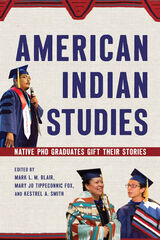
In American Indian Studies, Native PhD graduates share their personal stories about their educational experiences and how doctoral education has shaped their identities, lives, relationships, and careers.
This collection of personal narratives from Native graduates of the University of Arizona’s American Indian Studies (AIS) doctoral program, the first such program of its kind, gifts stories of endurance and resiliency, hardship and struggle, and accomplishment and success. It provides insight into the diverse and dynamic experiences of Native graduate students. The narratives address family and kinship, mentorship, and service and giving back. Essayists share the benefits of having an AIS program at a mainstream academic institution—not just for the students enrolled but also for their communities.
This book offers Native students aspiring to a PhD a realistic picture of what it takes. While each student has their own path to walk, these stories provide the gift of encouragement and serve to empower Native students to reach their educational goals, whether it be in an AIS program or other fields of study.

A true daughter of the West, Angela, born in a tiny mining hamlet in Nevada, came to the Territory of Arizona at the age of twelve. Betty Hammer Joy weaves together the lively story of her grandmother's life by drawing upon Angela's own prodigious writing and correspondence, newspaper archives, and the recollections of family members. Her book recounts the stories Angela told of growing up in mining camps, teaching in territorial schools, courtship, marriage, and a twenty-eight-year career in publishing and printing. During this time, Angela managed to raise three sons, run for public office before women in the nation had the right to vote, serve as Immigration Commissioner in Pinal County, homestead, and mature into an activist for populist agendas and water conservation. As questionable deals took place both within and outside the halls of government, the crusading Angela encountered many duplicitous characters who believed that women belonged at home darning socks, not running a newspaper.
Although Angela's independent papers brought personal hardship and little if any financial reward, after her death in 1952 the newspaper industry paid tribute to this courageous woman by selecting her as the first woman to enter the Arizona Newspaper Hall of Fame. In 1983 she was honored posthumously with another award for women who contributed to Arizona's progress—induction into the Arizona Women's Hall of Fame.


In Answered Prayers, the Mexicans, Mexican Americans, Tohono O'odham, and Yaquis who practice this tradition share their stories of unwavering faith and divine intervention. Anthropologist and photographer Eileen Oktavec has spent more than two decades documenting this fascinating tradition in the Arizona-Mexico borderlands. Quoting extensive interviews, she explains the beliefs of the people who perform this ancient folk ritual and the many rules guiding this practice. She also describes the many places where milagros are offered—from the elaborate Mexican baroque Mission San Xavier near Tucson, Arizona, to tiny household shrines and hospitals on both sides of the border. Oktavec also explains how milagros are made, where they are bought, and how they are used in jewelry, sculpture, and art.
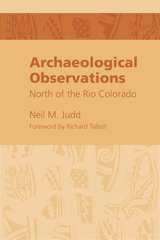
Archeological Observations North of the Rio Colorado was originally published in 1926 as part of the Smithsonian Institution’s Bureau of American Ethnology (Bulletin 82). It contains the report of six seasons of fieldwork undertaken by Neil M. Judd for the Bureau between 1915 and 1920 in western Utah and northwestern Arizona. The original investigation set out to examine alleged prehistoric sites near Beaver, Utah—specifically sites related to the “Pueblo ruins” found elsewhere in the Southwest. This in turn led to a much larger project, as there were more sites than expected recognized as having a cultural affinity with other prehistoric Puebloan sites. During these six years, Judd’s team covered a region from the Grand Canyon to the northern shore of the Great Salt Lake, east to the Green River and west into the deserts of Nevada.
This book is part of the University of Utah Press’s ongoing effort to reprint selected out-of-print volumes that apply directly to Utah archaeology, in an attempt to allow current students easier access and use of historic information. Owing to continued development, increased artifact collection, and on-going degradation, Utah archaeology is far different today than it was a century ago. The scientific works of these early archaeologists provide a glimpse of the variability that existed within sites and geographic areas in the early 1900s and gives a picture of Utah archaeology in an earlier era.
This book invites us to step into a Hohokam village with its sounds of barking dogs, children's laughter, and the ever-present grinding of mano on metate to produce the daily bread. Here, too, readers will marvel at the skills of Clovis elephant hunters and touch the lives of other ancestral people known as Mogollon, Anasazi, Sinagua, and Salado. Descriptions of long-ago people are balanced with tales about the archaeologists who have devoted their lives to learning more about "those who came before." Trekking through the desert with the famed Emil Haury, readers will stumble upon Ventana Cave, his "answer to a prayer." With amateur archaeologist Richard Wetherill, they will sense the peril of crossing the flooded San Juan River on the way to Chaco Canyon. Others profiled in the book are A. V. Kidder, Andrew Ellicott Douglass, Julian Hayden, Harold S. Gladwin, and many more names synonymous with the continuing saga of southwestern archaeology.
This book is an open invitation to general readers to join in solving the great archaeological puzzles of this part of the world. Moreover, it is the only up-to-date summary of a field advancing so rapidly that much of the material is new even to professional archaeologists. Lively and fast paced, the book will appeal to anyone who finds magic in a broken bowl or pueblo wall touched by human hands hundreds of years ago. For all readers, these pages offer a sense of adventure, that "you are there" stir of excitement that comes only with making new discoveries about the distant past.
Like many indigenous legal institutions across North America, the Hopi Tribal Court was created in the image of Anglo-American-style law. But Richland shows that in recent years, Hopi jurists and litigants have called for their courts to develop a jurisprudence that better reflects Hopi culture and traditions. Providing unprecedented insights into the Hopi and English courtroom interactions through which this conflict plays out, Richland argues that tensions between the language of Anglo-style law and Hopi tradition both drive Hopi jurisprudence and make it unique. Ultimately, Richland’s analyses of the language of Hopi law offer a fresh approach to the cultural politics that influence indigenous legal and governmental practices worldwide.

Hailed as a model state history thanks to Thomas E. Sheridan's thoughtful analysis and lively interpretation of the people and events shaping the Grand Canyon State, Arizona has become a standard in the field. Now, just in time for Arizona's centennial, Sheridan has revised and expanded this already top-tier state history to incorporate events and changes that have taken place in recent years. Addressing contemporary issues like land use, water rights, dramatic population increases, suburban sprawl, and the US-Mexico border, the new material makes the book more essential than ever. It successfully places the forty-eighth state's history within the context of national and global events. No other book on Arizona history is as integrative or comprehensive.
From stone spear points more than 10,000 years old to the boom and bust of the housing market in the first decade of this century, Arizona: A History explores the ways in which Native Americans, Hispanics, African Americans, Asians, and Anglos have inhabited and exploited Arizona. Sheridan, a life-long resident of the state, puts forth new ideas about what a history should be, embracing a holistic view of the region and shattering the artificial line between prehistory and history. Other works on Arizona's history focus on government, business, or natural resources, but this is the only book to meld the ethnic and cultural complexities of the state's history into the main flow of the story.
A must read for anyone interested in Arizona's past or present, this extensive revision of the classic work will appeal to students, scholars, and general readers alike.

Here, in rich detail, her day-by-day narrative and the editor's annotations bring to life Arizona's territorial capital of Prescott more than one hundred years ago. Lily gives us firsthand accounts of the operation of territorial government; of pressure from Anglo settlers to dispossess Pima Indians from their land; and of efforts by the governor and the army to deal with Indian scares. Here also, underlying her words, are insights into the dynamics of a close-knit Victorian family, shaping the life of an intelligent, educated single woman. As unofficial secretary for her father, Lily was well placed to observe and record an almost constant stream of visitors to the governor's home and office. Observe and record, she did. Her diary is filled with unvarnished images of personalities such as the Goldwaters, General O. B. Willcox, Moses Sherman, Judge Charles Silent, and a host of lesser citizens, politicians, and army officers.
Lily's anecdotes vividly re-create the periodic personality clashes that polarized society (and one full-fledged scandal), the ever-present danger of fire, religious practices (particularly a burial service conducted in Hebrew), and attitudes toward Native Americans and Chinese. On a more personal level, the reader will find intimate accounts of John Frémont's obsession with mining promotion, his complicated business dealings with Judge Silent, and his attempts to recoup his family's sagging fortune. Here especially, Lily outlines a telling profile of her father, a man roundly castigated then and now as a carpetbagger less interested in promoting Arizona's interests than his own.
For students of western history, Lily Frémont's diary provides a wealth of fresh information on frontier politics, mining, army life, social customs, and ethnicity. For all readers, her words from a century ago offer new perspectives on the winning of the West as well as fascinating glimpses of a world that once was and is no more.
Arizona Goes to War takes readers back to a time when military installations sprang up all over the state as thousands of airmen arrived to train in Arizona's clear desert skies, and when soldiers destined for North Africa came to get their first taste of desert sands. In its pages, readers will learn not only of the green recruits who passed through Arizona, but also of the state's Native Americans who registered for the draft in record numbers, of Japanese Americans unjustly incarcerated in desert detention centers, and of ordinary citizens who did their bit for the war effort. Included in the book are some of World War II's most incredible stories, such as the testing of tank engines in Arizona dust storms for the North Africa campaign, the interrogation of Japanese consular diplomats from Honolulu at the Triangle T Guest Ranch near Dragoon, and the escape of 25 German POWs from a detention camp outside of Phoenix—called the greatest escape by Axis prisoners from a U.S. compound during the war. A separate chapter pays tribute to Arizona's war heroes: not only Silvestre Herrera, but also fighter ace Grant Turley, Midway hero John C. Butler, and Pima Indian Ira Hayes, who helped raise the flag on Iwo Jima. A host of profiles and sidebars bring people and events of the wartime era to life, and a useful appendix provides a traveler's guide to Arizona's World War II sites.
World War II may have transformed Arizona more than it did any other state; not only did Arizona's industry blossom, its population did as well when servicemen who had been stationed there returned to put down stakes. Arizona Goes to War recaptures the glory and spirit of that era and reminds us that the people who lived through those years are well worth commemorating.

For this first toponymic encyclopedia of Arizona, Barnes compiled information from published histories, federal and state government documents, and reminiscences of "old timers, Indians, Mexicans, cowboys, sheep-herders, historians, any and everybody who had a story to tell as to the origin and meaning of Arizona names." The result is a book chock full of oddments, humor, and now-forgotten lore, which belongs on the night table as well as in the glove compartment.
Barnes' original Arizona Place Names has become a booklover's favorite and is much in demand. The University of Arizona Press is pleased to reissue this classic of Arizoniana, which remains as useful and timeless as it was more than half a century ago.

—A car dealer who propelled himself to the governor's mansion with the help of public recognition of his TV commercials
—An Arizonan who served not only as governor and chief justice of the Arizona Supreme Court, but also as the Majority Leader of the U.S. Senate and chief sponsor of the GI Bill
—A cowboy who delivered speeches to ranchhands and went on to become a U.S. senator known as one of the great orators of the twentieth century
—One of four Arizonans who lost a bid for the presidency yet made the Gallup Poll as one of the ten most admired men in the world
—A secretary who became the first woman in the nation to sit on a state supreme court
Journalist James Johnson has written profiles of 21 men and women from Arizona who have made their mark in the political arena. Chosen for their contributions to the state, their national prominence, their colorful personalities, and in some cases their notoriety, these prominent public servants—from first governor George W. P. Hunt to current senior senator McCain—all have been major participants in state or national affairs. Congressman Mo Udall once commented on Arizona's "civilized brand of politics," in which Republicans and Democrats, conservatives and liberals, treated one another with mutual respect. Johnson conveys both the spirit and spiritedness of Arizona politics and reveals how in many cases these politicians and their family members found their lives and careers overlapping. He tells their stories with humor and objectivity, while political cartoonist David Fitzsimmons captures their trademark styles in original drawings.
Although the individuals may speak from different platforms, all have been proud to call themselves Arizonans and proud to serve their state. This book shares their accomplishments and shows how, for better or worse, they've helped put Arizona in the spotlight.
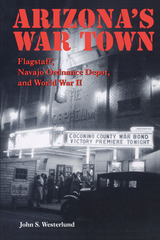
A clearing in the ponderosa pine forest called Volunteer Prairie met the military's criteria for a munitions depot—open terrain, a cool climate, plentiful water, and proximity to a railroad—and it was also sufficiently inland to be safe from the threat of coastal invasion. Constructing a depot of 800 ammunition bunkers, each the size of a 2,000-square-foot home, called for a force of 8,000 laborers, and Flagstaff became a boom town overnight as construction workers and their families poured in from nearby Indian reservations and as far away as the Midwest and South. More than 2,000 were retained as permanent employees—a larger workforce than Flagstaff's total pre-war employment roster.
As Westerlund's portrait of wartime Flagstaff shows, prosperity brought unanticipated consequences: racism simmered beneath the surface of the town as ethnic groups were thrown together for the first time; merchants called a city-wide strike to protest emerging union activity; juvenile delinquency rose dramatically; Flagstaff women entered the workforce in unprecedented numbers, altering local mores along with their own plans for the future; meanwhile, hundreds of sailors and marines arrived at Arizona State Teachers College to participate in the Navy's "V-12" program. Whether recounting the difficulty of 3,500 Navajo and Hopi employees adjusting to life off the reservation or the complaints of townspeople that Austrian POWs-transferred to the depot to ease the labor shortage-were treated too well, Westerlund shows that the construction and maintenance of the facility was far more than a military matter.
Navajo Ordnance Depot remained operational to support wars in Korea, Vietnam, and the Persian Gulf, and today Camp Navajo provides storage for thousands of deactivated ICBM motors. But in recounting its early days, Westerlund has skillfully blended social and military history to vividly portray not only a city's transitional years but also the impact of military expansion on economic and community development in the American West.
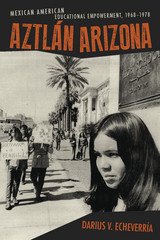
The word Aztlán, originally meaning the legendary ancestral home of the Nahua peoples of Mesoamerica, was adopted as a symbol of independence by Chicano/a activists during the movement of the 1960s and 1970s. In an era when poverty, prejudice, and considerable oppositional forces blighted the lives of roughly one-fifth of Arizonans, the author argues that understanding those societal realities is essential to defining the rise and power of the Chicano Movement.
The book illustrates how Mexican American communities fostered a togetherness that ultimately modified larger Arizona society by revamping the educational history of the region. The concluding chapter outlines key Mexican American individuals and organizations that became politically active in order to address Chicano educational concerns. This Chicano unity, reflected in student, parent, and community leadership organizations, helped break barriers, dispel the Mexican American inferiority concept, and create educational change that benefited all Arizonans.
No other scholar has examined the emergence of Chicano Movement politics and its related school reform efforts in Arizona. Echeverría’s thorough research, rich in scope and interpretation, is coupled with detailed and exact endnotes. The book helps readers understand the issues surrounding the Chicano Movement educational reform and ethnic identity. Equally important, the author shows how residual effects of these dynamics are still pertinent today in places such as Tucson.
READERS
Browse our collection.
PUBLISHERS
See BiblioVault's publisher services.
STUDENT SERVICES
Files for college accessibility offices.
RECENTLY PUBLISHED







UChicago Accessibility Resources
home | accessibility | search | about | contact us
BiblioVault ® 2001 - 2024
The University of Chicago Press