
 A SCHOLARLY BOOK REPOSITORY
18 start with A start with A
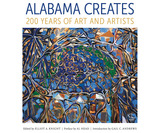
Alabama artists have been an integral part of the story of the state, reflecting a wide-ranging and multihued sense of place through images of the land and its people. Quilts, pottery, visionary paintings, sculpture, photography, folk art, and abstract art have all contributed to diverse visions of Alabama’s culture and environment. The works of art included in this volume have all emerged from a distinctive milieu that has nourished the creation of powerful visual expressions, statements that are both universal and indigenous.
Published to coincide with the state’s bicentennial, Alabama Creates: 200 Years of Art and Artists features ninety-four of Alabama’s most accomplished, noteworthy, and influential practitioners of the fine arts from 1819 to the present. The book highlights a broad spectrum of artists who worked in the state, from its early days to its current and contemporary scene, exhibiting the full scope and breadth of Alabama art.
This retrospective volume features biographical sketches and representative examples of each artist’s most masterful works. Alabamians like Gay Burke, William Christenberry, Roger Brown, Thornton Dial, Frank Fleming, the Gee’s Bend Quilters, Lonnie Holley, Dale Kennington, Charlie Lucas, Kerry James Marshall, David Parrish, and Bill Traylor are compared and considered with other nationally significant artists.
Alabama Creates is divided into four historical periods, each spanning roughly fifty years and introduced by editor Elliot A. Knight. Knight contextualizes each era with information about the development of Alabama art museums and institutions and the evolution of college and university art departments. The book also contains an overview of the state’s artistic heritage by Gail C. Andrews, director emerita of the Birmingham Museum of Art. Alabama Creates conveys in a sweeping and captivating way the depth of talent, the range of creativity, and the lasting contributions these artists have made to Alabama’s extraordinarily rich visual and artistic heritage.
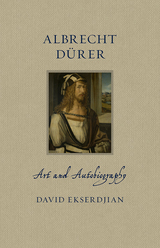
The Italian Renaissance birthed the modern sense of self, and no artist from the period compares with Albrecht Dürer (1471–1528) in terms of the almost obsessive interest he displayed in his own life. Dürer’s works are filled with personal details from his day-to-day, his dreams, and his escapades. In this brief biography, David Ekserdjian explores Dürer’s life and times—his studies, travels, and influences—as well as his paintings, drawings, and prints. This book is essential reading for anyone interested in Renaissance or Northern European art.
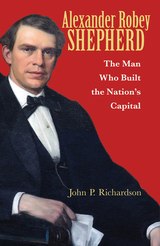
With Alexander Robey Shepherd, John P. Richardson gives us the first full-length biography of his subject, who as Washington, D.C.’s, public works czar (1871–74) built the infrastructure of the nation’s capital in a few frenetic years after the Civil War. The story of Shepherd is also the story of his hometown after that cataclysm, which left the city with churned-up streets, stripped of its trees, and exhausted.
An intrepid businessman, Shepherd became president of Washington’s lower house of delegates at twenty-seven. Garrulous and politically astute, he used every lever to persuade Congress to realize Peter L’Enfant’s vision for the capital. His tenure produced paved and graded streets, sewer systems, trees, and gaslights, and transformed the fetid Washington Canal into one of the city’s most stately avenues. After bankrupting the city, a chastened Shepherd left in 1880 to develop silver mines in western Mexico, where he lived out his remaining twenty-two years.
In Washington, Shepherd worked at the confluence of race, party, region, and urban development, in a microcosm of the United States. Determined to succeed at all costs, he helped force Congress to accept its responsibility for maintenance of its stepchild, the nation’s capital city.
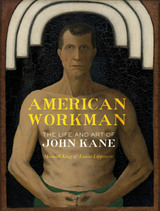
American Workman presents a comprehensive, novel reassessment of the life and work of one of America’s most influential self-taught artists, John Kane. With a full account of Kane’s life as a working man, including his time as a steelworker, coal miner, street paver, and commercial painter in and around Pittsburgh in the early twentieth century, the authors explore how these occupations shaped his development as an artist and his breakthrough success in the modern art world. A rough-and-tumble blue-collar man prone to brawling and drinking, Kane also sought out beauty in the industrial world he inhabited. This Kane paradox—brawny and tough, sensitive and creative—was at the heart of much of the public’s interest in Kane as a person. The allure of the Kane saga was heightened all the more by the fact that he did not achieve renown until he was at the age at which most people are retiring from their professions. Kane’s dedication to painting resulted in a fascinating body of work that has ended up in some of America’s most important museums and private collections. His dramatic life story demonstrates the courage, strength, and creativity of his generation of workmen. They may be long gone, but thanks to Kane they cannot be forgotten.
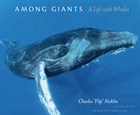
It all started in 1965 with a guy riding a whale. The guy was Flip Nicklin’s father, Chuck, and the whale was an unlucky Bryde’s Whale that had gotten caught up in some anchor line. Hoping to free the whale, Chuck and some friends took their boat as near as they could, and, just before they cut it loose, Chuck posed astride it for a photo.
That image, carried on wire services nationwide, became a sensation and ultimately changed the life of Chuck’s young son, Flip. In the decades since that day, Flip Nicklin has made himself into the world’s premier cetacean photographer. It’s no exaggeration to say that his photos, published in such venues as National Geographic and distributed worldwide, have virtually defined these graceful, powerful creatures in the mind of the general public—even as they helped open new ground in the field of marine mammalogy.
Among Giants tells the story of Nicklin’s life and career on the high seas, from his first ill-equipped shoots in the mid-1970s through his long association with the National Geographic Society to the present, when he is one of the founders of Whale Trust, a nonprofit conservation and research group. Nicklin is equal parts photographer, adventurer, self-trained scientist, and raconteur, and Among Giants reflects all those sides, matching breathtaking images to firsthand accounts of their making, and highlighting throughout the importance of conservation and new advances in our understanding of whale behavior. With Nicklin as our guide, we see not just whales but also our slowly growing understanding of their hidden lives, as well as the evolution of underwater photography—and the stunning clarity and drama that can be captured when a determined, daring diver is behind the lens.
Humpbacks, narwhals, sperm whales, orcas—these and countless other giants of the ocean parade through these pages, spouting, breaching, singing, and raising their young. Nicklin’s photographs bring us so completely into the underwater world of whales that we can’t help but feel awe, while winning, personal accounts of his adventures remind us of what it’s like to be a lone diver sharing their sea.
For anyone who has marveled at the majesty of whales in the wild, Among Giants is guaranteed to be inspiring, even moving—its unmatched images of these glorious beings an inescapable reminder of our responsibility as stewards of the ocean.
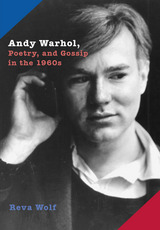
Wolf investigates the underground culture of poets, artists, and filmmakers who interacted with Warhol regularly. She claims that Warhol understood the literary imagination of his generation and that recognizing Warhol's literary activities is essential to understanding his art. Drawing on a wealth of unpublished material, including interviews, personal and public archives, tape recordings, documentary photographs, and works of art, Wolf offers dramatic evidence that Warhol's interactions with writers functioned like an extended conversation and details how this process impacted his work. This highly original and fascinating study gives us fresh insight into Warhol's art as practice and reformulates the myth that surrounds this popular American artist.

While biographers of Andy Warhol have long recognized his mother as a significant influence on his life and art, Julia Warhola’s story has not yet been told. As an American immigrant who was born in a small Carpatho-Rusyn village in Austria-Hungary in 1891, Julia never had the opportunity to develop her own considerable artistic talents. Instead, she worked and sacrificed so her son could follow his dreams, helping to shape Andy’s art and persona. Julia famously followed him to New York City and lived with him there for almost twenty years, where she remained engaged in his personal and artistic life. She was well known as “Andy Warhol’s mother,” even developing a distinctive signature with the title that she used on her own drawings.
Exploring previously unpublished material, including Rusyn-language correspondence and videos, Andy Warhol’s Mother provides the first in-depth look at Julia’s hardscrabble life, her creative imagination, and her spirited personality. Elaine Rusinko follows Julia’s life from the folkways of the Old Country to the smog of industrial Pittsburgh and the tumult of avant-garde New York. Rusinko explores the impact of Julia’s Carpatho-Rusyn culture, Byzantine Catholic faith, and traditional worldview on her ultra-modern son, the quintessential American artist. This close examination of the Warhola family’s lifeworld allows a more acute perception of both Andy and Julia while also illuminating the broader social and cultural issues that confronted and conditioned them.
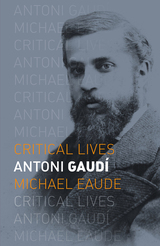
The celebrated art nouveau architect Antoni Gaudí was a contradictory figure: a deeply religious, politically right-wing man who nevertheless built revolutionary buildings. This book explores Gaudí’s life, work, and influences from Catalan nationalism to the industrial revolution. Michael Eaude expertly guides readers through Gaudí’s dozen great works, including the Sagrada Família that attracts millions of tourists each year. Gaudí’s life is also chronicled from his provincial upbringing in Reus to his time in Barcelona. He later suffered a nervous breakdown, became obsessively religious, and fused Gothic, Baroque, and Orientalist architecture into his unique style. This brief biography offers an accessible introduction to this perplexing and fascinating life.
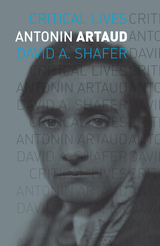
Shafer casts Artaud as a person with tenacious values. Even though Artaud was born in the material comfort of a bourgeois family from Marseille, he uncompromisingly rejected bourgeois values and norms. Becoming famous as an actor, director, and author, he would use his position to challenge contemporary assumptions about the superiority of the West, the function of speech, the purpose of culture, and the individual’s agency over his or her body. In this way—as Shafer points out—Artaud embodied the revolutionary spirit of France. And as Shafer shows, although Artaud was immensely productive, he struggled profoundly with his creative process, hindered by narcotics addiction, increasing paranoia, and an overwhelming sense of alienation. Situating Artaud’s contributions within the frenzy of his life and that of the twentieth century at large, this book is a compelling and fresh biography that pays tribute to its subject’s lasting cultural reverberations.
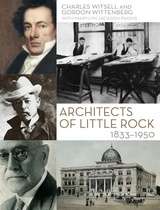
Published in collaboration with the Fay Jones School of Architecture.
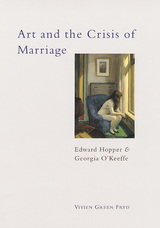
Vivien Green Fryd argues that this crisis played a crucial role in the lives and works of two of America's most familiar and beloved artists, Georgia O'Keeffe (1887-1986) and Edward Hopper (1882-1967). Combining biographical study of their marriages with formal and iconographical analysis of their works, Fryd shows how both artists expressed the pleasures and perils of their relationships in their paintings. Hopper's many representations of Victorian homes in sunny, tranquil landscapes, for instance, take on new meanings when viewed in the context of the artist's own tumultuous marriage with Jo and the widespread middle-class fears that the new urban, multidwelling homes would contribute to the breakdown of the family. Fryd also persuasively interprets the many paintings of skulls and crosses that O'Keeffe produced in New Mexico as embodying themes of death and rebirth in response to her husband Alfred Stieglitz's long-term affair with Dorothy Norman.
Art and the Crisis of Marriage provides both a penetrating reappraisal of the interconnections between Georgia O'Keeffe's and Edward Hopper's lives and works, as well as a vivid portrait of how new understandings of family, gender, and sexuality transformed American society between the wars in ways that continue to shape it today.
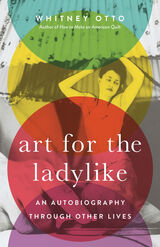
In Art for the Ladylike, Whitney Otto limns the lives of eight pioneering women photographers—Sally Mann, Imogen Cunningham, Judy Dater, Ruth Orkin, Tina Modotti, Lee Miller, Madame Yvonne, and Grete Stern—to in turn excavate her own writer’s life. The result is an affecting exploration of what it means to be a woman, what it means to be an artist, and the perils and rewards of being both at once. In considering how feminism, career, and motherhood were entangled throughout her subjects’ lives as they tirelessly sought to render their visions and paved the way for others creating within the bounds of domesticity, Otto assesses her own struggles with balancing writing and the pulls of home life. Ultimately, she ponders the persistent question that artistic women face in a world that devalues women’s ambition: If what we love is what we are, how do those of us with multiple loves forge lives with room for everything?
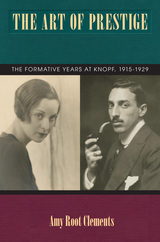
Capturing the little-known early history of Knopf, The Art of Prestige explores the origins of the company's rise to success during the Jazz Age, when Alfred and Blanche established themselves as literary impresarios on both sides of the Atlantic. Drawing on key archival documents from all phases of the publishing process, Amy Root Clements reconstructs the turning points and rhetorical exchanges that made Knopf's initial books noteworthy, from the acquisitions process to design, consumer marketing, and bookselling.
Lasting cornerstones of the young firm include alliances with pivotal figures in the world of graphic arts and book production and with European publishers who brought numerous Nobel Prize winners to the Borzoi list during the company's first fifteen years. Other featured luminaries include the American authors Willa Cather, Dashiell Hammett, and Langston Hughes. The Art of Prestige also examines Alfred Knopf's ancestry, up-bringing, and formal education at Columbia, as well as his apprenticeships with Frank Nelson Doubleday and Mitchell Kennerley—factors that would influence his business decisions for years to come.
The result is a portrait of innovative branding that seamlessly merged book production with book promotion in a literary landscape that was ripe for transformation.
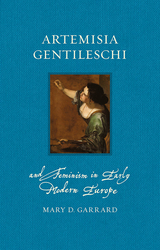
Artemisia Gentileschi is by far the most famous woman artist of the premodern era. Her art addressed issues that resonate today, such as sexual violence and women’s problematic relationship to political power. Her powerful paintings with vigorous female protagonists chime with modern audiences, and she is celebrated by feminist critics and scholars.
This book breaks new ground by placing Gentileschi in the context of women’s political history. Mary D. Garrard, noted Gentileschi scholar, shows that the artist most likely knew or knew about contemporary writers such as the Venetian feminists Lucrezia Marinella and Arcangela Tarabotti. She discusses recently discovered paintings, offers fresh perspectives on known works, and examines the artist anew in the context of feminist history. This beautifully illustrated book gives for the first time a full portrait of a strong woman artist who fought back through her art.

A Choice Outstanding Academic Title
“Thanks to Bigsby’s research, particularly into previously unseen material, his account of Miller trying to hang on to his soul in midcentury America shows that he was large not least in his contradictions…What the book makes newly clear, though, is how much of Miller’s work reflects his own personal struggles.”—Jeremy McCarter, New York Times Book Review
“Bigsby’s biography is so effective because it manages to locate Miller’s art in terms both of the progression of his idealism and the regressions of his actual experience. There can’t be many writers who appeared to live so much at the center of their times and who suffered so much from that seeming centrality.”—Andrew O’Hagan, London Review of Books
This is the long-awaited biography of one of the twentieth century’s greatest playwrights, Arthur Miller, whose postwar decade of work earned him international critical and popular acclaim. Christopher Bigsby’s gripping, meticulously researched biography, based on boxes of papers made available to him before Miller’s death, examines his refusal to name names before the notorious House on Un-American Activities Committee, offers new insights into Miller’s marriage to Marilyn Monroe, and sheds new light on how their relationship informed Miller’s subsequent great plays.
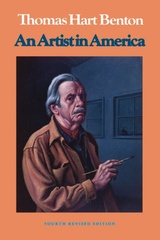
Controversial, flamboyant, contentious, brilliant--Thomas Hart Benton (1889-1975) was certainly all of those. Few American artists have stirred so much love and hatred as he did in a career that lasted almost seventy years. Although his painting aroused much controversy, perhaps equally as much was created by his words, for his piercing wit, profane sarcasms, and insightful condemnations were fired off without restraint. In this fiery and provocative autobiography, Benton presents an intriguing records of American art and society during his lifetime.
The first installment of this work was published in 1937, but Benton continued his life story in chapters added to editions published in 1951 and 1968. This new edition includes seventy-six drawings that add much to his narrative, plus a foreword discussing Benton's place in American art and an afterword covering his career after 1968, both written by art historian Matthew Baigell.
Although Benton is most famous as a regionalist painter and muralist, his complex and fascinating career brought him into contact with many of the most important artists and thinkers of the century, including Jackson Pollock, Grant Wood, Julian Huxley, Felix Frankfurter, Eugene Debbs, John Reed, and Harry Truman. While living in New York and on Martha's Vineyard in the 1920s and 1930s, Benton often associated with leading intellectuals and radicals. However, when his evolving principles of art led him away from an interest in Marxism, he was bitterly attacked by many of his former friends, and his account of that time reveals strikingly the fierce critical battles he faced in trying to establish his own artistic vision.
Critics on the Left were not his only opponents, however, and equally revealing are his responses to the moral condemnations heaped on his murals done for the states of Indiana and Missouri and on his realistic nudes of the late 1930s.
Throughout his account, from descriptions of his boyhood in southwest Missouri, his travels, and his career to discussions of specific works of art and other artists, Benton portrays people and events as vividly in words as he does in his paintings.
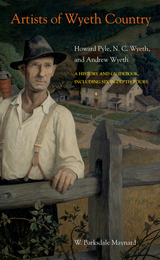
Few artists have ever been so beloved—or so controversial among art critics—as Andrew Wyeth. The groundbreaking book Artists of Wyeth Country presents an unauthorized and unbiased biographical portrait of Wyeth, based on interviews with family, friends, neighbors—even actress Eva Marie Saint. Journalist W. Barksdale Maynard shines new light on the reclusive artist, emphasizing Wyeth’s artistic debt to Howard Pyle as well as his surprising interest in surrealism. The book is filled with brand-new information and fresh interpretations.
Artists of Wyeth Country also comprises the first-ever guidebook to the artistic world of Chadds Ford, Pennsylvania, center of the Brandywine Tradition begun by Howard Pyle. Six in-depth tours for walking or driving allow the reader to stand exactly where N. C. and Andrew Wyeth stood, as has never been fully possible before.
As Maynard explains, Andrew Wyeth’s artistic process was influenced by Henry David Thoreau’s nature-worship and by his habit of walking daily. Newly commissioned maps, rare aerial photographs, as well as glorious full-color images and artworks of the landscape (many never reproduced before) illustrate the text.
A fascinating exploration of the world of Andrew Wyeth, Artists of Wyeth Country is sure to become an essential new source for those who love American art as well as for admirers of the scenic landscapes of the Mid-Atlantic, of which the Brandywine Valley is an exceptional example. As a rare, unauthorized biography of Andrew Wyeth, it opens the door for an entirely new understanding of the American master.

Astad Deboo (1947–2020), widely considered a pioneer of modern dance in India, was globally renowned for his distinctive style, characterized by meditative minimalism, gravity-defying backbends, and signature whirls which defined his innovative approach to form and content. In this first biography and book-length appreciation of Deboo’s work, Ketu H. Katrak unveils the remarkable life, choreography, and legacy of this groundbreaking figure in Indian modern dance. Through a comprehensive exploration, readers journey from Deboo's formative years in Jamshedpur and Bombay to his global endeavors that shaped his unique dance style.
Divided into four parts, this biography sheds light on various aspects of Deboo’s life and career: his youth, schooling, and the friendships that shaped him; his solo choreography, which boldly addressed social issues and fused modern dance with traditional elements; his humanitarian spirit, showcasing group choreography with deaf performers and Manipuri drum-dancers; and his mastery in collaborating with artists from India and abroad.
From receiving prestigious awards to transforming lives through dance, traveling around the world for over five decades yet being firmly rooted in Indian soil, Deboo left an indelible mark on contemporary Indian dance. Astad Deboo: An Icon of Contemporary Indian Dance pays homage to the dancer’s legendary status, emphasizing his unparalleled dedication and resilience—a guiding light for aspiring dancers striving to realize their artistic visions. It is a valuable addition to scholarship on dance studies, performance studies, and South Asian studies.
READERS
Browse our collection.
PUBLISHERS
See BiblioVault's publisher services.
STUDENT SERVICES
Files for college accessibility offices.
RECENTLY PUBLISHED


UChicago Accessibility Resources
home | accessibility | search | about | contact us
BiblioVault ® 2001 - 2024
The University of Chicago Press