
 A SCHOLARLY BOOK REPOSITORY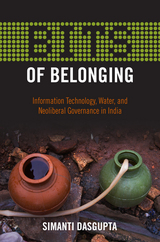
India’s global success in the Information Technology industry has also prompted the growth of neoliberalism and the re-emergence of the middle class in contemporary urban areas, such as Bangalore. In her significant study, BITS of Belonging, Simanti Dasgupta shows that this economic shift produces new forms of social inequality while reinforcing older ones. She investigates this economic disparity by looking at IT and water privatization to explain how these otherwise unrelated domains correspond to our thinking about citizenship, governance, and belonging.
Dasgupta’s ethnographic study shows how work and human processes in the IT industry intertwine to meet the market stipulations of the global economy. Meanwhile, in the recasting of water from a public good to a commodity, the middle class insists on a governance and citizenship model based upon market participation. Dasgupta provides a critical analysis of the grassroots activism involved in a contested water project where different classes lay their divergent claims to the city.

Tracking Bengaluru’s dramatic urban transformation through the entanglements of finance, land frenzy, real estate volatility, and livelihood upheavals
Over the past two decades, Bengaluru’s exploding real estate sector and massive infrastructure investments have led to land speculation targeting working-class neighborhoods and agricultural land for development. Chronicles of a Global City turns Bengaluru inside out to examine its “world-city” transformation that stimulated rapid urbanization and unbounded growth. Moving the spotlight away from the urban elites and “new middle class,” this book explores how people caught up in the whirlwinds of change in Bengaluru—from construction laborers, street vendors, domestic workers, and platform delivery workers to small-time property brokers, petty landlords, and local politicians—experience, struggle, aspire, invent, strive, and speculate to make a livable city for themselves.
Grounded in long-term ethnographic research and activist experiences, Chronicles of a Global City vividly illuminates the multifaceted entanglements of finance capital, real estate markets, livelihood struggles, and fraying ecologies in urban and peri-urban Bengaluru. Its anchoring concept, “speculative urbanism,” provides a powerful, innovative lens for understanding the risk-laden practices of leveraging land, labor, and resources for the promise of future profit.
Contributors: Hemangini Gupta, Pierre Hauser, Priyanka Krishna, Eesha Kunduri, Kaveri Medappa, Usha Rao, Shaheen Shasa, Swathi Shivanand, Vinay K. Sreenivasa.
What urban food networks reveal about middle class livability in times of transformation
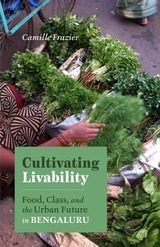
In recent years, the concept of “livability” has captured the global imagination, influencing discussions about the implications of climate change on human life and inspiring rankings of “most livable cities” in popular publications. But what really makes for a livable life, and for whom?
Cultivating Livability takes Bengaluru, India, as a case study—a city that is alternately described as India’s most and least livable megacity, where rapid transformation is undergirded by inequalities evident in the food networks connecting peri-urban farmers and the middle-class public. Anthropologist Camille Frazier probes the meaning of “livability” in Bengaluru through ethnographic work among producers and consumers, corporate intermediaries and urban information technology professionals.
Examining the varying efforts to reconfigure processes of food production, distribution, retail, and consumption, she reveals how these intersections are often rooted in and exacerbate ongoing forms of disenfranchisement that privilege some lives at the expense of others.
READERS
Browse our collection.
PUBLISHERS
See BiblioVault's publisher services.
STUDENT SERVICES
Files for college accessibility offices.
RECENTLY PUBLISHED





UChicago Accessibility Resources
home | accessibility | search | about | contact us
BiblioVault ® 2001 - 2026
The University of Chicago Press