
 A SCHOLARLY BOOK REPOSITORY
Adaptive Strategies and Population Ecology of Northern Grouse was first published in 1988. Minnesota Archive Editions uses digital technology to make long-unavailable books once again accessible, and are published unaltered from the original University of Minnesota Press editions.
This book is at once a major reference to the species of grouse that inhabit North America and the Holarctic and a synthesis of all the available data on their ecology, sociobiology, population dynamics, and management. The book undertakes to answer two long-standing questions in population ecology: what actually regulates the numbers within a population, and what are the breeding and survival strategies evolved in this northern environment? For Volume I, editors Arthur T. Bergerud and Michael W. Gratson have drawn together their own work and that of colleagues in North America, Iceland, and Norway—in all, eleven research studies, averaging six years' duration, on eight species of grouse. These studies deal with the blue and ruffed grouse of the forest habitat; the sharp-tailed grouse, prairie chicken, and sage grouse of the prairie or steppe; and the white-tailed, rick, and willow ptarmigan found in alpine and arctic tundras. The authors describe the rich repertoire of behavior patterns developed by the hen and the cock to achieve their two primary objectives—first, to stay alive, and then to breed. Volume II, primarily the work of Bergerud, synthesizes the evidence in Volume I and in the grouse research literature from a theoretical perspective. Several potentially controversial sociobiological hypotheses are advanced to account for flocking behavior, migration, dispersal, roosting and feeding behavior, mate choice and mating systems. The demographic analysis provides new insights into cycles of abundance, the limitation of numbers, and the demographic factors that determine densities. The contributors, besides Bergerud and Gratson: R.C. Davies, A. Gardarson, J.E. Hartzler, R.A. Huempfner, D.A. Jenni, D.H. Mossop, S. Myrberget, R.E. Page, R.K. Schmidt, W.D. Svedarsky, and J.R. Tester.
Adaptive Strategies and Population of Northern Grouse was first published in 1988. Minnesota Archive Editions uses digital technology to make long-unavailable books once again accessible, and are published unaltered from the original University of Minnesota Press editions.
The first volume contains eleven studies of eight grouse species; the second contains primarily the work of Bergerud, which utilizes the evidence in the first volume to advance theories of behavior and offer new demographic insights.
This second volume contains primarily the work of Bergerud, which utilizes the evidence in the first volume to advance theories of behavior and offer new demographic insights.

Terry Root has used the data from the 1963-72 counts to provide the first large-scale biogeographical account of birds wintering in North America. Using sophisticated computer techniques, Root has translated the data into both traditional contour maps and innovative new maps that stimulate three dimensions. The maps show at a glance that, for example, the Baltimore Oriole winters primarily along the eastern seaboard, with the densest populations in Florida between Tallahassee and Gainesville and in North Carolina from Rocky Mount to the Croatan National Forest.
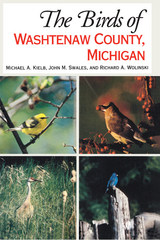
The Birds of Washtenaw County, Michigan provides a comprehensive account of the birdlife in Washtenaw County. Situated to the west of Detroit in southeast Michigan, the county has an exceptionally rich history of ornithological study, fueled by the activists of numerous amateur birdwatchers and by the interests of two major universities.
Frequency accounts of the 267 species recorded in the county during the last 15 years are framed by a discussion of the topographical history of the county. In addition, the authors present notes on another 30 species not seen in the county since 1976. A comprehensive site guide offers suggestions of the optimal locals and times to try to find the birds.
Michael A. Kielb has studied birds in Michigan for over 15 years and teaches classes on birds at the Matthaei Botanical Gardens in Ann Arbor and the College of Du Page in Illinois. He also leads bird-watching tours throughout the Americas and is currently a Research Associate in the Reproductive Sciences Program at the University of Michigan.
John M. Swales first became interested in birds while teaching in the Sudan and has been exploring the birdlife of Washtenaw County since arriving at the University of Michigan in 1985. He is Professor of Linguistics and Director of the English Language Institute, University of Michigan.
Richard A. Wolinski has been studying birds of Washtenaw County for nearly two decades. He is a staff biologist with an engineering firm in southeast Michigan.


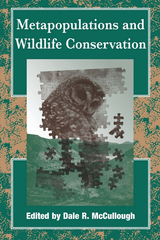
Development of rural landscapes is converting once-vast expanses of open space into pockets of habitat where wildlife populations exist in isolation from other members of their species. The central concept of metapopulation dynamics -- that a constellation of partially isolated patches can yield overall stability to a system that is chaotic at the level of the individual patch -- offers an important new way of thinking about the conservation and management of populations dispersed among small habitat fragments. This approach is proving to be a rich resource for biologists hoping to arrest the current catastrophic loss of biodiversity.
An understanding of metapopulation theory and analysis is critical to the modern practice of wildlife conservation and management. This volume provides a comprehensive overview of the subject, addressing the needs of an applied professional audience for comprehensible information to integrate into their practices. Leading conservation biologists, ecologists, wildlife managers, and other experts consider the emergence and development of metapopulation theory and explore its applicability and usefulness to real-world conservation programs.
Introductory chapters provide background information on basic concepts such as models, genetics, landscape configuraton, and edges and corridors. Subsequent chapters present detailed methods of analyzing metapopulation structure. Case studies of an array of vertebrate species, including the Swedish pool frog, the northern spotted owl, Stephens' kangaroo rat, Florida scrub jay, Mediterranean monk seal, Steller sea lion, tule elk, and others, illustrate nuances of metapopulation theory analysis and its practical applications.
Contributors describe what metapopulation approaches bring to wildlife conservation and management, present models of how metapopulation thinking has been applied in specific situations, and suggest the analysis required in given cases. Metapopulations and Wildlife Conservation is essential reading for anyone working in the field of wildlife conservation and managment.
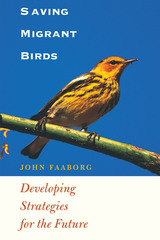
In the 1980s, numerous scientific surveys documented both declining bird populations, especially among Neotropical songbirds that winter in the tropics, and the loss of tropical rain forest habitat. Drawing the seemingly obvious conclusion, scientists and environmental activists linked songbird declines to loss of tropical habitats and alerted the world to an impending ecological catastrophe. Their warnings led to the establishment of the Neotropical Migratory Bird Conservation Program, also known as Partners in Flight, the self-proclaimed largest conservation effort in history.
Looking back over more than a decade of efforts to save migrant birds, John Faaborg offers the first serious evaluation of the state of songbird populations today, the effectiveness of conservation programs such as Partners in Flight, and the reliability and completeness of scientific research on migrant birds. Taking neither an alarmist nor a complacent approach, he shows that many factors besides habitat loss affect bird populations and that Neotropical migrants as a group are not declining dramatically, though some species adapt to habitat alteration more successfully than others. Faaborg's state-of-the-art survey thus clarifies the kinds of information we will need and the conservation efforts we should undertake to ensure the long-term survival of Neotropical migrant birds.
READERS
Browse our collection.
PUBLISHERS
See BiblioVault's publisher services.
STUDENT SERVICES
Files for college accessibility offices.
RECENTLY PUBLISHED






UChicago Accessibility Resources
home | accessibility | search | about | contact us
BiblioVault ® 2001 - 2024
The University of Chicago Press