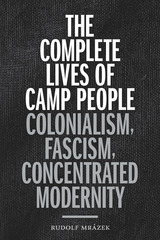
front cover of The Complete Lives of Camp People
The Complete Lives of Camp People
Colonialism, Fascism, Concentrated Modernity
Rudolf Mrázek
Duke University Press, 2020
In The Complete Lives of Camp People Rudolf Mrázek presents a sweeping study of the material and cultural lives of twentieth-century concentration camp internees and the multiple ways in which their experiences speak to the fundamental logics of modernity. Mrázek focuses on the minutiae of daily life in two camps: Theresienstadt, a Nazi “ghetto” for Jews near Prague, and the Dutch “isolation camp” Boven Digoel—which was located in a remote part of New Guinea between 1927 and 1943 and held Indonesian rebels who attempted to overthrow the colonial government. Drawing on a mix of interviews with survivors and their descendants, archival accounts, ephemera, and media representations, Mrázek shows how modern life's most mundane tasks—buying clothes, getting haircuts, playing sports—continued on in the camps, which were themselves designed, built, and managed in accordance with modernity's tenets. In this way, Mrázek demonstrates that concentration camps are not exceptional spaces; they are the locus of modernity in its most distilled form.
[more]


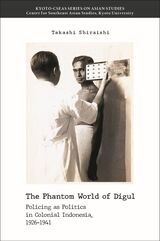
front cover of The Phantom World of Digul
The Phantom World of Digul
Policing as Politics in Colonial Indonesia, 1926–1941
Takashi Shiraishi
National University of Singapore Press, 2020
Digul was an internment colony for political prisoners that was established in 1926 in West Papua. This book argues that Digul is the key to understanding Indonesia’s colonial governance between the failed communist rebellion of late 1926 and the declaration of independence in 1945, a time when the Dutch regime attempted to impose what they called “rust en orde,” or peace and order, on the Indonesian people via the suppression of politics by the police. The political policing regime the Dutch Indies state created, Takashi Shiraishi shows, was simultaneously a success and a failure. While unrest was to some degree put down, the native terrain was never completely pacified, as activists linked up with each other in fluid networks that cut across spatial and ideational boundaries.
 
How did the government deploy political policing to achieve its policy objectives? What were the consequences and challenges for Indonesian activists? How was the government able to fashion its policing apparatus as the most potent instrument to achieve peace and order when the Great Depression hit the Indies, nationalist and communist forces were gaining strength in other places of the world, and war was coming both in Europe and Asia? This book answers those questions and more, breaking new ground for our understanding of the history of the Dutch Indies state in the early part of the twentieth century.
 
[more]


Send via email Share on Facebook Share on Twitter