
 A SCHOLARLY BOOK REPOSITORY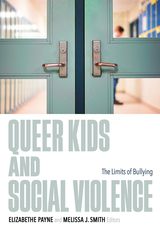
Challenging the myths about LGBTQ+ kids and bullying: what it means to protect queer kids in schools
Conversations around LGBTQ+ kids in school have become dominated by the subject of bullying. Although this may be due to good-faith efforts to protect vulnerable students, Queer Kids and Social Violence demonstrates that a focus on bullying as acts of individual peer aggression fails to address the social norms that perpetuate the violence. Considering the broader contexts of bullying, this volume offers ways to engage with queer youth that are both more humanizing and more likely to create sustainable change.
Essays by leading international scholars analyze how bullying discourse shapes policy and practice, using in-depth case studies, research findings, and examinations of political policy to guide readers through the various forms of violence, identity regulation, and identity erasure in schools. Offering conversation-shifting interventions to respond to a difficult and frightening political moment for LGBTQ+ youth, Queer Kids and Social Violence is a rounded, empathetic picture that does queer youth justice and points the way toward safer schools for all.
Contributors: Ana María Amigo-Ventureira, Durell M. Callier, Cristyn Davies, Renée DePalma, Tania Ferfolja, Jessica Fields, Elliot Fonarev, Jen Gilbert, Tristan Gleason, Dominique C. Hill, Angela Ingram, Laurie Gutmann Kahn, Cris Mayo, Mollie McQuillan, Aoife Neary, C.J. Pascoe, Victoria Rawlings, EJ Renold, Jessica Ringrose, Kerry H. Robinson, Dorte Marie Søndergaard, Cris Townley, Jacqueline Ullman, Boni Wozolek.
Retail e-book files for this title are screen-reader friendly with images accompanied by short alt text and/or extended descriptions.
Draws directly on insights from teens to reframe our understanding of bullying in the age of social media and why anti-bullying campaigns have been unsuccessful in combating it.
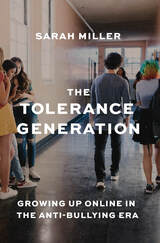
Fitting in and standing out is an eternal rite of passage for teenagers. Increasingly, their struggles to establish hierarchies and regulate social norms are labeled under the umbrella of “bullying.” This phenomenon is considered such a significant problem that all fifty states have passed anti-bullying legislation, and many schools now engage prevention programs that promote tolerance, kindness, and active bystander interventions. Despite these efforts, bullying remains as widespread as ever. Why is that? The answer lies in a unique challenge faced by teens today: social media.
In The Tolerance Generation, sociologist Sarah Miller explores how youth grapple with bullying in the digital age alongside the anti-bullying industry. Drawing on two school years with students at a Northeastern high school, Miller reveals how institutional efforts to curb bullying are no match for the many online interactions in which bullying thrives. She charts teens’ experiences as they confront not only bullying, but also sexting exposures, school shooting threats, and viral cancel culture, illustrating the escalating pressures social media places on youth. Yet the school’s anti-bullying campaigns are a mismatch. They are engineered to address individual instances of explicit conflict, not to change the culture that contributes to bullying, nor to help marginalized students who are most likely to be targeted. Miller captures how exclusion and harm spread through the interplay of teens’ on and offline lives and shows how this is due, in part, to school practices that both reinforce—and fail to address—bullying as a systemic problem.
But while social media can foster conflict, it can also be a tool for building a youth culture of care. Miller shows how many teens harness digital culture to develop their own prevention strategies, going beyond tolerance to use social media as a site for education, conflict resolution, and resistance. Ultimately, Miller argues that the anti-bullying movement is an inadequate training ground for youth to learn how to deal with American inequalities. However, by addressing the structural factors that produce bullying, and by listening to teens’ wisdom on how best to handle it, schools can create a more effective curriculum.
READERS
Browse our collection.
PUBLISHERS
See BiblioVault's publisher services.
STUDENT SERVICES
Files for college accessibility offices.
RECENTLY PUBLISHED






UChicago Accessibility Resources
home | accessibility | search | about | contact us
BiblioVault ® 2001 - 2026
The University of Chicago Press