
 A SCHOLARLY BOOK REPOSITORY
55 start with A start with A

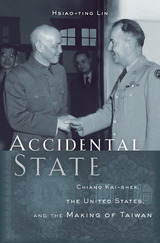
The existence of two Chinese states—one controlling mainland China, the other controlling the island of Taiwan—is often understood as a seemingly inevitable outcome of the Chinese civil war. Defeated by Mao Zedong, Chiang Kai-shek’s Nationalists fled to Taiwan to establish a rival state, thereby creating the “Two Chinas” dilemma that vexes international diplomacy to this day. Accidental State challenges this conventional narrative to offer a new perspective on the founding of modern Taiwan.
Hsiao-ting Lin marshals extensive research in recently declassified archives to show that the creation of a Taiwanese state in the early 1950s owed more to serendipity than careful geostrategic planning. It was the cumulative outcome of ad hoc half-measures and imperfect compromises, particularly when it came to the Nationalists’ often contentious relationship with the United States.
Taiwan’s political status was fraught from the start. The island had been formally ceded to Japan after the First Sino-Japanese War, and during World War II the Allies promised Chiang that Taiwan would revert to Chinese rule after Japan’s defeat. But as the Chinese civil war turned against the Nationalists, U.S. policymakers reassessed the wisdom of backing Chiang. The idea of placing Taiwan under United Nations trusteeship gained traction. Cold War realities, and the fear of Taiwan falling into Communist hands, led Washington to recalibrate U.S. policy. Yet American support of a Taiwan-based Republic of China remained ambivalent, and Taiwan had to eke out a place for itself in international affairs as a de facto, if not fully sovereign, state.
Can—or should—the United States try to promote reform in client states in the Third World? This question, which reverberates through American foreign policy, is at the heart of Adventures in Chaos. A faltering friendly state, in danger of falling to hostile forces, presents the U.S. with three options: withdraw, bolster the existing government, or try to reform it. Douglas Macdonald defines the circumstances that call these policy options into play, combining an analysis of domestic politics in the U. S., cognitive theories of decision making, and theories of power relations drawn from sociology, economics, and political science.
He examines the conditions that promote the reformist option and then explores strategies for improving the success of reformist intervention in the future. In order to identify problems in this policy—and to propose solutions—Macdonald focuses on three case studies of reformist intervention in Asia: China, 1946-1948; the Philippines, 1950-1953; and Vietnam, 1961-1963. Striking similarities in these cases suggest that such policy dilemmas are a function of the global role played by the U.S., especially during the Cold War. Though this role is changing, Macdonald foresees future applications for the lessons his study offers.
A challenge to the conventional wisdom on reformist intervention, Adventures in Chaos—through extensive archival research—displays a theoretical and historical depth often lacking in treatments of the subject.
Far from being secondary considerations in Chinese Marxism, aesthetics and culture are in fact principal concerns. In this respect, such Marxists are similar to their Western counterparts, although Europeans have had little understanding of the Chinese experience. Liu traces the genealogy of aesthetic discourse in both modern China and the West since the era of classical German thought, showing where conceptual modifications and divergences have occurred in the two traditions. He examines the work of Mao Zedong, Lu Xun, Li Zehou, Qu Qiubai, and others in China, and from the West he discusses Kant, Schiller, Schopenhauer, and Marxist theorists including Horkheimer, Adorno, Benjamin, and Marcuse. While stressing the diversity of Marxist positions within China as well as in the West, Liu explains how ideas of culture and aesthetics have offered a constructive vision for a postrevolutionary society and have affected a wide field of issues involving the problems of modernity.
Forcefully argued and theoretically sophisticated, this book will appeal to students and scholars of contemporary Marxism, cultural studies, aesthetics, and modern Chinese culture, politics, and ideology.
Scholars have described the eighteenth century in China as a time of “state activism” when the state sought to strengthen its control on various social and cultural sectors. The Taiping Rebellion and the postbellum restoration efforts of the mid-nineteenth century have frequently been associated with the origins of elite activism. However, drawing upon a wide array of sources, including previously untapped Qing government documents, After the Prosperous Age argues that the ascendance of elite activism can be traced to the Jiaqing and Daoguang reigns in the early nineteenth century, and that the Taiping Rebellion served as a second catalyst for the expansion of elite public roles rather than initiating such an expansion.
The first four decades of the nineteenth century in China remain almost uncharted territory. By analyzing the social and cultural interplay between state power and local elites of Suzhou, a city renowned for its economic prosperity and strong sense of local pride, from the eighteenth to the early nineteenth century, Seunghyun Han illuminates the significance of this period in terms of the reformulation of state-elite relations marked by the unfolding of elite public activism and the dissolution of a centralized cultural order.
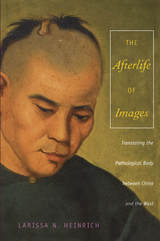
Combining literary studies, the history of science, and visual culture studies, Heinrich analyzes the rhetoric and iconography through which medical missionaries transmitted to the West an image of China as “sick” or “diseased.” He also examines the absorption of that image back into China through missionary activity, through the earliest translations of Western medical texts into Chinese, and even through the literature of Chinese nationalism. Heinrich argues that over time “scientific” Western representations of the Chinese body and culture accumulated a host of secondary meanings, taking on an afterlife with lasting consequences for conceptions of Chinese identity in China and beyond its borders.
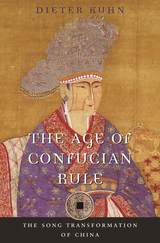
Just over a thousand years ago, the Song dynasty emerged as the most advanced civilization on earth. Within two centuries, China was home to nearly half of all humankind. In this concise history, we learn why the inventiveness of this era has been favorably compared with the European Renaissance, which in many ways the Song transformation surpassed.
With the chaotic dissolution of the Tang dynasty, the old aristocratic families vanished. A new class of scholar-officials—products of a meritocratic examination system—took up the task of reshaping Chinese tradition by adapting the precepts of Confucianism to a rapidly changing world. Through fiscal reforms, these elites liberalized the economy, eased the tax burden, and put paper money into circulation. Their redesigned capitals buzzed with traders, while the education system offered advancement to talented men of modest means. Their rationalist approach led to inventions in printing, shipbuilding, weaving, ceramics manufacture, mining, and agriculture. With a realist’s eye, they studied the natural world and applied their observations in art and science. And with the souls of diplomats, they chose peace over war with the aggressors on their borders. Yet persistent military threats from these nomadic tribes—which the Chinese scorned as their cultural inferiors—redefined China’s understanding of its place in the world and solidified a sense of what it meant to be Chinese.
The Age of Confucian Rule is an essential introduction to this transformative era. “A scholar should congratulate himself that he has been born in such a time” (Zhao Ruyu, 1194).
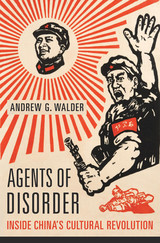
Why did the Chinese party state collapse so quickly after the onset of the Cultural Revolution? The award-winning author of China Under Mao offers a surprising answer that holds a powerful implicit warning for today’s governments.
By May 1966, just seventeen years after its founding, the People’s Republic of China had become one of the most powerfully centralized states in modern history. But that summer everything changed. Mao Zedong called for students to attack intellectuals and officials who allegedly lacked commitment to revolutionary principles. Rebels responded by toppling local governments across the country, ushering in nearly two years of conflict that in places came close to civil war and resulted in nearly 1.6 million dead.
How and why did the party state collapse so rapidly? Standard accounts depict a revolution instigated from the top down and escalated from the bottom up. In this pathbreaking reconsideration of the origins and trajectory of the Cultural Revolution, Andrew Walder offers a startling new conclusion: party cadres seized power from their superiors, setting off a chain reaction of violence, intensified by a mishandled army intervention. This inside-out dynamic explains how virulent factions formed, why the conflict escalated, and why the repression that ended the disorder was so much worse than the violence it was meant to contain.
Based on over 2,000 local annals chronicling some 34,000 revolutionary episodes across China, Agents of Disorder offers an original interpretation of familiar but complex events and suggests a broader lesson for our times: forces of order that we count on to stanch violence can instead generate devastating bloodshed.
During and after the Cultural Revolution, radical leaders in the Chinese Communist Party tried to mobilize rural society for socioeconomic and political changes and move rural China to even higher stages of collectivism. David Zweig argues that because advocates of agrarian radicalism formed a minority group within China’s central leadership, they acted in opposition to the dominant moderate forces and resorted to alternative strategies to mobilize support for their unofficial policies. The limited institutionalization of the system allowed the radicals to promote their principles through “policy winds,” speeches generated by newspaper articles, networks of political allies, and organized visits; they also linked their policies to ongoing political and economic campaigns. In spite of this radical ideology and frequent upheavals in the countryside, Zweig finds that Chinese peasants had no ideological affinity for Mao’s theory of the continuing revolution and reacted to each policy change on the basis of how it affected their personal, family, or collective interests. Despite intense propaganda, cadres adjusted the impact of these radical policies so that the peasants’ conservative mindset, entrepreneurial spirit, and desire to improve their own lot remained intact.
Zweig examines the local realities of the radicals’ program by describing the results of specific policies; he discriminates among the responses of officials at different bureaucratic levels, peasants of varying income levels and family structures, and villages with specific geographic and socioeconomic characteristics. He draws on his own field research in Chinese villages and interviews with Chinese college students and their friends who had lived in the countryside and emigrés in Hong Kong who had lived and worked in rural China.
Before the Cultural Revolution, Ai Ssu-ch’i (1910–1966) was one of Communist China’s foremost Marxist philosophers, second only to Chairman Mao himself. Ai was attracted to Marxism-Leninism as a young student in China and Japan, and wrote numerous books and articles seeking to explain the complexities of the philosophy in language everyone could understand. His writings were enormously popular during the 1930s and 1940s, and went through many printings despite continuous harassment from Kuomintang censors.
This volume is the first full-length study of Ai Ssu-ch’i. In spite of his popularity, Ai has largely been ignored in recent histories of the Chinese Communist movement, because his importance lies in his function as a popularizer rather than as an original thinker. However, it can be shown that Mao and other leaders of the movement were influenced by him, and his writings and translations certainly helped to attract many young Chinese intellectuals to the Communist cause.
The recent flood of reminiscence literature in China has reserved a special place of prominence for Ai Ssu-ch’i. This is not only because he was so admired by Mao, but also because he devoted his life so enthusiastically and wholeheartedly to the Party. Joshua Fogel traces the pattern of this devotion via Ai’s crucial role in spreading Marxist-Leninist thought among Chinese intellectuals.

The enormous changes in twentieth-century Chinese higher education up to the Sino-Japanese War are detailed in this pioneering work. Yeh examines the impact of instruction in English and of the introduction of science and engineering into the curriculum. Such innovations spurred the movement of higher education away from the gentry academies focused on classical studies and propelled it toward modern middle-class colleges with diverse programs.
Yeh provides a typology of Chinese institutions of higher learning in the Republican period and detailed studies of representative universities. She also describes student life and prominent academic personalities in various seats of higher learning. Social changes and the political ferment outside the academy affected students and faculty alike, giving rise, as Yeh contends, to a sense of alienation on the eve of war.
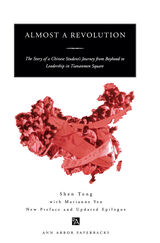
Now nearly ten years later as our fascination with post-Deng China continues to develop, Shen's story and the updated material he provides are weighted with increasing significance. Coupled with much of the recent analysis, Shen's firsthand account vividly contextualizes the Chinese government's opposition to democracy and offers meaningful insight into a country that promises to occupy an increasingly prominent position in the world.
"A cause for celebration . . . an important contribution to China's newly discovered historical memory." --New York Times Book Review
Shen Tong is a doctoral student in political sociology at Boston University and the founder of the Democracy for China Fund, which aims to support and publicize dissent networks in China. Marianne Yen is a former New York correspondent for the Washington Post.
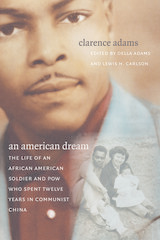
Adams was a seventeen-year-old high school dropout in 1947 when he fled Memphis and the local police to join the U.S. Army. Three years later, after fighting in the Korean War in an all-black artillery unit that he believed to have been sacrificed to save white troops, he was captured by the Chinese. After spending almost three years as a POW, during which he continued to suffer racism at the hands of his fellow Americans, he refused repatriation in 1953, choosing instead the People's Republic of China, where he hoped to find educational and career opportunities not readily available in his own country.
While living in China, Adams earned a university degree, married a Chinese professor of Russian, and worked in Beijing as a translator for the Foreign Languages Press. During the Vietnam War he made a controversial anti-war broadcast over Radio Hanoi, urging black troops not to fight for someone else's political and economic freedoms until they enjoyed these same rights at home.
In 1966, having come under suspicion during the Chinese Cultural Revolution, he returned with his wife and two children to the United States, where he was subpoenaed to appear before the House Committee on Un-American Activities to face charges of "disrupting the morale of American fighting forces in Vietnam and inciting revolution in the United States." After these charges were dropped, he and his family struggled to survive economically. Eventually, through sheer perseverance, they were able to fulfill at least part of the American Dream. By the time he died, the family owned and operated eight successful Chinese restaurants in his native Memphis.
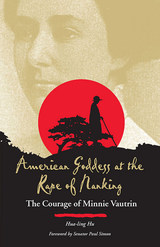
The Japanese army’s brutal four-month occupation of the city of Nanking during the 1937 Sino-Japanese War is known, for good reason, as “the rape of Nanking.” As they slaughtered an estimated three hundred thousand people, the invading soldiers raped more than twenty thousand women—some estimates run as high as eighty thousand. Hua-ling Hu presents here the amazing untold story of the American missionary Minnie Vautrin, whose unswerving defiance of the Japanese protected ten thousand Chinese women and children and made her a legend among the Chinese people she served.
Vautrin, who came to be known in China as the “Living Goddess” or the “Goddess of Mercy,” joined the Foreign Christian Missionary Society and went to China during the Chinese Nationalist Revolution in 1912. As dean of studies at Ginling College in Nanking, she devoted her life to promoting Chinese women’s education and to helping the poor.
At the outbreak of the war in July 1937, Vautrin defied the American embassy’s order to evacuate the city. After the fall of Nanking in December, Japanese soldiers went on a rampage of killing, burning, looting, rape, and torture, rapidly reducing the city to a hell on earth. On the fourth day of the occupation, Minnie Vautrin wrote in her diary: “There probably is no crime that has not been committed in this city today. . . . Oh, God, control the cruel beastliness of the soldiers in Nanking.”
When the Japanese soldiers ordered Vautrin to leave the campus, she replied: “This is my home. I cannot leave.” Facing down the blood-stained bayonets constantly waved in her face, Vautrin shielded the desperate Chinese who sought asylum behind the gates of the college. Vautrin exhausted herself defying the Japanese army and caring for the refugees after the siege ended in March 1938. She even helped the women locate husbands and sons who had been taken away by the Japanese soldiers. She taught destitute widows the skills required to make a meager living and provided the best education her limited sources would allow to the children in desecrated Nanking.
Finally suffering a nervous breakdown in 1940, Vautrin returned to the United States for medical treatment. One year later, she ended her own life. She considered herself a failure.
Hu bases her biography on Vautrin’s correspondence between 1919 and 1941 and on her diary, maintained during the entire siege, as well as on Chinese, Japanese, and American eyewitness accounts, government documents, and interviews with Vautrin’s family.
This volume explores commercial relations between the United States and China from the eighteenth century until 1949, fleshing out with facts the romantic and shadowy image of "the China trade." These nine chapters by specialists in the field have developed from papers they presented at a conference supported by the national Committee on American-East Asian Relations.
The work begins with an Introduction by John K. Fairbank, then moves on to analysis of the old China trade up to the American Civil War, centering on traditional Chinese exports of tea and silk. A second section deals with American imports into China--cotton textiles and textile-related goods, cigarettes, kerosene. Finally, the impact of the trade on both countries is assessed and the operations of American-owned and multinational companies in China are examined. For both the United States and China, the economic importance of the trade proves to have been less than the legend might suggest.
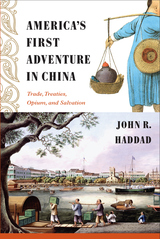
In America's First Adventure in China, John Haddad provides a colorful history of the evolving cultural exchange and interactions between these countries. He recounts how American expatriates adopted a pragmatic attitude-as well as an entrepreneurial spirit and improvisational approach-to their dealings with the Chinese. Haddad shows how opium played a potent role in the dreams of Americans who either smuggled it or opposed its importation, and he considers the missionary movement that compelled individuals to accept a hard life in an alien culture.
As a result of their efforts, Americans achieved a favorable outcome—they established a unique presence in China—and cultivated a relationship whose complexities continue to grow.
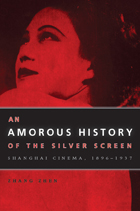
The first sustained historical study of the emergence of cinema in China, An Amorous History of the Silver Screen is a fascinating narrative that illustrates the immense cultural significance of film and its power as a vehicle for social change. Named after a major feature film on the making of Chinese cinema, only part of which survives, An Amorous History of the Silver Screen reveals the intricacies of this cultural movement and explores its connections to other art forms such as photography, architecture, drama, and literature. In light of original archival research, Zhang Zhen examines previously unstudied films and expands the important discussion of how they modeled modern social structures and gender roles in early twentieth-century China.
The first volume in the new and groundbreaking series Cinema and Modernity, An Amorous History of the Silver Screen is an innovative—and well illustrated—look at the cultural history of Chinese modernity through the lens of this seminal moment in Shanghai cinema.
Ancestors, Kings, and the Dao outlines the evolution of musical performance in early China, first within and then ultimately away from the socio-religious context of ancestor worship. Examining newly discovered bamboo texts from the Warring States period, Constance A. Cook compares the rhetoric of Western Zhou (1046–771 BCE) and Spring and Autumn (770–481 BCE) bronze inscriptions with later occurrences of similar terms in which ritual music began to be used as a form of self-cultivation and education. Cook’s analysis links the creation of such classics as the Book of Odes with the ascendance of the individual practitioner, further connecting the social actors in three types of ritual: boys coming of age, heirs promoted into ancestral government positions, and the philosophical stages of transcendence experienced in self-cultivation.
The focus of this study is on excavated texts; it is the first to use both bronze and bamboo narratives to show the evolution of a single ritual practice. By viewing the ancient inscribed materials and the transmitted classics from this new perspective, Cook uncovers new linkages in terms of how the materials were shaped and reshaped over time and illuminates the development of eulogy and song in changing ritual contexts.
Christianity is often praised as an agent of Chinese modernization or damned as a form of cultural and religious imperialism. In both cases, Christianity’s foreignness and the social isolation of converts have dominated this debate. Eugenio Menegon uncovers another story. In the sixteenth century, European missionaries brought a foreign and global religion to China. Converts then transformed this new religion into a local one over the course of the next three centuries.
Focusing on the still-active Catholic communities of Fuan county in northeast Fujian, this project addresses three main questions. Why did people convert? How did converts and missionaries transform a global and foreign religion into a local religion? What does Christianity’s localization in Fuan tell us about the relationship between late imperial Chinese society and religion?
Based on an impressive array of sources from Asia and Europe, this pathbreaking book reframes our understanding of Christian missions in Chinese-Western relations. The study’s implications extend beyond the issue of Christianity in China to the wider fields of religious and social history and the early modern history of global intercultural relations. The book suggests that Christianity became part of a preexisting pluralistic, local religious space, and argues that we have so far underestimated late imperial society’s tolerance for “heterodoxy.” The view from Fuan offers an original account of how a locality created its own religious culture in Ming-Qing China within a context both global and local, and illuminates the historical dynamics contributing to the remarkable growth of Christian communities in present-day China.
Ancestral ritual in early China was an orchestrated dance between what was present (the offerings and the living) and what was absent (the ancestors). The interconnections among the tangible elements of the sacrifice were overt and almost mechanical, but extending those connections to the invisible guests required a medium that was itself invisible. Thus in early China, ancestral sacrifice was associated with focused thinking about the ancestors, with a structured mental effort by the living to reach out to the absent forebears and to give them shape and existence. Thinking about the ancestors-about those who had become distant-required active deliberation and meditation, qualities that had to be nurtured and learned.
This study is a history of the early Chinese ancestral cult, particularly its cognitive aspects. Its goals are to excavate the cult's color and vitality and to quell assumptions that it was no more than a simplistic and uninspired exchange of food for longevity, of prayers for prosperity. Ancestor worship was not, the author contends, merely mechanical and thoughtless. Rather, it was an idea system that aroused serious debates about the nature of postmortem existence, served as the religious backbone to Confucianism, and may even have been the forerunner of Daoist and Buddhist meditation practices.
Anecdote, Network, Gossip, Performance is a study of the Shishuo xinyu, the most important anecdotal collection of medieval China—and arguably of the entire traditional era. In a set of interconnected essays, Jack W. Chen offers new readings of the Shishuo xinyu that draw upon social network analysis, performance studies, theories of ritual and mourning, and concepts of gossip and reputation to illuminate how the anecdotes of the collection imagine and represent a political and cultural elite. Whereas most accounts of the Shishuo have taken a historical approach, Chen argues that the work should be understood in literary terms.
At its center, Anecdote, Network, Gossip, Performance is an extended meditation on the very nature of the anecdote form, both what the anecdote affords in terms of representing a social community and how it provides a space for the rehearsal of certain longstanding philosophical and cultural arguments. Although each of the chapters may be read separately as an essay in its own right, when taken together, they present a comprehensive account of the Shishuo in all of its literary complexity.
This book is a project in comparative history, but along two distinct axes, one historical and the other historiographical. Its purpose is to constructively juxtapose the early modern European and Chinese approaches to historical study that have been called "antiquarian." As an exercise in historical recovery, the essays in this volume amass new information about the range of antiquarian-type scholarship on the past, on nature, and on peoples undertaken at either end of the Eurasian landmass between 1500 and 1800. As a historiographical project, the book challenges the received---and often very much under conceptualized---use of the term "antiquarian" in both European and Chinese contexts. Readers will not only learn more about the range of European and Chinese scholarship on the past---and especially the material past---but they will also be able to integrate some of the historiographical observations and corrections into new ways of conceiving of the history of historical scholarship in Europe since the Renaissance, and to reflect on the impact of these European terms on Chinese approaches to the Chinese past. This comparison is a two-way street, with the European tradition clarified by knowledge of Chinese practices, and Chinese approaches better understood when placed alongside the European ones.
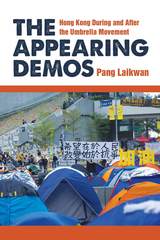
The 79-day-long Hong Kong Umbrella Movement occupied major streets in the busiest parts of the city, creating tremendous inconvenience to this city famous for capitalist order and efficiency. It was also a peaceful collective effort of appearance, and it was as much a political event as a cultural one. The urge for expressing an independent cultural identity underlined both the Occupy movement and the remarkably rich cultural expressions it generated. While understanding the specificity of Hong Kong’s situations, The Appearing Demos also comments on some global predicaments we are facing in the midst of neoliberalism and populism. It directs our attention from state-based sovereignty to city-based democracy, and emphasizes the importance of participation and cohabitation. The book also examines how the ideas of Hannah Arendt are useful to those happenings much beyond the political circumstances that gave rise to her theorization. The book pays particular attention to the actual intersubjective experiences during the protest. These experiences are local, fragile, and sometimes inarticulable, therefore resisting rationality and debates, but they define the fullness of any individual, and they also make politics possible. Using the Umbrella Movement as an example, this book examines the “freed” political agents who constantly take others into consideration in order to guarantee the political realm as a place without coercion and discrimination. In doing so, Pang Laikwan demonstrates how politics means neither to rule nor to be ruled, and these movements should be defined by hope, not by goals.
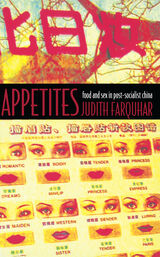
From eating well in improving economic times to memories of the late 1950s famine, from the flavors of traditional Chinese medicine to modernity’s private sexual passions, this book argues that embodiment in all its forms must be invented and sustained in public reflections about personal and national life. As much at home in science studies and social theory as in the details of life in Beijing, this account uses anthropology, cultural studies, and literary criticism to read contemporary Chinese life in a materialist and reflexive mode. For both Maoist and market reform periods, this is a story of high culture in appetites, desire in collective life, and politics in the body and its dispositions.
For much of the twentieth century, the May Fourth movement of 1919 was seen as the foundational moment of modernity in China. Recent examinations of literary and cultural modernity in China have, however, led to a questioning of this view. By approaching May Fourth from novel perspectives, the authors of the eight studies in this volume seek to contribute to the ongoing critique of the movement.
The essays are centered on the intellectual and cultural/historical motivations and practices behind May Fourth discourse and highlight issues such as strategies of discourse formation, scholarly methodologies, rhetorical dispositions, the manipulation of historical sources, and the construction of modernity by means of the reification of China’s literary past.
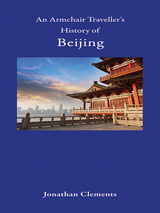
Home to capitals of several states over time, the site of modern Beijing has been ruled by Mongolian chiefs and the glorious Ming emperors, whose tombs can still be found on its outskirts. Through Beijing, we can experience Chinese history itself, including its more famous residents—including Khubilai Khan, Mulan, and Marco Polo. Special emphasis is placed on Beijing’s precarious heritage in the twenty-first century, as modern construction wipes out much of the old city to make way for homes for twenty million people.
This book also offers detailed information on sites of tourist interest, including the pros and cons of different sections of the Great Wall and the best ways to see the Forbidden City and the fast-disappearing relics of the city’s Manchu and Maoist eras. A chapter on food and drink examines not only local delicacies, but the many other Chinese dishes that form part of Beijing’s rich dining traditions. With its blend of rich history and expert tips, An Armchair Traveller’s History of Beijing is an essential introduction to one of the world’s most remarkable cities.
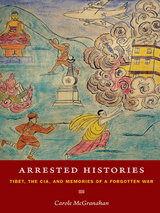
Drawing on rich ethnographic and historical research, McGranahan tells the story of the Tibetan resistance and the social processes through which this history is made and unmade, and lived and forgotten in the present. Fulfillment of veterans’ desire for recognition hinges on the Dalai Lama and “historical arrest,” a practice in which the telling of certain pasts is suspended until an undetermined time in the future. In this analysis, struggles over history emerge as a profound pain of belonging. Tibetan cultural politics, regional identities, and religious commitments cannot be disentangled from imperial histories, contemporary geopolitics, and romanticized representations of Tibet. Moving deftly from armed struggle to nonviolent hunger strikes, and from diplomatic offices to refugee camps, Arrested Histories provides powerful insights into the stakes of political engagement and the cultural contradictions of everyday life.
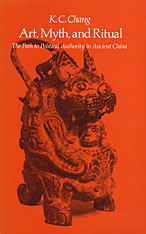
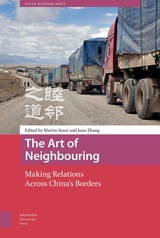
This is the first English-language monograph on the early history of maps in China, centering on those found in three tombs that date from the fourth to the second century BCE and constitute the entire known corpus of early Chinese maps (ditu). More than a millennium separates them from the next available map in the early twelfth century CE. Unlike extant studies that draw heavily from the history of cartography, this book offers an alternative perspective by mobilizing methods from art history, archaeology, material culture, religion, and philosophy. It examines the diversity of forms and functions in early Chinese ditu to argue that these pictures did not simply represent natural topography and built environments, but rather made and remade worlds for the living and the dead. Wang explores the multifaceted and multifunctional diagrammatic tradition of rendering space in early China.
At the genesis of the Republic of China in 1912, many political leaders, educators, and social reformers argued that republican education should transform China's people into dynamic modern citizens—social and political agents whose public actions would rescue the national community. Over subsequent decades, however, they came to argue fiercely over the contents of citizenship and how it should be taught. Moreover, many of their carefully crafted policies and programs came to be transformed by textbook authors, teachers, administrators, and students. Furthermore, the idea of citizenship, once introduced, raised many troubling questions. Who belonged to the national community in China, and how was the nation constituted? What were the best modes of political action? How should modern people take responsibility for "public matters"? What morality was proper for the modern public?
This book reconstructs civic education and citizenship training in secondary schools in the lower Yangzi region during the Republican era. It also analyzes how students used the tools of civic education introduced in their schools to make themselves into young citizens and explores the complex social and political effects of educated youths' civic action.
Joshua Fogel offers an incisive historical look at Sino-Japanese relations from three different perspectives. Using first a wide lens, he suggests a new way to capture the relationship between China and Japan by characterizing the nature of their contact. From the first century CE, the primary reasons for contact moved from political and ceremonial to cultural, and on to commercial ties. This period ends at the dawn of the modern age, when contacts involved treaties, consulates, and international law.
Switching to a microhistorical view, Fogel examines several important behind-the-scenes players in the launching of the countries’ modern diplomatic relations. He focuses on the voyage of the Senzaimaru from Nagasaki to Shanghai in 1862—the first official meeting of Chinese and Japanese in the modern era—and the Dutchman who played an important intermediary role. Finally, he examines the first expatriate Japanese community in the modern era, in Shanghai from the 1860s to the mid-1890s, when the first Sino-Japanese War erupted.
Introducing the concept of “Sinosphere” to capture the nature of Sino-foreign relations both spatially and temporally, Fogel presents an original and thought-provoking study on the long, complex relationship between China and Japan.
Mao explores the deep resonance American conservatives felt with the defeat of Chiang Kai-Shek and his exile to Taiwan, which they lamented as the loss of China to communism and the corrosion of traditional values. In response, they fomented aggressive anti-communist positions that urged greater action in the Pacific, a policy known as “Asia First.” While this policy would do nothing to oust the communists from China, it was powerfully effective at home. Asia First provided American conservatives a set of ideals—American sovereignty, selective military intervention, strident anti-communism, and the promotion of a technological defense state—that would bring them into the global era with the positions that are now their hallmark.
C. Patterson Giersch provides a groundbreaking challenge to the China-centered narrative of the Qing conquest through comparative frontier history and a pioneering use of indigenous sources. He focuses on the Tai domains of China's Yunnan frontier, part of the politically fluid borderlands, where local, indigenous leaders were crucial actors in an arena of imperial rivalry.
Patterns of acculturation were multi-directional. Both Qing and Tai created a hybrid frontier government that was tested as Burma and Siam extended influence into the region. As Qing and Chinese migrants gained greater political and economic control in borderland communities, indigenes adopted select Chinese ways. Chinese language was useful for trade, and relations with imperial officials were eased by wearing the queue and donning imperial robes. But indigenous culture and livelihoods persisted, and Tai aristocrats adopted rituals and symbols of the Burmese and Siamese courts.
Qing conquest and Chinese migration did not lead to simple patterns of incorporation and assimilation. Chinese economic and cultural influences were profound, but did not entirely undermine indigenous practices. These legacies, which would shape and complicate twentieth-century Chinese state building, hold an important key to understanding modern China.
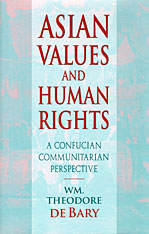
Since the horrific Tiananmen Square massacre in 1989, the debate on human rights in China has raged on with increasing volume and shifting context, but little real progress. In this provocative book, one of our most learned scholars of China moves beyond the political shouting match, informing and contextualizing this debate from a Confucian and a historical perspective.
"Asian Values" is a concept advanced by some authoritarian regimes to differentiate an Asian model of development, supposedly based on Confucianism, from a Western model identified with individualism, liberal democracy, and human rights. Highlighting the philosophical development of Confucianism as well as the Chinese historical experience with community organization, constitutionalism, education, and women's rights, Wm. Theodore de Bary argues that while the Confucian sense of personhood differs in some respects from Western libertarian concepts of the individual, it is not incompatible with human rights, but could, rather, enhance them.
De Bary also demonstrates that Confucian communitarianism has historically resisted state domination, and that human rights in China could be furthered by a genuine Confucian communitarianism that incorporates elements of Western civil society. With clarity and elegance, Asian Values and Human Rights broadens our perspective on the Chinese human rights debate.

READERS
Browse our collection.
PUBLISHERS
See BiblioVault's publisher services.
STUDENT SERVICES
Files for college accessibility offices.
RECENTLY PUBLISHED


UChicago Accessibility Resources
home | accessibility | search | about | contact us
BiblioVault ® 2001 - 2024
The University of Chicago Press