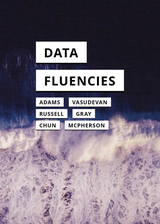
front cover of Data Fluencies
Data Fluencies
Philippa R. Adams
University of Minnesota Press, 2027

Creating communities of care in the digital world

Data Fluencies offers a model for enacting theories of data justice, methods of community engagement, and practical approaches to disrupting institutions and infrastructures that have diminished the capacities of everyday digital technology users. Combining humanities-based critical thinking, computational data analyses, arts-based research cocreation, and media making, data fluencies offer creative and imaginative approaches to investigating and countering algorithmic discrimination, digital surveillance, mis- and disinformation, and deep fake versions of reality.

Not fixed or static, data fluencies move with, through, and against data streams to build the worlds we want, not the ones algorithms push on us. Presenting real-world examples, the authors demonstrate how data fluencies transcend difference and counter the proliferation of hate and toxicity online. As they outline visions for disrupting the past to reimagine the future, the authors guide the way in devising new ways to think, act, and imagine—to influence and reshape the currents that flow through our data-driven world.

Distributed for meson press.

Retail e-book files for this title are screen-reader friendly with images accompanied by short alt text and/or extended descriptions.


[more]

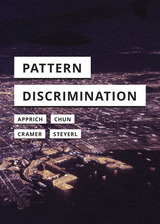
front cover of Pattern Discrimination
Pattern Discrimination
Clemens Apprich
University of Minnesota Press, 2018

How do “human” prejudices reemerge in algorithmic cultures allegedly devised to be blind to them?

How do “human” prejudices reemerge in algorithmic cultures allegedly devised to be blind to them? To answer this question, this book investigates a fundamental axiom in computer science: pattern discrimination. By imposing identity on input data, in order to filter—that is, to discriminate—signals from noise, patterns become a highly political issue. Algorithmic identity politics reinstate old forms of social segregation, such as class, race, and gender, through defaults and paradigmatic assumptions about the homophilic nature of connection.

Instead of providing a more “objective” basis of decision making, machine-learning algorithms deepen bias and further inscribe inequality into media. Yet pattern discrimination is an essential part of human—and nonhuman—cognition. Bringing together media thinkers and artists from the United States and Germany, this volume asks the urgent questions: How can we discriminate without being discriminatory? How can we filter information out of data without reinserting racist, sexist, and classist beliefs? How can we queer homophilic tendencies within digital cultures?

[more]


Send via email Share on Facebook Share on Twitter