
 A SCHOLARLY BOOK REPOSITORY
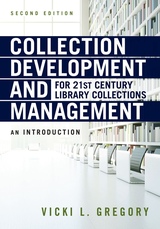
Packed with discussion questions, activities, suggested additional references, selected readings, and many other features that speak directly to students and library professionals, Gregory’s Collection Development and Management for 21st Century Library Collections is a comprehensive handbook that also shares myriad insightful ideas and approaches valuable to experienced practitioners. This new second edition brings an already stellar text fully up to date, presenting top-to-bottom coverage of
- the impact of new technologies and developments on the discipline, including discussion of e-books, open access, globalization, self-publishing, and other trends;
- needs assessment, policies, and selection sources and processes;
- budgeting and fiscal management;
- collection assessment and evaluation;
- weeding, with special attention paid to electronic materials;
- collaborative collection development and resource sharing;
- marketing and outreach;
- self-censorship as a component of intellectual freedom, professional ethics, and other legal issues;
- diversity and ADA issues;
- preservation; and
- the future of the field.
Additional features include updated vendor lists, samples of a needs assessment report, a collection development policy, an approval plan, and an electronic materials license.

Assessment is increasingly integral to building, managing, and justifying library collections. Unfortunately, assessment can also be a daunting undertaking. And though every institution is unique, as this manual demonstrates, there’s no need to reinvent the wheel. Spanning both concept and practice, Kelly offers a holistic assessment framework suitable to a variety of collections and contexts. With a structure that makes it applicable as both a training tool for practicing librarians and a useful course text for library students, this manual
- introduces foundational assessment methodologies then provides concrete guidance on how to contextualize those methodologies within a holistic collections assessment program;
- covers topics such as assessment goals, assessment stakeholders, selecting data and methodologies, working through project constraints, and project planning;
- includes sample assessment program structures and other useful templates;
- provides step-by-step instructions for more than a dozen specific methodologies, describing which aspect of the collection is being measured, what goals the methodology can address, technological requirements, recommended visualizations, and other helpful pointers; and
- shares best practices for communicating effectively with internal and external stakeholders about assessment projects, with sample communication plans that can be easily adapted.

Technical Services Quarterly declared that the third edition “must now be considered the essential textbook for collection development and management … the first place to go for reliable and informative advice." For the fourth edition expert instructor and librarian Johnson has revised and freshened this resource to ensure its timeliness and continued excellence. Each chapter offers complete coverage of one aspect of collection development and management, including numerous suggestions for further reading and narrative case studies exploring the issues. Thorough consideration is given to
- traditional management topics such as organization of the collection, weeding, staffing, and policymaking;
- cooperative collection development and management;
- licenses, negotiation, contracts, maintaining productive relationships with vendors and publishers, and other important purchasing and budgeting topics;
- important issues such as the ways that changes in information delivery and access technologies continue to reshape the discipline, the evolving needs and expectations of library users, and new roles for subject specialists, all illustrated using updated examples and data; and
- marketing, liaison activities, and outreach.
As a comprehensive introduction for LIS students, a primer for experienced librarians with new collection development and management responsibilities, and a handy reference resource for practitioners as they go about their day-to-day work, the value and usefulness of this book remain unequaled.
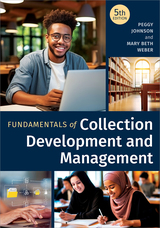
- traditional management topics such as organization of the collection, staffing, planning, and policymaking;
- the continuing relevance and importance of the discipline in an increasingly digital environment;
- open access, the Big Ten Open Books collection, and moving toward a digital library ownership model;
- e-book lending, including purchasing models (PDA, DDA, EBA) and controlled digital lending;
- collaborative collection development and management;
- licenses, negotiation, contracts, maintaining productive relationships with vendors and publishers, and other important purchasing and budgeting topics;
- self-published books and their path into library collections;
- collection analysis and weeding, including both print and e-resources;
- timely issues such as the ways in which collecting practices have changed post-pandemic, the evolving needs and expectations of library users, diversity in library collections, and ensuring accessibility, all illustrated using updated examples and data; and
- marketing, liaison activities, and outreach, through coverage expanded for this edition.
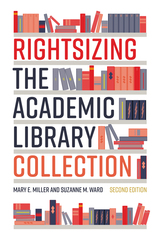
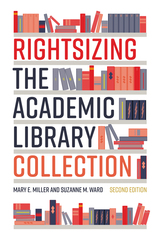
Honored with many accolades, including a starred review in Library Journal, the first edition of this book demonstrated the power and flexibility of “rightsizing,” an approach that applies a scalable, rule-based strategy to help academic libraries balance stewardship of spaces and the collection. In the five years since Ward’s first edition, the shared print infrastructure has grown in leaps and bounds, as has coordination among programs. With this revision, Miller addresses new options as well as the increasing urgency to protect at-risk titles as you reduce your physical collection. Readers will feel confident rightsizing their institution’s own collections with this book’s expert guidance on
- the concept of rightsizing, a strategic and largely automated approach that uses continuous assessment to identify the no- and low-use materials in the collection, and its five core elements;
- crafting a rightsizing plan, from developing withdrawal criteria and creating discard lists to managing workflow and disposing of withdrawn materials, using a project-management focus;
- moving toward a “facilitated collection” with a mix of local, external, and collaborative services;
- six discussion areas for decisions on participating in a shared print program;
- factors in choosing a collection decision support tool;
- relationships with stakeholders;
- how to handle print resources after your library licenses perpetual access rights to the electronic equivalent; and
- future directions for rightsizing
READERS
Browse our collection.
PUBLISHERS
See BiblioVault's publisher services.
STUDENT SERVICES
Files for college accessibility offices.
RECENTLY PUBLISHED




UChicago Accessibility Resources
home | accessibility | search | about | contact us
BiblioVault ® 2001 - 2026
The University of Chicago Press